HomeDiagramsDatabaseMapsForum About
     

Go Back   SkyscraperPage Forum > Regional Sections > Canada > Ontario > Ottawa-Gatineau > Urban, Urban Design & Heritage Issues


Reply

 
Thread Tools Display Modes
     
     
  #1  
Old Posted Aug 16, 2024, 1:36 PM
J.OT13's Avatar
J.OT13 J.OT13 is online now
Moderator
 
Join Date: Mar 2012
Location: Ottawa
Posts: 28,479
Ottawa-Gatineau Water Infrastructure

Ottawa designates city’s first water treatment facility as heritage building

By Natasha O'Neill
Posted Aug 6, 2024 12:33:49 PM.


Structures dating back to over 100 years old is part of the reason the City of Ottawa designated portions of a water treatment facility as a heritage building.

At the July 10 meeting, council voted to designate the Lemieux Island Water Purification Plant. Located 2.5 kilometres west of Parliament Hill, the building sits on the border of Quebec and Ontario on an island in the Ottawa River.


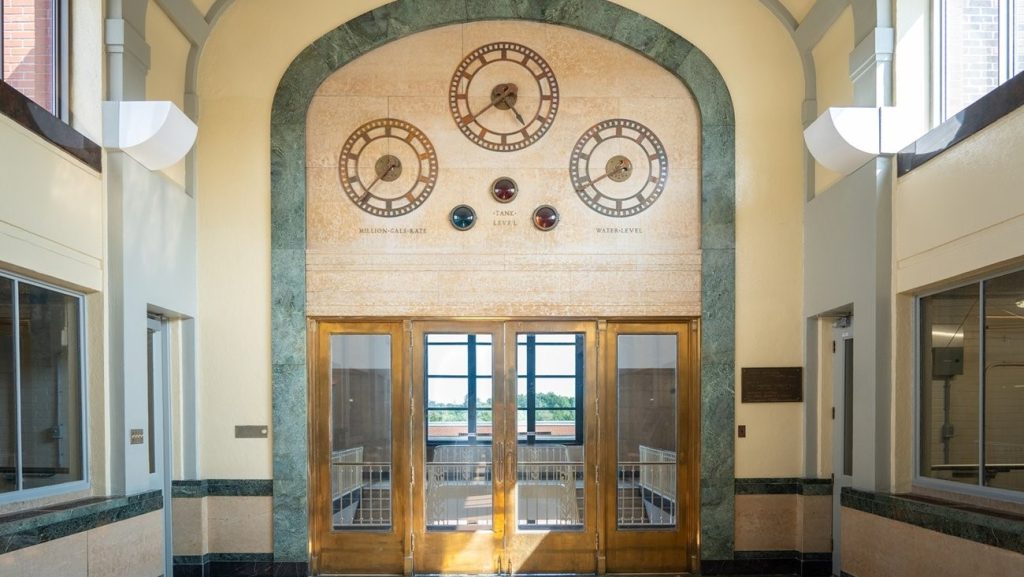
The “core” of the structure is the pumping station, chemical and fire buildings, which were constructed between 1915 to 1932. According to the report to council, the areas showcase “excellent” examples of industrial building influence of the early 20th century.

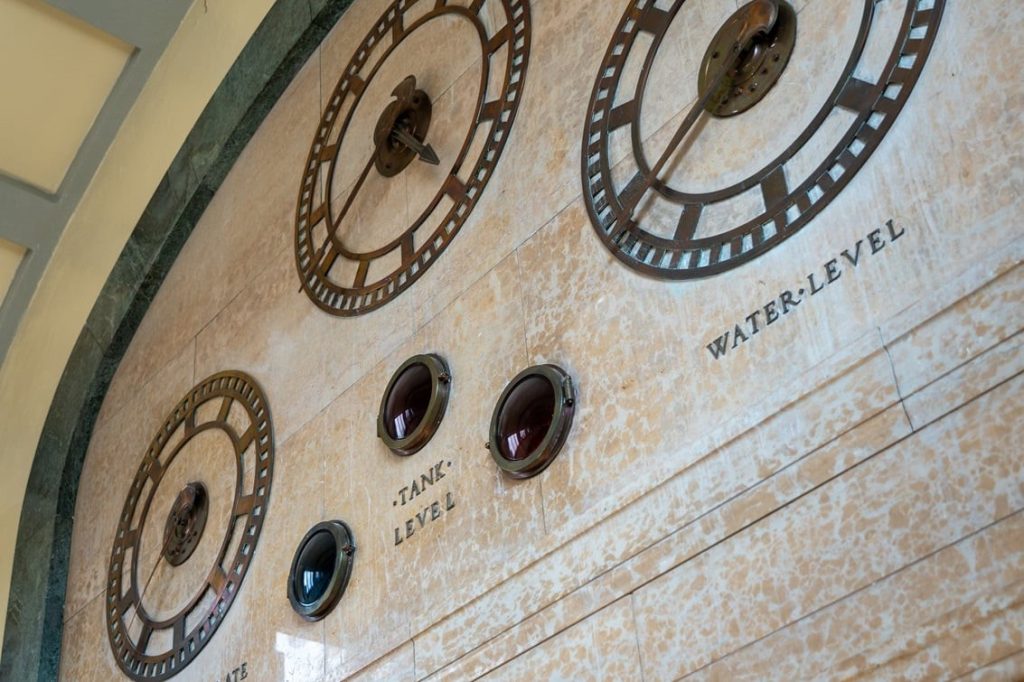
The decorative walls, bronze doors and geometrical patterns throughout the building and “high craftsmanship” were part of the reasons for the designation.

Staff in the report also mentioned how ground-breaking the facility was to residents at the time due to its technical achievement cleaning water for the municipality. It had a multi-step sanitation process including chlorination.

Clean drinking water became a huge priority for the city after a 1911 to 1912 typhoid outbreak caused by pollution in the Ottawa River.

The building has been listed under the city’s heritage register since 2019 but changes to the Ontario Heritage Act resulted in council designating the property.


Not the only water facility designated


The Lemieux Island Water Purification Plant is not the only facility to be designated as a heritage structure.

The Hintonburg Pumphouse, located on the mainland of Lemieux Island, is another city-owned heritage building that was built in 1899. It was replaced by the Lemieux Island facility and turned into a residence and gatehouse for the island in 1932.

It was designated a heritage structure in 1987 and two years later was destroyed in a fire. Sitting in ruins for the last several decades, the city started exploring ways to turn the small piece of Ottawa’s history into something more.

In May and June 2023 a design plan to turn the area into a public park was chosen. Construction is set to being this month.

https://ottawa.citynews.ca/2024/08/06/ot...,facility%20as%20a%20heritage%20building.
Reply With Quote
     
     
  #2  
Old Posted Nov 6, 2024, 4:06 PM
J.OT13's Avatar
J.OT13 J.OT13 is online now
Moderator
 
Join Date: Mar 2012
Location: Ottawa
Posts: 28,479
City of Ottawa Municipal Water Infrastructure

How 150-year-old technology keeps Ottawa's water flowing​
The Fleet Street pumping station just celebrated its 150th birthday, and we got peek inside.

Author of the article:
Blair Crawford
Published Nov 06, 2024 • Last updated 5 hours ago • 4 minute read
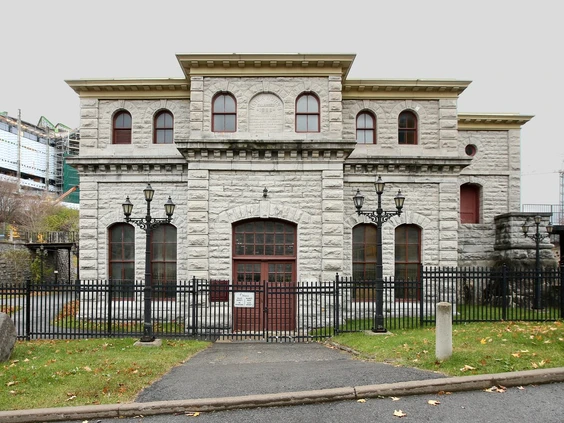


The Fleet Street Pumping Station, located in downtown Ottawa in the Lebreton Flats area, celebrates its 150th anniversary this year. Photo by JULIE OLIVER /Postmedia

Where would you look to find the heart of Ottawa?

It’s not the ByWard Market, the Rideau Canal Skateway or even on the green-carpeted floor of the House of Commons.

The city’s real beating heart is hidden behind the stone walls of the Fleet Street Pumping Station, where five huge pumps feed hundreds of millions of litres of drinking water each day. Remarkably, the technology is nearly unchanged from the day it opened, on Halloween 1874, when Alexander Mackenzie was prime minister and horse and wagons travelled the city’s muddy streets.

Fleet Street, which celebrated its 150th birthday last week, is the last remaining water-driven pumping station in the country.

“It’s very simple, but very effective,” says Paul Montgomery, plant manager of the Fleet Street Pumping Station and the Lemieux Island Water Treatment Plant.

“People ask why we haven’t replaced these with electric power,” Montgomery said, struggling to be heard above the din of five horsepower pumps that together deliver 2,400 horsepower. “Why would we? Can you imagine the size of the electric motors and generators we would need to replace them?”

Using water power to drive the pumps also saves money — about $1.2 million a year in electricity costs, he said. And since they run on river power, not even a city-wide electricity blackout would keep the water from flowing.

Tucked beneath an escarpment at the eastern edge of LeBreton Flats, the Fleet Street Pumping Station may be barely noticed by those walking or cycling past over the adjacent Pooley’s Bridge. Few would imagine the mysterious workings inside.

The pumping station was designed by Thomas C. Keefer, a Canadian civil engineer who also built water works in Montreal and Hamilton. Keefer’s plan was to harness the flow of the Ottawa River to drive the pumps. Its original purpose, however, was not to supply drinking water.

“It was built to provide water for fighting fires,” Montgomery said. “In the 1800s, there were huge fires in cities like Ottawa. Businesses wanted to buy insurance, but the insurance companies insisted there had to be an adequate water supply. It was the insurance companies that demanded it.”

(Ottawa’s first fire brigade was formed the same year that Fleet Street opened, but ironically, neither would help much when the great fire of 1900 destroyed a fifth of the city.)
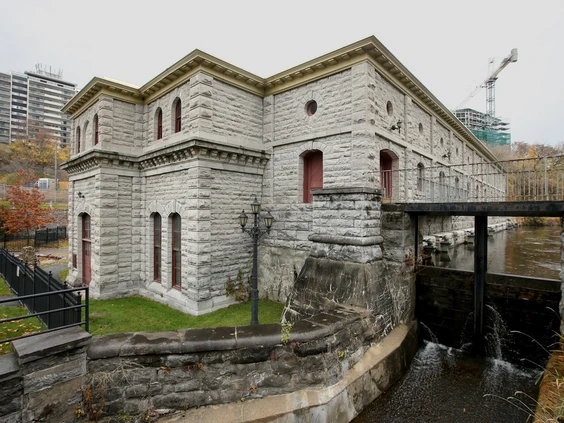


River water enters the system through gates in Nepean Bay, just west of the Canadian War Museum. It flows about 500 metres along an aqueduct to the pumping station where it enters into five portals, one for each pump. After passing through a screen to keep debris out, the water power spins turbines that in turn drive massive gearboxes that transfer that power to the pumps.

Though the machinery has been updated, it’s hardly new. The gearboxes date from 1932 and 1943. Detailed blueprints, hand-drafted by craftsman at the long-gone Dominion Engineering Works of Montreal, sit on a table, ready for use should a replacement part need to be machined.

When the Lemieux Island treatment plant opened in 1932, Fleet Street was converted to supply drinking water. A pipe laid on the floor of the aqueduct carries the clean, potable water to the pumping station for distribution. Fleet Street’s pumps send the water to 95 per cent of the city’s residents, from Orléans in the east, Stittsville in the west and Manotick in the south.

On an average day, Ottawa uses about 300 million litres of water, Montgomery said. Lemieux Island and Fleet Street together can produce about 400 million litres of water. The city’s second water treatment plant in Britannia adds another 360 million litres a day.

Either one can easily meet Ottawa’s demands. In fact, a couple of times a month one or the other plants is shut down for maintenance and just one plant supplies the city’s water. There’s space at Fleet Street to add a sixth pump, and if needed, Lemieux Island’s capacity could be bumped up to 600 million litres, he said.

“The city is growing, for sure, but people are using a lot less water than they used to,” he said. “You’ve got more efficient fixtures today and water itself costs a lot more so people are getting thrifty with it. And there’s a change of demographics. People just aren’t using as much outdoor water as they used to.”

The Fleet Street Pumping Station was designated a national historic site in 1982. That can complicate work on the exterior — “There just aren’t that many stone masons around to do the work,” Montgomery says — but doesn’t affect changes or modifications needed inside the plant.

Still, a look inside the station, with it’s polished wooden bannisters, historic plaques and gnashing gears, would seem still seem familiar to the 19th-century tradesmen who built it. The next time you step into the shower, fill the sink or even flush the toilet, spare a thought for the Fleet Street Pumping Station, the beating heart that makes it possible.
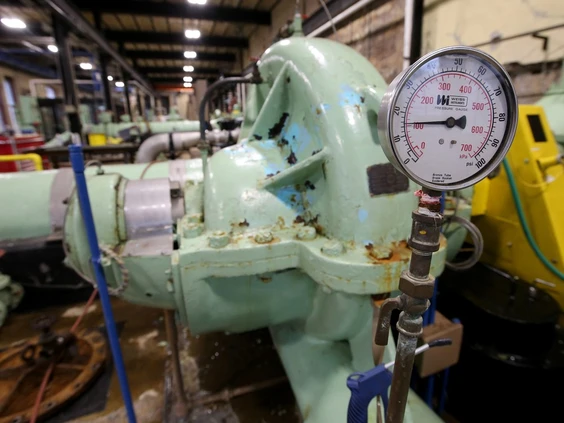

The massive gearboxes date to the 1930s and 40s and are still in use today. Photo by JULIE OLIVER /Postmedia
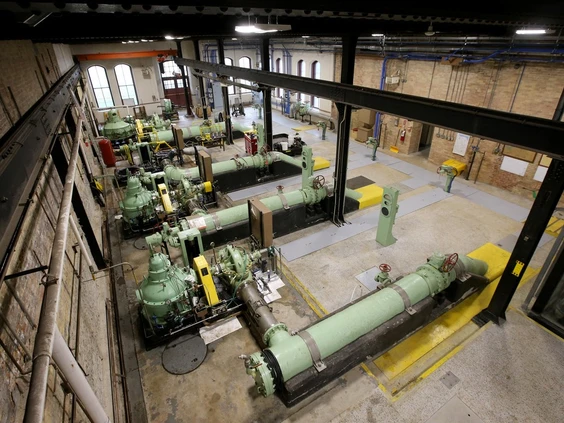

Five water-powered pumps deliver 2400 horsepower to pump drinking water into the city’s distribution network. Photo by JULIE OLIVER /Postmedia
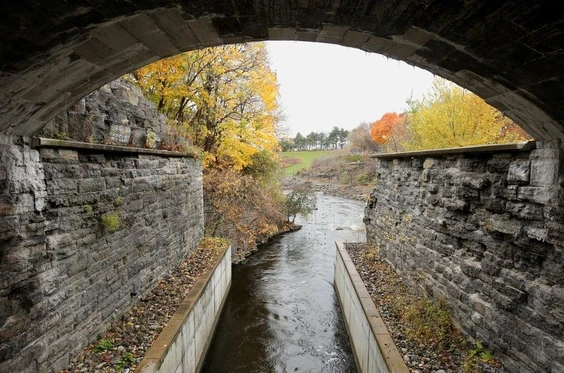

Water empties from the pumping station downs a spillway that into a kayaking course below Pooley’s Bridge. Photo by JULIE OLIVER /Postmedia
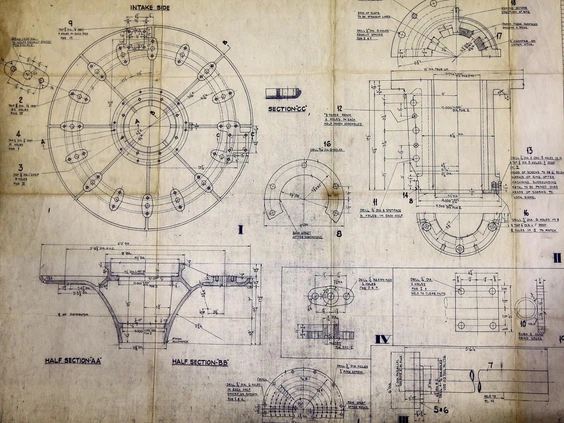

A hand-drafted blue print of the gearbox, dated from 1943. Photo by JULIE OLIVER /Postmedia
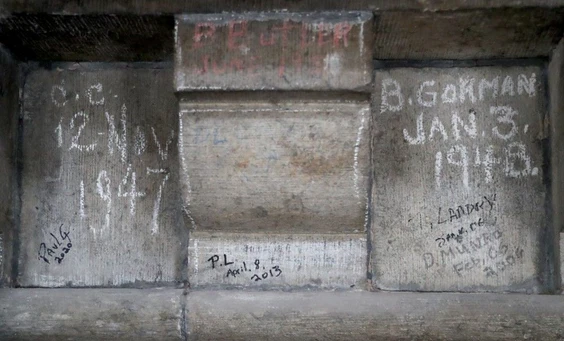

Workers have left their mark inside the pumping station over the years Photo by JULIE OLIVER /Postmedia

https://ottawacitizen.com/news/local-news/how-150-year-old-technology-keeps-ottawas-water-flowing

Reply With Quote
     
     
  #3  
Old Posted Nov 6, 2024, 8:59 PM
J.OT13's Avatar
J.OT13 J.OT13 is online now
Moderator
 
Join Date: Mar 2012
Location: Ottawa
Posts: 28,479
Wonder if I should make this thread water & Sewers, and if I do, should I move the old CSST discussion here.
Reply With Quote
     
     
  #4  
Old Posted May 29, 2026, 1:29 PM
J.OT13's Avatar
J.OT13 J.OT13 is online now
Moderator
 
Join Date: Mar 2012
Location: Ottawa
Posts: 28,479
Didn't even know this was going on.

Dans les coulisses du plus grand chantier municipal de Gatineau
Par Daniel LeBlanc, Le Droit
28 mai 2026 à 16h52


Le plus imposant chantier d’infrastructure municipale sur le territoire gatinois avance rondement. Tout pointe pour que les travaux de modernisation de l’usine de production d’eau potable du secteur Gatineau soient complétés comme prévu dans 18 mois.

Les installations de la rue Saint-Louis, qui datent de plus de 40 ans et desservent une population de 118 000 personnes, sont rénovées au coût de 143 millions de dollars.

Une visite des lieux a permis aux médias jeudi d’avoir un aperçu de l’avancement des travaux amorcés au début 2025 et qui ne nécessitent aucun arrêt ni de la production ni de la distribution d’eau potable.

85 travailleurs en poste

Près de 85 travailleurs sont mobilisés sur ce chantier du lundi jeudi, où certains travaux ont lieu de soir et de nuit, lorsque nécessaire.

«Ça ne paraît pas, mais c’est quand même assez grand, on a beaucoup de travailleurs à différents endroits pour faire justement évoluer les travaux et pouvoir être en mesure de compléter le tout en novembre 2027, explique Jean-Claude Bergeron, responsable de projet au Service des infrastructures et des projets. On est environ à 50 % d’avancement.»

Tant au niveau financier que l’échéancier, tout est respecté, insiste ce dernier.

«Les médias [filtrants] actuels sont désuets, ils vont être remplacés par des filtres biologiques, c’est un mélange de dépôts de sable et de charbon par-dessus. Ils ne sont pas encore en fonction, c’est en préparation, affirme M. Bergeron. L’eau va être encore de meilleure qualité, car ces nouveaux filtres-là vont pouvoir retirer plus de bactéries.»

Un bâtiment de production d’ozone sera aussi construit. Le recours à ce procédé permet de retirer complètement tout résidu ou contaminant chimique résiduel.

Les travaux visant à ajouter à terme une troisième conduite d’arrivée d’eau à l’usine, qui puise le tout dans la rivière des Outaouais quelques dizaines de mètres plus loin, ont aussi débuté.

Meilleure eau au Québec?

Aux yeux de ce gestionnaire, la qualité de l’eau potable de Gatineau, qui a remporté un prix au concours de la meilleure eau du Québec organisé par Réseau Environnement en 2024 avec les changements apportés et le procédé d’ozone ajoutés à l’usine du secteur Buckingham, sera encore plus dans le «top».

Le public, selon lui, n’y verra toutefois aucune différence à la maison en ouvrant le robinet dans un an et demi, même chose pour le goût.

Pour les citoyens, au-delà de l’amélioration de la qualité de l’eau, la mise à niveau de cette infrastructure permettra notamment d’améliorer les procédés de désinfection et de réduire les risques de baisses de pression dans le réseau, lesquels peuvent parfois mener au déclenchement d’avis d’ébullition.

Le remplacement des six pompes d’eau brute, la réfection complète des deux systèmes de décantation et la mise en service de la nouvelle réserve d’eau potable de même que du bassin de contact d’ozone sont au nombre des étapes à venir dans les prochains mois.

Toutes les pompes de distribution de l’eau, de grands appareils qui s’apparentent à d’immenses bornes-fontaines installées dans une grande pièce, seront remplacées une à une. Déjà, la toute première flambant neuve a été installée dans les derniers jours.

On prévoit que les travaux permettront de répondre aux besoins pour un horizon minimal de 20 ans.

M. Bergeron ne cache pas que ce projet majeur vient avec d’énormes défis étant donné qu’aucune interruption de service n’est faite.

«Avec l’entrepreneur, avec notre consultant, on travaille d’arrache-pied pour mettre en place des planifications structurées pour bien coordonner l’ensemble des activités au quotidien. C’est ça qui permet vraiment de n’avoir aucun impact sur la vie quotidienne du citoyen», lance-t-il.

Malgré la croissance démographique, la capacité de production des installations n’a pas été rehaussée.

«La population est grandissante, oui, mais il y a aussi encore là des efforts qui sont faits sur les réseaux pour venir éliminer certaines fuites souterraines qu’on pourrait retrouver, certains bris d’aqueduc qui viennent consommer passablement d’eau, indique Jean-Claude Bergeron. Puis, bien sûr, on demande la collaboration du citoyen pour utiliser cette eau potable là de façon responsable.»

https://www.ledroit.com/actualites/actua...omplete-a-50-YQHSCXH5C5HEZN2R2UYKRLFMJQ/
Reply With Quote
     
     
End
 
 
Reply

Go Back   SkyscraperPage Forum > Regional Sections > Canada > Ontario > Ottawa-Gatineau > Urban, Urban Design & Heritage Issues
Forum Jump


Forum Jump


All times are GMT. The time now is 7:15 PM.

     
SkyscraperPage.com - Privacy Statement - Top

Powered by vBulletin® Version 3.8.7
Copyright ©2000 - 2026, vBulletin Solutions, Inc.