HomeDiagramsDatabaseMapsForum About
     

Go Back   SkyscraperPage Forum > Discussion Forums > City Discussions


Reply

 
Thread Tools Display Modes
     
     
  #81  
Old Posted May 11, 2026, 6:26 PM
The North One's Avatar
The North One The North One is offline
Registered User
 
Join Date: Sep 2009
Posts: 5,882
Quote:
Originally Posted by craigs View Post
Sure, there is. I can't speak to the situation in Vancouver or Toronto, but here in Los Angeles, many diners, most supermarkets, and all of the hardware stores that used to stay open 24-7 now close overnight.
The fact that almost nothing in the US stays open overnight anymore really sucks.
__________________
Spawn of questionable parentage!
Reply With Quote
     
     
  #82  
Old Posted May 11, 2026, 6:51 PM
JManc's Avatar
JManc JManc is offline
Administrator
 
Join Date: Feb 2003
Location: Houston
Posts: 22,624
Quote:
Originally Posted by DCReid View Post
Seems like that has always been Houston, but I've never lived there and haven't visited in over 25 years. There were complaints about Houston in the 80 oil boom years about tacky billboards, unorganized growth, oppressive weather, terrible traffic, and all kinds of bugs. Then it collapsed and they showed whole neighborhoods with empty houses. The general thought was that perhaps it had grown up too fast and lacked basic infrastructure needs of a city that had managed its growth over decades. It's surprising to hear about Houston being just as bad, if not worse, after all of these years. I would have thought it would have gotten its act together....I am not sure any of the big metros (top 10) have really improved in livability over the last 20 or so years. It seems like the smaller ones that have grown steadily, like the KC and Indy, have done better.
Yeah, Houston has always been a city of contrasts but it's gotten more extreme over the past 20-25 years. Parts of town are better off than they were (transit, density, services, etc.) but it's upper middle class and above while others have stagnated or have gotten worse. Houston is also a victim of its own success. A lot of shoddy development in many middle class areas were thrown up overnight (homes, apartments, commercial) to accommodate influx back in the 70's and 80's and now many of these are in disrepair and not are being redeveloped so they become lower income areas. The professional class either moved further out or to the more expensive areas in town.

One of the few good things this city has done is banned billboards so they are becoming less and less common. Only the old ones grandfathered in are still up.
__________________
Who are you people and where is my horse? - G. Carlin
Reply With Quote
     
     
  #83  
Old Posted May 11, 2026, 8:01 PM
iheartthed iheartthed is offline
Registered User
 
Join Date: Oct 2009
Location: New York
Posts: 11,859
Surprising changes in Detroit from 2006 - 2026:

Detroit as a brand: Shinola Detroit didn't exist in 2006. Nobody would have ever expected a Detroit themed luxury brand to be created, let alone be successful. Luxury brands associated with cities was something that was still mostly the domain of New York, Los Angeles, London, Paris, or Milan. It still is.

Similarly, while the style of pizza that is now known as "Detroit style pizza" had existed long before 2006, nobody would have expected it to become a national and international sensation. If you went back to 2006 and asked for "Detroit style pizza" most people would be confused by the question. There was a New York style and a Chicago style, but "Buddy's style" still hadn't yet become "Detroit style".

Detroit as a destination: Prior to the last decade or so, Detroit was never really much of a tourist destination at any point in the city's history. People visited Detroit for specific reasons, primarily work or family. Some people in nearby places might come for big concerts and shows that stopped in the city, but very few people ever went to the city just to be a tourist. By 2006 this was still mostly true but something has clearly changed since then. Music festivals in Detroit such as Movement annually attract a global crowd to the city. Detroit has increasingly become a stop on the circuit for international tourists curious about the city's history. And the city is competing for more shows and conventions than ever before.

Obsolescence of the Renaissance Center: The Ren Cen was still Detroit's star in 2026, and that seemed unlikely to change. Fast forward to today and the office towers of the Ren Cen have been vacated and it's scheduled for a partial demolition.

Resurgence of Corktown: Corktown revolved around Tiger Stadium for a century. It was a huge blow when the team moved to Comerica Park and many predicted that the neighborhood would never recover. There was some loss but it was nowhere near as bad as the predictions. Slows BBQ, which opened in 2005, became hugely important to Corktown's resurgence. Although it was still not well known in 2006, the restaurant quickly became a destination for diners all across Metro Detroit. From there it became an obligatory stop for people visiting Detroit. Today there are a number of popular bars and restaurants in the area.


Michigan Central Station: Related to above, more people expected MCS, the infamous abandoned train station located in Corktown, to be torn down by 2026 than for it to have been fully restored to a functional building. It's still shocking for many people (myself included) to see it in its restored state.

Success of the Detroit Riverfront and Dequindre Cut: The first phase of the Detroit Riverfront had already been opened by 2006, but it wasn't yet clear how popular this investment into the city's waterfront would be. I don't think I'm exaggerating when I say that the Detroit Riverfront is the single most popular investment in public works in the city of Detroit since at least the 1950s. I can't immediately think of anything built in Detroit within the past 80 years that can compare in terms of popularity. It's more popular than the Detroit People Mover.

The Gordie Howe Bridge: Yes, the second bridge had already been proposed by 2006, in the aftermath of 9/11, but it was still then so theoretical that it was hard to take seriously. A new bridge seemed about as realistic as Detroit getting a subway.

The "Detroit" Pistons: The Lions had already returned to Detroit from Pontiac by 2006, but there was fear that Detroit would lose the Red Wings to a location in the suburbs because of the steady decline of Joe Louis Arena. It was still unthinkable that the Detroit Pistons would return any time soon because of their home at the still relatively new Palace of Auburn Hills. The Palace was still less than 20 years old in 2006. Fast forward twenty years and the Pistons have been back in the city for almost a decade already.

Severity of the population decline: A declining population had been a feature of Detroit's since the 1950s. But I think most people (naively) expected that Detroit would never drop below 900,000 in population. When some demographers started to warn that Detroit would probably land at a population around 800k at the 2010 census, it was thought to be so absurd that they were accused of crying wolf. Detroit ended up with an official 2010 census population of 713,777. While this really should not have been a surprise, it was nonetheless a shock to most people. Not many people thought that Detroit's population in 2026 would start with a 6.

The widespread disappearance of urban fabric: Related to the above, the city had never seen the scale of erasure of urban fabric that happened over the past 20 years. Thanks to a number of demolition grants from the federal government the city successfully erased many, many miles of structures, effectively wiping many neighborhoods off the map. Before the city got into the demolition business it was much more common for buildings to sit dormant. Physically, many parts of the city look much less urban than it did 20 years ago. For example:

2007: https://maps.app.goo.gl/s5zP33RNJv6L28xa9

2026: https://maps.app.goo.gl/AwWke2BFp4mRCcFS9

A non-black mayor: In 2006 I would have thought Detroit would elect a woman mayor before another white male mayor, and I would've been wrong. Twenty years ago Detroit's population was overwhelmingly black, and today the city's population is still almost as overwhelmingly black. By 2006 there had not been a non-black mayor of Detroit since 1973, over 30 years. By 2026 the mayor of Detroit had been white for 12 of the 20 years since 2006. On Jan. 1, 2026, Detroit's first woman mayor took office.

Bike lanes: I can't say for sure that there were no bike lanes in Detroit in 2006, but I can say for sure that there were not a lot of them. Today there are over 200 miles of bike lanes in the city.
Reply With Quote
     
     
  #84  
Old Posted May 11, 2026, 9:02 PM
DCReid DCReid is online now
Registered User
 
Join Date: Jun 2012
Posts: 1,507
Quote:
Originally Posted by iheartthed View Post
Surprising changes in Detroit from 2006 - 2026:

Detroit as a brand: Shinola Detroit didn't exist in 2006. Nobody would have ever expected a Detroit themed luxury brand to be created, let alone be successful. Luxury brands associated with cities was something that was still mostly the domain of New York, Los Angeles, London, Paris, or Milan. It still is.

Similarly, while the style of pizza that is now known as "Detroit style pizza" had existed long before 2006, nobody would have expected it to become a national and international sensation. If you went back to 2006 and asked for "Detroit style pizza" most people would be confused by the question. There was a New York style and a Chicago style, but "Buddy's style" still hadn't yet become "Detroit style".

Detroit as a destination: Prior to the last decade or so, Detroit was never really much of a tourist destination at any point in the city's history. People visited Detroit for specific reasons, primarily work or family. Some people in nearby places might come for big concerts and shows that stopped in the city, but very few people ever went to the city just to be a tourist. By 2006 this was still mostly true but something has clearly changed since then. Music festivals in Detroit such as Movement annually attract a global crowd to the city. Detroit has increasingly become a stop on the circuit for international tourists curious about the city's history. And the city is competing for more shows and conventions than ever before.

Obsolescence of the Renaissance Center: The Ren Cen was still Detroit's star in 2026, and that seemed unlikely to change. Fast forward to today and the office towers of the Ren Cen have been vacated and it's scheduled for a partial demolition.

Resurgence of Corktown: Corktown revolved around Tiger Stadium for a century. It was a huge blow when the team moved to Comerica Park and many predicted that the neighborhood would never recover. There was some loss but it was nowhere near as bad as the predictions. Slows BBQ, which opened in 2005, became hugely important to Corktown's resurgence. Although it was still not well known in 2006, the restaurant quickly became a destination for diners all across Metro Detroit. From there it became an obligatory stop for people visiting Detroit. Today there are a number of popular bars and restaurants in the area.


Michigan Central Station: Related to above, more people expected MCS, the infamous abandoned train station located in Corktown, to be torn down by 2026 than for it to have been fully restored to a functional building. It's still shocking for many people (myself included) to see it in its restored state.

Success of the Detroit Riverfront and Dequindre Cut: The first phase of the Detroit Riverfront had already been opened by 2006, but it wasn't yet clear how popular this investment into the city's waterfront would be. I don't think I'm exaggerating when I say that the Detroit Riverfront is the single most popular investment in public works in the city of Detroit since at least the 1950s. I can't immediately think of anything built in Detroit within the past 80 years that can compare in terms of popularity. It's more popular than the Detroit People Mover.

The Gordie Howe Bridge: Yes, the second bridge had already been proposed by 2006, in the aftermath of 9/11, but it was still then so theoretical that it was hard to take seriously. A new bridge seemed about as realistic as Detroit getting a subway.

The "Detroit" Pistons: The Lions had already returned to Detroit from Pontiac by 2006, but there was fear that Detroit would lose the Red Wings to a location in the suburbs because of the steady decline of Joe Louis Arena. It was still unthinkable that the Detroit Pistons would return any time soon because of their home at the still relatively new Palace of Auburn Hills. The Palace was still less than 20 years old in 2006. Fast forward twenty years and the Pistons have been back in the city for almost a decade already.

Severity of the population decline: A declining population had been a feature of Detroit's since the 1950s. But I think most people (naively) expected that Detroit would never drop below 900,000 in population. When some demographers started to warn that Detroit would probably land at a population around 800k at the 2010 census, it was thought to be so absurd that they were accused of crying wolf. Detroit ended up with an official 2010 census population of 713,777. While this really should not have been a surprise, it was nonetheless a shock to most people. Not many people thought that Detroit's population in 2026 would start with a 6.

The widespread disappearance of urban fabric: Related to the above, the city had never seen the scale of erasure of urban fabric that happened over the past 20 years. Thanks to a number of demolition grants from the federal government the city successfully erased many, many miles of structures, effectively wiping many neighborhoods off the map. Before the city got into the demolition business it was much more common for buildings to sit dormant. Physically, many parts of the city look much less urban than it did 20 years ago. For example:

2007: https://maps.app.goo.gl/s5zP33RNJv6L28xa9

2026: https://maps.app.goo.gl/AwWke2BFp4mRCcFS9

A non-black mayor: In 2006 I would have thought Detroit would elect a woman mayor before another white male mayor, and I would've been wrong. Twenty years ago Detroit's population was overwhelmingly black, and today the city's population is still almost as overwhelmingly black. By 2006 there had not been a non-black mayor of Detroit since 1973, over 30 years. By 2026 the mayor of Detroit had been white for 12 of the 20 years since 2006. On Jan. 1, 2026, Detroit's first woman mayor took office.

Bike lanes: I can't say for sure that there were no bike lanes in Detroit in 2006, but I can say for sure that there were not a lot of them. Today there are over 200 miles of bike lanes in the city.
Yes, it's WONDERFUL that Detroit saved and refurbished the Michigan Central Station. Most cities, including NYC, would have demolished it years ago for 'urban renewal'.
Reply With Quote
     
     
  #85  
Old Posted May 12, 2026, 1:48 AM
dave8721 dave8721 is offline
Registered User
 
Join Date: Jul 2005
Location: Miami
Posts: 4,181
For Miami, back in 2006 I would have assume Little Havana would be filled with mid-rise towers by now. Its interesting the gentrification has never fully hit eastern Little Havana. Even Overtown is getting built up faster.

Also would be surprised that Miami-Dade County and the City of Miami both have Non-Hispanic White women mayors
Reply With Quote
     
     
  #86  
Old Posted May 12, 2026, 3:35 AM
The North One's Avatar
The North One The North One is offline
Registered User
 
Join Date: Sep 2009
Posts: 5,882
Not disagreeing that a lot has been lost but there's not a lot of change in this example other than the road being paved.

Actually what I think is much more surprising has been the resurgence of walkable commercial corridors in Detroit. But this is a more recent change.

Like McNichols going from looking post-apocalyptic to a functional street again. Lots of examples of this all over the city.

https://www.google.com/maps/@42.4171587,..._ep=EgoyMDI2MDUwNi4wIKXMDSoASAFQAw%3D%3D

https://www.google.com/maps/@42.4171001,..._ep=EgoyMDI2MDUwNi4wIKXMDSoASAFQAw%3D%3D
__________________
Spawn of questionable parentage!
Reply With Quote
     
     
  #87  
Old Posted May 12, 2026, 4:01 AM
Bonsai Tree's Avatar
Bonsai Tree Bonsai Tree is offline
Small but Mighty
 
Join Date: Jun 2017
Location: Chicago, IL
Posts: 434
Quote:
Originally Posted by The North One View Post
Not disagreeing that a lot has been lost but there's not a lot of change in this example other than the road being paved.

Actually what I think is much more surprising has been the resurgence of walkable commercial corridors in Detroit. But this is a more recent change.

Like McNichols going from looking post-apocalyptic to a functional street again. Lots of examples of this all over the city.

https://www.google.com/maps/@42.4171587,..._ep=EgoyMDI2MDUwNi4wIKXMDSoASAFQAw%3D%3D

https://www.google.com/maps/@42.4171001,..._ep=EgoyMDI2MDUwNi4wIKXMDSoASAFQAw%3D%3D
I see it time and again where people underestimate the power that streetscape enhancements can have. That little push of investment has a big impact (not that its the only thing of course).
Reply With Quote
     
     
  #88  
Old Posted May 12, 2026, 1:02 PM
benp's Avatar
benp benp is offline
Registered User
 
Join Date: Mar 2006
Location: Buffalo, NY
Posts: 782
Surprising changes in Buffalo 2006-2026

Creation and development of Canalside: After over a century of industrial use, and decades of decay and awaiting a never-to-come silver bullet development, downtown public access to the waterfront has become an expanding mixed-use development and restoration which includes historical canals, HarborCenter, museums, boating, and ongoing residential construction. Still a major work in progress.

Clean-up of Buffalo River and First Ward: Decaying and decades-vacant grain elevators and industrial facilities along the Buffalo River have been converted to new residential and recreational facilities (Riverworks, Silo City, Barcolo), new apartments constructed, and former industrial roads (Ohio Street, Gansen Street) becoming parkways and bike-friendly paths, with the river itself having completed major cleanup efforts and now have expanded recreational boating on many Blueway sites. Former Perry Projects have mainly been removed and replaced with hundreds of new apartments. Cobblestone area saw several major building conversions and restorations, new nightclubs, and new Seneca casino.

Larkinville: What began as a single industrial warehouse conversion to office space, has since expanded to dozens of former industrial buildings of the former Larkin Soap complex, and has since broadened to adjacent neighborhoods along Seneca and Exchange Streets, with new retail and hundreds of residential still being added, along with new commercial and retail along the corridor as well as popular public spaces at Larkin Square.

Outer Harbor: After decades of talk but no action, former industrial lands have been converted to parkland and recreational spaces. Public access to the waterfront has boomed with the creation of Buffalo Harbor State Park, as well as expanded park and waterfront recreational facilities such as Wilkeson Point, the Terminal B amphitheater, and Gallagher Beach waterpark. Nearly the entire Buffalo waterfront now has public access, and bike trails now extend north from Lake Erie to Niagara Falls and the Erie Canal Trail.

Buffalo Niagara Medical Center: In the area once known for its large and vacant parking lots and "dangerous" neighborhood, new medical and residential has exploded in the medical corridor on Main Street near downtown with the construction of the new UB Medical Campus, as well as expansion of existing hospitals, addition (via relocation) of the Children's Hospital and Gates Vascular Institute, and expansion of medical-related businesses. Hundreds of new apartments have been built, along with residential conversions of hundreds of units in formerly vacant industrial spaces nearby (like Trico).

West Side Gentrification: Neighborhoods once known for being dangerous or dying have been seeing expanded gentrification and are attracting dozens of new businesses and hundreds of new residents who have been restoring old homes or living in converted former industrial spaces. Five Points has become a trendy neighborhood spot of cafes and shops, and Niagara Street area (now yuppified as "Upper Rock") has seen conversions of industrial spaces to residential and retail, along with addition of dedicated bike lanes and expanded businesses.

East Side Not Dead Yet: In the last decades tens of thousands of South Asians, primarily of Bangladeshi heritage, many if not most from NYC, have migrated to Buffalo and have been rebuilding the mostly vacant residential and commercial properties that have been ignored for decades. The former Polish neighborhoods of the East Side through the 1980s saw near total collapse through the early 2000s, but have since stabilized and mostly recovered, with thousands of homes now purchased and occupied by the new residents. Per the last Census, some inner city tracts in that area are now primarily of Asian origin residents, with Asian population in the city increasing by 200% in the last decade. Dozens, if not hundreds, of new businesses, shops, and stores catering to the newer arrivals, as well as new schools and dozens of new places of worship, have opened with new ones opening regularly.

Pierce-Arrow: The area near the former Pierce-Arrow factory in North Buffalo has seen multiple industrial to residential conversions to hundreds of new apartments in places like the Pierce-Arrow HQ building, former American Radiator building, and multiple other industrial buildings on Chandler, Grote, and Elmwood. In former industrial spaces charter schools have been built or expanded, and new sports and recreation facilities have been created. Chandler Street has also become a hub for new industrial startups, as well as dining and entertainment, including the addition of a pool club in one of the most unlikely spots.

City Overall: Nearly every city neighborhood and commercial area has seen stabilization or expansion since 2006, and despite talk that Buffalo is still losing population, it has thousands of more residents than in 2006.

Last edited by benp; May 12, 2026 at 3:37 PM.
Reply With Quote
     
     
  #89  
Old Posted May 12, 2026, 2:01 PM
wwmiv wwmiv is offline
Registered User
 
Join Date: Sep 2009
Location: Austin -> San Antonio -> Columbia -> San Antonio -> Chicago -> Austin -> Denver -> Austin
Posts: 5,786
Quote:
Originally Posted by The North One View Post
The fact that almost nothing in the US stays open overnight anymore really sucks.
I disagree. It’s wonderful having a society that sets proper boundaries and expectations about behavior and the economy. Whatever can be done during the day, should be done during the day—and the only stuff that needs to be open at night are emergency and essential supplemental services.

Those formerly overnight employees and people have their regular personal lives back and enabled by an economy that now expects their employers to operate on a natural, human schedule… not an artificial schedule that caters to some rich person’s need for a delivered gourmet cookie at 4 AM.
__________________
Houston: 2.4m (+3.9%) + MSA suburbs: 5.4m (+12%) + CSA exurbs: 200k (+5%)
Dallas: 1.3m (+2%) / FtW: 1.0m (+10%) + suburbs: 6.4m (9%) + exurbs: 566k (+9%)
San Antonio: 1.5m (+6%) + MSA suburbs: 1.2m (+10%) + CSA exurbs: 82k (+3%)
Austin: 994k (+3%) + MSA suburbs: 1.6m (+18%)
Texas (whole): 31.29m (+7%) / Texas (balance): 8.6m (+3%)
Reply With Quote
     
     
  #90  
Old Posted May 12, 2026, 2:06 PM
iheartthed iheartthed is offline
Registered User
 
Join Date: Oct 2009
Location: New York
Posts: 11,859
Quote:
Originally Posted by The North One View Post
Actually what I think is much more surprising has been the resurgence of walkable commercial corridors in Detroit. But this is a more recent change.

Like McNichols going from looking post-apocalyptic to a functional street again. Lots of examples of this all over the city.

https://www.google.com/maps/@42.4171587,..._ep=EgoyMDI2MDUwNi4wIKXMDSoASAFQAw%3D%3D

https://www.google.com/maps/@42.4171001,..._ep=EgoyMDI2MDUwNi4wIKXMDSoASAFQAw%3D%3D
There have been some very good streetscape improvements around the city of Detroit in the past decade or so.
Reply With Quote
     
     
  #91  
Old Posted May 12, 2026, 4:34 PM
montréaliste montréaliste is offline
Registered User
 
Join Date: Jun 2010
Location: Chambly, Quebec
Posts: 2,217
Quote:
Originally Posted by wwmiv View Post
I disagree. It’s wonderful having a society that sets proper boundaries and expectations about behavior and the economy. Whatever can be done during the day, should be done during the day—and the only stuff that needs to be open at night are emergency and essential supplemental services.

Those formerly overnight employees and people have their regular personal lives back and enabled by an economy that now expects their employers to operate on a natural, human schedule… not an artificial schedule that caters to some rich person’s need for a delivered gourmet cookie at 4 AM.

You apparently don’t know what it’s like to land back here in my private jet and come home to an empty fridge!
Reply With Quote
     
     
  #92  
Old Posted May 12, 2026, 4:36 PM
Yuri's Avatar
Yuri Yuri is offline
Registered User
 
Join Date: Sep 2008
Posts: 6,156
It's weird to think on how much far we're from 2006 and how much things change without us realizing.

São Paulo between 2006 and 2026 has been completely changed. The urban form is still recognizably the same city, of course, but the way it functions and presents itself changed is a different place.

One of the biggest long-term shifts was the change in zoning and urbanism. In the 2000s São Paulo was still largely producing isolated towers with setbacks, walls and life in a fortress. The newer zoning legioslation pushed development closer to the sidewalk, encouraged mixed-use projects, reduced parking requirements near transit and concentrated density along transit corridors. Entire avenues that would have received gated condo compounds twenty years ago are now getting much more continuous street frontage. For Downtown it was a revolution: setbacks prevented anything to be build there since the 1970's and suddenly we have literally hundreds and hundreds of new highrises in the region.

Transit expansion was also significant. In 2006 Line 4 of the subway was still under construction and Line 5 was basically an isolated southern branch. Since then the network expanded substantially with Lines 4, 5, 6, 15 and major CPTM (Railway) upgrades. Coverage is still insufficient for a metro area this large, but the geography of the city changed a lot.

Bike infrastructure went from almost nonexistent to citywide. The quality varies, but the shift itself was real.

Paulista Avenue opening to pedestrians on Sundays became one of the symbolic changes of the city in the 2010s. The same for Minhocão (the elevated highway) gradually becoming an urban park and the biggest graffiti gallery in the world.

Street life also became much stronger after the mid-2010s. In 2006 São Paulo still felt much more inward-looking and defensive. Since then there has been a major growth in cafés, bars, rooftops, sidewalk activity and nightlife districts, especially in places like Pinheiros and Downtown.

The Historic Center is still uneven and has major social problems, but the idea that downtown was simply “lost forever” became much weaker than it was twenty years ago. There is clearly more residential, cultural and commercial activity than there used to be.

Tourism also changed considerably. In the 2000s São Paulo was seen almost exclusively as a business city or gateway to Rio. Today the city has a much stronger international profile for gastronomy, nightlife, culture and urban experiences in general. For the domestic public, it's the country's biggest touristic destination.

Carnaval changed dramatically as well. Twenty years ago São Paulo’s street carnival was non-existent. Today it is massive and completely transforms the city for several weeks.

Of course many structural problems remain or even worsened. Homelessness became far more visible and inequality remains high. But overall the city today feels denser, more urban, more confident and much less provincially inward-looking than it did in the mid-2000s. People learned to like São Paulo as big city and not a place they only live, work and fly away on weekends.
__________________
London - São Paulo - Rio de Janeiro - Londrina - Frankfurt
Reply With Quote
     
     
  #93  
Old Posted May 12, 2026, 4:44 PM
New Brisavoine New Brisavoine is offline
Registered User
 
Join Date: Nov 2007
Posts: 4,753
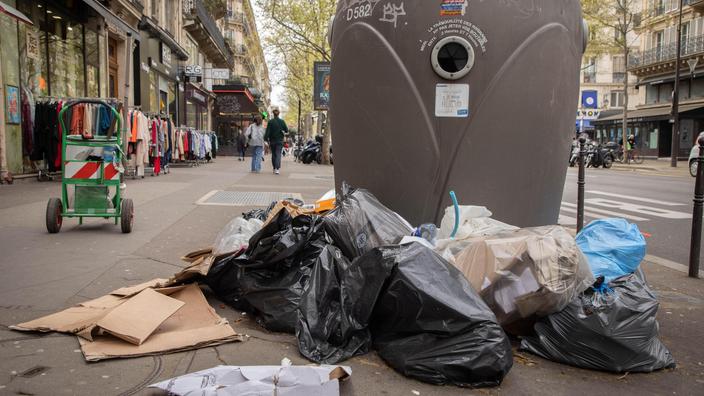
Article published just today. Apparently the mayor of Paris wants to treat the trash problem that some in this thread refuse to see. I don't believe he will achieve anything, because he's been sharing power with the former mayor for more than 10 years, so it's unlikely he will solve the problem he's responsible for, but at least it shows that I am not making things up as some people in this thread have malignly accused me of.

Quote:
Garbage and bulk items... How Emmanuel Grégoire plans to tackle the 1000 "black spots" of sanitation in Paris


A map of the "1000 black spots" in Paris will be published in the coming weeks.

Le Figaro
May 12, 2026

[...]

https://www.lefigaro.fr/conjoncture/ordu...ts-noirs-de-la-proprete-a-paris-20260512
__________________
New Axa – New Brisavoine
Reply With Quote
     
     
  #94  
Old Posted May 12, 2026, 5:32 PM
Yuri's Avatar
Yuri Yuri is offline
Registered User
 
Join Date: Sep 2008
Posts: 6,156
Despite enjoying speaking French, Paris has never really had an wow effect on me. I've been there three times and never felt carried away by it. Tthe excess of cars, noise and the lack of greenery (felt so arid compared to London) were the downers.

Paris is changing so much there which is very surprising for such conservative city and culture. Paris is the latest urbanist darling and it's bizarre the way it's been protrait here.

If you enjoy good urban news, have fun:

How to (Quickly) Build a Cycling City - Paris

Video Link


Paris' Grand Plan to Become Europe's Greenest City

Video Link


How Paris Reduced Traffic by 50% in 20 Years

Video Link


How to Find Space for Bike Lanes in Clogged Cities

Video Link


The Peaceful Pedestrian Plazas of Paris: Lessons for Your City

Video Link


Why Paris is Doubling the Size of its Metro?

Video Link


How to Become a Bike-Friendly City? Lessons from Paris

Video Link


Parisification - Why Paris is THE City to Watch in Urbanism

Video Link


The huge urban forest in the heart of Paris

Video Link


Paris is greening its heart—literally. The city inaugurated a bold transformation of this square

Video Link


Paris: Paving the Way for Green Spaces in a Concrete Jungle

Video Link
__________________
London - São Paulo - Rio de Janeiro - Londrina - Frankfurt
Reply With Quote
     
     
  #95  
Old Posted May 12, 2026, 8:15 PM
New Brisavoine New Brisavoine is offline
Registered User
 
Join Date: Nov 2007
Posts: 4,753
Quote:
Originally Posted by Yuri View Post
Tthe excess of cars, noise and the lack of greenery (felt so arid compared to London) were the downers.
I chuckle as I saw your comment while I was seated here (I took the picture after reading your comment):


And this is the path I took to return to my apartment for dinner. And I live in the city of Paris proper, not in the suburbs!


Your comment is typical of tourists who stay in the most central areas and have no idea of the amount of greenery there is actually in Paris. It's like a tourist in LA who would only stay in Beverly Hills and West Hollywood and would conclude that there is no nature in LA.

In reality, once you enlarge your scope, Paris is like this, i.e. one of the European cities with the most parks, woods, and forests:


It's one of the reasons why I stay in Paris. There is no other city in France that has as many parks, woods, forests. Even in Europe, there are very few cities with more green spaces than Paris (Berlin, Stockholm, but not much more). London has some centrally located parks, which is why people have this image of London as a green city, but apart from the 3 central parks (St James, Hyde Park, and Regent's Park), there is far less greenery than in Paris. And their parks are also smaller than what we have in Paris.

The reason for this abundance of green areas here is because Paris has been the center of the French monarchy since the 12th century, and the kings have preserved the forests that existed before the year 1000 to use as their pleasure grounds (game hunting). Other cities have cut all (or most of) their Medieval forests. No other French city has the amount of green space that Paris has, but of course you're gonna have to move a little bit beyond Le Marais or St Germain des Prés to see it.

Quote:
Originally Posted by Yuri View Post
Paris is the latest urbanist darling and it's bizarre the way it's been protrait here.
These people use Paris as an abstract object to bolster their propaganda. The vision of Paris that I read in Anglo-Saxon medias is far removed from the reality of the city that I experience everyday. It's a bit the same as how Mao's China was presented in the French media in the 1970s. The Western students back then used Mao as some sort of idealization of Communism, a Communism that would have succeeded (unlike Soviet Communism), but they really weren't interested in the actual situation on the ground in China, which was miserable and not the rosy picture they presented.

Well there's a bit of that in the Anglo-Saxon medias these past years when it comes to Paris. They use it as an "example" of a city that would have succeeded in a bicycle and urban revolution, when in reality the situation on the ground is far removed from that. But it doesn't matter, they don't live here, they don't have to live with what we actually experience everyday. Paris is only an abstract idea to bolster their own propaganda at home. It's used only to make a point.

Quote:
Originally Posted by Yuri View Post
How to (Quickly) Build a Cycling City - Paris
Bullshit propaganda from the Paris city hall. In reality, the % of people using a bicycle to go work is still very small (around 6%). Also, cyclists complain that the bike lanes in Paris are ill conceived and dangerous. Also, since the streets are not properly maintained and there is lack of supervision everywhere, there are now many potholes everywhere, which is very dangerous for cyclists (an increasing number of accidents take place every year). Last but not least, the city of Paris controls only a small territory, and the rest of Greater Paris is certainly not a "cycling city" (well, even Paris proper isn't, but the rest of Greater Paris is even less).

Quote:
Originally Posted by Yuri View Post
Paris' Grand Plan to Become Europe's Greenest City
Again, bullshit propaganda. As I've already explained, more trees are cut than new trees planted. Whistle blowers who follow this subject have demonstrated how the city statistics are being faked (for example by planting some shrubs along the Périphérique ring road and counting them as "trees"). The reality that we can all observe is that the parks are very badly maintained now, because they don't water the lawns anymore due to Green extremist ideology, so after a few years the lawns become all threadbare and patchy. For example in the Parc Monceau, which used to be the most gorgeous park in Paris, and which now looks like a shadow of its former self (picture taken by me at the beginning of the Spring in 2022; it's only worse now).


Another example, the Pelouses de la Muette, which used to be a magnificent green space in English style by the Porte de la Muette in the 16th arrondissement. The city hall incredibly allowed a fun fair to set up camp there 2 months a year in the Autumn starting in 2008, and this is how it looked after 8 years.


And it's much worse now, it's become a dead zone really. This picture I took during Covid. Tell me, do you know any other European city that purposely destroys some of its most beautiful parks in such a way??? So spare us the bullshit about greenification and becoming the greenest city in Europe. We WERE already one of the greenest cities in Europe, all we had to do was maintaining what we had, instead of destroying it.


Quote:
Originally Posted by Yuri View Post
How Paris Reduced Traffic by 50% in 20 Years
Again, bullshit propaganda from the city hall. They measure it only in some very central areas. Of course if you block an avenue to car traffic (like Rue de Rivoli), it reduces traffic. Like duh! But the reality is traffic gets detoured to less centrally located areas, and overall there isn't less traffic in Greater Paris. If anything, it has just made the life of people more complicated by forcing them to use detours and longer routes. And the people in the suburbs must endure more car traffic due to the selfish inner Parisians. A bit as if Manhattan had its own mayor who blocked car traffic and forced Brooklyn, Queens, and Bronx to endure more car traffic due to the selfishness of Manhattan residents.

Quote:
Originally Posted by Yuri View Post
The Peaceful Pedestrian Plazas of Paris: Lessons for Your City
There'd be LOTS to say about that one, but let me just laugh about this ludicrous claim. Again, it's just some Americans presenting an idealized image of Paris to make a point back at home, but their idealized view of Paris is extremely FAR from the reality on the ground as experienced everyday by us the guinea pigs who live in this supposed urban utopia. Starting with rising insecurity. Ask any woman in Paris if she'd like to enjoy one of these "plazas" alone after sunset...

Quote:
Originally Posted by Yuri View Post
Why Paris is Doubling the Size of its Metro?
This has ABSOLUTELY NOTHING to do with the Paris city hall. The Métro is not under the responsibility of the Paris city hall. The Métro is under the responsibility of the (right-wing) Paris Region. And as for the expansion of the Métro, it's not even a project led by the regional council, it's a national project that was started by... the most right-winger of all French presidents, Nicolas Sarkozy. It's one of the few good things he did during his tenure (he was from the suburbs, not from the city of Paris proper, so he understood better than the inner Parisians that the people of the suburbs needed more, less centrally oriented Métro lines).

Bottom line: in the Anglophone world, Paris, and France more generally, have always been used to make a point. They'll either present us as very good at something (like French women never gaining weight and always staying classy), or very bad at something (like the French not working enough and having a stagnant economy), just to make a point back home. They are not interested in the actual reality of life here (French women are not as perfect as they portray them, and the French economy is not as bad as they portray it, and the French work more than in the cliché). France/Paris is just used as an abstract thing to make a point.

In a way we should feel proud about it. There is no other country that is used in such a way in the Anglophone world, which proves that we must mean a lot to them.

__________________
New Axa – New Brisavoine
Reply With Quote
     
     
  #96  
Old Posted May 12, 2026, 8:23 PM
Crawford Crawford is offline
Registered User
 
Join Date: Nov 2003
Location: Brooklyn, NYC/Polanco, DF
Posts: 34,695
Ok, this is all absurd.

Paris proper does not have a lot of greenery. And Paris was always a gritty city. And it has never been more livable. The boulevards used to be super-noisy and chaotic with all the diesel cars and motorbikes. The public sphere is vastly better than 20 years ago.
Reply With Quote
     
     
  #97  
Old Posted May 12, 2026, 8:57 PM
mousquet's Avatar
mousquet mousquet is offline
Moderator
 
Join Date: Jan 2011
Location: Greater Paris, France
Posts: 5,086
Quote:
Originally Posted by Yuri View Post
How to (Quickly) Build a Cycling City - Paris
Uhh, it may be exciting to a lot of people, it is certainly not quick.
La Fayette and Charenton streets on my mind. It took something like 10 years for them to set up their cycling lanes. It was a hellish mess for the whole time.
And there are quite more instances of that kind.

Of course, the thing is urban planners have to work on the consequences on traffic over an entire area and beyond, which definitely causes headaches to them.
There are pros and cons, but it's nothing quick anyway.

And sometimes, the result is not satisfying. Like cycling lanes on boulevard de Magenta that are on the sidewalks. Pedestrians are constantly in conflict with cyclists.
They couldn't do any better because of traffic on the boulevard which is an important axis within the central city, that's not wide enough for actual separated cycling lanes.

Cycling traffic on boulevard de Sébastopol is hard to handle. Lanes are too narrow and two-way.
I bet Brisavoine never figured it out, cause he probably doesn't know what a bicycle is.

Quote:
Originally Posted by Crawford View Post
And Paris was always a gritty city.
Paris has never been "gritty". It is the prettiest city in the world.
Reply With Quote
     
     
  #98  
Old Posted May 12, 2026, 9:02 PM
New Brisavoine New Brisavoine is offline
Registered User
 
Join Date: Nov 2007
Posts: 4,753
Quote:
Originally Posted by Crawford View Post
Paris proper does not have a lot of greenery.
Paris proper has 5,925 acres of gardens, parks, and woods. That's 23% of the municipal territory of Paris proper.

https://fr.wikipedia.org/wiki/Liste_des_espaces_verts_de_Paris


And there is much more beyond the municipal borders.

Quote:
Originally Posted by Crawford View Post
The boulevards used to be super-noisy and chaotic with all the diesel cars and motorbikes.
The boulevards are as noisy as they ever were. You want me to record a video tomorrow?

Frankly the things one has to read here! Do you guys really believe what you say, or is it just a game?

There are only two streets/expressways (just TWO, in a large city like Paris) where there are either no more cars (Voies sur Berges, closed to car traffic in the central area) or very few cars left (Rue de Rivoli). That's the ones you always see in those videos about Paris or in articles lauding Paris's urban "revolution". The rest of the avenues are as busy and noisy as ever.
__________________
New Axa – New Brisavoine
Reply With Quote
     
     
  #99  
Old Posted May 12, 2026, 9:07 PM
Yuri's Avatar
Yuri Yuri is offline
Registered User
 
Join Date: Sep 2008
Posts: 6,156
Quote:
Originally Posted by Crawford View Post
Ok, this is all absurd.

Paris proper does not have a lot of greenery. And Paris was always a gritty city. And it has never been more livable. The boulevards used to be super-noisy and chaotic with all the diesel cars and motorbikes. The public sphere is vastly better than 20 years ago.
Here’s right in the Bois de Boulogne and claiming that’s inside Paris, when it’s beyond the ring road. Paris that I’m interested it’s the inner arrondissements, both as a tourist and also as a citizen if I decided to move there. Heck, even here in SP I hardly ever leave Downtown, so why on Earth I’d go to Paris suburbs if I lived there?

Paris got hundreds and hundreds of new gardens, new trees by removing car parking. Few cities have improved more in a such planned way. We’ve documented improvements in several cities here, but Paris is a special case as it was by design.

And I don’t go into petty politics (“I don’t like the mayor because she’s a communist”). That’s silly and more important, boring. I couldn’t care less about the ideology of French mayors. Propaganda or not, Parisians are aproving. It’s been ruled by this group for almost 30 years now.
__________________
London - São Paulo - Rio de Janeiro - Londrina - Frankfurt
Reply With Quote
     
     
  #100  
Old Posted May 12, 2026, 9:12 PM
New Brisavoine New Brisavoine is offline
Registered User
 
Join Date: Nov 2007
Posts: 4,753
Quote:
Originally Posted by mousquet View Post
I bet Brisavoine never figured it out, cause he probably doesn't know what a bicycle is.
I used to bicycle in Paris LONG BEFORE it became a trend, back when there were no bicycle lanes and very few people used a bike. Mountain bike, that's what I used. And it was never a problem to ride my bike among car traffic. Contrary to the urban legend, Paris car drivers are actually, in my experience, rather respectful. The only people that I had to worry about were the taxi drivers. These one respected no one, and certainly not someone riding a bicycle.

I've stopped using a bicycle now both because I cannot stand the morons who use their bicycles with total lack of respect for other people, and also because I don't like to follow trends. Back when I did it, it was wild and you felt unique. Now it feels like you're one among a herd of sheep, and I don't like it. Also, I personally don't like bicycle lanes, I find them dangerous, there's always a risk you could run into a pedestrian or another bicycle. I prefer the regular car lanes, which are larger, completely separated from pedestrians, and like I've said car drivers respect you so I never worried about being overrun by a car (except the taxis as I've said).
__________________
New Axa – New Brisavoine
Reply With Quote
     
     
This discussion thread continues

Use the page links to the lower-right to go to the next page for additional posts
 
 
Reply

Go Back   SkyscraperPage Forum > Discussion Forums > City Discussions
Forum Jump


Forum Jump


All times are GMT. The time now is 1:45 PM.

     
SkyscraperPage.com - Privacy Statement - Top

Powered by vBulletin® Version 3.8.7
Copyright ©2000 - 2026, vBulletin Solutions, Inc.