HomeDiagramsDatabaseMapsForum About
     

Go Back   SkyscraperPage Forum > Discussion Forums > City Discussions


Reply

 
Thread Tools Display Modes
     
     
  #81  
Old Posted Jul 23, 2025, 9:51 PM
chris08876's Avatar
chris08876 chris08876 is offline
NYC/NJ/Miami-Dade
 
Join Date: Jul 2013
Location: Great State of NJ
Posts: 49,365
Around Western Somerset County is where you start to see the drop in density followed by most of Hunterdon County with the exception of communities bordering the river, on the PA and NJ side (Delaware).

Sussex and Warren are generally very low.

Way to think of the NY metro from a density perspective or visualize it for quick reference is if you draw an acute angle from Center City in Philly and extend it up the point where it touches the GWB Bridge, a very large bulk of the density peak follows that angle. In that respect, the metro area and most of Bos-Wash follows a similar path.

The whole city of LA could fit in North Eastern NJ and that section still has a higher population within 550 sq-miles than all of LA.

NJ is all about concentrated density and the surrounding areas often bog down its density numbers. Reference Ocean County as an example.

Those 2030 figures will be interesting as the state is growing quite fast.

We are surely to see some increases density wise for some of the fringes due to the housing mandate. And I can tell you, multi-family housing is rising in the fringe suburbs. Developments truly under the radar.
Reply With Quote
     
     
  #82  
Old Posted Jul 23, 2025, 11:54 PM
Docere Docere is online now
Registered User
 
Join Date: Jul 2014
Posts: 8,811
Leipzig has the Leipzig Riverside Forest and Neuseenland, where old mines are being converted into artificial lakes (to be completed in 2060, wonder if I'll still be around!)
Reply With Quote
     
     
  #83  
Old Posted Jul 24, 2025, 2:22 PM
iheartthed iheartthed is offline
Registered User
 
Join Date: Oct 2009
Location: New York
Posts: 11,932
Quote:
Originally Posted by chris08876 View Post
NJ is all about concentrated density and the surrounding areas often bog down its density numbers. Reference Ocean County as an example.
New Jersey is also the most densely populated state in the country. New Jersey had to be far more proactive with land management than other states because it could foresee the state quickly running out of undeveloped land.
Reply With Quote
     
     
  #84  
Old Posted Jul 24, 2025, 10:30 PM
chris08876's Avatar
chris08876 chris08876 is offline
NYC/NJ/Miami-Dade
 
Join Date: Jul 2013
Location: Great State of NJ
Posts: 49,365
Quote:
Originally Posted by iheartthed View Post
New Jersey is also the most densely populated state in the country. New Jersey had to be far more proactive with land management than other states because it could foresee the state quickly running out of undeveloped land.
Its suprisingly organized, the urban sprawl. Might not appear from the ground level but there is structure to the madness, especially around Middlesex and Somerset County. This differs from the unorganized and nightmare sprawl patterns of the South. Atlanta as a case study.

Not many few states do urban sprawl well. I think NJ does to an extent but the best and most organized sprawl goes to California. Its compact, and land does not go to waste and its not super spagetti in nature.

Frankly, I think even Pheonix does well in this respect. Grid grid grid and the edges end at one point, again, grid or box format.

NJ has a TON of land in the South though. Yes there are the Pine barrens and those never should be touced but as expansion of the greater Philly area, South NJ has a lot of opportunity.

Its interesting to see sprawl patterns via aerial maps. There is some structure to the madness. In some situations.

The future for NJ will be in the burbs though. Tons of multi-family rising and we are bound to see the burbs increase in density (and the traffic pain )

I only wish PA cities grew faster. Compared to NJ, PA is falling through the cracks.
Reply With Quote
     
     
  #85  
Old Posted Jul 25, 2025, 2:22 AM
MonkeyRonin's Avatar
MonkeyRonin MonkeyRonin is offline
¥ ¥ ¥
 
Join Date: Sep 2006
Location: Vancouver
Posts: 10,617
This population mapping tool has been popular on the Canadian section lately. I can't vouch for the accuracy, but, for what it's worth here's a population comparison of each of Germany and Canada's 3 largest cities as measured from a 3km radius of each city centre (note: I played around a bit with the location to get the largest number for each; omitting water and large parks as much as possible).

https://www.maps.ie/population/

Berlin


Munich


Hamburg


Toronto


Montreal


Vancouver
__________________
Reply With Quote
     
     
  #86  
Old Posted Jul 25, 2025, 2:58 PM
Yuri's Avatar
Yuri Yuri is offline
Registered User
 
Join Date: Sep 2008
Posts: 6,157
Hamburg and München have relatively low densities at their old cities. The densest hoods are around it.

We should note that Germany and Britain have the lowest urban densities in the entire Western Europe.
__________________
London - São Paulo - Rio de Janeiro - Londrina - Frankfurt
Reply With Quote
     
     
  #87  
Old Posted Jul 25, 2025, 3:05 PM
MolsonExport's Avatar
MolsonExport MolsonExport is offline
Touching grass everyday.
 
Join Date: Oct 2003
Location: Otisburgh
Posts: 51,145
I'd say that those inner-city density graphs confirm the position advocated in the thread title. That is, for the inner cities.

Having travelled extensively in Germany (as well as of course, in Canada), our three biggest cities (Toronto, Montreal, Vancouver) certainly hold their own on inner-city density, relative to Germany's three biggest cities.

I do find that medium and small cities in Germany are leagues more dense than their most of their Canadian counterparts. Our smaller cities are sprawling empires of stroads and banal big box barf.

German cities were obliterated in WW2, and many English cities had sections laid to waste by the Luftwaffe. I wonder if that is the primary reason for the relatively low inner city densities of Germany and the UK (vis-a-vis the rest of Europe)?
__________________
The whole problem with the world is that fools and fanatics are always so certain of themselves, and wiser people so full of doubts. (Bertrand Russell). Sweet Loretta fart thought she was a cleaner, but she was a frying pan. (John Lennon)
Reply With Quote
     
     
  #88  
Old Posted Jul 25, 2025, 3:13 PM
MolsonExport's Avatar
MolsonExport MolsonExport is offline
Touching grass everyday.
 
Join Date: Oct 2003
Location: Otisburgh
Posts: 51,145
At its peak in the 1990s, Kowloon Walled City was the most densely populated place on Earth, with an estimated 50,000 residents packed into a 6.4-acre area. This translates to a population density of roughly 1.9 million people per square kilometer, or 3.2 million per square mile.

Does anything come even remotely close nowadays? I heard that Manila (especially the Tondo district) is considered to rank as one of the most dense cities on earth.
__________________
The whole problem with the world is that fools and fanatics are always so certain of themselves, and wiser people so full of doubts. (Bertrand Russell). Sweet Loretta fart thought she was a cleaner, but she was a frying pan. (John Lennon)
Reply With Quote
     
     
  #89  
Old Posted Jul 25, 2025, 3:39 PM
Yuri's Avatar
Yuri Yuri is offline
Registered User
 
Join Date: Sep 2008
Posts: 6,157
Quote:
Originally Posted by MolsonExport View Post
I'd say that those inner-city density graphs confirm the position advocated in the thread title. That is, for the inner cities.

Having travelled extensively in Germany (as well as of course, in Canada), our three biggest cities (Toronto, Montreal, Vancouver) certainly hold their own on inner-city density, relative to Germany's three biggest cities.

I do find that medium and small cities in Germany are leagues more dense than their most of their Canadian counterparts. Our smaller cities are sprawling empires of stroads and banal big box barf.

German cities were obliterated in WW2, and many English cities had sections laid to waste by the Luftwaffe. I wonder if that is the primary reason for the relatively low inner city densities of Germany and the UK (vis-a-vis the rest of Europe)?
But we are comparing much larger Canadian metro areas with German ones. Toronto urban area is over 7 million people; Berlin is barely above 4 million. Hamburg is at 2.5 million and München 2 million.

Regarding the tool's accuracy, I found 373,268 inh. in 27.7 km2 in central Berlin (Mitte, Gesundbrunnen and Prenzlauer Berg quarters). 13,475 people/km2. Hamburg with 292,220 inh. in 27.2 km2 and 10,743 inh./km2 density. München 346,989 inh., 27.9 km2 and 12,437 inh./km2. Frankfurt 216,448 inh., 25.9 km2 and 8,357 inh./km2.

And the Canadians: Montreal (3 arrondissements) 235,386 inh., 28.5 km2 and 8,259 inh./km2. Vancouver 260,610 inh., 26.7 km2 and 9,761 inh./km2. For Toronto it's too complicated. Old Toronto gets 841,236 inh., 97.1 km2 and 8,663 inh./km2 and Vancouver 706,273 inh., 115.2 km2 and 6,131 inh./km2.
__________________
London - São Paulo - Rio de Janeiro - Londrina - Frankfurt

Last edited by Yuri; Jul 25, 2025 at 4:17 PM.
Reply With Quote
     
     
  #90  
Old Posted Jul 25, 2025, 4:14 PM
James Bond Agent 007's Avatar
James Bond Agent 007 James Bond Agent 007 is online now
Posh
 
Join Date: Aug 2003
Location: Kansas City, MISSOURI
Posts: 23,629
Does anyone want to use that tool on the two areas I linked in this post below?

Can you draw rectangles instead of circles using that tool? Might be more helpful that way.
Quote:
Originally Posted by James Bond Agent 007 View Post
We could also do a visual inspection.

Hamburg residential area at 53.56 degrees north, scale at 1000 feet.

Edmonton residential area at 53.42 degrees north, scale at 1000 feet.

The 500 foot scale bars aren't quite the same but they're close. Just eyeballing it, the densities appear to be reasonably similar.

It's not Hamburg's densest area, while the Edmonton area is fairly typical for Edmonton. But Edmonton has lots of downtown highrises while Hamburg's densest areas are characterized more by rowhouses and mid-rises. So I think the density of Canada's cities get to approximate Germany's by building lots of highrises.
__________________
You fill me with inertia.
Reply With Quote
     
     
  #91  
Old Posted Jul 25, 2025, 4:23 PM
montréaliste montréaliste is offline
Registered User
 
Join Date: Jun 2010
Location: Chambly, Quebec
Posts: 2,228
Quote:
Originally Posted by MolsonExport View Post
At its peak in the 1990s, Kowloon Walled City was the most densely populated place on Earth, with an estimated 50,000 residents packed into a 6.4-acre area. This translates to a population density of roughly 1.9 million people per square kilometer, or 3.2 million per square mile.

Does anything come even remotely close nowadays? I heard that Manila (especially the Tondo district) is considered to rank as one of the most dense cities on earth.
That’s a lot of Cantonese chow mein right there.
Reply With Quote
     
     
  #92  
Old Posted Jul 25, 2025, 4:29 PM
Nouvellecosse's Avatar
Nouvellecosse Nouvellecosse is online now
Volatile Pacivist
 
Join Date: Aug 2005
Location: Nova Scotia
Posts: 11,224
Quote:
Originally Posted by Yuri View Post
But we are comparing much larger Canadian metro areas with German ones. Toronto urban area is over 7 million people; Berlin is barely above 4 million. Hamburg is at 2.5 million and München 2 million.
I've always found it fascinating how a country with Germany's population size and density has no really large cities. It's a country with over twice the population of Canada in a land area smaller than 7 out of 10 provinces.
__________________
"The reasonable man adapts himself to the world; the unreasonable one persists in trying to adapt the world to himself. Therefore all progress depends on the unreasonable man." - George Bernard Shaw
Don't ask people not to debate a topic. Just stop making debatable assertions. Problem solved.

Last edited by Nouvellecosse; Jul 25, 2025 at 5:52 PM.
Reply With Quote
     
     
  #93  
Old Posted Jul 25, 2025, 4:44 PM
James Bond Agent 007's Avatar
James Bond Agent 007 James Bond Agent 007 is online now
Posh
 
Join Date: Aug 2003
Location: Kansas City, MISSOURI
Posts: 23,629
Quote:
Originally Posted by James Bond Agent 007 View Post
Does anyone want to use that tool on the two areas I linked in this post below?

Can you draw rectangles instead of circles using that tool? Might be more helpful that way.
Nevermind, I just did it myself. You can draw a polygon.

Since it shows the area of the polygon you draw I decided to go to some new suburbs of Toronto instead of Edmonton. I only did Edmonton before because it's at a similar latitude as Hamburg, which made visual inspection more apples-to-apples. But with this tool it doesn't matter.

Here is the area of Hamburg. 12.458 sq km with 51,674 people:


Here is the area of Brampton. 12.468 sq km with 54,371 people:


Both are basically suburban, largely residential areas outside a main city. And the Toronto one is denser.
__________________
You fill me with inertia.
Reply With Quote
     
     
  #94  
Old Posted Jul 25, 2025, 4:58 PM
The North One's Avatar
The North One The North One is offline
Registered User
 
Join Date: Sep 2009
Posts: 5,896
Quote:
Originally Posted by Crawford View Post
Here are some pics of the only fringe area in the NYC metro experiencing considerable growth. I would not call this low-density development. Also you will notice very hard boundaries between development and protected land:

https://www.dailymonroe.com/news/birdseye-view-of-the-new-acres-enclave-development

This is in Orange County, NY, a super low density county. This is easily the fastest growing fringe area in the tristate region. There are tens of thousands of units of such housing planned, in Orange County, NY (Kiryas Joel area) and in Ocean County, NJ (Lakewood area). Outside this you'll find basically zero fringe new construction (except for a random replacement house in the woods somewhere).
Kiryas Joel is absolutely hideous. It's also a deliberate takeover of the area by religious extremists from Brooklyn. An extreme outlier. Definitely not what you can call typical NYC sprawl.
__________________
Spawn of questionable parentage!

Last edited by The North One; Jul 26, 2025 at 1:48 AM.
Reply With Quote
     
     
  #95  
Old Posted Jul 25, 2025, 5:45 PM
Yuri's Avatar
Yuri Yuri is offline
Registered User
 
Join Date: Sep 2008
Posts: 6,157
Quote:
Originally Posted by MolsonExport View Post
At its peak in the 1990s, Kowloon Walled City was the most densely populated place on Earth, with an estimated 50,000 residents packed into a 6.4-acre area. This translates to a population density of roughly 1.9 million people per square kilometer, or 3.2 million per square mile.

Does anything come even remotely close nowadays? I heard that Manila (especially the Tondo district) is considered to rank as one of the most dense cities on earth.
I think it will depend on how large you want the area to be. Manila has 1,846,513 inh. within 42 km2 for a 44,000 inh./km2 density. To compare with the German and Canadian circles, I added up all districts north of the river: 1,365,922 inh. within 26.8 km2 for a 50,967 inh./km2 density.

Kowloon is even denser: 2,232,339 inh. within 47 km2 for a 47,547 inh./km2 density. Trimming out the edges 2,031,527 inh. within 30.6 km2 for a 66,390 inh./km2 density (!!!). Probably the highest in the world in such area.

Hong Kong Island northern shore: 872,133 inh. within 25 km2 for a 34,885 inh./km2 density, much lower than Kowloon. I guess the amount of commercial buildings helps to decrease it.

Shanghai (two central districts): 1,419,528 inh. within 43.9 km2 for a 32,335 inh./km2 density. We cannot trim out because the edges are even denser than the very core.

Tianjin (two central districts): 908,119 inh. within 27.4 km2 for a 33,143 inh./km2 density.

Guangzhou: 1,229,598 inh. within 27.3 km2 for a 45,040 inh./km2 density. Much denser than the others.

Shenzhen: 893,709 inh. within 25 km2 for a 35,748 inh./km2 density.

Chinese cities had huge drops in central areas between 2010 and 2020 census. Probably it's their clearance/urban renewal projects.

Southeast Asia only Vietnam gets very high density:

Saigon: 902,221 inh. within 26.7 km2 for a 33,791 inh./km2 density.

Hanoi: 968,716 inh. within 28.8 km2 for a 33,636 inh./km2 density.


Quote:
Originally Posted by Nouvellecosse View Post
I've always found it fascinating how a country with Germany's population size and density has so no really large cities. It's a country with over twice the population of Canada in a land area smaller than 7 out of 10 provinces.
They would only have the Rhein-Ruhr area with roughly 12 million people, but it's fact a collection of cities, with at least six very strong nodes.

Ruhr has about 6 million and Essen, Dortmund and Duisburg are roughly equals and there are several independent smaller nodes (Gelsenkirchen, Oberhausen, Bochum, etc.).

Düsseldorf has centers around 1.8 million around it, Köln 2.5 mllion and Bonn 600k. Very fractured.

Berlin is actually their big city but the metro area is yet to reach 5 million people.

__________________
London - São Paulo - Rio de Janeiro - Londrina - Frankfurt
Reply With Quote
     
     
  #96  
Old Posted Jul 25, 2025, 5:57 PM
MolsonExport's Avatar
MolsonExport MolsonExport is offline
Touching grass everyday.
 
Join Date: Oct 2003
Location: Otisburgh
Posts: 51,145
Quote:
Originally Posted by Yuri View Post
But we are comparing much larger Canadian metro areas with German ones. Toronto urban area is over 7 million people; Berlin is barely above 4 million. Hamburg is at 2.5 million and München 2 million.

Regarding the tool's accuracy, I found 373,268 inh. in 27.7 km2 in central Berlin (Mitte, Gesundbrunnen and Prenzlauer Berg quarters). 13,475 people/km2. Hamburg with 292,220 inh. in 27.2 km2 and 10,743 inh./km2 density. München 346,989 inh., 27.9 km2 and 12,437 inh./km2. Frankfurt 216,448 inh., 25.9 km2 and 8,357 inh./km2.

And the Canadians: Montreal (3 arrondissements) 235,386 inh., 28.5 km2 and 8,259 inh./km2. Vancouver 260,610 inh., 26.7 km2 and 9,761 inh./km2. For Toronto it's too complicated. Old Toronto gets 841,236 inh., 97.1 km2 and 8,663 inh./km2 and Vancouver 706,273 inh., 115.2 km2 and 6,131 inh./km2.
The Hamburg Metropolitan Region has a population of over 5.1 million. The broader Munich Metropolitan Region is home to about 6.2 million people.
As of the 2021 Canadian census Montreal had a population of 1,762,949, and a metropolitan population of 4,291,732.
__________________
The whole problem with the world is that fools and fanatics are always so certain of themselves, and wiser people so full of doubts. (Bertrand Russell). Sweet Loretta fart thought she was a cleaner, but she was a frying pan. (John Lennon)
Reply With Quote
     
     
  #97  
Old Posted Jul 25, 2025, 6:28 PM
Yuri's Avatar
Yuri Yuri is offline
Registered User
 
Join Date: Sep 2008
Posts: 6,157
Quote:
Originally Posted by MolsonExport View Post
The Hamburg Metropolitan Region has a population of over 5.1 million. The broader Munich Metropolitan Region is home to about 6.2 million people.
As of the 2021 Canadian census Montreal had a population of 1,762,949, and a metropolitan population of 4,291,732.
German metro areas are ridiculously wide. It's basically regions and not directly comparable. For instance, Hamburg urban area has only 2,627,000 inh. München, only 2,153,900. This Munich region is based the historical Bavaria (Bavaria state minus Franconia and Swabia). Source: http://citypopulation.de/en/germany/urbanareas/ . In comparison, Montreal urbanized area is surpassing 4 million now.

A more sensible metro area definition for Hamburg metro area (Hamburg and the 6 counties around it) has 3,362,960 inh. in 7,307 km2. Ssame size of official metro area definition of São Paulo. A very generous definition.

München (München plus 7 counties) gets 2,813,648 within 4,697 km2. Maps: http://citypopulation.de/en/germany/admin/

In comparison, Montreal metro area (plus Salaberry, Lachute, Joliette) has 4,731,935 within only 4,996 km2. Way more populated than both Hamburg and München.
__________________
London - São Paulo - Rio de Janeiro - Londrina - Frankfurt
Reply With Quote
     
     
  #98  
Old Posted Jul 25, 2025, 8:10 PM
Yuri's Avatar
Yuri Yuri is offline
Registered User
 
Join Date: Sep 2008
Posts: 6,157
Quote:
Originally Posted by Yuri View Post
I think it will depend on how large you want the area to be. Manila has 1,846,513 inh. within 42 km2 for a 44,000 inh./km2 density. To compare with the German and Canadian circles, I added up all districts north of the river: 1,365,922 inh. within 26.8 km2 for a 50,967 inh./km2 density.

Kowloon is even denser: 2,232,339 inh. within 47 km2 for a 47,547 inh./km2 density. Trimming out the edges 2,031,527 inh. within 30.6 km2 for a 66,390 inh./km2 density (!!!). Probably the highest in the world in such area.

Hong Kong Island northern shore: 872,133 inh. within 25 km2 for a 34,885 inh./km2 density, much lower than Kowloon. I guess the amount of commercial buildings helps to decrease it.

Shanghai (two central districts): 1,419,528 inh. within 43.9 km2 for a 32,335 inh./km2 density. We cannot trim out because the edges are even denser than the very core.

Tianjin (two central districts): 908,119 inh. within 27.4 km2 for a 33,143 inh./km2 density.

Guangzhou: 1,229,598 inh. within 27.3 km2 for a 45,040 inh./km2 density. Much denser than the others.

Shenzhen: 893,709 inh. within 25 km2 for a 35,748 inh./km2 density.

Chinese cities had huge drops in central areas between 2010 and 2020 census. Probably it's their clearance/urban renewal projects.

Southeast Asia only Vietnam gets very high density:

Saigon: 902,221 inh. within 26.7 km2 for a 33,791 inh./km2 density.

Hanoi: 968,716 inh. within 28.8 km2 for a 33,636 inh./km2 density.
The Indian subcontinent is another place to find ultra high densities spanning over very large areas:

New Delhi has 5,421,268 inh. within 206.6 km2 for a 26,240 inh./km2 density.

Bombay has 12,442,373 inh. within 499.8 km2 for a 24,895 inh./km2 density. It's municipality counts 3,085,411 within only 64 km2 for 48,210 inh./km2. That's more than Manila and Kowloon.

Dacca has 10,295,786 inh. within 304.3 km2 for a 33,834 inh./km2 density. The inner districts get 1,885,715 within the 27.3 km2 for 69,074 inh./km2. That's higher than Kowloon's central core over the same area.

Karachi has 16,649,947 inh. within 575 km2 of its inner districts for a 28,956 inh./km2 density. Higher than Bombay. Trimming out and Karachi is number one: 9,913,081 within only 171 km2 for 57,971 inh./km2. Higher than either Kowloon and Manila in an area 4x larger. There are four districts just north of their harbor where 2,345,935 within only 25 km2 for 93,837 inh./km2 (!!!). That's world's highest by a long shot.
__________________
London - São Paulo - Rio de Janeiro - Londrina - Frankfurt
Reply With Quote
     
     
  #99  
Old Posted Jul 26, 2025, 5:02 AM
shappy's Avatar
shappy shappy is offline
Registered User
 
Join Date: Mar 2004
Posts: 2,341
Quote:
Originally Posted by Yuri View Post
But we are comparing much larger Canadian metro areas with German ones. Toronto urban area is over 7 million people; Berlin is barely above 4 million. Hamburg is at 2.5 million and München 2 million.

Regarding the tool's accuracy, I found 373,268 inh. in 27.7 km2 in central Berlin (Mitte, Gesundbrunnen and Prenzlauer Berg quarters). 13,475 people/km2. Hamburg with 292,220 inh. in 27.2 km2 and 10,743 inh./km2 density. München 346,989 inh., 27.9 km2 and 12,437 inh./km2. Frankfurt 216,448 inh., 25.9 km2 and 8,357 inh./km2.

And the Canadians: Montreal (3 arrondissements) 235,386 inh., 28.5 km2 and 8,259 inh./km2. Vancouver 260,610 inh., 26.7 km2 and 9,761 inh./km2. For Toronto it's too complicated. Old Toronto gets 841,236 inh., 97.1 km2 and 8,663 inh./km2 and Vancouver 706,273 inh., 115.2 km2 and 6,131 inh./km2.
The 3KM radius is not perfect but it's a good estimate. There is just less control in defining the main central areas. Defining the areas allows a higher density yield because you're omitting adjacent districts with less population density. The 3KM value posted above gives 12,458 inh/km2 for Toronto. With a more selective sample area it should yield something slightly higher. Even still, the density number is lower than Berlin but certainly similar enough to compare. Actually, it's almost identical to Munich.
Reply With Quote
     
     
  #100  
Old Posted Jul 26, 2025, 5:57 AM
muppet's Avatar
muppet muppet is offline
if I sang out of tune
 
Join Date: Sep 2004
Location: London
Posts: 6,507
Quote:
Originally Posted by MolsonExport View Post
I'd say that those inner-city density graphs confirm the position advocated in the thread title. That is, for the inner cities.

Having travelled extensively in Germany (as well as of course, in Canada), our three biggest cities (Toronto, Montreal, Vancouver) certainly hold their own on inner-city density, relative to Germany's three biggest cities.

I do find that medium and small cities in Germany are leagues more dense than their most of their Canadian counterparts. Our smaller cities are sprawling empires of stroads and banal big box barf.

German cities were obliterated in WW2, and many English cities had sections laid to waste by the Luftwaffe. I wonder if that is the primary reason for the relatively low inner city densities of Germany and the UK (vis-a-vis the rest of Europe)?
Although UK had its city centres devastated in WWII, much of the drops in densities came with the slum clearances in the 50s and 60s. A wave of suburbia, tower-in-the-parks, malls and parkland.
Nowhere as low a density as North America, but befitting the country of origin for most of those ideas. UK built the first suburbs and the garden city concept.

A lot of that was reversed from the 1980s due to population pressure -UK is actually the 3rd densest in Europe now, behind Netherlands and Belgium, adding half a million people each year by the 2010s.
If England was a country it would be the world's 8th densest non city-state, ahead of Haiti, Philippines, Japan. However a large amount of parklands remain despite being so crowded.


Brits endure the smallest average house size in the West (818 sq ft/ 76 sq m), lower even than Japan, by a quarter.
It shows the dichotomy of high living density despite seeming much lower in overall density -and the lived experience not matching the stats.

The same for the optics -many singular houses are actually converted to flats, such is the profitability of some of the world's highest prices, national average at $471 per sq foot/ $5070 per sq m.

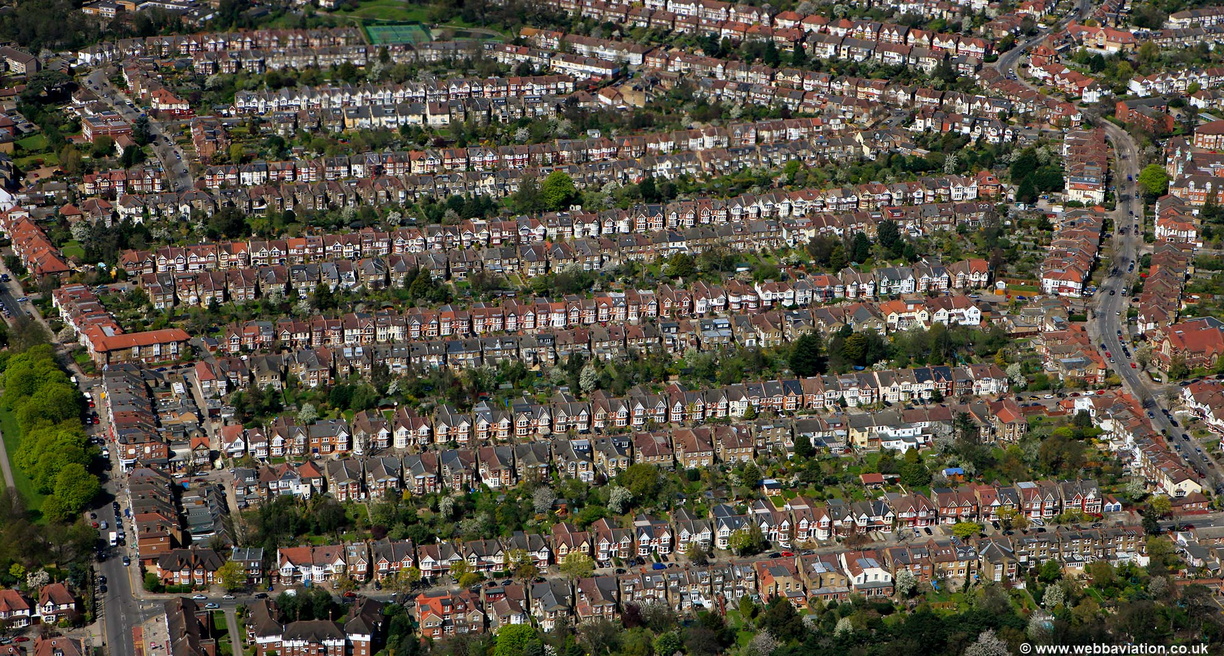
Normal suburban rowhomes/ duplexes - although crammed together, they're still large houses with 3-5 bedrooms and a garden, often with extensions round the back:


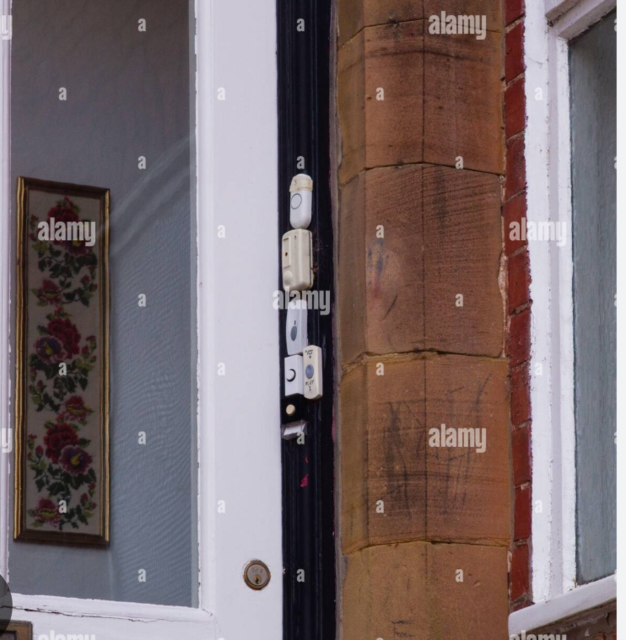
However, on closer inspection this is now a norm (London at least). Every time I visit any of my mates I have to try and remember which doorbell:


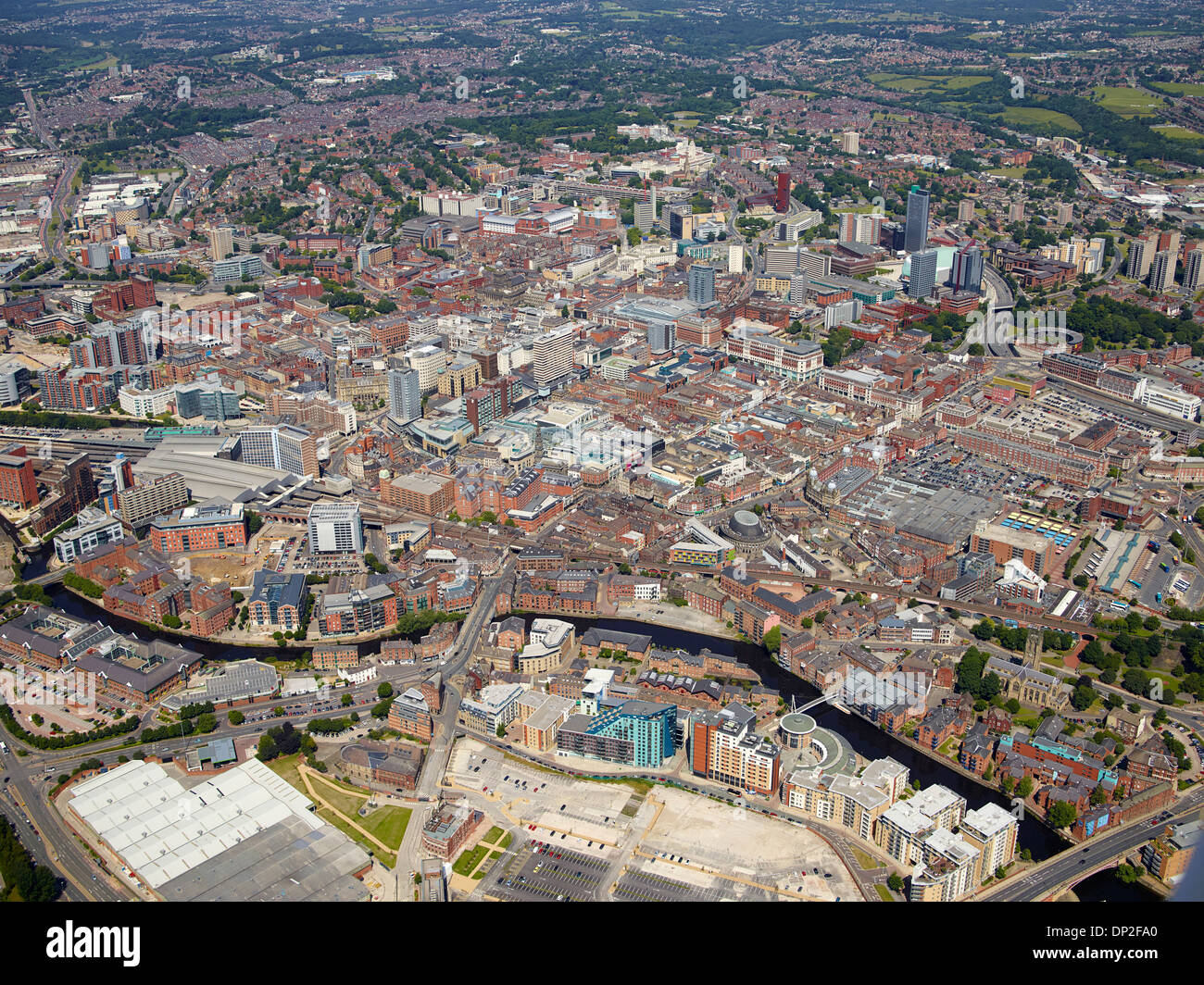
A typical city -dense centre having filled in the malls and carparks from the 70s and 80s (you can see some still remain).
But look beyond at the inner city ring -that's not countryside but parks within the city limits. I imagine Germany, with much rebuilt postwar, and the onus on efficient housing but also green space, would be similar.


Last edited by muppet; Jul 26, 2025 at 12:29 PM.
Reply With Quote
     
     
This discussion thread continues

Use the page links to the lower-right to go to the next page for additional posts
 
 
Reply

Go Back   SkyscraperPage Forum > Discussion Forums > City Discussions
Forum Jump


Forum Jump


All times are GMT. The time now is 5:39 AM.

     
SkyscraperPage.com - Privacy Statement - Top

Powered by vBulletin® Version 3.8.7
Copyright ©2000 - 2026, vBulletin Solutions, Inc.