HomeDiagramsDatabaseMapsForum About
     

Go Back   SkyscraperPage Forum > Regional Sections > Canada


Reply

 
Thread Tools Display Modes
     
     
  #5901  
Old Posted Nov 28, 2024, 12:39 AM
chowhou's Avatar
chowhou chowhou is offline
 
Join Date: Sep 2019
Posts: 3,944
Quote:
Originally Posted by ssiguy View Post
Catenary across the country or battery trains running thousands of km thru mountainous and rugged terrain are both laughably unrealistic.


https://www.scmp.com/news/china/article/...gh-speed-railway-network-remote-xinjiang


https://www.chinadaily.com.cn/a/202012/10/WS5fd17e61a31024ad0ba9afb9.html

• Video Link


Reply With Quote
     
     
  #5902  
Old Posted Nov 28, 2024, 3:15 AM
acottawa acottawa is offline
 
Join Date: Aug 2009
Posts: 18,941
He should have specified in a democratic country where leaders can’t spend obscene amounts of money on vanity projects hardly anyone uses. The China State railway is a trillion dollars in debt.
Reply With Quote
     
     
  #5903  
Old Posted Nov 28, 2024, 12:30 PM
Truenorth00 Truenorth00 is online now
 
Join Date: May 2017
Posts: 29,143
Quote:
Originally Posted by ssiguy View Post
I see that CP has just finished it's construction of 2 hydrogen refueling stations, one in Calgary and the other in Edmonton. These are using wind powered electrolysis and hence are considered "green" hydrogen. This the first step in creating a nationwide system to meet it's GHG emissions.

This is exactly what I said several times about VIA rail. As CP & CN continue to expand their hydrogen distribution networks, infrastructure, and rolling stock, VIA will be able to piggyback onto this infrastructure to de-carbonize it's network. Catenary across the country or battery trains running thousands of km thru mountainous and rugged terrain are both laughably unrealistic.

This also works well with Alberta's plan to expand it's hydrogen capabilities and potential which is why the potential Cal/Banff route is proposed to be hydrogen. With Spain's newly under development hi-speed hydrogen/battery bi-modal trains reaching speeds of up to 300 km/hr, it would be a great testing ground for Cal/Edm HSR. It could also easily be deployed in the Windsor/Quebec Corridor bringing HSR with zero emissions but without the huge initial cost of electrification and it's expensive upkeep especially in snow/ice prone Ont/Que.
You might be right about going across Canada. You're definitely wrong about the Quebec-Windsor corridor. Electrification is not more expensive than grade separation, the real cost for high speed projects. And electrification is compared on a TCO basis to other fuels over a fixed period (say 25 years). Given that setting up hydrogen infrastructure isn't free, that hydrogen as a fuel is much more expensive than electricity in Ontario and Quebec (which has cheap electricity), and that passenger traffic is an order of magnitude higher than freight, electrification will always win in these parts. And now that GO RER is electrifying, the idea that VIA HxR (which won't share much track with freight) is particularly ridiculous.

Quote:
Originally Posted by acottawa View Post
He should have specified in a democratic country where leaders can’t spend obscene amounts of money on vanity projects hardly anyone uses. The China State railway is a trillion dollars in debt.
At one point last decade, American freight companies did actually consider electrifying their mainlines. It's not as crazy as you'd imagine. It's oil prices dropping to under $80/bbl that stopped them. There's a business case where they would absolutely consider it. That said, doesn't mean government should be funding cross-country electrification. Industry can find a technology and business case that works for them. And anybody sharing tracks will follow suit.
Reply With Quote
     
     
  #5904  
Old Posted Nov 28, 2024, 1:11 PM
acottawa acottawa is offline
 
Join Date: Aug 2009
Posts: 18,941
Quote:
Originally Posted by Truenorth00 View Post
At one point last decade, American freight companies did actually consider electrifying their mainlines. It's not as crazy as you'd imagine. It's oil prices dropping to under $80/bbl that stopped them. There's a business case where they would absolutely consider it. That said, doesn't mean government should be funding cross-country electrification. Industry can find a technology and business case that works for them. And anybody sharing tracks will follow suit.
There might be certain lines where that would be feasible. Electrifying in Northern Ontario where high voltage lines, power stations and settlements with large electricity demands would be particularly prohibitive, as would redoing the tunnels, etc. to make room for overhead lines. It isn't like Siberia where the Soviets built large industrial industrial cities with huge power demands all along the Trans-Siberian.
Reply With Quote
     
     
  #5905  
Old Posted Nov 28, 2024, 5:42 PM
SFUVancouver's Avatar
SFUVancouver SFUVancouver is offline
 
Join Date: Dec 2006
Posts: 6,734
Quote:
Originally Posted by ssiguy View Post
Catenary across the country or battery trains running thousands of km thru mountainous and rugged terrain are both laughably unrealistic.
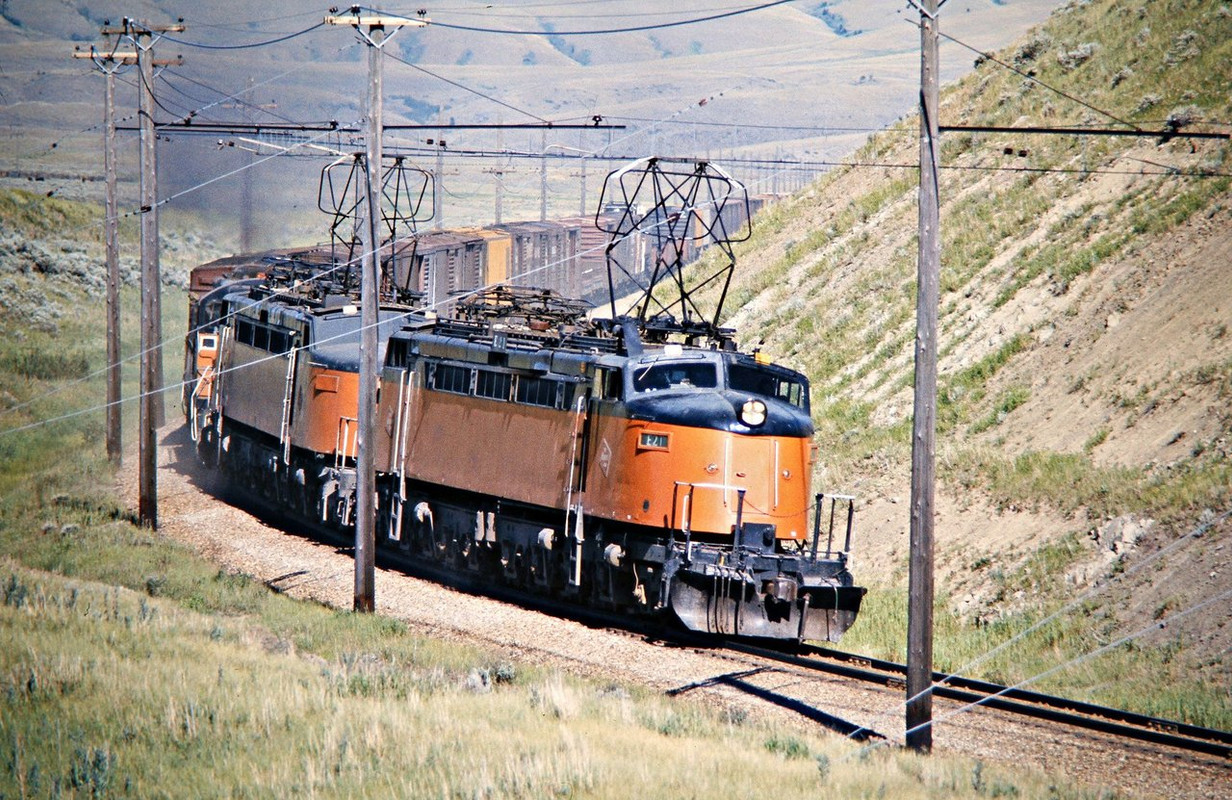
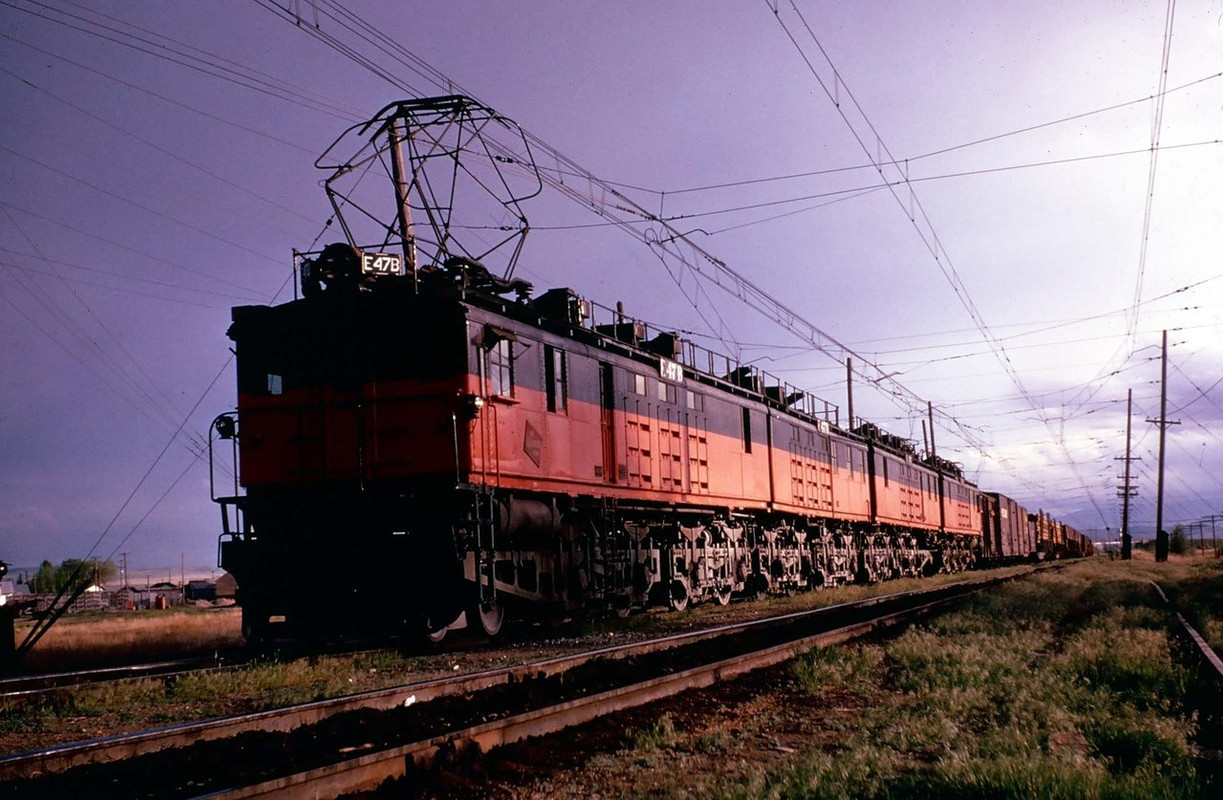
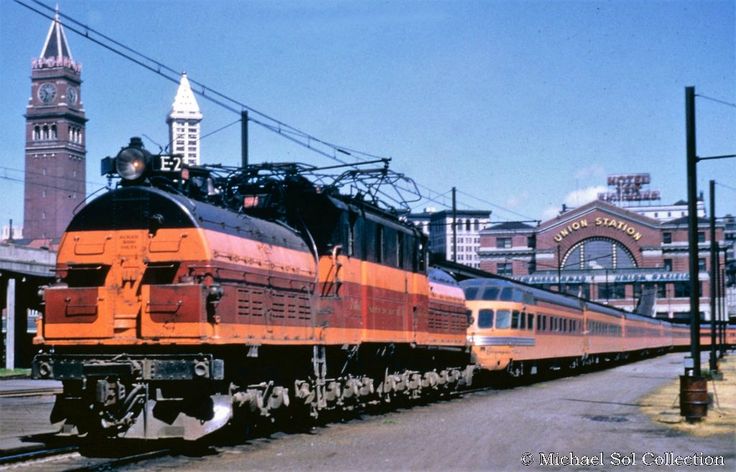
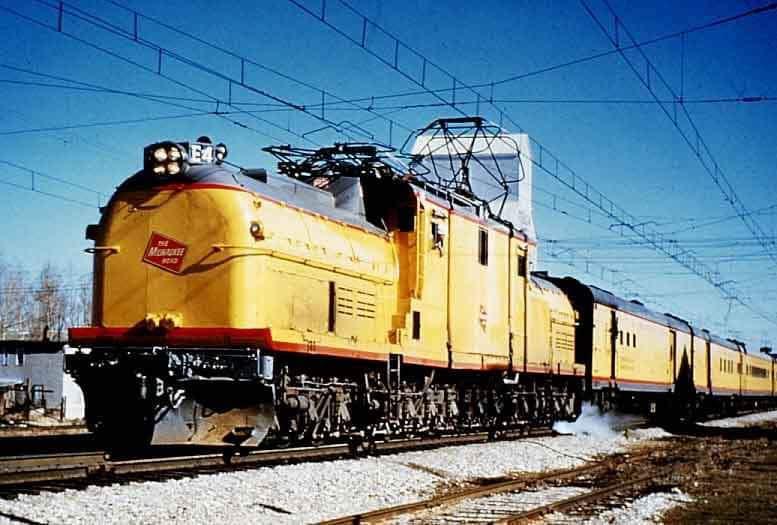
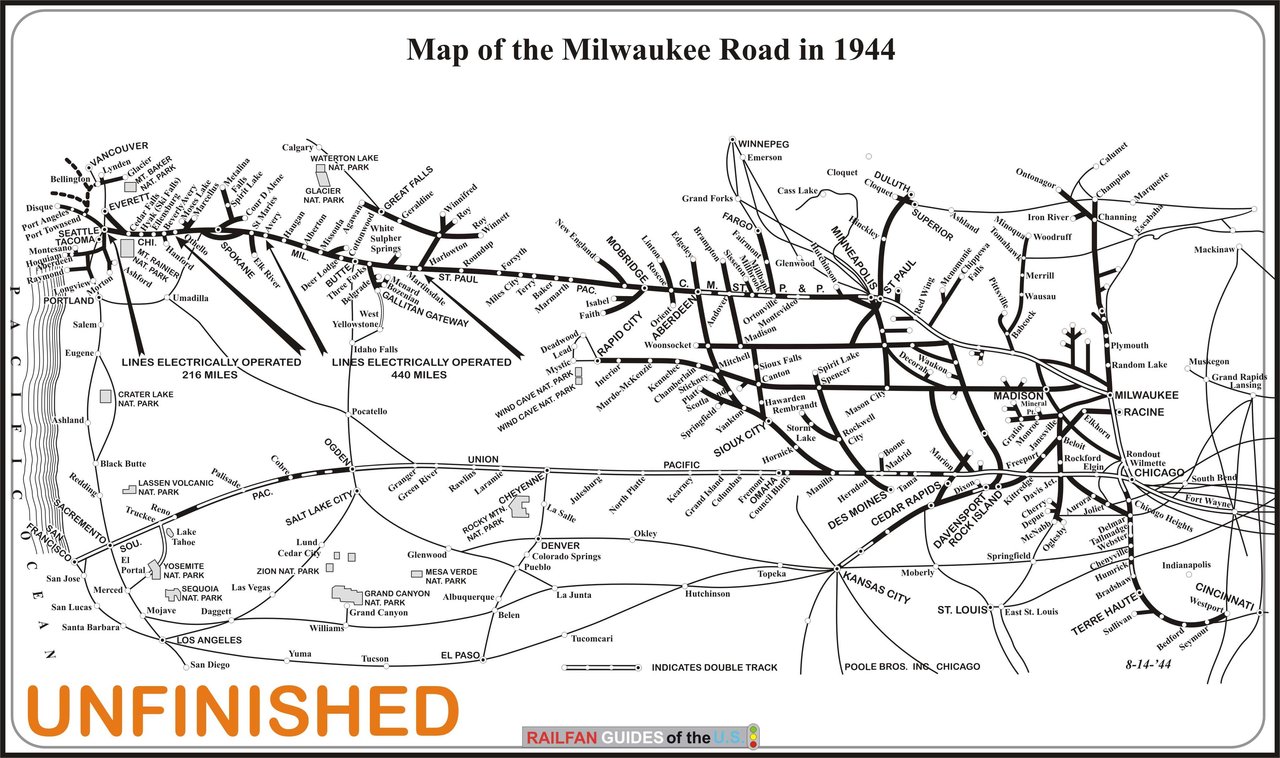
Laughably unrealistic? The Milwaukee Road railroad at one time had over 1,000 kilometres of electrified mainline track with freight and passenger service using catenaries across large sections of its mainline across the US Midwest, Rocky Mountains, and Pacific Northwest. And they achieved that by 1944 and operated long-distance electric service until 1974.

Unfortunately, the railway was poorly managed and hemorrhaged money through the late 60s and early 70s. Senior management, bafflingly, decided to juice their balance sheet by ripping out the overhead wires and selling the copper for scrap. They were busy replacing low-cost, low-maintenance electric traction on electrified lines, the only part of the railway that made money, incidentally, with diesels just as the 1973 OPEC oil crisis made burning oil expensive as F. This killed the railway dead by 1977.


Source


Source


Source


Source


Source

Last edited by SFUVancouver; Nov 28, 2024 at 7:30 PM.
Reply With Quote
     
     
  #5906  
Old Posted Nov 28, 2024, 6:30 PM
Nouvellecosse's Avatar
Nouvellecosse Nouvellecosse is online now
 
Join Date: Aug 2005
Posts: 11,377
Obviously it could be done. There's nothing making cross-country electrification infeasible from a purely technically standpoint. The only issue is whether the funds would be better spent on something else. If the goal is say, emissions reduction, then could you spend the same amount of money on something else and get a greater emissions reduction per dollar? Considering how efficient long hail freight rail already is, there's a good chance the money could get greater returns elsewhere such as shifting more long haul truck traffic onto existing rail services or developing lower emissions aviation fuel technology. Obviously things were different 75 years ago since alternatives like road and highway infrastructure were much poorer.

But things are a little different with passenger service since it isn't just the energy source that would be changing but also the speed, service frequency and reliability that would accompany a major upgrade. No one is talking about just electrifying The Corridor as a stand-alone project as it would be part of creating a high frequency and perhaps high speed rail corridor. So you have the additional benefits quality of life, work/home location flexibility, and the economic benefits of improved connectivity added to the equation. Plus, The Corridor gets much more frequent service so there's more opportunity to save on energy costs. Conversely, electrifying a freight route wouldn't see much benefit beyond the energy cost savings since the trains wouldn't be much faster and any reduction is train maintenance cost would be absorbed by the greater maintenance cost of the electric infrastructure. And they spend most of their time outside populated areas so the reduction is noise and decrease in local emissions wouldn't be that relevant.

The common retort to China is often their lack of democracy, but I suspect the main issue is that you can justify a lot more investment for 1.4 billion people than you can for 0.04 billion. They currently have about 46,000 km of HSR which would mean Canada would only need about 1300 km to be equal per capita. Far less than the over 3000km just to get from Toronto to Vancouver. While 1300km is longer than from Toronto to QC, the actual ~800km length needed to serve that route would give us a similar amount per capita to several OECD countries.
Reply With Quote
     
     
  #5907  
Old Posted Nov 28, 2024, 7:25 PM
Innsertnamehere's Avatar
Innsertnamehere Innsertnamehere is online now
 
Join Date: Jan 2010
Posts: 12,916
Quote:
Originally Posted by Nouvellecosse View Post
Obviously it could be done. There's nothing making cross-country electrification infeasible from a purely technically standpoint. The only issue is whether the funds would be better spent on something else. If the goal is say, emissions reduction, then could you spend the same amount of money on something else and get a greater emissions reduction per dollar? Considering how efficient long hail freight rail already is, there's a good chance the money could get greater returns elsewhere such as shifting more long haul truck traffic onto existing rail services or developing lower emissions aviation fuel technology. Obviously things were different 75 years ago since alternatives like road and highway infrastructure were much poorer.

But things are a little different with passenger service since it isn't just the energy source that would be changing but also the speed, service frequency and reliability that would accompany a major upgrade. No one is talking about just electrifying The Corridor as a stand-alone project as it would be part of creating a high frequency and perhaps high speed rail corridor. So you have the additional benefits quality of life, work/home location flexibility, and the economic benefits of improved connectivity added to the equation. Plus, The Corridor gets much more frequent service so there's more opportunity to save on energy costs. Conversely, electrifying a freight route wouldn't see much benefit beyond the energy cost savings since the trains wouldn't be much faster and any reduction is train maintenance cost would be absorbed by the greater maintenance cost of the electric infrastructure. And they spend most of their time outside populated areas so the reduction is noise and decrease in local emissions wouldn't be that relevant.

The common retort to China is often their lack of democracy, but I suspect the main issue is that you can justify a lot more investment for 1.4 billion people than you can for 0.04 billion. They currently have about 46,000 km of HSR which would mean Canada would only need about 1300 km to be equal per capita. Far less than the over 3000km just to get from Toronto to Vancouver. While 1300km is longer than from Toronto to QC, the actual ~800km length needed to serve that route would give us a similar amount per capita to several OECD countries.
For comparison - an HSR route from Windsor to Quebec City is about 1,150km.

add a spur to Niagara Falls and a Calgary - Edmonton line, you have about 1,600km of HSR - per capita more than what China has.

Your point about freight electrification is very prescient. Freight locomotives are simply such a small, tiny fraction of national emissions that the billions and billions spent to cut their emissions is simply not a good priority of limited climate-fighting money. You could probably reduce emissions ten-fold by putting that money into reduce oil-field emissions.
Reply With Quote
     
     
  #5908  
Old Posted Nov 28, 2024, 9:03 PM
Truenorth00 Truenorth00 is online now
 
Join Date: May 2017
Posts: 29,143
It is really is moronic the way we sometimes discuss things in Canada.

For most of rail history, electrification was never about emissions reduction. It was about cost reduction, performance and reliability. Electricity is cheaper and more reliable than just about any other fuel source. And electricity enables much higher performance (notably on acceleration) while being substantially more efficient (regen). This is why every urban rail system is electrified. It's also why basically every HSR above 200 kph is electrified. On long distance, this is all a tradeoff between the capital costs and long term operating cost. And a significant determinant of the latter is frequency. Lines with trains operating a few times per day will never have a business case to electrify. And that's what most of Canada is. On the other hand, HxR will start at a minimum hourly or even half hourly. That is very different math. You know what you will notice in all of what I just wrote? Not one bit about emissions reduction.

ssiguy has a fetish for hydrogen and that's why he thinks hydrogen can be ham fisted everywhere. It works in some places. Like low frequency long haul freight. It doesn't work in other cases. Like high frequency and higher speed passenger service.
Reply With Quote
     
     
  #5909  
Old Posted Dec 4, 2024, 4:39 AM
ssiguy ssiguy is online now
 
Join Date: Mar 2006
Posts: 12,013
Quote:
Originally Posted by Truenorth00 View Post

ssiguy has a fetish for hydrogen and that's why he thinks hydrogen can be ham fisted everywhere. It works in some places. Like low frequency long haul freight. It doesn't work in other cases. Like high frequency and higher speed passenger service.
Don't be so insulting, I do not have a "fetish" for hydrogen. Hydrogen can be used everywhere as can catenary or battery for that matter. Hell, we could still use coal-fired steam if we wanted to.

We "can" do a lot of things but that doesn't mean those things are either practical or financially responsible. Yes, we could use battery or catenary on every rail line in the country but is it worth the $100 billion it would probably cost as well as the decades to build? No. Also remember that for every billion we spend on putting up wires in Thompson and Smithers, that a billion we don't have for either the Ont/Que or Cal/Edm corridors.

Hydrogen is viable for non-Corridor routes and is probably our only REALISTIC option for decarbonizing our monstrous rail system both passenger and freight.
Reply With Quote
     
     
  #5910  
Old Posted Dec 4, 2024, 5:24 AM
Curmudgeon Curmudgeon is offline
 
Join Date: Apr 2017
Posts: 1,058
Quote:
Originally Posted by Innsertnamehere View Post
For comparison - an HSR route from Windsor to Quebec City is about 1,150km.

add a spur to Niagara Falls and a Calgary - Edmonton line, you have about 1,600km of HSR - per capita more than what China has.

Your point about freight electrification is very prescient. Freight locomotives are simply such a small, tiny fraction of national emissions that the billions and billions spent to cut their emissions is simply not a good priority of limited climate-fighting money. You could probably reduce emissions ten-fold by putting that money into reduce oil-field emissions.
Toronto-Ottawa-Montréal is viable for true HSR (300 kmh 190 mph)

Higher speed rail ie.Chicago-Detroit (180 kmh 110 mph) is perfectly viable with modest upgrades to existing infrastructure for Windsor-London-Toronto and Montreal-Quebec City as well as Calgary-Edmonton with some investment to 200 kmh/125 mph.

The market is not there for true HSR throughout the entire corridor.
Reply With Quote
     
     
  #5911  
Old Posted Dec 4, 2024, 6:12 AM
Nouvellecosse's Avatar
Nouvellecosse Nouvellecosse is online now
 
Join Date: Aug 2005
Posts: 11,377
Quote:
Originally Posted by Curmudgeon View Post
Toronto-Ottawa-Montréal is viable for true HSR (300 kmh 190 mph)

Higher speed rail ie.Chicago-Detroit (180 kmh 110 mph) is perfectly viable with modest upgrades to existing infrastructure for Windsor-London-Toronto and Montreal-Quebec City as well as Calgary-Edmonton with some investment to 200 kmh/125 mph.

The market is not there for true HSR throughout the entire corridor.
That's probably true. But the thing is, this is likely not something that will be, or is being, determined strictly by "the market" the way it would be if it was an entirely private, profit-driven venture. So far it seems like this will be some sort of PPP so it will be at least partially determined by political considerations much like pretty much all public transportation in Canada and most HSR projects globally. It still has to make sense in terms of cost vs benefits, but it doesn't have to be profitable which is what the phrase "the market" implies. The government(s) will be providing some level of subsidy depending on what it/they deems is appropriate for the benefits received. In other words, viability isn't an inherent characteristic that a route or technology does or doesn't have. It's partly determined by the goals and desires of governments and by extension the electorate.
Reply With Quote
     
     
  #5912  
Old Posted Dec 5, 2024, 12:17 AM
Truenorth00 Truenorth00 is online now
 
Join Date: May 2017
Posts: 29,143
Quote:
Originally Posted by ssiguy View Post
Don't be so insulting, I do not have a "fetish" for hydrogen.
Calling it a fetish when you say this, without due consideration to any other context (like frequency, operating cost, etc):

Quote:
Originally Posted by ssiguy View Post
Hydrogen can be used everywhere as can catenary or battery for that matter. Hell, we could still use coal-fired steam if we wanted to.
At one point, you were suggesting hydrogen for GO. I don't even want to get into how ridiculously laughable that was. That's what makes your view a fetish. And heck, you don't even live anywhere near the GTA.

Quote:
Originally Posted by ssiguy View Post
Hydrogen is viable for non-Corridor routes and is probably our only REALISTIC option for decarbonizing our monstrous rail system both passenger and freight.
As has been mentioned many times before, decarbonization of rail is not a priority for anybody, least of all passenger rail. It's not even 1% of national emissions. VIA will use whatever the dominant tech is on tracks where it operates. As GO goes electric, they'll use electric. If and when, CN and CP switch to hydrogen, battery cars or whatever, VIA will adopt it. This is so far away, it's not even really relevant to any substantial discussion of VIA right now. Whatever the freight cos pick, they won't even finish fully deploying for another 20+ years. VIA won't even think of switching before that.

Reply With Quote
     
     
  #5913  
Old Posted Dec 5, 2024, 12:39 AM
ssiguy ssiguy is online now
 
Join Date: Mar 2006
Posts: 12,013
I NEVER suggested hydrogen for GO rail. They could certainly try it for very small segments but I was a strong supporter of battery & catenary. GO could electrify the core RER sections and run battery on destinations further out.

Ottawa wants to reach net-zero and most corporations have agreed to reach that goal by 2050. It is patently offensive that Ottawa should give a crown corporation a pass while other businesses are spending billions to reach their targets.

As for HSR/HFR or whatever they are calling it now, catenary makes sense but I would combine that will battery and/or hydrogen on less used Corridor routes ie London-Sarnia. Battery and hydrogen technology is advancing at an exponential rate and by the time Canada actually gets around to building something, both technologies will considerably more advanced and feasible than they may not be now.

As far as Edmonton/Calgary, and probably the entire Alberta rail plan, they are going hydrogen. Smith has made it clear she wants hydrogen to showcase the technology's potential as Alberta wants to gear it's future towards hydrogen production. For the higher speed Cal/Edm line, I could see them taking advantage of Talgo's new dual mode trains of battery/Catenary & hydrogen where the hydrogen is basically used for somewhat slower sections to recharge the higher speed battery sections.
Reply With Quote
     
     
  #5914  
Old Posted Dec 5, 2024, 12:56 AM
Urban_Sky Urban_Sky is offline
 
Join Date: Feb 2018
Posts: 500
Quote:
Originally Posted by ssiguy View Post
Hydrogen is viable for non-Corridor routes and is probably our only REALISTIC option for decarbonizing our monstrous rail system both passenger and freight.
I’m sorry to say this, but the railway companies’ own industry body (and virtually anyone with a brain) politely, but decidedly disagrees:


https://www.railcan.ca/wp-content/uploads/2022/12/Rail-Pathways-Decarbonization-Roadmap.pdf

Last edited by Urban_Sky; Dec 5, 2024 at 1:09 AM.
Reply With Quote
     
     
  #5915  
Old Posted Dec 5, 2024, 1:05 AM
Urban_Sky Urban_Sky is offline
 
Join Date: Feb 2018
Posts: 500
Quote:
Originally Posted by ssiguy View Post
Don't be so insulting, I do not have a "fetish" for hydrogen. Hydrogen can be used everywhere as can catenary or battery for that matter. Hell, we could still use coal-fired steam if we wanted to.
To quote one of my earlier responses to your compulsive fetishization of Hydrogen which I wrote in May 2022 (!):
Quote:
I can’t tell you how tiring it already is to just read (let alone: reply to) someone who just keeps re-vomiting the ever-same talking points at every cheap occasion without ever bothering to even acknowledge any of the debunking with which it gets reliably shot down.

Please consider finding yourself a different hobby (or at the very least: different victims), thank you!

Public Service Announcement to anyone who might feel tempted to correct his misconceptions yet another time: “Insanity is to try the same thing all over again, while expecting different results.”
https://urbantoronto.ca/forum/threads/via-rail.21060/page-827#post-1817440


Take from that what you want, but 14 fellow commenters on UT reacted to this response with a thumbs up. People there seem to be just as exasperated from your moronic — bingo as they are here…

Last edited by Urban_Sky; Dec 5, 2024 at 2:28 PM.
Reply With Quote
     
     
  #5916  
Old Posted Feb 20, 2025, 5:16 PM
Taeolas Taeolas is offline
 
Join Date: Oct 2009
Posts: 5,117
Was going to put this in the HSR thread, but it's more of a VIA rant.

Following the HSR announcement, it would be great if it could have a follow up transportation announcement for PAX Rail traffic in general for Canada and setting some new goals for VIA.

Things like "Connecting most cities over 200k to their nearest neighbours with daily service" and a Passenger Priority plan, to give PAX trains priority on shared tracks, and minimum average speeds.

Basically give VIA incentive/goals to start linking more of the country and not to just focus on the Corridor and the constitutional mandated routes.

Ed-Cal should have been VIA's second golden goose, but they never put it in.

SJ to Halifax is a no brainer route as well, but there's no real desire to do it.

Winnipeg should be the gateway to the prairies, with routes to Saskatoon and Regina (and onward to Edmonton and Calgary), as well as routes back into Ontario to ThunderBay and Sudbury and onwards.

Basically VIA should be focused on connecting the closer cities, and less focused (It's not even focused really) on the coast to coast tourist routes.
Reply With Quote
     
     
  #5917  
Old Posted Feb 22, 2025, 3:53 PM
Urban_Sky Urban_Sky is offline
 
Join Date: Feb 2018
Posts: 500
Quote:
Originally Posted by Taeolas View Post
Following the HSR announcement, it would be great if it could have a follow up transportation announcement for PAX Rail traffic in general for Canada and setting some new goals for VIA.
The only possible “follow up announcement” would be the announcement of the RFP for the non-corridor fleet renewal, as its speedy delivery is the prerequisite for securing the operation of VIA’s non-corridor network beyond 2035. Before this has happened, all of your other points are moot…
Reply With Quote
     
     
  #5918  
Old Posted Feb 22, 2025, 5:54 PM
Innsertnamehere's Avatar
Innsertnamehere Innsertnamehere is online now
 
Join Date: Jan 2010
Posts: 12,916
Quote:
Originally Posted by Taeolas View Post
Was going to put this in the HSR thread, but it's more of a VIA rant.

Following the HSR announcement, it would be great if it could have a follow up transportation announcement for PAX Rail traffic in general for Canada and setting some new goals for VIA.

Things like "Connecting most cities over 200k to their nearest neighbours with daily service" and a Passenger Priority plan, to give PAX trains priority on shared tracks, and minimum average speeds.

Basically give VIA incentive/goals to start linking more of the country and not to just focus on the Corridor and the constitutional mandated routes.

Ed-Cal should have been VIA's second golden goose, but they never put it in.

SJ to Halifax is a no brainer route as well, but there's no real desire to do it.

Winnipeg should be the gateway to the prairies, with routes to Saskatoon and Regina (and onward to Edmonton and Calgary), as well as routes back into Ontario to ThunderBay and Sudbury and onwards.

Basically VIA should be focused on connecting the closer cities, and less focused (It's not even focused really) on the coast to coast tourist routes.
They have alluded that they are looking at services to SW Ontario and how to improve them - but nothing about western Canada.

I suspect the Feds aren't discussing Cal-Ed as the Province of Alberta is leading an investigation into passenger rail on the corridor already. No need to duplicate efforts.

Outside of the Corridor and Calgary-Edmonton, most other Canadian population centres are simply too far apart and too small for passenger rail to really "work". Winnipeg-Regina is ~600km to connect a population centre of 900k with one of 300k. Halifax - Saint John is 400km to connect a city of ~150k with a city of ~200k and ~500k. There are more people who live within a 1 hour drive of London, ON than on that corridor. It just doesn't work.
Reply With Quote
     
     
  #5919  
Old Posted Feb 22, 2025, 6:47 PM
Truenorth00 Truenorth00 is online now
 
Join Date: May 2017
Posts: 29,143
Quote:
Originally Posted by Urban_Sky View Post
The only possible “follow up announcement” would be the announcement of the RFP for the non-corridor fleet renewal, as its speedy delivery is the prerequisite for securing the operation of VIA’s non-corridor network beyond 2035. Before this has happened, all of your other points are moot…
They literally split off HFR/HSR from VIA and will be privatizing the whole Corridor with HSR. And yet we still have people here talking about what VIA should do elsewhere. This ain't a VIA project. When are people going to understand this?
Reply With Quote
     
     
  #5920  
Old Posted Feb 22, 2025, 9:20 PM
Taeolas Taeolas is offline
 
Join Date: Oct 2009
Posts: 5,117
All the more reason for VIA to be trying to diversity and do more in general. Because they are on the verge of losing their Golden Goose with the Corridor, and missed the boat to have a second golden goose (Ed-Cal).

They need to be doing something to improve the situation one way or another.

SJ to HFX seems like a no brainer. The track is already mostly there, it goes through one of the fastest growing cities in the country, and would service another large city, and the distances are almost perfect for rail. I wouldn't call it a golden goose route like the other two, but it would certainly be an obvious situation that would only get better as the Maritime cities keep growing.
Reply With Quote
     
     
This discussion thread continues

Use the page links to the lower-right to go to the next page for additional posts
 
 
Reply

Go Back   SkyscraperPage Forum > Regional Sections > Canada
Forum Jump


Forum Jump


All times are GMT. The time now is 2:36 AM.


Powered by vBulletin® Version 3.8.7
Copyright ©2000 - 2026, vBulletin Solutions, Inc.