HomeDiagramsDatabaseMapsForum About
     

Go Back   SkyscraperPage Forum > Discussion Forums > City Discussions


Reply

 
Thread Tools Display Modes
     
     
  #581  
Old Posted Jan 24, 2024, 6:52 PM
Quixote's Avatar
Quixote Quixote is offline
Inveterate Angeleno
 
Join Date: Apr 2006
Location: Los Angeles
Posts: 7,652
Since we're playing make-believe...

You could add West Hollywood, Huntington Park, Maywood, Bell, Walnut Park, Cudahy, South Gate, and East LA for an additional 400,000 or so. All of those places are more or less extensions of the same grid that just happen to not be part of LA city.
__________________
“To tell a story is inescapably to take a moral stance.”

— Jerome Bruner
Reply With Quote
     
     
  #582  
Old Posted Jan 24, 2024, 7:01 PM
Klippenstein's Avatar
Klippenstein Klippenstein is offline
Rust Belt Motherland
 
Join Date: Apr 2021
Location: Chicago, IL
Posts: 872
Quote:
Originally Posted by Quixote View Post
^ I find the notion that LA city's population density without the SFV only increases by 500 very hard to believe, as it just doesn't pass the smell test. Basically what you're suggesting is that LA's population density south of the SM Mountains is marginally higher.

Here's an old (2008) thread from SSC on the concept of "classic Los Angeles," which proffers that if one were to delineate LA city's boundaries by its pre-1950 development patterns, then you'd have somewhat of a more "traditional" city with a density of 13,500. And keep in mind that that includes the 4,310-acre Griffith Park.

https://www.skyscrapercity.com/threads/classic-los-angeles.667314/
That's using the population from 2000 not 1950, no?
Reply With Quote
     
     
  #583  
Old Posted Jan 24, 2024, 7:36 PM
Quixote's Avatar
Quixote Quixote is offline
Inveterate Angeleno
 
Join Date: Apr 2006
Location: Los Angeles
Posts: 7,652
^ iheartthed is saying that, using 2020 figures, the population density of the city of LA is nearly even north and south of the Santa Monica Mountains.

I'm sure that the make-believe "classic LA" wasn't as dense as it is day, given all the post-war apartment complexes that have sprung up over the decades. That's a different argument.
__________________
“To tell a story is inescapably to take a moral stance.”

— Jerome Bruner
Reply With Quote
     
     
  #584  
Old Posted Jan 24, 2024, 7:51 PM
iheartthed iheartthed is offline
Registered User
 
Join Date: Oct 2009
Location: New York
Posts: 11,837
Quote:
Originally Posted by Quixote View Post
^ iheartthed is saying that, using 2020 figures, the population density of the city of LA is nearly even north and south of the Santa Monica Mountains.

I'm sure that the make-believe "classic LA" wasn't as dense as it is day, given all the post-war apartment complexes that have sprung up over the decades. That's a different argument.
I showed the numbers. Point out what's wrong.
Reply With Quote
     
     
  #585  
Old Posted Jan 24, 2024, 7:53 PM
ChiSoxRox's Avatar
ChiSoxRox ChiSoxRox is offline
Registered User
 
Join Date: Mar 2007
Location: Boston, MA
Posts: 2,331
I tracked down my old 2020 Census weighted population data to see if I could crunch LA's weighted density for either side of the Santa Monicas.

The map is still alive with sufficient information (density and population), but the server query page is dead now, meaning a weighted density calculation is back to a tedious tract by tract sweep.

Edit: There should still be a table somewhere to query to pull population and density per census tract. I'll see if I can find it. LA actually has a sensible CT numbering scheme: 1000-1400 is the Valley, 1900-2000s is the rest of the city, 3000 and up are suburban LA County.
__________________
Like the pre-war masonry skyscrapers? Then check out my list of the tallest buildings in 1950.
Reply With Quote
     
     
  #586  
Old Posted Jan 24, 2024, 9:09 PM
KlausD2 KlausD2 is offline
Registered User
 
Join Date: Jan 2024
Posts: 358
Quote:
Originally Posted by Crawford View Post
A lot of Europe isn't that old, even if the underlying street grid and pedestrian patterns are mostly intact. Is the average home in Metropolitan London or Paris much older than Metropolitan NYC? Likely not. German cities were almost universally destroyed 80 years ago. Same with Warsaw, Rotterdam and many others.

Med Europe is generally older, and since it was poorer, and had issues like Franco, developed less urban renewal and wacky postwar schemes. But I'm not sure the big cities are overall that old. Madrid has quadrupled in population since 1950. Rome is prolly the greatest historical city on earth, yet it was quite small for 1,000 years, and didn't really boom again until the 20th century.

IMO people ascribe trans-Atlantic development/lifestyle differences to age, and I think it's more a postwar divergence. 1950-era Detroit and Hamburg would have been pretty similar. By 1980 or so they embodied radically different built forms and lifestyles.

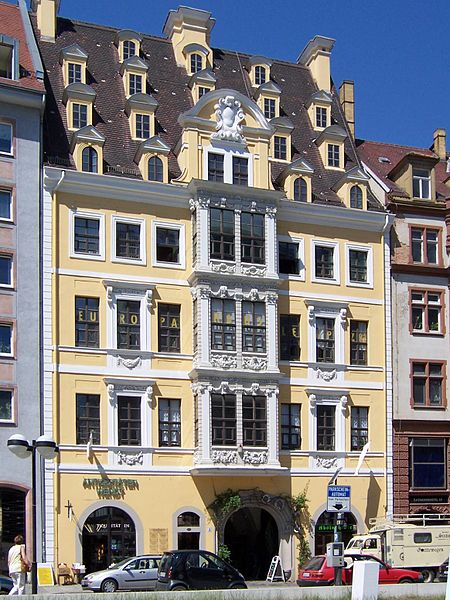
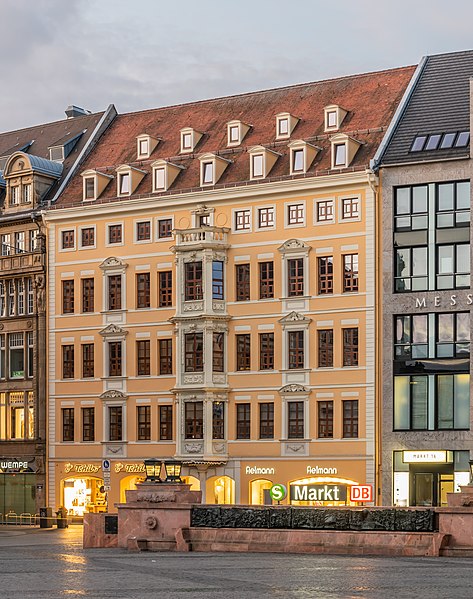
Some examples from my home town Leipzig. Source: Liste der Kulturdenkmale in Leipzig-Zentrum

Katharinenstraße 11 - Fregehaus (1535, 1706 bis 1707)

by User:Jungpionier, Wikimedia Commons (CC BY-SA 3.0 DEED)

Markt 17 - Königshaus (1560)

User:Tournasol7, Wikimedia Commons (CC BY-SA 4.0 DEED)

Alte Handelsbörse (1678)

by User:Tournasol7, Wikimedia Commons (CC BY-SA 4.0 DEED)


Romanushaus (1701–1704)

by User:Appaloosa, Wikimedia Commons (CC BY-SA 3.0 DEED)

Katharinenstraße 19 – Hansen-Haus (1748/1749)

by Freddo213, Wikimedia Commons (CC BY-SA 4.0 DEED)

Katharinenstraße 21 (1750–1752)

Userr._Bernd_Gross, Wikimedia Commons (CC BY-SA 3.0 DEED)


The country with the most preserved cities is probably Italy. Just think of Rome, Milan, Florence, Bologna, Venice and so on.

Last edited by KlausD2; Jan 27, 2024 at 3:59 PM.
Reply With Quote
     
     
  #587  
Old Posted Jan 24, 2024, 9:22 PM
Crawford Crawford is offline
Registered User
 
Join Date: Nov 2003
Location: Brooklyn, NYC/Polanco, DF
Posts: 34,681
Yes, there are individual buildings, but let's be real. Leipzig was absolutely obliterated during WW2.

I've been there. I have a cousin nearby. The predominant housing stock is from the DDR era. Leipzig's built form is almost entirely postwar.
Reply With Quote
     
     
  #588  
Old Posted Jan 24, 2024, 9:26 PM
ChiSoxRox's Avatar
ChiSoxRox ChiSoxRox is offline
Registered User
 
Join Date: Mar 2007
Location: Boston, MA
Posts: 2,331
I found the Census Data to get weighted population density.

Reminder: WPD = SUM (fraction of population * density).

In words, WPD weighs each subdivision's density by its share of the population to give the density experienced by the average inhabitant.

This is calculated by census tract, and the population for each tract is from data.census.gov

Areas are trickier: from these geographic tables in square meters, trivial to convert to square miles.

Los Angeles County overall: 13,328 ppsm

Los Angeles city: 17,294

San Fernando Valley: 12,402

rest of LA city: 20,315
__________________
Like the pre-war masonry skyscrapers? Then check out my list of the tallest buildings in 1950.
Reply With Quote
     
     
  #589  
Old Posted Jan 25, 2024, 3:44 AM
dktshb's Avatar
dktshb dktshb is offline
Environmental Sabotage
 
Join Date: Jun 2005
Location: San Francisco/ Los Angeles/ Tahoe
Posts: 5,138
Quote:
Originally Posted by Quixote View Post
^ iheartthed is saying that, using 2020 figures, the population density of the city of LA is nearly even north and south of the Santa Monica Mountains.

I'm sure that the make-believe "classic LA" wasn't as dense as it is day, given all the post-war apartment complexes that have sprung up over the decades. That's a different argument.
Yeah the guy has an agenda. What LA also has between the SFV and the Basin is the the Santa Monica Mountains, The Verdugo Hills and even 5K Mt. Lukens in its City boundaries.
Reply With Quote
     
     
  #590  
Old Posted Jan 25, 2024, 3:44 AM
Segun's Avatar
Segun Segun is offline
Ikenga: Igbo God of Power
 
Join Date: Aug 2001
Posts: 5,948
Quote:
Originally Posted by kool maudit View Post
I had to search for it, and it's tiny, but I was able to find this little image from some paper on daily life in Uruk because I thought it probably got it right. At least in Sumer, I doubt you were getting the Lower East Side with those mud bricks but I bet it was pretty intricate and lively.


Very interesting. It looks like the inspiration for Tattooine in Star Wars. The "insulae" that Eschaton mentioned is interesting as well. I had a more Indian/Sub-Saharan African/Carribean type of shantytown in mind.

https://maps.app.goo.gl/ekuK1fMp1S1SwZtr7

^ I can't imagine that not existing in ancient history. Who knows, maybe they were more progressive in planning and social structure.
Reply With Quote
     
     
  #591  
Old Posted Jan 25, 2024, 4:35 AM
jd3189's Avatar
jd3189 jd3189 is offline
An Optimistic Realist
 
Join Date: Dec 2010
Location: Los Angeles, CA / West Palm Beach, FL
Posts: 6,701
Quote:
Originally Posted by Quixote View Post
^ iheartthed is saying that, using 2020 figures, the population density of the city of LA is nearly even north and south of the Santa Monica Mountains.

I'm sure that the make-believe "classic LA" wasn't as dense as it is day, given all the post-war apartment complexes that have sprung up over the decades. That's a different argument.
Yeah, it does seem that LA is denser today than back then, but it is strange to see such low calculated densities when the city ( even if less dense than the big 6) is still far denser and city-like than the majority of the other large American cities.

The hills and mountains make a huge difference with Griffith Park, the Hollywood Hills, and the Santa Monica mountains taking up a huge amount of land between the basin and the SFV. Not that many US cities have mountains within their city limits. LA has several.

And much of East LA ( Lincoln Heights, Eagle Rock, Highland Park, etc) is very hilly. Still slightly more suburban compared to similar areas in SF, but it's still development surrounding quite a few hills and protected parks.
__________________
MAWA: Make America Walkable Again
Reply With Quote
     
     
  #592  
Old Posted Jan 25, 2024, 4:35 AM
wwmiv wwmiv is offline
Registered User
 
Join Date: Sep 2009
Location: Austin -> San Antonio -> Columbia -> San Antonio -> Chicago -> Austin -> Denver -> Austin
Posts: 5,780
Quote:
Originally Posted by Segun View Post
Very interesting. It looks like the inspiration for Tattooine in Star Wars. The "insulae" that Eschaton mentioned is interesting as well. I had a more Indian/Sub-Saharan African/Carribean type of shantytown in mind.

https://maps.app.goo.gl/ekuK1fMp1S1SwZtr7

^ I can't imagine that not existing in ancient history. Who knows, maybe they were more progressive in planning and social structure.
Generally, as societies advance, stratify and become less equal, they become less progressive. e.g. people are only willing to be reciprocal with people in their own social strata. Earlier societies and less advanced societies tend to operate on norms of universal reciprocity because they have less rigid social stratification demarcating the boundaries of acceptable reciprocity.

I.E. I could totally see this being the case. I wasn’t saying that Africa never had examples of this type of urbanism at all, but rather that the examples came and went and feature significant decay and ruin across all historical time periods. It was just never maintained except for a sparse handful of very specific monuments, and even those are better described as ruins and relics than anything deliberately preserved.
__________________
Houston: 2.4m (+3.9%) + MSA suburbs: 5.4m (+12%) + CSA exurbs: 200k (+5%)
Dallas: 1.3m (+2%) / FtW: 1.0m (+10%) + suburbs: 6.4m (9%) + exurbs: 566k (+9%)
San Antonio: 1.5m (+6%) + MSA suburbs: 1.2m (+10%) + CSA exurbs: 82k (+3%)
Austin: 994k (+3%) + MSA suburbs: 1.6m (+18%)
Texas (whole): 31.29m (+7%) / Texas (balance): 8.6m (+3%)
Reply With Quote
     
     
  #593  
Old Posted Jan 25, 2024, 7:11 AM
DZH22 DZH22 is offline
Registered User
 
Join Date: Aug 2009
Location: Boston
Posts: 1,556
Quote:
Originally Posted by Segun View Post
https://maps.app.goo.gl/ekuK1fMp1S1SwZtr7

^ I can't imagine that not existing in ancient history. Who knows, maybe they were more progressive in planning and social structure.
I could spend hours clicking around the Lagos streetviews. Pull out to satellite then drop into any neighborhood and the scene is bound to be certifiably bananas. Most of it looks like it was built straight out of a landfill. It's really hard to believe sometimes how many people are living like this worldwide.
Reply With Quote
     
     
  #594  
Old Posted Jan 25, 2024, 10:18 AM
KlausD2 KlausD2 is offline
Registered User
 
Join Date: Jan 2024
Posts: 358
Quote:
Originally Posted by Crawford View Post
Yes, there are individual buildings, but let's be real. Leipzig was absolutely obliterated during WW2.

I've been there. I have a cousin nearby. The predominant housing stock is from the DDR era. Leipzig's built form is almost entirely postwar.

Leipzig was less destroyed than other cities in Germany. Today, there are large, intact Wilhelminian style/Gründerzeit areas that have been restored after years of decay.

Last edited by KlausD2; Jan 25, 2024 at 12:44 PM.
Reply With Quote
     
     
  #595  
Old Posted Jan 25, 2024, 2:18 PM
eschaton eschaton is offline
Registered User
 
Join Date: Dec 2013
Posts: 5,566
Quote:
Originally Posted by Segun View Post
The "insulae" that Eschaton mentioned is interesting as well. I had a more Indian/Sub-Saharan African/Carribean type of shantytown in mind.
No intact insulae survive, but enough ruins that we understand their layouts quite well:


Pretty similar to more modern Near Eastern/North African vernacular architecture. With the exception of the lack of windows (glass panes were only perfected by 100 AD, and only the wealthy had them), really not that different from a 19th century European tenement building.

As I said, they had running water and sewage, since Romans had a good understanding of plumbing which was lost in the middle ages.

Romans also understood how to utilize central heat, but my understanding is these systems (hypocausts) were generally limited to public baths and the homes of the wealthy. They also had a crude form of air conditioning, as they'd sometimes use tunnels off aqueducts (water mains, more or less) for cooling.

Life wasn't great for a urban Roman, but it was in a lot of ways better than that of urban dwellers anywhere until the early 20th century.
Reply With Quote
     
     
  #596  
Old Posted Jan 25, 2024, 3:58 PM
iheartthed iheartthed is offline
Registered User
 
Join Date: Oct 2009
Location: New York
Posts: 11,837
Quote:
Originally Posted by kool maudit View Post
I had to search for it, and it's tiny, but I was able to find this little image from some paper on daily life in Uruk because I thought it probably got it right. At least in Sumer, I doubt you were getting the Lower East Side with those mud bricks but I bet it was pretty intricate and lively.


Much of Timbuktu was built from mud bricks, and it was one of the largest cities in the world in the 1400s. It was similar in population to London in the same period.
Reply With Quote
     
     
  #597  
Old Posted Jan 25, 2024, 7:38 PM
Quixote's Avatar
Quixote Quixote is offline
Inveterate Angeleno
 
Join Date: Apr 2006
Location: Los Angeles
Posts: 7,652
Quote:
Originally Posted by iheartthed View Post
I showed the numbers. Point out what's wrong.
This isn't complete, but...

Neighborhood | Population | Density | Area

Koreatown | 92,950 | 42,610 | 2.18 SM
Westlake | 90,650 | 34,740 | 2.61 SM
Pico-Union | 28,750 | 34,380 | 0.84 SM
Arlington Heights | 12,490 | 28,490 | 0.44 SM
Harvard Heights | 29,290 | 25,360 | 1.15 SM
Hollywood | 146,510 | 23,870 | 6.14 SM
Palms | 43,310 | 20,370 | 2.13 SM
Adams-Normandie | 20,130 | 20,230 | 1 SM
Watts | 35,590 | 19,790 | 1.8 SM
Chinatown | 7,800 | 19,230 | 0.41 SM
SE LA | 182,550 | 18,810 | 9.7 SM
University Park | 25,100 | 18,700 | 1.34 SM
Boyle Heights | 78,370 | 17,090 | 4.59 SM
Pico-Robertson | 22,260 | 16,570 | 1.34 SM
South LA | 198,980 | 16,420 | 12.12 SM
Jefferson Park | 30,100 | 16,360 | 1.84 SM
Central City | 52,800 | 15,700 | 3.36 SM
Highland Park | 52,870 | 15,360 | 3.44 SM
Crestview | 10,020 | 15,340 | 0.65 SM
Mid City | 83,500 | 15,060 | 5.54 SM
Sawtelle | 30,780 | 14,830 | 2.08 SM
Mid City West | 46,120 | 13,480 | 3.42 SM
Westwood | 52,100 | 12,890 | 4.04 SM
West Adams | 26,990 | 12,690 | 2.13 SM
Hyde Park | 36,140 | 12,680 | 2.85 SM
Echo Park | 24,690 | 12,570 | 1.96 SM
Mid Wilshire | 39,790 | 12,470 | 3.19 SM
Venice | 36,900 | 12,120 | 3.04 SM
Silver Lake | 37,020 | 11,990 | 3.09 SM
Mar Vista | 39,480 | 11,380 | 3.47 SM
Downtown | 36,120 | 10,550 | 3.42 SM
Los Feliz | 27,130 | 10,540 | 2.57 SM

Total population: 1,677,280 over 97.88 SM
Density: 17,136

https://statisticalatlas.com/place/California/Los-Angeles/Population

__________________
“To tell a story is inescapably to take a moral stance.”

— Jerome Bruner
Reply With Quote
     
     
  #598  
Old Posted Jan 25, 2024, 7:58 PM
ChiSoxRox's Avatar
ChiSoxRox ChiSoxRox is offline
Registered User
 
Join Date: Mar 2007
Location: Boston, MA
Posts: 2,331
Running the weighted density calculations on various slices of Los Angeles, to negate the effect of the mountains:

Full city: 17,294 ppsm

San Fernando Valley: 12,402

LA - SFV: 20,315

LA urban core (1800-2400 numbers on the map, trims off harbor foot and West Side past BH): 22,314

For comparison, San Francisco is at a WPD of 33,572 ppsm.
__________________
Like the pre-war masonry skyscrapers? Then check out my list of the tallest buildings in 1950.

Last edited by ChiSoxRox; Jan 25, 2024 at 8:15 PM.
Reply With Quote
     
     
  #599  
Old Posted Jan 26, 2024, 1:10 AM
Segun's Avatar
Segun Segun is offline
Ikenga: Igbo God of Power
 
Join Date: Aug 2001
Posts: 5,948
Quote:
Originally Posted by wwmiv View Post

I.E. I could totally see this being the case. I wasn’t saying that Africa never had examples of this type of urbanism at all, but rather that the examples came and went and feature significant decay and ruin across all historical time periods. It was just never maintained except for a sparse handful of very specific monuments, and even those are better described as ruins and relics than anything deliberately preserved.
I wouldn't expect any shantytown to be preserved anywhere throughout history. The only evidence we have of the few in America are only found in photographs. I'm very interested in the grimier aspects of ancient civilizations, physically and socially. I feel as if the evidence we have doesn't portray the reality as filthy and macabre as it actually was. For instance, I don't see said Insulae housing as being where the poorest of the poor lived in Caligula's Rome. It's still interesting though.
Reply With Quote
     
     
  #600  
Old Posted Jan 26, 2024, 1:19 AM
craigs's Avatar
craigs craigs is online now
Registered User
 
Join Date: May 2019
Location: Los Angeles
Posts: 10,690
Quote:
Originally Posted by ChiSoxRox View Post
Running the weighted density calculations on various slices of Los Angeles, to negate the effect of the mountains:

Full city: 17,294 ppsm

San Fernando Valley: 12,402

LA - SFV: 20,315

LA urban core (1800-2400 numbers on the map, trims off harbor foot and West Side past BH): 22,314

For comparison, San Francisco is at a WPD of 33,572 ppsm.
Thanks for running the numbers. The city population/land area calculation is really thrown off by the unpopulated mountains within LA city limits. Weighted density is a better measure of the densities at which people are actually living in LA.
__________________
Chaos upon my enemies, chaos upon my enemies, chaos upon my enemies.
Reply With Quote
     
     
This discussion thread continues

Use the page links to the lower-right to go to the next page for additional posts
 
 
Reply

Go Back   SkyscraperPage Forum > Discussion Forums > City Discussions
Forum Jump


Forum Jump


All times are GMT. The time now is 3:50 AM.

     
SkyscraperPage.com - Privacy Statement - Top

Powered by vBulletin® Version 3.8.7
Copyright ©2000 - 2026, vBulletin Solutions, Inc.