HomeDiagramsDatabaseMapsForum About
     

Go Back   SkyscraperPage Forum > Discussion Forums > City Discussions


Reply

 
Thread Tools Display Modes
     
     
  #561  
Old Posted Jan 23, 2024, 3:39 PM
Crawford Crawford is offline
Registered User
 
Join Date: Nov 2003
Location: Brooklyn, NYC/Polanco, DF
Posts: 34,682
A lot of Europe isn't that old, even if the underlying street grid and pedestrian patterns are mostly intact. Is the average home in Metropolitan London or Paris much older than Metropolitan NYC? Likely not. German cities were almost universally destroyed 80 years ago. Same with Warsaw, Rotterdam and many others.

Med Europe is generally older, and since it was poorer, and had issues like Franco, developed less urban renewal and wacky postwar schemes. But I'm not sure the big cities are overall that old. Madrid has quadrupled in population since 1950. Rome is prolly the greatest historical city on earth, yet it was quite small for 1,000 years, and didn't really boom again until the 20th century.

IMO people ascribe trans-Atlantic development/lifestyle differences to age, and I think it's more a postwar divergence. 1950-era Detroit and Hamburg would have been pretty similar. By 1980 or so they embodied radically different built forms and lifestyles.
Reply With Quote
     
     
  #562  
Old Posted Jan 23, 2024, 4:05 PM
lio45 lio45 is offline
BANNED
 
Join Date: Aug 2007
Location: Quebec
Posts: 44,901
Paris isn’t a very good example because it’s been well preserved since the late 1800s; the average person living in the city likely lives in a older dwelling than in NYC. But Paris in terms of median age of current built form isn’t much more historic than, say, Philly. Which is your point, I’m sure.
Reply With Quote
     
     
  #563  
Old Posted Jan 23, 2024, 4:29 PM
iheartthed iheartthed is offline
Registered User
 
Join Date: Oct 2009
Location: New York
Posts: 11,838
Quote:
Originally Posted by Crawford View Post
A lot of Europe isn't that old, even if the underlying street grid and pedestrian patterns are mostly intact. Is the average home in Metropolitan London or Paris much older than Metropolitan NYC? Likely not. German cities were almost universally destroyed 80 years ago. Same with Warsaw, Rotterdam and many others.

Med Europe is generally older, and since it was poorer, and had issues like Franco, developed less urban renewal and wacky postwar schemes. But I'm not sure the big cities are overall that old. Madrid has quadrupled in population since 1950. Rome is prolly the greatest historical city on earth, yet it was quite small for 1,000 years, and didn't really boom again until the 20th century.

IMO people ascribe trans-Atlantic development/lifestyle differences to age, and I think it's more a postwar divergence. 1950-era Detroit and Hamburg would have been pretty similar. By 1980 or so they embodied radically different built forms and lifestyles.
Yeah, a lot of urban Europe is less than 150 years old. Athens is the second densest city in Europe after Paris, and is known for the 2,500 year old Acropolis, yet about 95% of the city was built after roughly 1900.
Reply With Quote
     
     
  #564  
Old Posted Jan 23, 2024, 4:45 PM
Crawford Crawford is offline
Registered User
 
Join Date: Nov 2003
Location: Brooklyn, NYC/Polanco, DF
Posts: 34,682
Quote:
Originally Posted by lio45 View Post
Paris isn’t a very good example because it’s been well preserved since the late 1800s; the average person living in the city likely lives in a older dwelling than in NYC.
I mean the metropolitan area, not city proper. The Île-de-France has had pretty rapid growth in recent decades, so I don't think it's outlandish to think the housing stock isn't dissimilar in age to an older U.S. metro.
Reply With Quote
     
     
  #565  
Old Posted Jan 23, 2024, 5:35 PM
JManc's Avatar
JManc JManc is offline
Administrator
 
Join Date: Feb 2003
Location: Houston
Posts: 22,610
What Allied bombing raids didn't destroy in the 40's, Urban Renewal in the 50's, 60's and early 70's finished off.
Reply With Quote
     
     
  #566  
Old Posted Jan 23, 2024, 6:05 PM
Quixote's Avatar
Quixote Quixote is offline
Inveterate Angeleno
 
Join Date: Apr 2006
Location: Los Angeles
Posts: 7,652
Quote:
Originally Posted by TempleGuy1000 View Post
This really is such an important point. I don't want to sound like a hater because the Backbay and the North End are architectural gems, but Boston's a city of triple-deckers and houses with siding and shingles. It is distinctly New England and American. Which is different than the rowhouses of the mid-Atlantic which mirrored the terraces being built all across the ocean in the UK and Ireland.

+2

Boston’s street layout and design is very similar to that of English cities, but Philadelphia’s endless blocks of utilitarian-looking Victorian homes have an uncanny resemblance to their predominant urban vernaculars.
__________________
“To tell a story is inescapably to take a moral stance.”

— Jerome Bruner
Reply With Quote
     
     
  #567  
Old Posted Jan 24, 2024, 1:45 AM
Segun's Avatar
Segun Segun is offline
Ikenga: Igbo God of Power
 
Join Date: Aug 2001
Posts: 5,948
Quote:
Originally Posted by wwmiv View Post

The only places that don't have LOTS of examples are (a) Africa (because it largely never had sustained development and maintenance of these types of places over large spans of time) and (b) the major places that Brits colonized (Australia/New Zealand, Canada/United States), but nowhere in any of these countries existed anything like what was elsewhere prior to their colonization. That isn’t to say that places that existed weren’t substantial (Cahokia, for instance, and various places in the Southwest), they just built in an entirely different way.
I wonder how often the shantytown was prevalent in human history. Depictions of places such as Sumeria, Khemet and Mesoamerican cities are always portrayed in artistic renderings as big monuments surrounded by a few huts and hovels, yet they were often seats of major empires. I wouldn't be surprised to find them in ancient Rome and Jerusalem also.
Reply With Quote
     
     
  #568  
Old Posted Jan 24, 2024, 2:06 AM
Crawford Crawford is offline
Registered User
 
Join Date: Nov 2003
Location: Brooklyn, NYC/Polanco, DF
Posts: 34,682
Shantytowns (basically informal housing) were the norm basically everywhere. Central Park was once a shantytown.

You just don't have evidence bc only rich people's housing was built to last, and considered worth saving.
Reply With Quote
     
     
  #569  
Old Posted Jan 24, 2024, 2:13 AM
eschaton eschaton is offline
Registered User
 
Join Date: Dec 2013
Posts: 5,566
Quote:
Originally Posted by Segun View Post
I wonder how often the shantytown was prevalent in human history. Depictions of places such as Sumeria, Khemet and Mesoamerican cities are always portrayed in artistic renderings as big monuments surrounded by a few huts and hovels, yet they were often seats of major empires. I wouldn't be surprised to find them in ancient Rome and Jerusalem also.
We actually know Rome's urban form pretty well. Its buildings were called insulae - basically walkup apartment buildings, not too dissimilar in structure from those built in the late 19th century. They were typically 4-6 stories and had running water. The upper stories were the low-income housing, as (again similar to the 19th century) areas that had the most flights of stairs were least desirable.

They tended to collapse quite often. Rome had concrete, but not reinforced concrete!
Reply With Quote
     
     
  #570  
Old Posted Jan 24, 2024, 3:31 AM
wwmiv wwmiv is offline
Registered User
 
Join Date: Sep 2009
Location: Austin -> San Antonio -> Columbia -> San Antonio -> Chicago -> Austin -> Denver -> Austin
Posts: 5,781
Quote:
Originally Posted by Crawford View Post
A lot of Europe isn't that old, even if the underlying street grid and pedestrian patterns are mostly intact. Is the average home in Metropolitan London or Paris much older than Metropolitan NYC? Likely not. German cities were almost universally destroyed 80 years ago. Same with Warsaw, Rotterdam and many others.

Med Europe is generally older, and since it was poorer, and had issues like Franco, developed less urban renewal and wacky postwar schemes. But I'm not sure the big cities are overall that old. Madrid has quadrupled in population since 1950. Rome is prolly the greatest historical city on earth, yet it was quite small for 1,000 years, and didn't really boom again until the 20th century.

IMO people ascribe trans-Atlantic development/lifestyle differences to age, and I think it's more a postwar divergence. 1950-era Detroit and Hamburg would have been pretty similar. By 1980 or so they embodied radically different built forms and lifestyles.
This is SO accurate. A few years ago I read a study that found that the average age of structures in each major metropolitan area in the United States is actually older than in comparable European cities.
__________________
Houston: 2.4m (+3.9%) + MSA suburbs: 5.4m (+12%) + CSA exurbs: 200k (+5%)
Dallas: 1.3m (+2%) / FtW: 1.0m (+10%) + suburbs: 6.4m (9%) + exurbs: 566k (+9%)
San Antonio: 1.5m (+6%) + MSA suburbs: 1.2m (+10%) + CSA exurbs: 82k (+3%)
Austin: 994k (+3%) + MSA suburbs: 1.6m (+18%)
Texas (whole): 31.29m (+7%) / Texas (balance): 8.6m (+3%)
Reply With Quote
     
     
  #571  
Old Posted Jan 24, 2024, 8:32 AM
kool maudit's Avatar
kool maudit kool maudit is offline
video et taceo
 
Join Date: Jul 2001
Location: Stockholm
Posts: 14,345
Structural age is not the only factor signalling age or continuity. Street layouts and planning are major aspects of this. New York's "tall and narrow" typology goes back to the New Amsterdam era, despite no surviving urban structures and the fact that the city was then limited to south of Wall Street.

With that said, the 19th century courtyard blocks that we started discussing here are definitely "modern". The late 19th century was modern, and both Vienna's Ring and Chicago's Loop are products of it.

The "old town surrounded by wedding cake blocks" in a lot of Europe is roughly analogous to the "skyscrapers surrounded by apartments and walkups" in the East and Midwest of the US in terms of how the cities work.
Reply With Quote
     
     
  #572  
Old Posted Jan 24, 2024, 8:34 AM
kool maudit's Avatar
kool maudit kool maudit is offline
video et taceo
 
Join Date: Jul 2001
Location: Stockholm
Posts: 14,345
Quote:
Originally Posted by Segun View Post
I wonder how often the shantytown was prevalent in human history. Depictions of places such as Sumeria, Khemet and Mesoamerican cities are always portrayed in artistic renderings as big monuments surrounded by a few huts and hovels, yet they were often seats of major empires. I wouldn't be surprised to find them in ancient Rome and Jerusalem also.


I think it is the basic urban form. If you take a favela from Rio, polish it over time and carve out some squares, you have Siena.

One of the reasons that we can't build cities right now is that we have rejected the favela on a very fundamental level. There is a refusal to acknowledge the primordial urban form that comes from structures arising alongside pathways. We inject planning into the process too early and too absolutely, so we always end up with Pruitt Igoe despite the fact that our most celebrated districts look nothing like this. Maybe it is a fussy bourgeois thing, like the man who can't enjoy the flea market or the bonfire.
Reply With Quote
     
     
  #573  
Old Posted Jan 24, 2024, 8:43 AM
kool maudit's Avatar
kool maudit kool maudit is offline
video et taceo
 
Join Date: Jul 2001
Location: Stockholm
Posts: 14,345
Quote:
Originally Posted by Segun View Post
Depictions of places such as Sumeria, Khemet and Mesoamerican cities are always portrayed in artistic renderings as big monuments surrounded by a few huts and hovels


I had to search for it, and it's tiny, but I was able to find this little image from some paper on daily life in Uruk because I thought it probably got it right. At least in Sumer, I doubt you were getting the Lower East Side with those mud bricks but I bet it was pretty intricate and lively.


Reply With Quote
     
     
  #574  
Old Posted Jan 24, 2024, 9:47 AM
jd3189's Avatar
jd3189 jd3189 is offline
An Optimistic Realist
 
Join Date: Dec 2010
Location: Los Angeles, CA / West Palm Beach, FL
Posts: 6,701
It's cool to see discussion on the fundamentals of urbanism here.

In terms of the "big six" urban cities in the US, I also thought it would be interesting to look at the 1950 census. Essentially this was taken at the very beginning of the postwar era when many major American cities were at their peak population and built urbanism. I decided to just get the top 19 cities only.

1950 Census
1 New York 7.8 million
2 Chicago 3.6 million
3 Philadelphia 2 million
4 Los Angeles 1.9 million
5 Detroit 1.8 million
6 Baltimore 950 thousand
7 Cleveland 915 thousand
8 St. Louis 857 thousand
9 Washington 802 thousand
10 Boston 801 thousand
11 San Francisco 775 thousand
12 Pittsburgh 677 thousand
13 Milwaukee 637 thousand
14 Houston 596 thousand
15 Buffalo 580 thousand
16 New Orleans 570 thousand
17 Minneapolis 522 thousand
18 Cincinnati 504 thousand
19 Seattle 468 thousand


Based on this list, many of the actual big six are on top, but it's still interesting to see that LA was in the top 5 even back then, overtaking Detroit during the 1940s. But, damn, if only Detroit, Cleveland, and other Rust Belt cities had surpassed their peak populations.
__________________
MAWA: Make America Walkable Again
Reply With Quote
     
     
  #575  
Old Posted Jan 24, 2024, 10:26 AM
kool maudit's Avatar
kool maudit kool maudit is offline
video et taceo
 
Join Date: Jul 2001
Location: Stockholm
Posts: 14,345
Because the large populations of a lot of US cities c. 1930 reflect a pretty frantic, 30-year industrial boom, maybe it's not strange that not every city could hold the gains. All of the big ones were 4x, 5x their 1890 or 1900 level by the Depression.
Reply With Quote
     
     
  #576  
Old Posted Jan 24, 2024, 2:40 PM
Crawford Crawford is offline
Registered User
 
Join Date: Nov 2003
Location: Brooklyn, NYC/Polanco, DF
Posts: 34,682
And immigration fell off a cliff. 1920's-era immigration restrictions severely curtailed the the primary growth input, at least for the older cities. In-migration shifted to southern blacks and appalachian whites, but not at the same levels as previous trans-Atlantic migration.

Also, the oldest cities already had wealth movement into the periphery. Westchester County, NY had over 500,000 residents before the Empire State Building was completed.
Reply With Quote
     
     
  #577  
Old Posted Jan 24, 2024, 4:21 PM
jmecklenborg jmecklenborg is offline
Registered User
 
Join Date: Jul 2003
Posts: 4,158
Quote:
Originally Posted by jd3189 View Post
12 Pittsburgh 677 thousand
13 Milwaukee 637 thousand
14 Houston 596 thousand
15 Buffalo 580 thousand
16 New Orleans 570 thousand
17 Minneapolis 522 thousand
18 Cincinnati 504 thousand
19 Seattle 468 thousand


Based on this list, many of the actual big six are on top, but it's still interesting to see that LA was in the top 5 even back then, overtaking Detroit during the 1940s. But, damn, if only Detroit, Cleveland, and other Rust Belt cities had surpassed their peak populations.

These are the city populations, not the metro populations. Some cities are physically very small, surround independent cities, and/or part of the metro is across state lines.

Also, some cities began tearing down large sections of their most-densely populated areas in the 1950s and certainly by the 1950s. So yes, population went down, but so did physical residential land. This was motivated in part by states generally switching laws to enable municipal earnings taxes. Industrial land generated more tax than residential, therefore cities chased tax income by switching residents for employees.
Reply With Quote
     
     
  #578  
Old Posted Jan 24, 2024, 4:30 PM
iheartthed iheartthed is offline
Registered User
 
Join Date: Oct 2009
Location: New York
Posts: 11,838
Quote:
Originally Posted by kool maudit View Post
Because the large populations of a lot of US cities c. 1930 reflect a pretty frantic, 30-year industrial boom, maybe it's not strange that not every city could hold the gains. All of the big ones were 4x, 5x their 1890 or 1900 level by the Depression.
Many (all?) of those cities are in urban areas today that are larger than they were in 1950.
Reply With Quote
     
     
  #579  
Old Posted Jan 24, 2024, 4:37 PM
iheartthed iheartthed is offline
Registered User
 
Join Date: Oct 2009
Location: New York
Posts: 11,838
Quote:
Originally Posted by jd3189 View Post
It's cool to see discussion on the fundamentals of urbanism here.

In terms of the "big six" urban cities in the US, I also thought it would be interesting to look at the 1950 census. Essentially this was taken at the very beginning of the postwar era when many major American cities were at their peak population and built urbanism. I decided to just get the top 19 cities only.

1950 Census
1 New York 7.8 million
2 Chicago 3.6 million
3 Philadelphia 2 million
4 Los Angeles 1.9 million
5 Detroit 1.8 million
6 Baltimore 950 thousand
7 Cleveland 915 thousand
8 St. Louis 857 thousand
9 Washington 802 thousand
10 Boston 801 thousand
11 San Francisco 775 thousand
12 Pittsburgh 677 thousand
13 Milwaukee 637 thousand
14 Houston 596 thousand
15 Buffalo 580 thousand
16 New Orleans 570 thousand
17 Minneapolis 522 thousand
18 Cincinnati 504 thousand
19 Seattle 468 thousand


Based on this list, many of the actual big six are on top, but it's still interesting to see that LA was in the top 5 even back then, overtaking Detroit during the 1940s. But, damn, if only Detroit, Cleveland, and other Rust Belt cities had surpassed their peak populations.
L.A. had a large population in 1950, but it was much less dense than the other big cities:

Quote:
Originally Posted by iheartthed View Post
I thought the San Fernando Valley was a major drag on L.A.'s density, but that's not really the case. Backing out the Valley from L.A. appears to only slightly move the needle up in terms of density.
  • San Fernando Valley population (including L.A.): 1,826,028
  • Valley minus Burbank, Calabasas, Glendale, Hidden Hills, and San Fernando: 1,473,236 in an area of 194 sq. miles for a density of 7,577 ppsm.
  • Los Angeles minus Valley population: 2,425,511 in an area of 275 sq. miles for a density of 8,802

So removing the Valley just slightly increases L.A.'s 2020 density from 8,312 ppsm to 8,802 ppsm.

Prewar L.A. also did not really match the big eastern cities in terms of scale of density. Los Angeles's 1950 population was 1.9 million and roughly 200k-300k of the population was in the San Fernando Valley by then. Los Angeles would have still easily been in the top 5 by population without the Valley, but its population density would've still been far lower than the rest of the top 5 in 1950:

U.S. cities with greater than 1 million in 1950 by population density (in people per square mile)
  1. New York - 26,306.52
  2. Chicago - 15,951.37
  3. Philadelphia - 15,459.74
  4. Detroit - 13,402.67
  5. Los Angeles - 4,201.18 (w/o Valley between 6,074 ppsm and 6,437 ppsm)
Reply With Quote
     
     
  #580  
Old Posted Jan 24, 2024, 6:35 PM
Quixote's Avatar
Quixote Quixote is offline
Inveterate Angeleno
 
Join Date: Apr 2006
Location: Los Angeles
Posts: 7,652
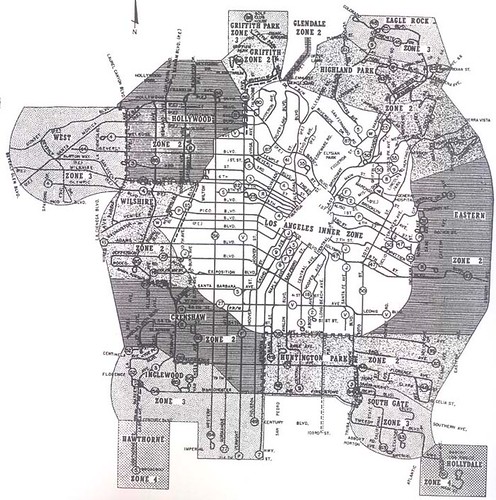
^ I find the notion that LA city's population density without the SFV only increases by 500 very hard to believe, as it just doesn't pass the smell test. Basically what you're suggesting is that LA's population density south of the SM Mountains is marginally higher. Did you also subtract Topanga State Park as well as uninhabited mountain areas in the Verdugo Canyon area? That's 30 square miles.

Here's an old (2008) thread from SSC on the concept of "classic Los Angeles," which proffers that if one were to delineate LA city's boundaries by its pre-1950 development patterns, then you'd have somewhat of a more "traditional" city with a density of 13,500. And keep in mind that that includes the 4,310-acre Griffith Park.

https://www.skyscrapercity.com/threads/classic-los-angeles.667314/

Quote:
I've always felt like there was a distinct feel to the area of LA that was once served by streetcars (I'm not talking about the interurban red cars, but the actual "zoned" network seen below in a map from the 40s).


I recently wondered what this area's stats would be if taken as it's own city, since it seemed to me to have a lot in common with older "traditional" American cities. I found a website today that lists demographic info (including area and population) for all of the census-designated areas in the city of LA, and I found it was really easy to add up census tracts and, in effect, draw my own city borders.

The map below shows this area as its own city.. I'm calling it "Classic" LA but I'm open to other names.


...
__________________
“To tell a story is inescapably to take a moral stance.”

— Jerome Bruner

Last edited by Quixote; Jan 24, 2024 at 7:06 PM.
Reply With Quote
     
     
This discussion thread continues

Use the page links to the lower-right to go to the next page for additional posts
 
 
Reply

Go Back   SkyscraperPage Forum > Discussion Forums > City Discussions
Forum Jump


Forum Jump


All times are GMT. The time now is 11:52 PM.

     
SkyscraperPage.com - Privacy Statement - Top

Powered by vBulletin® Version 3.8.7
Copyright ©2000 - 2026, vBulletin Solutions, Inc.