HomeDiagramsDatabaseMapsForum About
     

Go Back   SkyscraperPage Forum > Regional Sections > United States > Southeast > Atlanta


Reply

 
Thread Tools Display Modes
     
     
  #61  
Old Posted Jan 15, 2024, 11:16 PM
Labtec's Avatar
Labtec Labtec is offline
Registered User
 
Join Date: Mar 2002
Location: Atlanta
Posts: 905
Quote:
Originally Posted by newuserbuckhead View Post
Chicago is the second most densely built city in the country, only behind NYC. I haven't been there yet, but I've done enough reading and watched enough videos on the city to understand the true historic rivalry between Chi and NYC when the skyscraper was first built.

On the one hand, I hate when Youtubers and publications use city populations vs metro populations to compare. Jacksonville and San Antonia are literally larger city populations than Atlanta, but no one would actually say those two cities are larger than Atlanta. On the other hand, using only core city areas to compare is often nice; unless the core city has annexed most of its metro (cough Jax and SanAn)


Since I literally said Metro Atlanta was bigger than Seattle and Boston, and soon to be bigger than Philly, not sure what your point is?

Atlanta, to me, feels significantly larger than Houston, and a good deal bigger than Dallas. The city feeling is bigger here than either of those two cities, but yes, their metros are larger.

When you're walking around Seattle, Boston, or Phily, those cities built up area and urban feel seems to go on for miles with little to no break in the "urbanity" of the city. While Atlanta, it's very disjointed. There are pockets of great urban fabric, but then wide swaths of empty, or large noticeable pockets of empty. Parking lots in downtown or midtown, or literally empty spaces inside the beltline.
Boston and Philly yes but I didn't get that feeling in Seattle. I traveled to Seattle not too long ago and there were a lot more surface parking lots than I thought there would be. It feels smaller than Atlanta.
__________________
Screenshot Archive
Reply With Quote
     
     
  #62  
Old Posted Jan 16, 2024, 1:40 PM
newuserbuckhead newuserbuckhead is offline
Registered User
 
Join Date: Mar 2021
Posts: 134
I decided to dive into my "feeling" a bit more and dust off some old GIS skills I haven't used in years. I downloaded 2020 census data from the Bureau itself and did a rough estimate for how many people lived within 1 square mile and 5 square miles of downtown for Atlanta, Boston, and Seattle.

Atlanta:
1sqmi: 10,913
25sqmi: 182,250 (this number really surprised me, seems much higher than I would have expected)


Boston:
1sqmi: 36,099
25sqmi: 496,562


Seattle:
1sqmi: 39,833
25sqmi: 294,742


As you can see, both Boston and Seattle have significantly more people living downtown and their "in-town" areas. It's even more pronounced when you consider the amount of water in both of those cities and the lack of obstacles in Atlanta.

The Metro and COA are certainly on the right track with more growth and more concentrated/dense growth, but compared to cities that are smaller, Atlanta still feels smaller than them.

I don't have any data on the amount of square feet of all buildings in certain areas, that'd be some cool data to have. But I do have the amount of commercial office space in certain submarkets, according to JLL the office markets for each core city, in square feet as of 2020, are:

Atlanta:
  • Downtown: 19,423,197 (fully within 1sqmi)
    Midtown: 21,083,415
    In 2020 West Midtown and the Eastside Trail/O4W are not broken out, I believe they're true submarkets on their own now though.
Boston:
  • Downtown: 37,696,983 (fully within 1sqmi)
    South End: 1,203,716
    Back Bay: 12,469,737
    Charlestown: 1,961,144
    Fenway: 1,738,388
    North Station: 1,743,828 (fully within 1sqmi)
    Seaport: 10,633,812
    Cambridge: 11,462,784

Seattle:
  • Downtown: 26,756,909 (fully within 1sqmi)
    South Lake Union: 10,959,021
    Belltown: 3,005,120
    Pioneer Square: 4,943,065
    Queen Anne: 3,434,455
    Ballard/Uni of Wa: 3,005,120
This clearly shows that both Boston and Seattle leave downtown Atlanta in the dust, and even Midtown doesn't compare to their center cores. What's more, Midtown and Downtown here feel disjointed. They don't feel connected when walking. Driving on the connector, sure, but walking along Peachtree, not so much. And lets not begin to talk about WM and the EST/O4W and how unconnected to the urban fabric they are. They're fantastic spots and very much needed, but not well integrated into the rest of the city.

That concludes by little research/rant.

Thank you.

Last edited by newuserbuckhead; Jan 16, 2024 at 9:56 PM.
Reply With Quote
     
     
  #63  
Old Posted Jan 16, 2024, 2:03 PM
Tuckerman Tuckerman is offline
Registered User
 
Join Date: Mar 2006
Location: Atlanta
Posts: 1,013
[QUOTE=newuserbuckhead;10121498]I decided to dive into my "feeling" a bit more and dust off some old GIS skills I haven't used in years. I downloaded 2020 census data from the Bureau itself and did a rough estimate for how many people lived within 1 square mile and 5 square miles of downtown for Atlanta, Boston, and Seattle.


Many thanks for doing this; very interesting. Boston is fully understandable as it is an older classic pre car city and very much on a European model of development; Seattle seems an anomaly as it developed mostly in the late 20th century; my view is that the water and harbor restrictions helped centralize the development to have such a dense CBD. Atlanta, Dallas, Phoenix simply have few natural barriers to sprawl.
Reply With Quote
     
     
  #64  
Old Posted Jan 16, 2024, 4:07 PM
testarossa50 testarossa50 is offline
Registered User
 
Join Date: Mar 2008
Posts: 836
Very interesting analysis.

One thing I'd point out is that in Atlanta you have to embrace the fact that this city is a work in progress, not a "finished city" like Boston is. Atlanta has huge, huge amounts of land that will be redeveloped at some point, and will definitely look completely different in 30 years than it does now--hell, Atlanta of 30 years ago is nothing compared with what it is now.

Seattle is somewhere in the middle. It doesn't have huge redevelopment tracts left (after South Lake Union), but has a ton of infill going on so it looks very different with each passing decade.
Reply With Quote
     
     
  #65  
Old Posted Jan 17, 2024, 8:24 PM
Labtec's Avatar
Labtec Labtec is offline
Registered User
 
Join Date: Mar 2002
Location: Atlanta
Posts: 905
Doesn't midtown have a higher population density and higher population than downtown? Midtown and Downtown is more like a combined downtown which makes Atlanta feel larger than Seattle.
__________________
Screenshot Archive
Reply With Quote
     
     
  #66  
Old Posted Jan 17, 2024, 9:49 PM
newuserbuckhead newuserbuckhead is offline
Registered User
 
Join Date: Mar 2021
Posts: 134
Quote:
Originally Posted by Labtec View Post
Doesn't midtown have a higher population density and higher population than downtown? Midtown and Downtown is more like a combined downtown which makes Atlanta feel larger than Seattle.
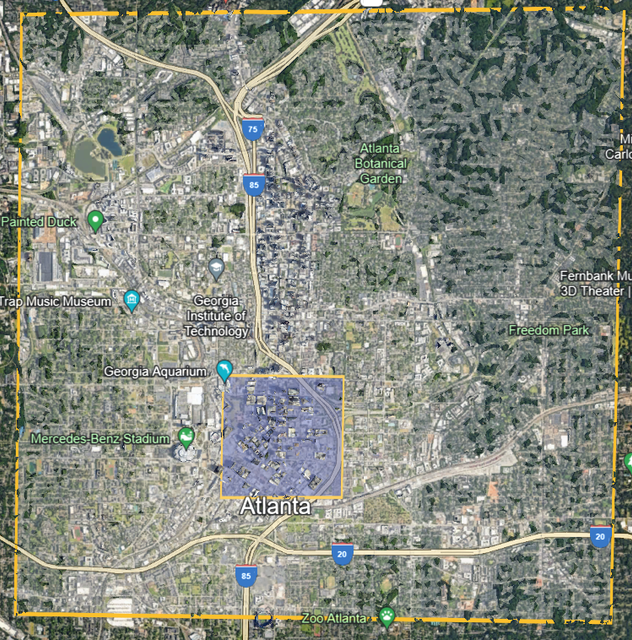
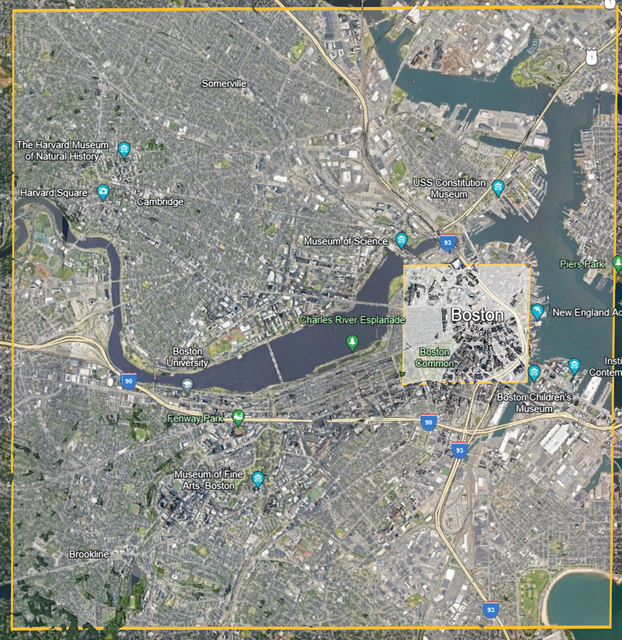
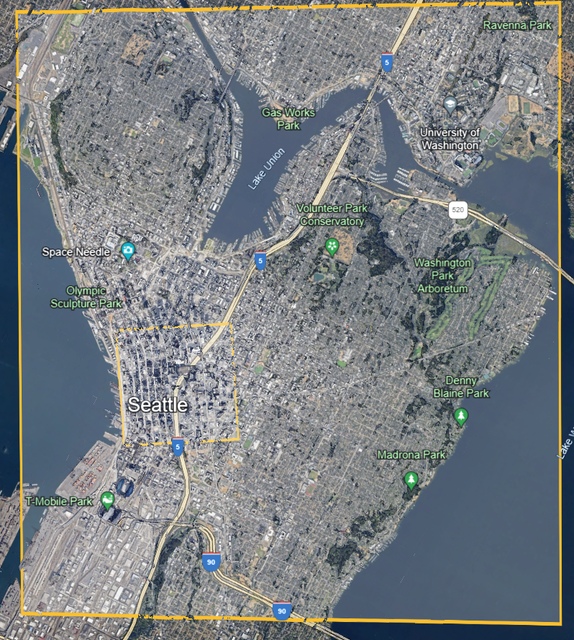
I don't have the GIS data available (not at home), but I do have Google Earth. I expanded by bounding box to include Midtown and Downtown Atlanta and then expanded Seattle to include South Lake Union, Belltown, and Pioneer Square.

Both areas are roughly 1.75 square miles. If I do this, Seattle beats Atlanta in office space, 45M to 40M. Even if my estimations for actual boundaries are incorrect for both, they're pretty darn close to being equal in land area. Seattle wins.

If you look at the pictures, Seattle has a lot of water that obviously won't have any population and then it has a decent amount of industrial land in the southwest corner of the box. Compare that to Atlanta's box, and there aren't any really large areas where people can't live, not to the same extent that Seattle has. I would venture to say that even if I added in the population of Midtown to Downtown, more people would live in the same area in Seattle than in Atlanta.

According to the Council for Tall Building and Urban Habitats, Atlanta ranks as the 10th tallest city in the country, while Seattle ranks 8th. This is measured by the number of buildings over 150m tall. Boston is number 7.

Walkscore, Seattle 12, Atlanta 51, for the sake of comparison, Boston is number 4.

City Observatory did some really cool analysis back in 2020 on walkability in cities/Metros based off of how far a person could realistically walk in a half-mile from the center of a census block. As you can imagine, Atlanta, with all of the rail roads, highways, and lack of a grid, did not perform well in this analysis. In fact, Atlanta ranked dead last of the top 25 largest metro's studied. They didn't do cities and I have zero desire to redo the calculations to limit it to just the downtown area of Atlanta, Boston, and Seattle, but it's at least another quantitative data point showing that Atlanta's built environment lags behind many other cities/metros, even those that are objectively smaller.

I still conclude Atlanta feels smaller than those two cities.
Reply With Quote
     
     
  #67  
Old Posted Jan 17, 2024, 10:03 PM
newuserbuckhead newuserbuckhead is offline
Registered User
 
Join Date: Mar 2021
Posts: 134
[QUOTE=Tuckerman;10121516]
Quote:
Originally Posted by newuserbuckhead View Post
I decided to dive into my "feeling" a bit more and dust off some old GIS skills I haven't used in years. I downloaded 2020 census data from the Bureau itself and did a rough estimate for how many people lived within 1 square mile and 5 square miles of downtown for Atlanta, Boston, and Seattle.


Many thanks for doing this; very interesting. Boston is fully understandable as it is an older classic pre car city and very much on a European model of development; Seattle seems an anomaly as it developed mostly in the late 20th century; my view is that the water and harbor restrictions helped centralize the development to have such a dense CBD. Atlanta, Dallas, Phoenix simply have few natural barriers to sprawl.

Fun fact, or weird fact, or surprising fact, Metro Seattle was larger than Atlanta up until the 1980 census. City of Seattle was larger than CoA until the 1940 census; though I don't know what the land area of each city was at that time. Most of what we would consider "in town Seattle" seems like it was built before WW2.

With regard to geography, completely agree. Boston, Seattle, San Fransisco, Chicago even, have geographic constraints that force densification. While the cities you mentioned don't have that particular "problem". But even then, Dallas, Houston, Denver, Phoenix (which is really weird because they have the shortest skyline of any city its size in the US.) have more dense in-town neighborhoods with solid grids while Atlanta somehow doesn't have that. Heck, even Nashville and Charlotte have better connected in-town neighborhoods than Atlanta.
Reply With Quote
     
     
  #68  
Old Posted Jan 17, 2024, 10:12 PM
newuserbuckhead newuserbuckhead is offline
Registered User
 
Join Date: Mar 2021
Posts: 134
Quote:
Originally Posted by testarossa50 View Post
Very interesting analysis.

One thing I'd point out is that in Atlanta you have to embrace the fact that this city is a work in progress, not a "finished city" like Boston is. Atlanta has huge, huge amounts of land that will be redeveloped at some point, and will definitely look completely different in 30 years than it does now--hell, Atlanta of 30 years ago is nothing compared with what it is now.
Agreed. Half the reason I moved here. It's been amazing to watch the growth of the city since 2015 when I moved here. The Beltline really has been one of the biggest drivers of change the city (not metro) has ever seen.

Quote:
Originally Posted by testarossa50 View Post
Seattle is somewhere in the middle. It doesn't have huge redevelopment tracts left (after South Lake Union), but has a ton of infill going on so it looks very different with each passing decade.
You can thank Amazon for the amazing growth of downtown Seattle. At one point, pre-covid, they occupied over 13M square feet of office space in Downtown. And that doesn't touch on the 3.5M in Bellevue (think Perimeter distance but Buckhead vibe). I believe they've since scaled down their office occupancy in the city, covid plus local politics, but they've had a massive impact on the city office scene.
Reply With Quote
     
     
  #69  
Old Posted Jan 18, 2024, 4:54 PM
Tuckerman Tuckerman is offline
Registered User
 
Join Date: Mar 2006
Location: Atlanta
Posts: 1,013
Obviously Atlanta is much more spread out than Seattle;nonethless over the past two decades one can see some conglomeration occurring and I think that will continue. Notably the corridor between Midtown and Buckhead has seen significant buildup and the area between Buckhead Village and Lenox is more dense; also the area of Poncey Highland and PCM is filling towards the CBD; also the Westside is creeping towards filling in the area between Midtown and Marietta/Howell Mills. A cover over the connecter in Midtown could make a great difference and the area of Home Park looks a potential for densification in the long run. We'll see how this basically "nodal" metro area will connect.
Reply With Quote
     
     
  #70  
Old Posted Jan 18, 2024, 5:25 PM
montydawg montydawg is offline
Registered User
 
Join Date: May 2016
Location: NYC
Posts: 911
Atlanta, Dallas, Phoenix simply have few natural barriers to sprawl.[/QUOTE]
———-////
yes, thanks for the research. I’m surprised Atlanta doesn’t stack up better. I brought my girlfriend into Atlanta for a visit last thanksgiving, and I was disappointed how much midtown was a ghost town. Reminds me how much potential Atlanta has and how much farther it really needs to go. I believe if the ponce and north avenue corridors are built out with density both east and west, and some highway capping is done, that will make a big difference. The good thing is the city is building tons of housing, and I believe everything else will follow the more people who move intown.
Reply With Quote
     
     
  #71  
Old Posted Jan 18, 2024, 8:30 PM
cabasse's Avatar
cabasse cabasse is offline
Registered User
 
Join Date: Jun 2002
Location: Ἀταλάντη
Posts: 4,385
Quote:
Originally Posted by newuserbuckhead View Post


Fun fact, or weird fact, or surprising fact, Metro Seattle was larger than Atlanta up until the 1980 census. City of Seattle was larger than CoA until the 1940 census; though I don't know what the land area of each city was at that time. Most of what we would consider "in town Seattle" seems like it was built before WW2.

With regard to geography, completely agree. Boston, Seattle, San Fransisco, Chicago even, have geographic constraints that force densification. While the cities you mentioned don't have that particular "problem". But even then, Dallas, Houston, Denver, Phoenix (which is really weird because they have the shortest skyline of any city its size in the US.) have more dense in-town neighborhoods with solid grids while Atlanta somehow doesn't have that. Heck, even Nashville and Charlotte have better connected in-town neighborhoods than Atlanta.
interested in hearing what you mean by this - better connected. nashville, perhaps - but i would say atlanta certainly has more pre-1940 housing stock than nashville, and many times that of charlotte. atlanta's rather puny grid network outside of the CBD is about as big as nashville's, both of which are 2-3x the size of charlotte's, and there are far more nodes of commercial activity outside of downtown/midtown in atlanta as well. (thinking historic commercial districts like EAV and virginia-highland as well as more modern spots like O4W, westside, summerhill)

i would say atlanta's topography was a fairly significant part of why it's grid is so tiny - we don't have super tall hills but they are everywhere, and instead of a large body of water to avoid we have creeks everywhere. i would never compare atlanta's urban environment to pittsburgh but interestingly their grids are very disjointed and disconnected because of their even more extreme topography. (if you pull up the three cities in google maps at the same scale and enable terrain, you can see how much more continuously dimpled atl's is compared with the other two)
__________________
Reply With Quote
     
     
  #72  
Old Posted Jan 18, 2024, 8:53 PM
jpk1292000 jpk1292000 is offline
Registered User
 
Join Date: Mar 2006
Location: Atlanta
Posts: 1,038
Quote:
Originally Posted by cabasse View Post
interested in hearing what you mean by this - better connected. nashville, perhaps - but i would say atlanta certainly has more pre-1940 housing stock than nashville, and many times that of charlotte. atlanta's rather puny grid network outside of the CBD is about as big as nashville's, both of which are 2-3x the size of charlotte's, and there are far more nodes of commercial activity outside of downtown/midtown in atlanta as well. (thinking historic commercial districts like EAV and virginia-highland as well as more modern spots like O4W, westside, summerhill)

i would say atlanta's topography was a fairly significant part of why it's grid is so tiny - we don't have super tall hills but they are everywhere, and instead of a large body of water to avoid we have creeks everywhere. i would never compare atlanta's urban environment to pittsburgh but interestingly their grids are very disjointed and disconnected because of their even more extreme topography. (if you pull up the three cities in google maps at the same scale and enable terrain, you can see how much more continuously dimpled atl's is compared with the other two)
Agreed that a big driver of the reason Dallas, Houston, Denver and Phoenix - all newer, Sunbelt, car-oriented cities like Atlanta - have a regular street grid is their flat topography. It's easy and cheap to lay out a nice grid on land that is flat as a board like in those four cities. In Atlanta, the roads seem to flow with the topography and were laid out long ago around our short, steep 150 foot hills that are everywhere in the metro area.
Reply With Quote
     
     
  #73  
Old Posted Jan 19, 2024, 4:11 PM
newuserbuckhead newuserbuckhead is offline
Registered User
 
Join Date: Mar 2021
Posts: 134
Quote:
Originally Posted by Labtec View Post
Doesn't midtown have a higher population density and higher population than downtown? Midtown and Downtown is more like a combined downtown which makes Atlanta feel larger than Seattle.
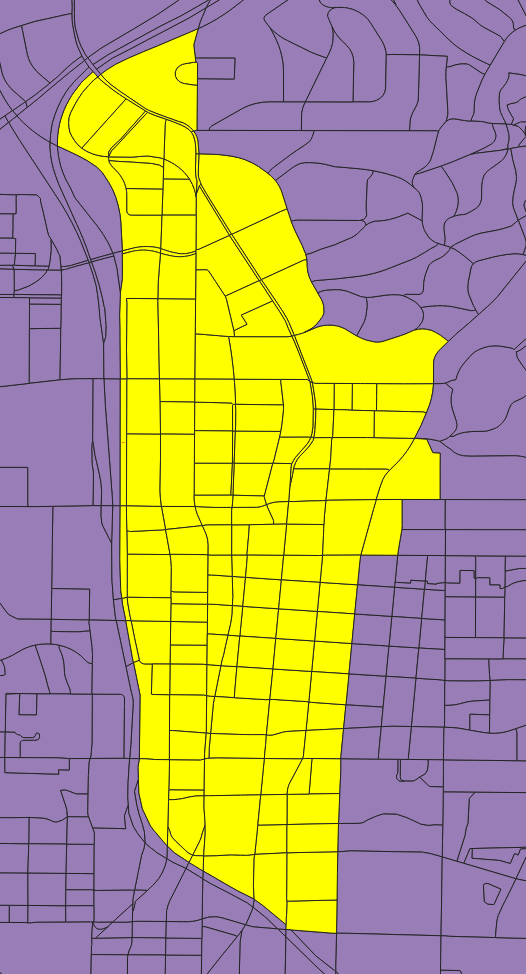
I got the population for "Midtown". I used what the Midtown Alliance has as their boundary plus a little more. The census blocks don't perfectly align with the MA area, so it's a little more expansive, but captures enough information.

The population in 2020 was 25,070.

The yellow is Midtown. To the west is the connector, to the east is Piedmont Road.

Reply With Quote
     
     
  #74  
Old Posted Mar 14, 2024, 11:33 AM
Julien Julien is offline
Registered User
 
Join Date: Apr 2021
Location: ATL/Atlantic Station
Posts: 1,104
Reply With Quote
     
     
  #75  
Old Posted Mar 14, 2024, 1:26 PM
SteveD's Avatar
SteveD SteveD is offline
Back on the road again
 
Join Date: Feb 2006
Location: East Atlanta Village
Posts: 3,098
Yes, with the new census metropolitan projections through July 1, 2023, Metro Atlanta is now the nation's 6th largest metropolitan area, leapfrogging Metro Philly and Metro DC.

Remarkable. It was the 18th largest metro when my family relocated from the north to Atlanta in the mid 1970's.

Top 10:

1. New York-Newark-Jersey City, NY-NJ Metro Area: 19,498,249
2. Los Angeles-Long Beach-Anaheim, CA Metro Area: 12,799,100
3. Chicago-Naperville-Elgin, IL-IN Metro Area: 9,262,825
4. Dallas-Fort Worth-Arlington, TX Metro Area: 8,100,037
5. Houston-Pasadena-The Woodlands, TX Metro Area: 7,510,253
6. Atlanta-Sandy Springs-Roswell, GA Metro Area: 6,307,261
7. Washington-Arlington-Alexandria, DC-VA-MD-WV Metro Area: 6,304,975
8. Philadelphia-Camden-Wilmington, PA-NJ-DE-MD Metro Area: 6,246,160
9. Miami-Fort Lauderdale-West Palm Beach, FL Metro Area: 6,183,199
10. Phoenix-Mesa-Chandler, AZ Metro Area: 5,070,110

The Census larger "Combined Statistical Area" Top 10:

1. New York-Newark, NY-NJ-CT-PA CSA: 21,859,598
2. Los Angeles-Long Beach, CA CSA: 18,316,743
3. Washington-Baltimore-Arlington, DC-MD-VA-WV-PA CSA: 10,069,592
4. Chicago-Naperville, IL-IN-WI CSA: 9,794,558
5. San Jose-San Francisco-Oakland, CA CSA: 9,001,024
6. Dallas-Fort Worth, TX-OK CSA: 8,654,750
7. Boston-Worcester-Providence, MA-RI-NH CSA: 8,345,067
8. Houston-Pasadena, TX CSA: 7,706,626
9. Philadelphia-Reading-Camden, PA-NJ-DE-MD CSA: 7,390,919
10. Atlanta-Athens-Clarke County-Sandy Springs, GA-AL CSA: 7,221,137
__________________
Maybe Martians could do better than we've done
Reply With Quote
     
     
  #76  
Old Posted Mar 14, 2024, 2:03 PM
jpk1292000 jpk1292000 is offline
Registered User
 
Join Date: Mar 2006
Location: Atlanta
Posts: 1,038
Quote:
Originally Posted by SteveD View Post
Yes, with the new census metropolitan projections through July 1, 2023, Metro Atlanta is now the nation's 6th largest metropolitan area, leapfrogging Metro Philly and Metro DC.

Remarkable. It was the 18th largest metro when my family relocated from the north to Atlanta in the mid 1970's.

Top 10:

1. New York-Newark-Jersey City, NY-NJ Metro Area: 19,498,249
2. Los Angeles-Long Beach-Anaheim, CA Metro Area: 12,799,100
3. Chicago-Naperville-Elgin, IL-IN Metro Area: 9,262,825
4. Dallas-Fort Worth-Arlington, TX Metro Area: 8,100,037
5. Houston-Pasadena-The Woodlands, TX Metro Area: 7,510,253
6. Atlanta-Sandy Springs-Roswell, GA Metro Area: 6,307,261
7. Washington-Arlington-Alexandria, DC-VA-MD-WV Metro Area: 6,304,975
8. Philadelphia-Camden-Wilmington, PA-NJ-DE-MD Metro Area: 6,246,160
9. Miami-Fort Lauderdale-West Palm Beach, FL Metro Area: 6,183,199
10. Phoenix-Mesa-Chandler, AZ Metro Area: 5,070,110

The Census larger "Combined Statistical Area" Top 10:

1. New York-Newark, NY-NJ-CT-PA CSA: 21,859,598
2. Los Angeles-Long Beach, CA CSA: 18,316,743
3. Washington-Baltimore-Arlington, DC-MD-VA-WV-PA CSA: 10,069,592
4. Chicago-Naperville, IL-IN-WI CSA: 9,794,558
5. San Jose-San Francisco-Oakland, CA CSA: 9,001,024
6. Dallas-Fort Worth, TX-OK CSA: 8,654,750
7. Boston-Worcester-Providence, MA-RI-NH CSA: 8,345,067
8. Houston-Pasadena, TX CSA: 7,706,626
9. Philadelphia-Reading-Camden, PA-NJ-DE-MD CSA: 7,390,919
10. Atlanta-Athens-Clarke County-Sandy Springs, GA-AL CSA: 7,221,137
SteveD - what is the URL that has this list ^^^?
Reply With Quote
     
     
  #77  
Old Posted Mar 14, 2024, 2:09 PM
SteveD's Avatar
SteveD SteveD is offline
Back on the road again
 
Join Date: Feb 2006
Location: East Atlanta Village
Posts: 3,098
Quote:
Originally Posted by jpk1292000 View Post
SteveD - what is the URL that has this list ^^^?
https://www.census.gov/programs-surveys/popest/data/tables.html

The Census web page is horribly confusing and difficult to navigate, IMO. Once you get to the Excel tables, the entire national MSAs and CSAs are listed alphabetically, and you have to hunt and peck to rank them. I don't thing the columns and lines are sortable, but I may be wrong.
__________________
Maybe Martians could do better than we've done
Reply With Quote
     
     
  #78  
Old Posted Mar 14, 2024, 5:19 PM
GeorgiaPeanuts GeorgiaPeanuts is offline
Registered User
 
Join Date: Sep 2014
Posts: 1,637
Quote:
Originally Posted by SteveD View Post
https://www.census.gov/programs-surveys/popest/data/tables.html

The Census web page is horribly confusing and difficult to navigate, IMO. Once you get to the Excel tables, the entire national MSAs and CSAs are listed alphabetically, and you have to hunt and peck to rank them. I don't thing the columns and lines are sortable, but I may be wrong.
if you download the excel tables you can sort it that way
Reply With Quote
     
     
  #79  
Old Posted Mar 14, 2024, 5:51 PM
Julien Julien is offline
Registered User
 
Join Date: Apr 2021
Location: ATL/Atlantic Station
Posts: 1,104
Wikipedia needs updating. It is embarrassing now being listed as #8.


https://en.wikipedia.org/wiki/Metropolitan_statistical_area
Reply With Quote
     
     
  #80  
Old Posted Mar 14, 2024, 6:19 PM
GeorgiaPeanuts GeorgiaPeanuts is offline
Registered User
 
Join Date: Sep 2014
Posts: 1,637
https://atlantaregional.org/what-we-do/research-and-data/atlanta-region-population-estimates/

The ARC 2023 estimate is also available. The ARC region added 66k. And Atlanta accounted for the largest gain than any other area of the metro barely edging out Gwinnett County with 14.3k new residents and the highest percent change of 2.8% growth.
Reply With Quote
     
     
This discussion thread continues

Use the page links to the lower-right to go to the next page for additional posts
 
 
Reply

Go Back   SkyscraperPage Forum > Regional Sections > United States > Southeast > Atlanta
Forum Jump


Forum Jump


All times are GMT. The time now is 11:52 PM.

     
SkyscraperPage.com - Privacy Statement - Top

Powered by vBulletin® Version 3.8.7
Copyright ©2000 - 2026, vBulletin Solutions, Inc.