HomeDiagramsDatabaseMapsForum About
     

Go Back   SkyscraperPage Forum > Discussion Forums > City Discussions


Reply

 
Thread Tools Display Modes
     
     
  #121  
Old Posted Dec 18, 2023, 9:04 PM
Crawford Crawford is offline
Registered User
 
Join Date: Nov 2003
Location: Brooklyn, NYC/Polanco, DF
Posts: 34,739
This is Grand River & Greenfield today. If you squint you see a bizzaroland LA commercial corridor:
https://www.google.com/maps/@42.3922977,...qWRVAPp7CEQ!2e0!7i16384!8i8192?entry=ttu
Reply With Quote
     
     
  #122  
Old Posted Dec 18, 2023, 9:12 PM
badrunner badrunner is offline
Registered User
 
Join Date: Oct 2016
Posts: 3,130
Quote:
Originally Posted by Crawford View Post
LA and pre-decline Detroit are/were quite dense, but it's a different kind of density.

I've read a lot about the Grand River & Greenfield shopping district, which was Detroit's most important non-core retail center. Now eviscerated, it was a major crossroads until the 1980's. The district had big department stores, built during the 1930's and 40's. Even at this early stage, the stores had dual front and back entrances, with the backs opening to large parking lots. The display windows were front and back too. By the 1960's, while the neighborhood remained dense and still had strong bus ridership, the back entrances became the main entrances. It looked largely the same, but wasn't.

LA seems similar, with the big former department stores along Wilshire oriented around rear parking lots. LA's 1930's and 40's growth was probably quite distinct from equivalent growth in the older metros. Nowadays, there are vibrant and largely contiguous mid-century street-fronting retail strips everywhere but choice pedestrian activity seems limited. Ventura Blvd. in Studio City, La Cienga by Cedars Sinai and the like.
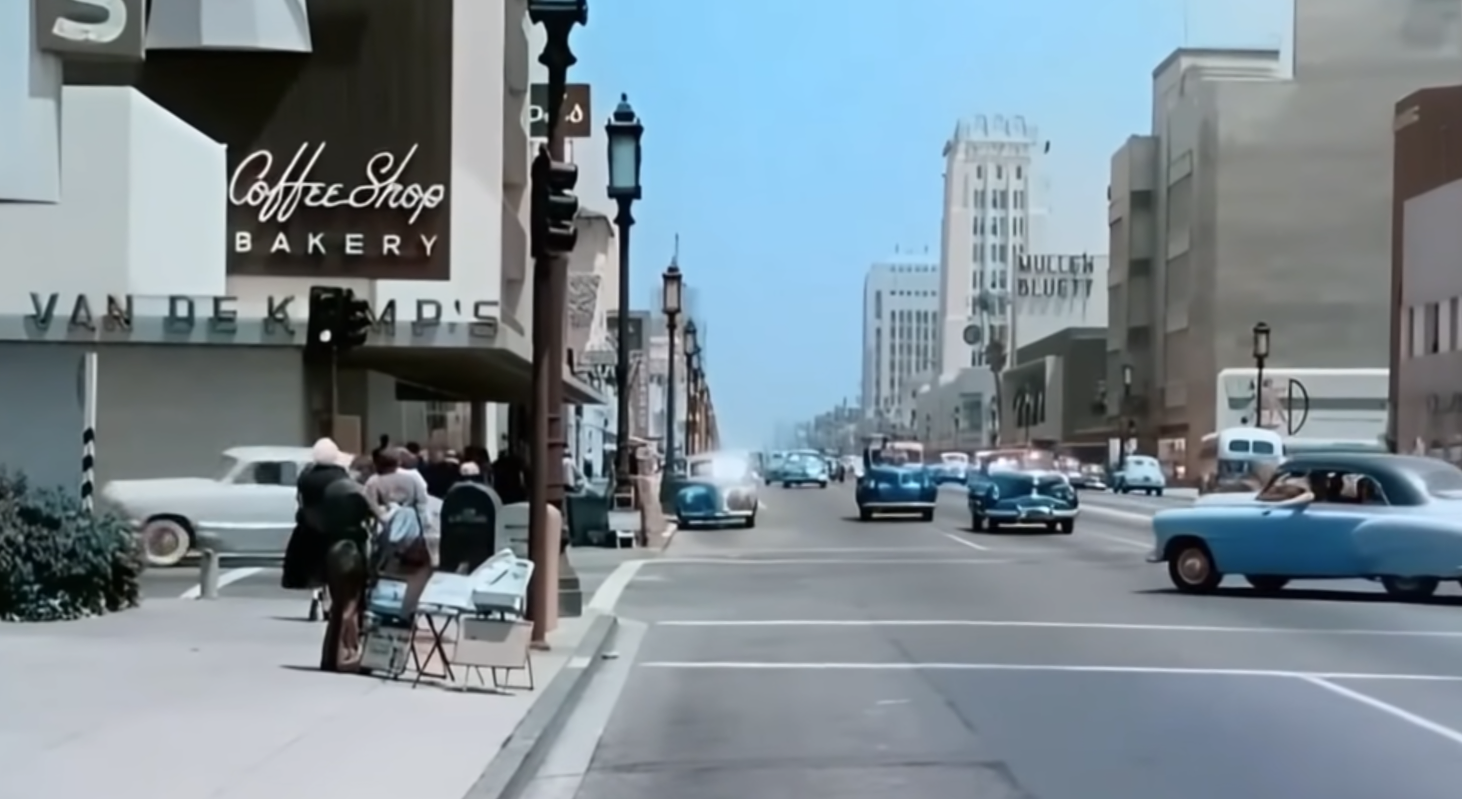
Wilshire or Woodward?


source
Reply With Quote
     
     
  #123  
Old Posted Dec 18, 2023, 9:36 PM
38 Geary 38 Geary is offline
你的媽媽
 
Join Date: Jan 2012
Location: The Bay
Posts: 11,587
^ Wilshire. Here's what it looks like now.
Reply With Quote
     
     
  #124  
Old Posted Dec 18, 2023, 10:10 PM
LA21st LA21st is offline
Registered User
 
Join Date: Jul 2002
Posts: 8,056
Quote:
Originally Posted by eschaton View Post
Back in 2021, I stayed in Del Ray for a week with my family. The area was theoretically walkable-ish - two blocks from W Washington Boulevard.

One day, my wife took the rental car out with my daughter, and I had to stay home with my son because he had gotten sick that day. I needed to walk like 15 minutes to a Wallgreens. No big deal, I thought - I walk twice that daily in Pittsburgh.

But this was the street I had to walk down.

Again, I'm not saying this was peak urbanism by LA's standards - we couldn't have rented a whole house in the "peak urbanism" parts of LA at our budget. But it should have been a doable walk, and it was unpleasant and felt actively dangerous, even though I didn't even have to cross Washington Boulevard.
That's like 14-15 miles from downtown LA. Thats basically outer LA for ffs, built after the war. At least say how far it is. Jeez

What do you think Chicago looks like in the bungalow belt, 14 miles from the Loop? Same shit.
What do you think DC is? STROADS. I'm from Fairfax County. Try to tell me it's "walkable" LMAO.
Reply With Quote
     
     
  #125  
Old Posted Dec 18, 2023, 10:11 PM
iheartthed iheartthed is offline
Registered User
 
Join Date: Oct 2009
Location: New York
Posts: 11,883
Quote:
Originally Posted by Crawford View Post
LA and pre-decline Detroit are/were quite dense, but it's a different kind of density.

I've read a lot about the Grand River & Greenfield shopping district, which was Detroit's most important non-core retail center. Now eviscerated, it was a major crossroads until the 1980's. The district had big department stores, built during the 1930's and 40's. Even at this early stage, the stores had dual front and back entrances, with the backs opening to large parking lots. The display windows were front and back too. By the 1960's, while the neighborhood remained dense and still had strong bus ridership, the back entrances became the main entrances. It looked largely the same, but wasn't.
Detroit had a few retail areas outside of downtown that were built around the late 1920s/early 1930s -- usually near a major intersection on a radial avenue that served as a hub for the streetcar system. Grand River and Greenfield was one, but I believe Grand River and Oakman was a bigger destination at its peak. Almost nothing is left of the Grand River and Oakman shopping district, but it once had a Sears and Federals anchoring both sides of Grand River. There was also a Woolworth's on Grand River not far from there that lasted until the early 1990s. I don't exactly remember what cross street but I believe it was a bit east of Grand River and Oakman. (o/t TIL that Footlocker is the corporate successor of Woolworth's.)

There was a twin shopping district to Grand River and Oakman on the east side at Gratiot and Van Dyke. It also had a Sears that opened the same day as the Grand River and Oakman location per this news article.

Grand River and Greenfield was one of the last surviving of those types of shopping districts in the city. I believe the mall on the north side of Grand River is still occupied today.

Here are some photos of the Sears: https://twitter.com/DetroitStreetVu/status/1056643573054140416

(slightly o/t, the now shuttered Sears building in Flatbush looks a LOT like the one that used to stand at Grand River and Oakman: https://maps.app.goo.gl/BsVUaavTEFF9ji4V9)

Here's a photo of the Federal's on the opposite side of the street: https://www.facebook.com/photo/?fbid=852026722336569&set=a.481737542698824

There was a pretty large shopping district along Woodward in Highland Park that also had a Sears as an anchor: https://twitter.com/DetroitStreetVu/status/946218049581002752

Reply With Quote
     
     
  #126  
Old Posted Dec 18, 2023, 10:20 PM
LA21st LA21st is offline
Registered User
 
Join Date: Jul 2002
Posts: 8,056
Quote:
Originally Posted by ChrisLA View Post
Density is all over LA, not just in poor areas. In fact I’m pretty sure there are more middle class areas that have better walkable neighborhoods than poorer ones in LA. Much of the south SFV have higher density areas and walkable all along the Ventura Blvd corridor and none of those areas are poor. Many people walk in these neighborhoods but it’s also mostly higher income neighborhoods so of course most of the people have cars as well.

Anyway I wouldn’t exactly call Venice, and many of the neighborhoods along the Wilshire 16 mile corridor as poor l, and Hollywood isn’t exactly poor either. Not to mention those areas outside the city, Santa Monica, Glendale, Long Beach, Manhattan Beach, Redondo Beach, Hermosa Beach, and even parts of Burbank.
People have bizarre ideas about LA. I even wonder if they've even been there. This guy said Miami is more urban than LA lol.
Reply With Quote
     
     
  #127  
Old Posted Dec 19, 2023, 1:11 AM
jd3189's Avatar
jd3189 jd3189 is offline
An Optimistic Realist
 
Join Date: Dec 2010
Location: Los Angeles, CA / West Palm Beach, FL
Posts: 6,715
^^^ Yeah, you kinda have to be here to really understand what LA actually is. Again, I was pleasantly surprised to see the built density here. Miami is similar, but on a smaller scale. Little Havana and South Beach do have a lot of those smaller apartment buildings as well.

Thinking about it, I did recognize those types of apartments in photos of Detroit as well as in Dayton, Ohio. I'm guessing that interwar style originated in the Midwest and LA originally was filled with a lot of former Midwesterners back in the early 20th century.

The wall-to-wall prewar urbanism is unique and very walkable in of itself. However, there's something about the interwar urbanism that's cleaner and more freeing. Manhattan is dense and walkable, but there's barely any alleyways and piles of shit are just out in the sidewalk. And, until recently, cars are still prevalent through the vast majority of NYC's streets. You still get the shitty car traffic down major streets in LA, but there is a bit of space between buildings and a good amount of alleys, similar to how Chicago developed itself after the Great Fire.

It's another style but if we ever return to building walkable communities again in this country I would like to see the incorporation of a more walkable, less car dependant interwar urban form.
__________________
MAWA: Make America Walkable Again
Reply With Quote
     
     
  #128  
Old Posted Dec 19, 2023, 1:28 AM
jpdivola jpdivola is offline
Registered User
 
Join Date: Mar 2014
Posts: 372
Quote:
Originally Posted by Crawford View Post
I understand these points, and DC is a bit of an outlier among the six. It's younger, more Sunbelt-y and lacks the extensive prewar fabric. It doesn't have terrific density and its activity nodes are often underwhelming. There's an (admittedly subjective) genericism in its architecture, design and civic spaces.

At the same time, DC has some particular strengths. It arguably has the best transit system outside of NYC. It has the highest heavy rail ridership outside of NYC. It has the highest share of multifamily outside NYC. It has a huge, monumental core that's the undisputed regional nexus. It has the best and most extensive postwar transit-oriented suburban development in the U.S. Downtown DC is the second or third largest core office market in the U.S.
Yeah, I agree. DC has rapidly infilled over the past decades and its inner-suburbs lead the nation in urban infill. It would really be splitting hairs to distinguish DC from Boston. With the aspects you point out, functionally DC is basically on Boston or Philly despite not really having a particularly active downtown or holdings a cohesive urban density over the same stretch.

But, I can see how people find places like Capitol Hill, Brookland, Crestwood, Upper NW as feeling quiet compared to much of central LA which is consistently dense over a greater stretch and has a lot more mixed-use activity interspersed throughout.

LA doesn't have the classic urbanism and is not really well connected from a transit standpoint. But it has a massive area of the city that is fairly dense with tightly packed SFHs and small apartment buildings and you are never more than 2 or 3 blocks from a major commercial street with retail.
Reply With Quote
     
     
  #129  
Old Posted Dec 19, 2023, 1:28 AM
JManc's Avatar
JManc JManc is offline
Administrator
 
Join Date: Feb 2003
Location: Houston
Posts: 22,693
Quote:
Originally Posted by homebucket View Post
Take away the palm trees and it sorta looks like some parts of Oakland.
A lot of the East Bay actually has a SoCal vibe. Houses, vegetation and those tall palms everywhere; think Mission Blvd running up from Fremont to Hayward.
Reply With Quote
     
     
  #130  
Old Posted Dec 19, 2023, 2:23 AM
eschaton eschaton is offline
Registered User
 
Join Date: Dec 2013
Posts: 5,590
Quote:
Originally Posted by jd3189 View Post
The wall-to-wall prewar urbanism is unique and very walkable in of itself. However, there's something about the interwar urbanism that's cleaner and more freeing. Manhattan is dense and walkable, but there's barely any alleyways and piles of shit are just out in the sidewalk. And, until recently, cars are still prevalent through the vast majority of NYC's streets.
I just want to note here that the largest component of NYC's urban fabric is interwar or built just before (as in, from 1900 to 1945 or so).

Indeed, the technology really wasn't there to construct a safe "elevator apartment building" for anyone but the very wealthy until almost 1900. Prior to that, NYC's urban fabric was rowhouses and the much smaller tenement buildings, which are still there, but the swathes of the city occupied by early 20th-century structures are much, much greater.
Reply With Quote
     
     
  #131  
Old Posted Dec 19, 2023, 3:21 AM
Docere Docere is offline
Registered User
 
Join Date: Jul 2014
Posts: 8,666
NYC's population doubled between 1900 and 1930.
Reply With Quote
     
     
  #132  
Old Posted Dec 19, 2023, 3:28 AM
Steely Dan's Avatar
Steely Dan Steely Dan is offline
devout Pizzatarian
 
Join Date: Jul 2001
Location: Lincoln Square, Chicago
Posts: 30,242
Quote:
Originally Posted by Docere View Post
NYC's population doubled between 1900 and 1930.
Ditto Chicago (1.7M to 3.4M).

Though obviously nowhere near as numerically impressive as NYC's early 20th doubling.

But it was a period of massive growth across the board for the legacy cities.


Hell, Detroit 5X'ed itself over those three decades (285K to 1.6M)!

And LA 12X'ed itself (100K to 1.2M)!!!

I always forget how Detroit and LA both kinda got "really big" together at roughly the same time.
__________________
"Missing middle" housing can be a marvelous middle ground for many middle class families.

Last edited by Steely Dan; Dec 19, 2023 at 1:51 PM.
Reply With Quote
     
     
  #133  
Old Posted Dec 19, 2023, 4:27 AM
sopas ej's Avatar
sopas ej sopas ej is offline
Registered User
 
Join Date: Jul 2007
Location: South Pasadena, California
Posts: 8,055
Quote:
Originally Posted by tech12 View Post
Those all look urban and walkable to me. Small lots, good density, and retail and other amenities within a few blocks walking distance. Some of the blocks are kinda long, but it's not a big deal. Public transit isn't bad either.
Not only that, but you can walk to these restaurants. Nothing wrong with that!

https://www.google.com/maps/place/Taquer...9305!10e5!16s%2Fg%2F11hbm4687c?entry=ttu

https://www.google.com/maps/place/Ostion...263518!10e5!16s%2Fg%2F1tmk8s3q?entry=ttu

https://www.google.com/maps/place/Cojute...787334!10e5!16s%2Fg%2F1tjdggfq?entry=ttu

https://www.google.com/maps/place/Bab+Al...8973!10e5!16s%2Fg%2F11rk6vmd8j?entry=ttu

But you know, Boston, and Philly cheesesteaks are somehow better.
__________________
"I guess the only time people think about injustice is when it happens to them."

~ Charles Bukowski
Reply With Quote
     
     
  #134  
Old Posted Dec 19, 2023, 10:02 AM
Prahaboheme Prahaboheme is offline
Registered User
 
Join Date: Apr 2003
Posts: 1,754
Quote:
Originally Posted by LA21st View Post
People have bizarre ideas about LA. I even wonder if they've even been there. This guy said Miami is more urban than LA lol.
Miami and LA is pretty equal in their urban design. Certainly more similarities than differences.
From an urban, pedestrian perspective, Miami Beach is notch above anything else in any other parts of either city.
Reply With Quote
     
     
  #135  
Old Posted Dec 19, 2023, 1:19 PM
LA21st LA21st is offline
Registered User
 
Join Date: Jul 2002
Posts: 8,056
Quote:
Originally Posted by Prahaboheme View Post
Miami and LA is pretty equal in their urban design. Certainly more similarities than differences.
From an urban, pedestrian perspective, Miami Beach is notch above anything else in any other parts of either city.
Highrises dont mean urban or walkable.
Most of miami beach is lifeless condos with little retail.

And no, the cities arent equal.
Reply With Quote
     
     
  #136  
Old Posted Dec 19, 2023, 1:20 PM
Crawford Crawford is offline
Registered User
 
Join Date: Nov 2003
Location: Brooklyn, NYC/Polanco, DF
Posts: 34,739
Quote:
Originally Posted by iheartthed View Post
Detroit had a few retail areas outside of downtown that were built around the late 1920s/early 1930s -- usually near a major intersection on a radial avenue that served as a hub for the streetcar system. Grand River and Greenfield was one, but I believe Grand River and Oakman was a bigger destination at its peak. Almost nothing is left of the Grand River and Oakman shopping district, but it once had a Sears and Federals anchoring both sides of Grand River. There was also a Woolworth's on Grand River not far from there that lasted until the early 1990s.
There were three major shopping districts along Grand River - Grand River/Joy, Grand River/Oakman and Grand River/Greenfield.

If you look at the 2009 Streetview, you still see active retail around Grand River/Oakman. Now all gone.

https://www.google.com/maps/@42.3730919,...20090701T000000!7i13312!8i6656?entry=ttu

The Sears Oakman flagship lasted until the late 70's. Grand River Greenfield had department stores until the 1990's. The Highland Park Sears lasted until early 2000's.

Grand River/Joy was closer to downtown and declined earlier. There's a book called Grand River & Joy that details 1960's-era interactions between Jewish merchants/landlords and black shoppers/residents. The shopping district appears even more devastated than the others:

https://www.google.com/maps/@42.3648951,...20230901T000000!7i16384!8i8192?entry=ttu

There were also East Side equivalents, along Gratiot, but there's nothing really to show, as strip malls and parking lots took out any traces.
Reply With Quote
     
     
  #137  
Old Posted Dec 19, 2023, 1:33 PM
tech12's Avatar
tech12 tech12 is offline
Registered User
 
Join Date: Sep 2005
Location: Oakland
Posts: 3,330
Quote:
Originally Posted by Prahaboheme View Post
Miami and LA is pretty equal in their urban design. Certainly more similarities than differences.
From an urban, pedestrian perspective, Miami Beach is notch above anything else in any other parts of either city.
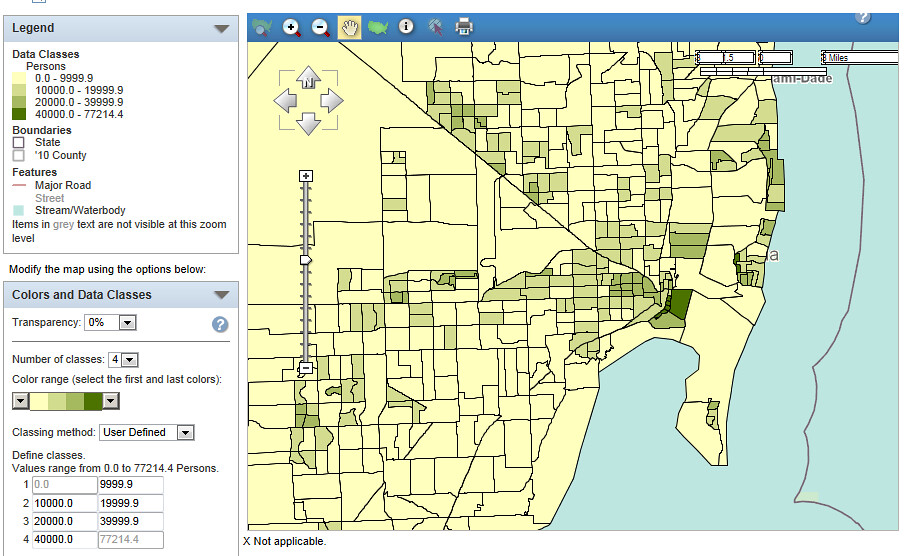
Not really. LA is far bigger than Miami, and is also more densely populated in the core, and on the metro level. LA also has hills, and better public transit than Miami.

And Miami Beach is not a notch above LA from an "urban pedestrian" perspective lol. Maybe compared to some parts of LA, but other parts of LA are at least as walkable as it, over a larger area, while being more densely populated.

Here's population density by census tract (from 2010) to help prove the point:


Let's compare with google maps too:

Miami Beach:
https://www.google.com/maps/@25.8110697,...y,239.57h,63.54t/data=!3m1!1e3?entry=ttu

Central LA:
https://www.google.com/maps/@34.0816602,...y,119.06h,55.32t/data=!3m1!1e3?entry=ttu

When comparing beach areas directly, places like Santa Monica, San Pedro, and Long Beach, all are walkable and have a similar if not higher population density than Miami Beach (Santa Monica is higher, though Long Beach comes close too, despite being much larger than Miami Beach):
https://www.google.com/maps/@33.9797924,...5y,14.44h,57.97t/data=!3m1!1e3?entry=ttu
https://www.google.com/maps/@33.7418312,...y,344.63h,63.49t/data=!3m1!1e3?entry=ttu
https://www.google.com/maps/@33.7461584,...y,246.94h,60.79t/data=!3m1!1e3?entry=ttu
Reply With Quote
     
     
  #138  
Old Posted Dec 19, 2023, 1:38 PM
Crawford Crawford is offline
Registered User
 
Join Date: Nov 2003
Location: Brooklyn, NYC/Polanco, DF
Posts: 34,739
I'd say South Beach has better urbanity than anywhere in CA outside of SF. Granted, it's a pretty small geography; not more than a few blocks.

South Florida as a whole has pretty weak urbanity tho. LA overall would be much better for some semblance of traditional urban lifestyle.
Reply With Quote
     
     
  #139  
Old Posted Dec 19, 2023, 1:47 PM
Prahaboheme Prahaboheme is offline
Registered User
 
Join Date: Apr 2003
Posts: 1,754
No one is stating that the LA metro isn't larger and its density extends across a wider area than other cities. That in and of itself, though, doesn't mean it is more dense than other cities that may be smaller in size. Density does not have anything to do with land area.

And yes, Miami Beach is more urban than Santa Monica. I lived on Montana Ave for 5 years and outside several urban nodes, its a largely residential city made up of mostly single family homes and smaller apartment buildings.
Reply With Quote
     
     
  #140  
Old Posted Dec 19, 2023, 2:22 PM
LA21st LA21st is offline
Registered User
 
Join Date: Jul 2002
Posts: 8,056
Quote:
Originally Posted by Prahaboheme View Post
No one is stating that the LA metro isn't larger and its density extends across a wider area than other cities. That in and of itself, though, doesn't mean it is more dense than other cities that may be smaller in size. Density does not have anything to do with land area.

And yes, Miami Beach is more urban than Santa Monica. I lived on Montana Ave for 5 years and outside several urban nodes, its a largely residential city made up of mostly single family homes and smaller apartment buildings.

The sm-venice corridor beats 15 blocks in south beach.
Easily. Again, who cares about miles of midrises with no businesses? How is that walkable? Walkable ...to what?
Reply With Quote
     
     
This discussion thread continues

Use the page links to the lower-right to go to the next page for additional posts
 
 
Reply

Go Back   SkyscraperPage Forum > Discussion Forums > City Discussions
Forum Jump


Forum Jump


All times are GMT. The time now is 11:39 AM.

     
SkyscraperPage.com - Privacy Statement - Top

Powered by vBulletin® Version 3.8.7
Copyright ©2000 - 2026, vBulletin Solutions, Inc.