HomeDiagramsDatabaseMapsForum About
     

Go Back   SkyscraperPage Forum > Discussion Forums > City Discussions


Reply

 
Thread Tools Display Modes
     
     
  #81  
Old Posted Dec 17, 2023, 5:19 PM
iheartthed iheartthed is online now
Registered User
 
Join Date: Oct 2009
Location: New York
Posts: 11,878
Quote:
Originally Posted by Steely Dan View Post
Yeah, those were all pretty big fucking deal places back in the day.

In terms of scale of urbanism, Baltimore was probably a notch above the others, perhaps with St. Louis at #2 out of that group?
It would've been Detroit. Baltimore, Cleveland, and St. Louis would've been pretty evenly matched after that.
Reply With Quote
     
     
  #82  
Old Posted Dec 17, 2023, 5:31 PM
iheartthed iheartthed is online now
Registered User
 
Join Date: Oct 2009
Location: New York
Posts: 11,878
Quote:
Originally Posted by jmecklenborg View Post
A lot of Los Angeles looks and functions like Detroit did at its peak, but instead of its sea of bungalows being interrupted by car factories, it's interrupted by movie studios. And...it's almost entirely intact, whereas 50%+ of Detroit has been demolished.
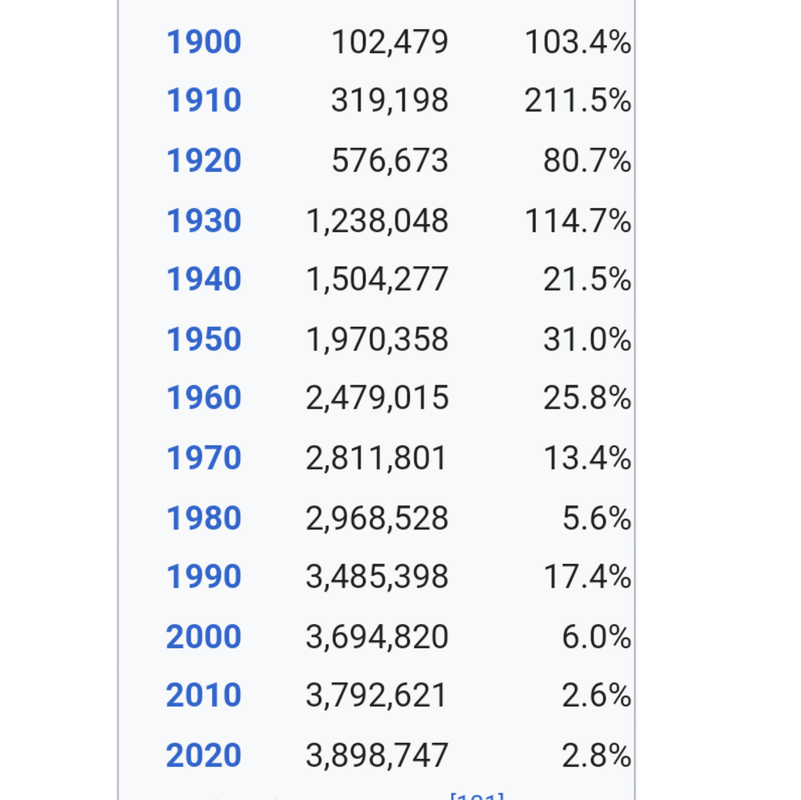
Yes and no. Detroit was far more dense than Los Angeles is today. Detroit was more similar to peak Philadelphia in density (and population). The areas of Detroit built between 1920 and 1950 have a pretty strong resemblance to those areas built in Los Angeles during that period. This is actually the building stock in Detroit that is most likely to still exist and has strong resemblances to the prewar sfh areas of L.A.
Reply With Quote
     
     
  #83  
Old Posted Dec 17, 2023, 7:38 PM
Velvet_Highground Velvet_Highground is offline
Doc Love 3.0
 
Join Date: Mar 2022
Location: Metropolitan Detroit
Posts: 700
I think that’s a pretty fair assessment outside of the oddball that is Southwest Detroit which is mostly intact and imo trends a bit more east coast in some areas. Hamtramck is the great time machine bringing that unique average middle class of the eastern outer urban core Detroit density of 100+ years ago into the 21st century.

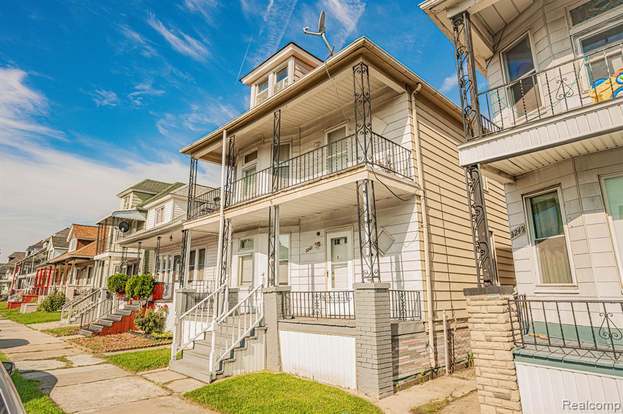
Blocks like this one old school Detroit density making up a significant portion of the city residents lived especially after the housing crisis of the 40’s when they were chopped into flats. Not to say that the outer west and SW don’t have or had block’s like this one but has a general rule of thumb Hamtramck and the area around was the densest part of town and made up of this kind of stock built around WW1.


*about the 50% demo comment a good rule of thumb is the rule of 1/3’s when the most recent study was done 1/3 of neighborhoods were in good shape 1/3 were fair or block to block the broken teeth analogy either on a street or street as part of a neighborhood or a combo of both or all. Then the remaining 1/3 of land is vacant those homes in the fore ground which were a majority in entire districts were single family at first back when 12 kids or 3 generations in a house was common.


https://www.redfin.com/city/9234/MI/Hamtramck/amenity/finished+attic

Last edited by Velvet_Highground; Dec 17, 2023 at 7:50 PM.
Reply With Quote
     
     
  #84  
Old Posted Dec 17, 2023, 8:21 PM
dktshb's Avatar
dktshb dktshb is offline
Environmental Sabotage
 
Join Date: Jun 2005
Location: San Francisco/ Los Angeles/ Tahoe
Posts: 5,140
Quote:
Originally Posted by Cirrus View Post
It means neighborhoods outside of downtown where it's mainstream to walk more often than drive for daily tasks.

Most cities have urban downtowns. What makes an urban city is its neighborhoods.

You are correct that post-covid, a lot of office downtowns are struggling, including in the Big 6 Urban Cities. What's different about the Big 6 Urban Cities is that their downtowns are only a tiny part of what makes them urban/walkable, not the main part.

If we were to rank just the best downtowns in the US, ignoring the rest, more than 6 cities would be in the conversation.
LA does pretty well in this regard though. Yeah the city is vast but there are vast areas where the built environment, grid and proximity of amenities to housing provides plenty opportunities of living in vibrant urban walkable neighborhoods. In the 20 years I lived in LA whether it was Silver Lake, Hollywood, West Hollywood Santa Monica or Long Beach I always lived in walkable neighborhoods where the grocery store, retail, restaurants, movie theaters and gym were always within walking distance and I walked much more often than I drove like here in SF. I guess LA is a city where you have both options. I wish they wouldn't make is so easy for people to get in their cars and drive but I think people on this forum who never lived in LA just don't understand that it is relatively easy and pleasant to get around your neighborhood on foot too.
Reply With Quote
     
     
  #85  
Old Posted Dec 17, 2023, 8:44 PM
iheartthed iheartthed is online now
Registered User
 
Join Date: Oct 2009
Location: New York
Posts: 11,878
Quote:
Originally Posted by Velvet_Highground View Post
Blocks like this one old school Detroit density making up a significant portion of the city residents lived especially after the housing crisis of the 40’s when they were chopped into flats. Not to say that the outer west and SW don’t have or had block’s like this one but has a general rule of thumb Hamtramck and the area around was the densest part of town and made up of this kind of stock built around WW1.
Hamtramck was almost twice as dense in 1920 as it is today, but it was still far less dense than the core of Detroit in that era. Hamtramck skyrocketed up in population between 1910 and 1920, going from about 3,500 in 1910 to nearly 50,000 by 1920. But the city's density was roughly 24k ppsm in 1920, which would have been a respectable density but not extraordinary in Detroit by then.

There were many areas in Detroit that were well above 30k ppsm even in 1950. If you look at the density map, you can see that those hyper dense areas were all targeted by the freeway construction projects in the 1950s and 1960s: https://drawingdetroit.wordpress.com/2012/07/02/detroits-population-density/
Reply With Quote
     
     
  #86  
Old Posted Dec 17, 2023, 10:49 PM
Wigs's Avatar
Wigs Wigs is offline
Great White North
 
Join Date: Nov 2003
Location: Niagara Region
Posts: 16,072
I think people forget how quickly LA boomed


LA (city) was already over 1.5 Million before America entered WW2


LA County was 2.8 Million at the time
Reply With Quote
     
     
  #87  
Old Posted Dec 17, 2023, 11:24 PM
craigs's Avatar
craigs craigs is offline
Registered User
 
Join Date: May 2019
Location: Los Angeles
Posts: 10,735
Quote:
Originally Posted by mhays View Post
Seattle's a tweener between that group and the urban six.

Its peak density is much higher. It's transit and walking commute shares are much higher. It's far more on an immigrant center. It has tourist districts (as does only SD).

Activity is in nodes that comprise 20% of the city. Some of these are linear, and others are dotted around town.

But it's true that all of these cities are growing in similar formats.
The forum's 2020 census thread yielded interesting statistics on metropolitan population density. The cities that you and Segun were discussing vary quite a bit in terms of overall density.

Percentage and number of persons in each MSA who lived in census tracts with population densities of 10,000+:
(Los Angeles: 50.0%, 6,611,283)
San Diego: 24.7%, 816,530
Seattle: 12.5%, 505,840
Denver: 10.6%, 315,809
Portland: 7.1%, 179,612
Minneapolis: 6.5%, 241,894

Seattle is not notably dense, but it is growing rapidly and in the right way--prioritizing transit-, pedestrian-, and bike-friendly new development and transit extensions in times of very high population growth.

Quote:
Originally Posted by Wigs View Post
I think people forget how quickly LA boomed

LA (city) was already over 1.5 Million before America entered WW2

LA County was 2.8 Million at the time
Right, and most of the cityscape laid out to contain those people before 1940 was either traditionally urban (e.g., downtown) or quasi-urban (e.g., streetcar suburbs). While pre-war Los Angeles was already in the process of suburbanization and switching from public transit to private vehicles, the entire region was still nonetheless well-served by a massive streetcar network. The pre-war streetcar-oriented layout formed the template upon which most of the city and much of the county were eventually built. Of course, there are now vast tracts of true autopian sprawl, but the transit-friendly layout of the pre-war city is what distinguishes Los Angeles from other polycentric sunbelt cities. That, and the population densities--which is probably related.
__________________
Chaos upon my enemies, chaos upon my enemies, chaos upon my enemies.
Reply With Quote
     
     
  #88  
Old Posted Dec 17, 2023, 11:30 PM
wwmiv wwmiv is online now
Registered User
 
Join Date: Sep 2009
Location: Austin -> San Antonio -> Columbia -> San Antonio -> Chicago -> Austin -> Denver -> Austin
Posts: 5,795
Quote:
Originally Posted by craigs View Post
The forum's 2020 census thread yielded interesting statistics on metropolitan population density. The cities that you and Segun were discussing vary quite a bit in terms of overall density.

Percentage and number of persons in each MSA who lived in census tracts with population densities of 10,000+:
(Los Angeles: 50.0%, 6,611,283)
San Diego: 24.7%, 816,530
Seattle: 12.5%, 505,840
Denver: 10.6%, 315,809
Portland: 7.1%, 179,612
Minneapolis: 6.5%, 241,894

Seattle is not notably dense, but it is growing rapidly and in the right way--prioritizing transit-, pedestrian-, and bike-friendly new development and transit extensions in times of very high population growth.


Right, and most of the cityscape laid out to contain those people before 1940 was either traditionally urban (e.g., downtown) or quasi-urban (e.g., streetcar suburbs). While pre-war Los Angeles was already in the process of suburbanization and switching from public transit to private vehicles, the entire region was still nonetheless well-served by a massive streetcar network. The pre-war streetcar-oriented layout formed the template upon which most of the city and much of the county were eventually built. Of course, there are now vast tracts of true autopian sprawl, but the transit-friendly layout of the pre-war city is what distinguishes Los Angeles from other polycentric sunbelt cities. That, and the population densities--which is probably related.
Exactly. Los Angeles is an interwar city, not a postwar city. Its urban heft is way more than people give it credit for. Way back on page 1:

Quote:
Originally Posted by wwmiv View Post
I’m a big fan of disaggregating into more than two groups of cities. Los Angeles certainly doesn’t belong in the same conversation or typology of urbanism as New York City, Boston, Philadelphia, San Francisco, etc., but it also doesn’t really belong in the same conversation as Houston, Dallas, or Atlanta.

Los Angeles boomed MUCH earlier than any of them, with its foray into major city status beginning in 1920 and unfolding until 1960. We all like to refer to Los Angeles as comparable to the post-war boomburbs, but the reality is that its bones are built on the basis of one of the largest interwar streetcar networks in the entire country. Interwar design principles fundamentally differ from their post-war counterparts, just as much as they differ from pre-war principles:

pre-war: largely attached or semi-attached single family dwellings and apartment blocks sometimes built with alleyways and on grids with people reliant on foot and transit for mobility;

interwar: largely detached, but narrowly spaced, single family homes and apartment blocks usually built with alleyways and on grids with people reliant on transit and vehicles for mobility;

post-war: largely detached and dispersed single family homes and apartment complexes rarely built with alleyways or grids with people reliant on only vehicles for mobility;

Los Angeles is prototypically an interwar city which built on those bones with even more post-war stuff as well, not some kind of monolithically post-war suburban hellscape like Houston.
It is leaps and bounds more urban than Houston, Seattle, Miami, Dallas, Minneapolis, etc.

I’d actually further refine the typology I presented, as there’s a noticeable difference in the built environment of cities that boomed before and after the civil war. Core Philadelphia is markedly different than the core of Pittsburgh, for instance, because they boomed at completely different times. Throughout central Pittsburgh there are detached historic structures, whereas there are very few of these in the core area of Philadelphia.

pre-independence: largely rural, and even in towns the built form was mostly extended family homes with the dominant mode of travel being foot and wagon;

pre-civil war: largely attached single family dwellings and small apartments on various types of grids and alleyways with most people reliant on foot for mobility;

pre-war antebellum: largely attached or semi-attached single family dwellings, flats, and apartment blocks sometimes built with alleyways and on grids with most people reliant on foot and transit for mobility;

interwar: largely detached, but narrowly spaced, single family homes and apartment blocks usually built with alleyways and on grids with most people reliant on transit and vehicles for mobility;

post-war: largely detached and dispersed single family homes and apartment complexes rarely built with alleyways or grids with most people reliant on only vehicles for mobility;

__________________
Houston: 2.4m (+3.9%) + MSA suburbs: 5.4m (+12%) + CSA exurbs: 200k (+5%)
Dallas: 1.3m (+2%) / FtW: 1.0m (+10%) + suburbs: 6.4m (9%) + exurbs: 566k (+9%)
San Antonio: 1.5m (+6%) + MSA suburbs: 1.2m (+10%) + CSA exurbs: 82k (+3%)
Austin: 994k (+3%) + MSA suburbs: 1.6m (+18%)
Texas (whole): 31.29m (+7%) / Texas (balance): 8.6m (+3%)

Last edited by wwmiv; Dec 17, 2023 at 11:40 PM.
Reply With Quote
     
     
  #89  
Old Posted Dec 18, 2023, 1:21 AM
jpdivola jpdivola is offline
Registered User
 
Join Date: Mar 2014
Posts: 372
Quote:
Originally Posted by jd3189 View Post
Before living here in LA for residency, I remember years ago on another thread that the only major cities in the country that still retained much of their prewar built environment and seemed urban were NYC, SF, Chicago, Boston, Philly, and DC. LA was sometimes included in this group but was seen as still distinct from those “big 6”.

Now that I have spent some time driving, walking, and taking public transit around the city, I have to say that LA is pretty urban at its core and various other nodes, such as Hollywood, Mid-Wilshire, etc. It’s still very car centric with small strip malls and some larger ones anchored by grocery stores like Ralph’s and local supermarkets. However, it’s still is walkable though many of those nodes and many of its urban parts are prewar or at least interwar/ early postwar.

In many neighborhoods, there isn’t only single family homes. A lot of small garden apartments, dingbats, duplexes/triplexes as well as legit large apartment buildings among them. Even the SFHs are on small lots which gives both a sense of independence but also fosters some level of community, unlike the newer suburbs in Texas or Florida. Overall the built area reminded me of parts of Brooklyn ( outside of the brownstones) and Queens. It’s not as intense as Manhattan (although nowhere in this country is) but it wasn’t built with that in mind.

I guess what I’m trying to say for this thread is that despite its faults, LA is legitimately one of the most urban cities in the country and belongs with the other 6 prewar cities. It still has a lot to improve upon but it does belong up there along with NYC, Chicago, and SF.
I do get the weirdness of comparing a massive city like LA to far smaller cities like Boston or DC and saying it is less urban. But, I would still lean toward saying LA is qualitatively different than the more traditionally urban cities.

In those cities, a disproportionate share of the MSA's employment, cultural and nightlife is found in a relatively dense urban core that consists of a downtown and surrounding core of dense walkable urban neighborhoods. You have a critical mass urban amenities in a relatively small area.

LA is far more polycentric. DTLA has certainly risen in stature of the past 20 year. But, it isn't the undisputed core of the region and competes with several other discrete nodes.

If you want to live a stereotypical car-free walkable lifestyle, it will be a lot easier to do in the other 6 than LA. 
Reply With Quote
     
     
  #90  
Old Posted Dec 18, 2023, 1:37 AM
jpdivola jpdivola is offline
Registered User
 
Join Date: Mar 2014
Posts: 372
Quote:
Originally Posted by LA21st View Post
For sure, the lack of amenties hurt street life, because there isn't a ton of stuff to walk to. Which is my point of DC, outside of the core/urban DC, it is lacking for retail/storefronts in many neighborhoods.
Westlake in LA is uglier/less pleasant and low income, but there's storefronts all over the damn place there. It makes it feel more "city" even though its grittier.
I feel like DC is the least urban of the so called Big 6. Partially due to being a master planned government city with a lot of impersonal government buildings in the core. But, also it is really more a hybrid urban/sunbelt city than the 5 others. In 1930, DC was far smaller than Boston or Philly to say nothing of Chicago. DC's prewar core is more like STL than Boston or Philly. With the rise of modern zoning, much of DC's quiet row house neighborhoods were basically frozen in time. Had DC grown earlier, it is likely Capitol Hill would have seen more apartment buildings and commercial mixed-use development built.
Reply With Quote
     
     
  #91  
Old Posted Dec 18, 2023, 1:49 AM
Docere Docere is online now
Registered User
 
Join Date: Jul 2014
Posts: 8,660
DC didn't pass the 500,000 mark until the 1940 census. Just looked up the stats and it grew quite quickly in the 1930s (36%) with the New Deal expansion of the federal government. So I guess it much have more 1930s housing and construction than most cities. The 1930s in most cities were a period of slow growth, so you have 10-15 years separating pre-war" and "post-war" construction, since little was built during that period.


DC population

1930: 486,869
1940: 663,091
Reply With Quote
     
     
  #92  
Old Posted Dec 18, 2023, 2:00 AM
Wigs's Avatar
Wigs Wigs is offline
Great White North
 
Join Date: Nov 2003
Location: Niagara Region
Posts: 16,072
Docere, what was the LA Metro population from 1900-1950?
Reply With Quote
     
     
  #93  
Old Posted Dec 18, 2023, 2:57 AM
Docere Docere is online now
Registered User
 
Join Date: Jul 2014
Posts: 8,660
I don't think there was really an official metropolitan area definition until 1930 or 1940.
Reply With Quote
     
     
  #94  
Old Posted Dec 18, 2023, 2:58 AM
Wigs's Avatar
Wigs Wigs is offline
Great White North
 
Join Date: Nov 2003
Location: Niagara Region
Posts: 16,072
Quote:
Originally Posted by Docere View Post
I don't think there was really an official metropolitan area definition until 1930 or 1940.
Just curious how much bigger the population was compared to LA county
Reply With Quote
     
     
  #95  
Old Posted Dec 18, 2023, 3:14 AM
jpdivola jpdivola is offline
Registered User
 
Join Date: Mar 2014
Posts: 372
Quote:
Originally Posted by Docere View Post
DC didn't pass the 500,000 mark until the 1940 census. Just looked up the stats and it grew quite quickly in the 1930s (36%) with the New Deal expansion of the federal government. So I guess it much have more 1930s housing and construction than most cities. The 1930s in most cities were a period of slow growth, so you have 10-15 years separating pre-war" and "post-war" construction, since little was built during that period.


DC population

1930: 486,869
1940: 663,091
A lot of that growth was military related. There was a massive housing shortage during that period. A lot of overcrowded housing, squatting (especially among the Black population), and I believe there were some temporary barrack style housing built along the mall. Almost as soon as the population boom started it ended with the post WW2 flight to the suburbs. So DC didn't really have time to grow into its 1950 peak population of 800k.
https://boundarystones.weta.org/2014/04/08/standing-room-only-dcs-wwii-housing-crunch

By contrast in 1930 Boston was at 781k with 200k plus in Cambridge/Somerville.
Reply With Quote
     
     
  #96  
Old Posted Dec 18, 2023, 3:17 AM
Segun's Avatar
Segun Segun is offline
Ikenga: Igbo God of Power
 
Join Date: Aug 2001
Posts: 5,948
Here's a speculation of what could have been if major top 10 cities didn't lose people.....

*I know family sizes were bigger historically. For this exercise, lets pretend people moved out crowded households and into new infill and high rises, keeping the numbers the same.

Cleveland, Pittsburgh, and Baltimore would all be around 12,000 ppsm. Cleveland would probably be arranged like a smaller Toronto today (strong downtown with scattered nodes of high density), whereas Baltimore and Pittsburgh might resemble Montreal, (or a hilly Montreal)

Detroit, Buffalo, DC and St Louis would be around the 13-14K ppsm range. Detroit would also be similar to Toronto (Woodward akin to Yonge with New Center similar to Yonge/Bloor) Buffalo would be smaller, but similar. Ironically with St Louis, I see it looking more like DC does today (as jpdivola also stated), with very elegant, urban but spacious residential streets. DC itself is very close to its peak, so it's hard to see where it might have looked different. Perhaps SE DC would be more vibrant than it is today.

In the 15,000 - 16,000 ppsm range would be Philadelphia, Chicago and Boston. Boston, like DC, is also somewhat close to its peak population. Chicago and Philadelphia, however, would be fundamentally different. Vibrant areas would be spread more evenly across the city.

Two anomalies are New Orleans and Cincinnati, which both have clusters of very dense significant (wealthy) urban neighborhoods, but historically also have very large boundaries, so the density figures at their peak aren't that high. In Cincinnati's case, it also has walkable urbanity that extends across the river into another state. The closest comparison I could come up with may be a Vancouver - A large, contiguous central area with an extreme jump in density from its outlying areas. New Orleans leaning more towards SF, and the Natti leaning more towards Boston.

Overall, many of the large cities in the US would have seamless urbanity on the scale of the busiest areas of Chicago, DC, SF, Philadelphia, Boston, Toronto and Montreal. Still nothing resembling New York.
Reply With Quote
     
     
  #97  
Old Posted Dec 18, 2023, 3:40 AM
craigs's Avatar
craigs craigs is offline
Registered User
 
Join Date: May 2019
Location: Los Angeles
Posts: 10,735
Quote:
Originally Posted by Segun View Post
Here's a speculation of what could have been if major top 10 cities didn't lose people.....

*I know family sizes were bigger historically. For this exercise, lets pretend people moved out crowded households and into new infill and high rises, keeping the numbers the same.

Cleveland, Pittsburgh, and Baltimore would all be around 12,000 ppsm. Cleveland would probably be arranged like a smaller Toronto today (strong downtown with scattered nodes of high density), whereas Baltimore and Pittsburgh might resemble Montreal, (or a hilly Montreal)

Detroit, Buffalo, DC and St Louis would be around the 13-14K ppsm range. Detroit would also be similar to Toronto (Woodward akin to Yonge with New Center similar to Yonge/Bloor) Buffalo would be smaller, but similar. Ironically with St Louis, I see it looking more like DC does today (as jpdivola also stated), with very elegant, urban but spacious residential streets. DC itself is very close to its peak, so it's hard to see where it might have looked different. Perhaps SE DC would be more vibrant than it is today.

In the 15,000 - 16,000 ppsm range would be Philadelphia, Chicago and Boston. Boston, like DC, is also somewhat close to its peak population. Chicago and Philadelphia, however, would be fundamentally different. Vibrant areas would be spread more evenly across the city.

Two anomalies are New Orleans and Cincinnati, which both have clusters of very dense significant (wealthy) urban neighborhoods, but historically also have very large boundaries, so the density figures at their peak aren't that high. In Cincinnati's case, it also has walkable urbanity that extends across the river into another state. The closest comparison I could come up with may be a Vancouver - A large, contiguous central area with an extreme jump in density from its outlying areas. New Orleans leaning more towards SF, and the Natti leaning more towards Boston.

Overall, many of the large cities in the US would have seamless urbanity on the scale of the busiest areas of Chicago, DC, SF, Philadelphia, Boston, Toronto and Montreal. Still nothing resembling New York.
You should start a thread about that.
__________________
Chaos upon my enemies, chaos upon my enemies, chaos upon my enemies.
Reply With Quote
     
     
  #98  
Old Posted Dec 18, 2023, 6:25 AM
Shawn Shawn is offline
Moderator
 
Join Date: Jul 2001
Location: Tokyo
Posts: 6,082
Quote:
Originally Posted by jpdivola View Post
I do get the weirdness of comparing a massive city like LA to far smaller cities like Boston or DC and saying it is less urban.
I'm pretty sure if you expand Boston's size to include land area about the size of LA minus the San Fernando Valley and all the Port of LA acreage (so, about 200 sq miles), you'd still be able to make a pretty apt comparison.

Most of southeastern Middlesex and Sussex Counties outside of Boston are more urban / denser than large parts of the City of Boston's southern neighborhoods. Cambridge, Somerville, Everett, Chelsea, Revere, etc. This ~200 sq mile "Greater Boston" has about 1.85 million people. Which is pretty close to how many people live in LA sans the SF Valley (about 1.99 million).
Reply With Quote
     
     
  #99  
Old Posted Dec 18, 2023, 1:51 PM
Prahaboheme Prahaboheme is offline
Registered User
 
Join Date: Apr 2003
Posts: 1,754
To keep this all in context, the population density of Washington DC is 10.9k pp/sm (and that includes all of the NPS designed areas as well as a large population not included as they do not register as DC residents). Might as well include adjacent Arlington VA (9.18 pp/sm) and Alexandria VA (10.4k pp/sm) with their 10+ metro stops.

In comparison, overall population density of LA is 8.3k pp/sm which is closer to Baltimore 7.23 pp/sm, 40 miles to the north of DC.
Reply With Quote
     
     
  #100  
Old Posted Dec 18, 2023, 1:58 PM
Crawford Crawford is online now
Registered User
 
Join Date: Nov 2003
Location: Brooklyn, NYC/Polanco, DF
Posts: 34,725
Quote:
Originally Posted by jpdivola View Post
I feel like DC is the least urban of the so called Big 6. Partially due to being a master planned government city with a lot of impersonal government buildings in the core. But, also it is really more a hybrid urban/sunbelt city than the 5 others. In 1930, DC was far smaller than Boston or Philly to say nothing of Chicago. DC's prewar core is more like STL than Boston or Philly. With the rise of modern zoning, much of DC's quiet row house neighborhoods were basically frozen in time. Had DC grown earlier, it is likely Capitol Hill would have seen more apartment buildings and commercial mixed-use development built.
I understand these points, and DC is a bit of an outlier among the six. It's younger, more Sunbelt-y and lacks the extensive prewar fabric. It doesn't have terrific density and its activity nodes are often underwhelming. There's an (admittedly subjective) genericism in its architecture, design and civic spaces.

At the same time, DC has some particular strengths. It arguably has the best transit system outside of NYC. It has the highest heavy rail ridership outside of NYC. It has the highest share of multifamily outside NYC. It has a huge, monumental core that's the undisputed regional nexus. It has the best and most extensive postwar transit-oriented suburban development in the U.S. Downtown DC is the second or third largest core office market in the U.S.
Reply With Quote
     
     
This discussion thread continues

Use the page links to the lower-right to go to the next page for additional posts
 
 
Reply

Go Back   SkyscraperPage Forum > Discussion Forums > City Discussions
Forum Jump


Forum Jump


All times are GMT. The time now is 4:27 PM.

     
SkyscraperPage.com - Privacy Statement - Top

Powered by vBulletin® Version 3.8.7
Copyright ©2000 - 2026, vBulletin Solutions, Inc.