This vid has changed my opinion of the homeless housing proposed for the old sears bldg southeast of the main part of dtla. I originally didn't know enough about the property's owner to be sure whether he was naive & foolhardy about urban LA's problems or trying to exploit the situation, make a quick buck & cause even worst results.....or what has been going on for yrs.
https://youtu.be/smY5chuHUL4?si=0vTFYeOadoklHJlw
^ If this devlpr manages a homeless proj in the former Sear bldg, he may be less unreliable than city officials & folks who run profitable (for themselves) charitable organizations are who end up making a bad situation even worse.
The city...dtla...is now facing anti urban trends similar to over 40 yrs ago. That's when more & more ppl & businesses wanted to avoid older areas by relocating to the newer burbs or smaller cities. Dirt, crime & homelessness are creating a lot of pressure on dt. Something major has to be done & business-as-usual no longer works. If not, the past 30 to 50 yrs of improving dtla will be lost, just as what's currently going on in sections of san francisco.
Quote:
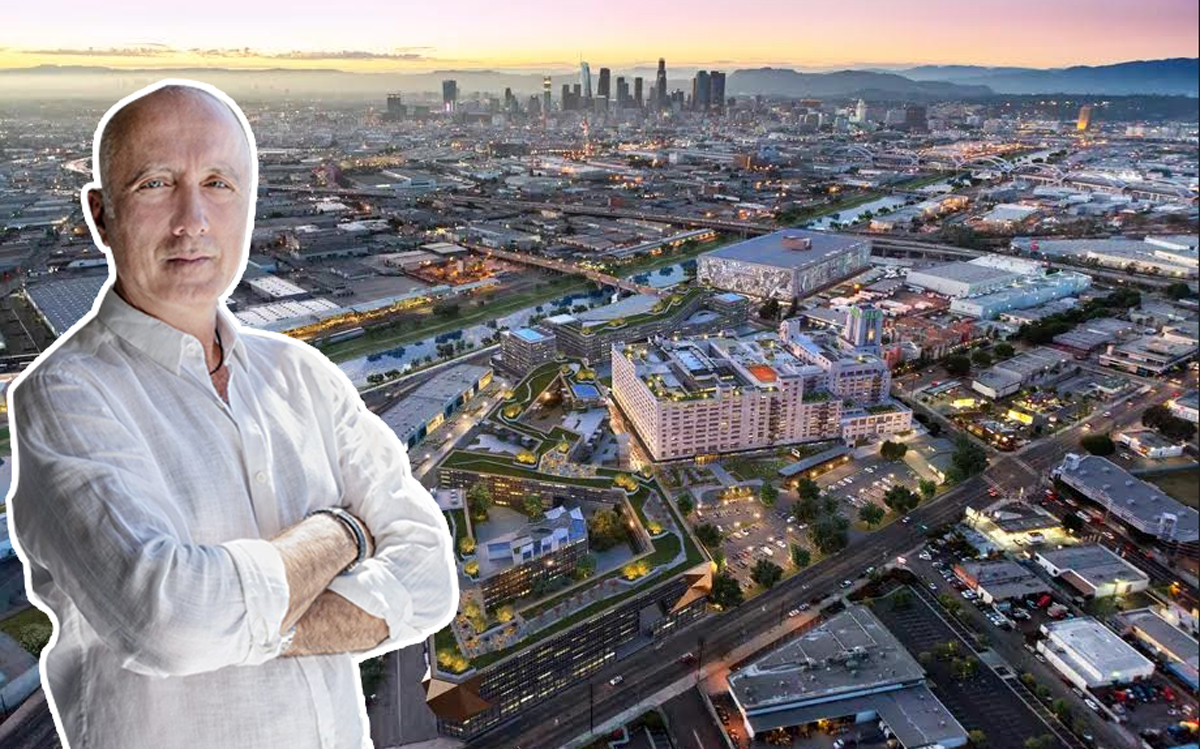
therealdeal.com
The 62-year-old Shomof bought the 1.6 million-square-foot property in 2013 and boasted to this paper then that he could “develop an entire neighborhood” there. For years, his company promised a mixed-use hipster hub branded as the Mail Order District complete with a food hall, live-work lofts and office space. That plan — which promised to “revitalize” the industrial neighborhood around the Sears building — is still up on the website of the Shomof Group. But when I met Shomof to hear about his new proposal, he had a radically different vision: Convert a concrete icon of L.A.’s Eastside into a full-fledged campus that helps the unhoused.
“I’ve been in L.A. for over 50 years, and I’ve seen homeless here that long,” said the multi-millionaire developer. “It’s time for it to be corrected once and for all. And after I met Bill, I think we’ve found a solution. Here, we can do a miracle.”
In nine acres of undeveloped land surrounding the Sears building, the two say they can house 2,000 people immediately in temporary shelters. On the first floor, Shomof and Taormina would build a one-stop shop for homeless — a pharmacy, a job training center, spaces for dentists and barbers, and even a kennel for pets — to get them off the streets and onto a better path. The second floor would house a medical center and offices for groups across Southern California who deal with homelessness, to foster a collaborative spirit.
Floors 3 through 10 — each the size of 3½ football fields — would hold more than 700 beds apiece in spacious dorm rooms for a total of nearly 5,900 beds in the building, with the capacity for more than 10,000.
To put that number into perspective, the 2021 Housing Inventory County conducted by the Los Angeles Homeless Services Authority found that L.A.’s shelter capacity was 14,854 beds. One of the largest homeless facilities in Los Angeles, Union Rescue Mission, can hold about 1,000 people.
Shomof first gained prominence in the 2000s as a downtown Los Angeles developer nicknamed the “King of Spring” for buying and repurposing old commercial buildings. But the neighborhood is also where Shomof says his perspective on homelessness was forever sealed as a teenage immigrant in the 1970s.
According to the proposal he and Taormina crafted, the joint-powers authority that would oversee the Life Rebuilding Center would have to enter into a lease with Shomof of at least 20 years at an annual estimated cost of $23.3 million. At that rate, Shomof would easily earn back his investment before the lease was up.
Shomof justified the rent as a bargain for taxpayers in a city where a 2020 city controller audit said the price of a single unit of housing for the homeless was $531,000. A city where last fall, construction began on a 19-story tower in skid row that will eventually host 382 units. The cost of the first phase, according to my colleague Doug Smith? $160 million.
|





 Prev
Prev


 Linear Mode
