HomeDiagramsDatabaseMapsForum About
     

Go Back   SkyscraperPage Forum > Regional Sections > Canada


View Poll Results: How often do you go downtown in your city?
Live downtown 36 18.09%
Work/Study downtown 44 22.11%
Live and work/study downtown 18 9.05%
Once or more per week 46 23.12%
Less than once per week but once or more per month 32 16.08%
Less than once per month but once or more per year 22 11.06%
Less than once per year 1 0.50%
Voters: 199. You may not vote on this poll

Reply

 
Thread Tools Display Modes
     
     
  #341  
Old Posted Sep 3, 2023, 8:25 PM
logan5's Avatar
logan5 logan5 is offline
Registered User
 
Join Date: Feb 2011
Location: Mt.Pleasant - The New Downtown South
Posts: 8,175
Should the Broadway Corridor (Mt. Pleasant/Fairview/Kits) be considered part of Downtown Vancouver now? Mt. Pleasant for example, is on par with the Beltline in Calgary (which is considered "downtown"), and areas like Granville and Broadway or Cambie and Broadway are just as busy (or busier) than many parts of downtown Toronto, which covers a much larger area than downtown Vancouver.

Living in Mt. Pleasant, I feel like I live downtown.
Reply With Quote
     
     
  #342  
Old Posted Sep 3, 2023, 8:42 PM
Changing City's Avatar
Changing City Changing City is online now
Registered User
 
Join Date: Nov 2016
Posts: 8,291
Quote:
Originally Posted by logan5 View Post
Should the Broadway Corridor (Mt. Pleasant/Fairview/Kits) be considered part of Downtown Vancouver now? Mt. Pleasant for example, is on par with the Beltline in Calgary (which is considered "downtown"), and areas like Granville and Broadway or Cambie and Broadway are just as busy (or busier) than many parts of downtown Toronto, which covers a much larger area than downtown Vancouver.

Living in Mt. Pleasant, I feel like I live downtown.
Not really. it's part of the city's Metro Core, but Downtown Vancouver has a specific geography and anything on the south side of False Creek really isn't Downtown. I live closer to Downtown than you do, but I don't feel like I live Downtown - Main Street seems like an appropriate boundary.
__________________
Contemporary Vancouver development blog, https://changingcitybook.wordpress.com/ Then and now Vancouver blog https://changingvancouver.wordpress.com/
Reply With Quote
     
     
  #343  
Old Posted Sep 3, 2023, 8:52 PM
logan5's Avatar
logan5 logan5 is offline
Registered User
 
Join Date: Feb 2011
Location: Mt.Pleasant - The New Downtown South
Posts: 8,175
Quote:
Originally Posted by Changing City View Post
Not really. it's part of the city's Metro Core, but Downtown Vancouver has a specific geography and anything on the south side of False Creek really isn't Downtown. I live closer to Downtown than you do, but I don't feel like I live Downtown - Main Street seems like an appropriate boundary.
I've mentioned this before because I feel like the boundary should be expanded in order for there to be better public acceptance of downtown like development (as there should be) along the Broadway Corridor. Imo the Broadway Plan is too conservative.

The neighbourhoods certainly exceed the downtown criteria threshold, if we compare to other cities, including Toronto. At least consider renaming the district "Downtown South".
Reply With Quote
     
     
  #344  
Old Posted Sep 4, 2023, 12:34 AM
Changing City's Avatar
Changing City Changing City is online now
Registered User
 
Join Date: Nov 2016
Posts: 8,291
Quote:
Originally Posted by logan5 View Post
I've mentioned this before because I feel like the boundary should be expanded in order for there to be better public acceptance of downtown like development (as there should be) along the Broadway Corridor. Imo the Broadway Plan is too conservative.

The neighbourhoods certainly exceed the downtown criteria threshold, if we compare to other cities, including Toronto. At least consider renaming the district "Downtown South".
There's already a "Downtown South"; it's the southern part of the Downtown Peninsula.

"Downtown South

In 1991, Council amended Downtown's Official Development Plan for the area known as Downtown South. Located south of Robson Street, east of the West End, and north of Pacific Street and historic Yaletown, this 51 ha (128 ac) area will be transformed into a high-density residential and mixed-use community. By 2020, the area should be home to approximately 11,000 people in 5,600 housing units. Guidelines are in place to provide view protection and ensure a livable, high density neighbourhood for residents.

Granville and Davie Streets are the major retail strips catering to residents and office workers. Strategies are being developed to provide the community with social, recreational and health services. Examples include a community centre, job development support, a mental health drop-in centre, and outreach programs.

Development levies on new projects will help fund services and amenities such as park land, replacement housing, and day care facilities. Council has also approved a unique streetscape plan for the area that will significantly improve the pedestrian environment.
"[City of Vancouver]

You're just going to have to move if you actually want to live 'Downtown'!
__________________
Contemporary Vancouver development blog, https://changingcitybook.wordpress.com/ Then and now Vancouver blog https://changingvancouver.wordpress.com/
Reply With Quote
     
     
  #345  
Old Posted Sep 4, 2023, 1:17 AM
logan5's Avatar
logan5 logan5 is offline
Registered User
 
Join Date: Feb 2011
Location: Mt.Pleasant - The New Downtown South
Posts: 8,175
Quote:
Originally Posted by Changing City View Post
There's already a "Downtown South"; it's the southern part of the Downtown Peninsula.

"Downtown South

In 1991, Council amended Downtown's Official Development Plan for the area known as Downtown South. Located south of Robson Street, east of the West End, and north of Pacific Street and historic Yaletown, this 51 ha (128 ac) area will be transformed into a high-density residential and mixed-use community. By 2020, the area should be home to approximately 11,000 people in 5,600 housing units. Guidelines are in place to provide view protection and ensure a livable, high density neighbourhood for residents.

Granville and Davie Streets are the major retail strips catering to residents and office workers. Strategies are being developed to provide the community with social, recreational and health services. Examples include a community centre, job development support, a mental health drop-in centre, and outreach programs.

Development levies on new projects will help fund services and amenities such as park land, replacement housing, and day care facilities. Council has also approved a unique streetscape plan for the area that will significantly improve the pedestrian environment.
"[City of Vancouver]

You're just going to have to move if you actually want to live 'Downtown'!
Nope. I like the area of downtown I live in. We’re just talking about boundaries here. I have all the amenities in Mt Pleasant that any other downtown in Canada has.
Reply With Quote
     
     
  #346  
Old Posted Sep 4, 2023, 2:05 AM
MonkeyRonin's Avatar
MonkeyRonin MonkeyRonin is online now
¥ ¥ ¥
 
Join Date: Sep 2006
Location: Vancouver
Posts: 10,658
Quote:
Originally Posted by logan5 View Post
Should the Broadway Corridor (Mt. Pleasant/Fairview/Kits) be considered part of Downtown Vancouver now? Mt. Pleasant for example, is on par with the Beltline in Calgary (which is considered "downtown"), and areas like Granville and Broadway or Cambie and Broadway are just as busy (or busier) than many parts of downtown Toronto, which covers a much larger area than downtown Vancouver.

Living in Mt. Pleasant, I feel like I live downtown.

Nope. What makes a downtown a downtown is geography & use, not urbanity. It's simply the city's centre and commercial core (and an adjacent residential neighbourhood or two) - and in Vancouver's case that's pretty neatly encapsulated by the peninsula. Flase Creek makes for a clear & obvious break; but there's also still an obvious drop-off in activity between the peninsula and Broadway Corridor, plus it becomes more residential in nature.

What's happening in Vancouver is just that it's becoming a big city - and that means that you'll start to find several dense, busy neighbourhoods even outside of the downtown core. Having amenities like Mount Pleasant is a normal feature of non-downtown urban neighbourhoods the world over. Some of Toronto's densest & busiest neighbourhoods are also not downtown (and if we're going to go by the standard of Kits being sufficiently downtown-ish in nature, then by that logic you could say that the majority of NYC's 9 million inhabitants would live downtown!).
__________________
Reply With Quote
     
     
  #347  
Old Posted Sep 4, 2023, 2:53 AM
logan5's Avatar
logan5 logan5 is offline
Registered User
 
Join Date: Feb 2011
Location: Mt.Pleasant - The New Downtown South
Posts: 8,175
Downtowns grow. Downtown Toronto's boundaries probly didn't always stretch out to Bathhurt/Don Valley.

Vancouver's downtown peninsula is built out, so it's only natural that it expands to the Broadway Corridor, which by the way already has a substantial office component, giving it an important doqntown component. Cambie and Broadway is becoming Vancouver's Bloor and Yonge. The office component to Broadway is only going to accelerate with the subway coming on line. When there are multiple high rise office towers there, we are still not going to recognize it as part if downtown?
Reply With Quote
     
     
  #348  
Old Posted Sep 4, 2023, 3:30 AM
Nite's Avatar
Nite Nite is offline
Registered User
 
Join Date: Dec 2007
Location: Toronto
Posts: 3,384
Quote:
Originally Posted by logan5 View Post
Downtowns grow. Downtown Toronto's boundaries probly didn't always stretch out to Bathhurt/Don Valley.

Vancouver's downtown peninsula is built out, so it's only natural that it expands to the Broadway Corridor, which by the way already has a substantial office component, giving it an important doqntown component. Cambie and Broadway is becoming Vancouver's Bloor and Yonge. The office component to Broadway is only going to accelerate with the subway coming on line. When there are multiple high rise office towers there, we are still not going to recognize it as part if downtown?
Video Link
Reply With Quote
     
     
  #349  
Old Posted Sep 4, 2023, 5:51 AM
ssiguy ssiguy is offline
Registered User
 
Join Date: Mar 2006
Location: White Rock BC
Posts: 11,978
When St. Paul's Hospital moves to it's new location in the DTES, Vancouver will be unique amongst cities in Canada to have a downtown that doesn't have a university, hospital, or even it's City Hall.
Reply With Quote
     
     
  #350  
Old Posted Sep 4, 2023, 9:30 AM
J.OT13's Avatar
J.OT13 J.OT13 is offline
Moderator
 
Join Date: Mar 2012
Location: Ottawa
Posts: 29,064
Quote:
Originally Posted by ssiguy View Post
When St. Paul's Hospital moves to it's new location in the DTES, Vancouver will be unique amongst cities in Canada to have a downtown that doesn't have a university, hospital, or even it's City Hall.
Ottawa was in that club for about for about 21 years. The General moved out of Downtown (ByWard Market) to the south end of the old City of Ottawa in 1980, and City Hall moved back to Downtown when the City amalgamated in 2001, taking over the Regional Government HQ. Though we could argue whether uOttawa is Downtown or Downtown adjacent (similar to St. Paul's).

Quote:
Originally Posted by MonkeyRonin View Post
Nope. What makes a downtown a downtown is geography & use, not urbanity. It's simply the city's centre and commercial core (and an adjacent residential neighbourhood or two) - and in Vancouver's case that's pretty neatly encapsulated by the peninsula. Flase Creek makes for a clear & obvious break; but there's also still an obvious drop-off in activity between the peninsula and Broadway Corridor, plus it becomes more residential in nature.

What's happening in Vancouver is just that it's becoming a big city - and that means that you'll start to find several dense, busy neighbourhoods even outside of the downtown core. Having amenities like Mount Pleasant is a normal feature of non-downtown urban neighbourhoods the world over. Some of Toronto's densest & busiest neighbourhoods are also not downtown (and if we're going to go by the standard of Kits being sufficiently downtown-ish in nature, then by that logic you could say that the majority of NYC's 9 million inhabitants would live downtown!).
Quote:
Originally Posted by logan5 View Post
Downtowns grow. Downtown Toronto's boundaries probly didn't always stretch out to Bathhurt/Don Valley.

Vancouver's downtown peninsula is built out, so it's only natural that it expands to the Broadway Corridor, which by the way already has a substantial office component, giving it an important doqntown component. Cambie and Broadway is becoming Vancouver's Bloor and Yonge. The office component to Broadway is only going to accelerate with the subway coming on line. When there are multiple high rise office towers there, we are still not going to recognize it as part if downtown?
It's an interesting conversation, when does Downtown expand. It seems Downtown Toronto today is more or less old Toronto, while it was what, Harbourfront to Dundas before? In Montreal, it was le Vieux, moved north to around Place Ville-Marie and Gare Central. Bell Centre was the edge for about 20 years, but that's expanded further west, and Vieux is arguably no longer considered.

When did the Beltline become part of Downtown Calgary? When did Vancouver's expand beyond the CBD and Gastown to the entire Peninsula? In Ottawa, I wouldn't necessarily consider Centretown (an equivalent to Beltline) as Downtown, but it is a Downtown neighbourhood. And I wonder if LeBreton Flats will one day be considered Downtown.

Reply With Quote
     
     
  #351  
Old Posted Sep 4, 2023, 10:55 AM
kool maudit's Avatar
kool maudit kool maudit is offline
video et taceo
 
Join Date: Jul 2001
Location: Stockholm
Posts: 14,345
I wonder if "downtown" is a concept that is limited to the American city type in the late industrial age, and will continue to blur as we grow more distant from that.
Reply With Quote
     
     
  #352  
Old Posted Sep 4, 2023, 4:50 PM
someone123's Avatar
someone123 someone123 is online now
hähnchenbrüstfiletstüc
 
Join Date: Nov 2001
Location: Vancouver
Posts: 35,956
Quote:
Originally Posted by ssiguy View Post
When St. Paul's Hospital moves to it's new location in the DTES, Vancouver will be unique amongst cities in Canada to have a downtown that doesn't have a university, hospital, or even it's City Hall.
When the SkyTrain extension is done, the Broadway corridor will have transit about as convenient as the downtown section for a lot of people in the region. City Hall will be a transfer point like Commercial.

Another point is that the nicest older buildings in Vancouver are in the old core of the city that is a bit east of the busiest areas today, partly decayed, and doesn't have great transit. And as ssiguy said it doesn't really have a lot of amenities as these were spread out. The gap between Broadway and downtown is smaller than you might guess when looking at a map or a skyline shot that has a lot of condos in it. Main Street around Broadway might be the most vibrant neighbourhood these days.
Reply With Quote
     
     
  #353  
Old Posted Sep 4, 2023, 8:59 PM
MonkeyRonin's Avatar
MonkeyRonin MonkeyRonin is online now
¥ ¥ ¥
 
Join Date: Sep 2006
Location: Vancouver
Posts: 10,658
Quote:
Originally Posted by logan5 View Post
Downtowns grow. Downtown Toronto's boundaries probly didn't always stretch out to Bathhurt/Don Valley.

Vancouver's downtown peninsula is built out, so it's only natural that it expands to the Broadway Corridor, which by the way already has a substantial office component, giving it an important doqntown component. Cambie and Broadway is becoming Vancouver's Bloor and Yonge. The office component to Broadway is only going to accelerate with the subway coming on line. When there are multiple high rise office towers there, we are still not going to recognize it as part if downtown?

Downtowns can expand as cities expand, sure - just as Vancouver's downtown has grown from Gastown to the cover the entire peninsula. But at this point, Vancouver has more-or-less reached its full extents, and will only be growing through intensification from here on out. Thus, more and more of the city will become "downtown-like" in terms of density & traffic, but I don't think it necessarily makes sense that Downtown should therefore consist of a larger and larger portion of the city.

I also don't think it's wrong or unfair to treat different downtowns differently, as each city has its own unique set of circumstances. Take New York for example - the originator of the entire concept of downtown - over a hundred years later, Downtown is considered to still just be the lower tip of Manhattan, even though the city has grown and it's been outright superceded in importance by Midtown (there are actually quite a few other US cities where a non-downtown area functions as the de facto city centre). In Vancouver's case, its downtown also has a more concise geography than a place like Toronto where it seamlessly transitions into surrounding neighbourhoods. The line may get blurred to the east as Strathcona develops, but the presence of False Creek and having to cross a bridge to get to Broadway will always create a clear break.
__________________
Reply With Quote
     
     
  #354  
Old Posted Sep 4, 2023, 9:53 PM
ssiguy ssiguy is offline
Registered User
 
Join Date: Mar 2006
Location: White Rock BC
Posts: 11,978
Broadway & Cambie are definitely considered inner city but I haven't met anyone who thinks of the area as downtown. When I, and I think most people, think of downtown we think of the peninsula. Broadway & Cambie very close to downtown but the bridge and False Creek act as not only a physical barrier but much more importantly, a psychological one.
Reply With Quote
     
     
  #355  
Old Posted Sep 4, 2023, 10:03 PM
Nouvellecosse's Avatar
Nouvellecosse Nouvellecosse is online now
Volatile Pacivist
 
Join Date: Aug 2005
Location: Nova Scotia
Posts: 11,336
Quote:
Originally Posted by MonkeyRonin View Post
Downtowns can expand as cities expand, sure - just as Vancouver's downtown has grown from Gastown to the cover the entire peninsula. But at this point, Vancouver has more-or-less reached its full extents, and will only be growing through intensification from here on out. Thus, more and more of the city will become "downtown-like" in terms of density & traffic, but I don't think it necessarily makes sense that Downtown should therefore consist of a larger and larger portion of the city.

I also don't think it's wrong or unfair to treat different downtowns differently, as each city has its own unique set of circumstances. Take New York for example - the originator of the entire concept of downtown - over a hundred years later, Downtown is considered to still just be the lower tip of Manhattan, even though the city has grown and it's been outright superceded in importance by Midtown (there are actually quite a few other US cities where a non-downtown area functions as the de facto city centre). In Vancouver's case, its downtown also has a more concise geography than a place like Toronto where it seamlessly transitions into surrounding neighbourhoods. The line may get blurred to the east as Strathcona develops, but the presence of False Creek and having to cross a bridge to get to Broadway will always create a clear break.
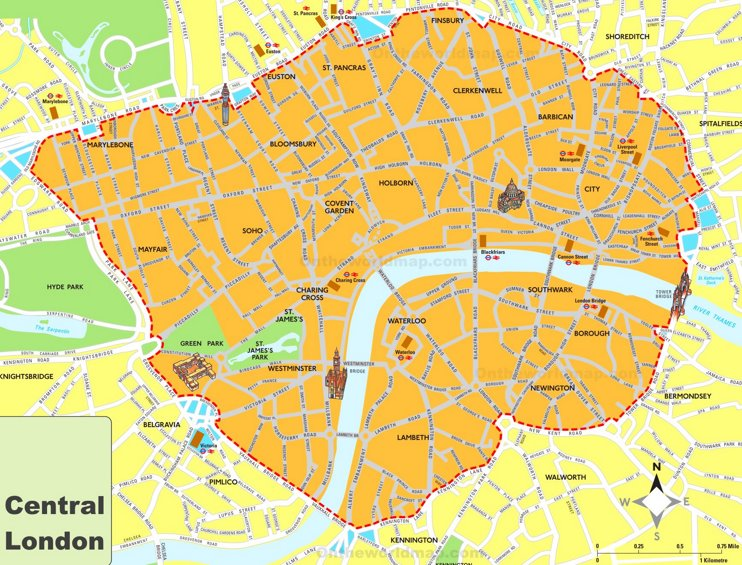
Although with the water as boundry, there are obviously counter examples like London. The official boundaries of Central London cross the Thames which is a fair bit wider than False Creek at the Cambie or Granville Bridges and it includes a decent chunk of the South Bank even though London was traditionally focused on the North Bank. And of course there's Chicago where downtown was once just the "Loop" business district south of the river but now extends a lot further north. Their river is much narrower of course, but it's still an example of a city's downtown ignoring the psychological and logistical barrier posed by geography.
__________________
"The reasonable man adapts himself to the world; the unreasonable one persists in trying to adapt the world to himself. Therefore all progress depends on the unreasonable man." - George Bernard Shaw
Don't ask people not to debate a topic. Just stop making debatable assertions. Problem solved.
Reply With Quote
     
     
  #356  
Old Posted Sep 4, 2023, 10:44 PM
MonkeyRonin's Avatar
MonkeyRonin MonkeyRonin is online now
¥ ¥ ¥
 
Join Date: Sep 2006
Location: Vancouver
Posts: 10,658
Quote:
Originally Posted by Nouvellecosse View Post
Although with the water as boundry, there are obviously counter examples like London. The official boundaries of Central London cross the Thames which is a fair bit wider than False Creek at the Cambie or Granville Bridges and it includes a decent chunk of the South Bank even though London was traditionally focused on the North Bank. And of course there's Chicago where downtown was once just the "Loop" business district south of the river but now extends a lot further north. Their river is much narrower of course, but it's still an example of a city's downtown ignoring the psychological and logistical barrier posed by geography.

London is actually a better counter-example I think. While there is no "downtown" in the North American sense (and "Central London" is a nebulous concept, or more broadly used for the inner city rather than than city centre), there is the City/the Square Mile - and it's boundaries haven't changed in 2000 years!

And in Chicago's case, the Loop is still the Loop. Not sure whether or not locals consider the areas north & west of the river to be "downtown" or not, but either way those rivers are only about a half a block wide. They're not a big physical or psychological barrier in the urban fabric .
__________________
Reply With Quote
     
     
  #357  
Old Posted Sep 4, 2023, 11:48 PM
J.OT13's Avatar
J.OT13 J.OT13 is offline
Moderator
 
Join Date: Mar 2012
Location: Ottawa
Posts: 29,064
To kool's point, and others have alluded to this as well, the concept of "Downtown" is very North American. I can't really think of any European city with an area clearly identified as "Downtown".

In Canada, I think Quebec City is the one city with no clear "Downtown".
Reply With Quote
     
     
  #358  
Old Posted Sep 5, 2023, 12:11 AM
Nouvellecosse's Avatar
Nouvellecosse Nouvellecosse is online now
Volatile Pacivist
 
Join Date: Aug 2005
Location: Nova Scotia
Posts: 11,336
Quote:
Originally Posted by MonkeyRonin View Post
London is actually a better counter-example I think. While there is no "downtown" in the North American sense (and "Central London" is a nebulous concept, or more broadly used for the inner city rather than than city centre), there is the City/the Square Mile - and it's boundaries haven't changed in 2000 years!

And in Chicago's case, the Loop is still the Loop. Not sure whether or not locals consider the areas north & west of the river to be "downtown" or not, but either way those rivers are only about a half a block wide. They're not a big physical or psychological barrier in the urban fabric .
London's "City" is basically just an office district, a small area within the city centre, not central London itself. The City would only be comparable to Vancouver's office district that only extends as far south as around Robson. If you consider downtown Vancouver to be the whole peninsula which includes mainly residential areas like the West End, London's "City" has no relevance to that. They use different terms but it's the same thing as a North American downtown (with NYC's downtown being an exception for historical reasons). Well, as close as you can get given the differences between NA and European cities. Central London is very much recognized as their downtown and while the term and concept have been around for a long time (over a century), the boundaries have evolved and changed many times.


https://ontheworldmap.com/uk/city/london/map-of-central-london.html

But yes, the sub-districts within downtown obviously remain the same. Toronto's financial district, Chicago's Loop, etc. still exist but they are no longer considered to be the whole of their downtowns. And of course Vancouver's central peninsula will always exist and be recognized as a distinct sub-section of downtown even when downtown expands beyond it.
__________________
"The reasonable man adapts himself to the world; the unreasonable one persists in trying to adapt the world to himself. Therefore all progress depends on the unreasonable man." - George Bernard Shaw
Don't ask people not to debate a topic. Just stop making debatable assertions. Problem solved.
Reply With Quote
     
     
  #359  
Old Posted Sep 5, 2023, 12:46 AM
Acajack's Avatar
Acajack Acajack is offline
Gros Méchant Loup
 
Join Date: Aug 2006
Location: Province 2, Canadian Empire
Posts: 72,949
Quote:
Originally Posted by J.OT13 View Post
To kool's point, and others have alluded to this as well, the concept of "Downtown" is very North American. I can't really think of any European city with an area clearly identified as "Downtown".

In Canada, I think Quebec City is the one city with no clear "Downtown".
All European cities tend to have a clearly defined "CENTRE" with signage pointing to that, though it isn't always the main CBD of the metro area.

For example the official centre of Paris is the square in front of Notre-Dame on Île de la Cité, though if I were to pick a CBD in the classic sense I might pick La Défense which isn't even in the city limits.
__________________
Loin des yeux, loin du coeur.
Reply With Quote
     
     
  #360  
Old Posted Feb 24, 2024, 6:10 PM
Docere Docere is online now
Registered User
 
Join Date: Jul 2014
Posts: 9,121
On the use of the term "downtown":

Quote:
As the city grows, the definition of “downtown” is changing. This century, Toronto has graduated from big city to proper metropolis. It is now the fourth-largest urban area in North America, behind only Mexico City, New York and Los Angeles (and ahead of Chicago). In step with that growth, its downtown has grown taller (all those skyscrapers) and bigger.

But how much bigger, definitionally speaking? You can start a pretty good argument these days about what actually constitutes downtown. Some would say I am dreaming to think I live “downtown” when my place is all the way out there by Dufferin. After all, there is a big suburban-type mall – Dufferin Mall – just a few blocks from me.

Officially, Toronto’s urban boundaries changed in 1998, when the provincial government lumped the central city in with suburbs such as North York, Etobicoke and Scarborough to create an amalgamated city under a unified government with a single mayor and city council. You could argue that the former polity known as Toronto, and often referred to as the “old city of Toronto,” is now essentially downtown Toronto. One bit of evidence is that the men and women who represent that old city tend to be called “downtown councillors.”

In fact I would argue that you could call anything south of Eglinton Avenue downtown without going seriously astray. But there are legions who dispute that. Some say it is madness to call anything north of Bloor Street downtown. Others draw the line a little farther north at Dupont and Davenport streets, or, at a stretch, St. Clair Avenue.

Times change, terms change. What used to be the distant suburbs are now called the “inner suburbs,” distinguishing them from the new suburbs and exurbs that have gobbled up farmers’ fields all around Greater Toronto. College and Yonge used to be considered midtown Toronto. Then Bloor and Yonge got that label. Now Yonge and Eglinton is sometimes called midtown. You would have seen the same progression in Manhattan in the 20th century as New York boomed.
https://www.theglobeandmail.com/canada/toronto/article-what-is-downtown-anyway/
Reply With Quote
     
     
This discussion thread continues

Use the page links to the lower-right to go to the next page for additional posts
 
 
Reply

Go Back   SkyscraperPage Forum > Regional Sections > Canada
Forum Jump


Forum Jump


All times are GMT. The time now is 9:30 PM.


Powered by vBulletin® Version 3.8.7
Copyright ©2000 - 2026, vBulletin Solutions, Inc.