Quote:
Originally Posted by BodomReaper

An Onni development manager where he stated that a column-free design was their preferred choice, but a thicker transfer slab would have resulted in an intrusion of several inches into the holy sanctity of a view cone.
|
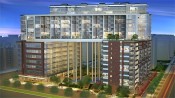
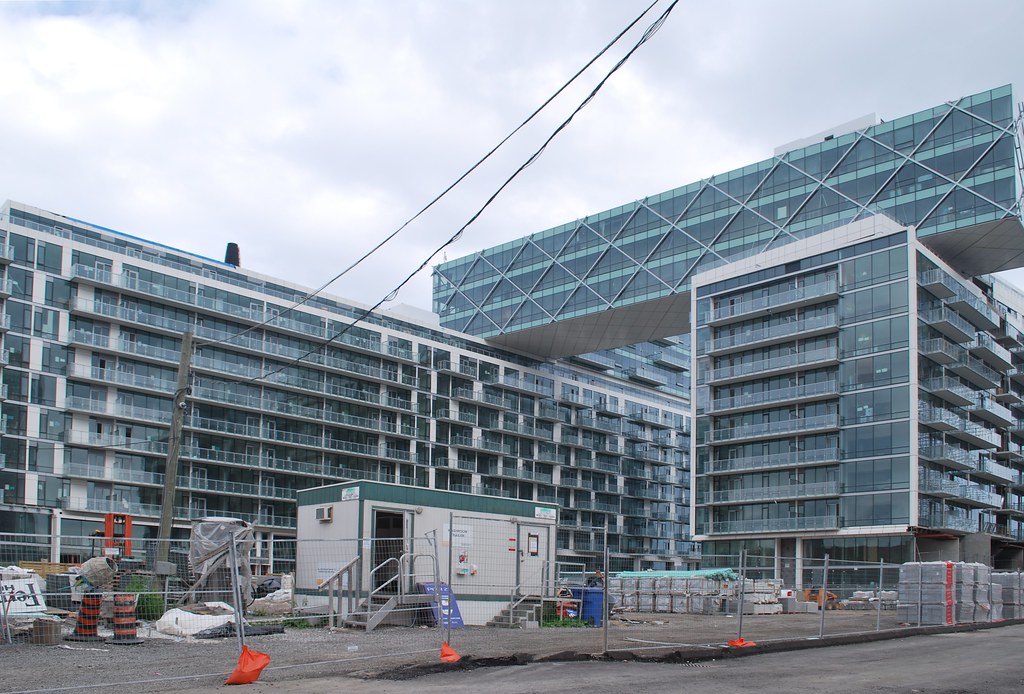
This was discussed when the project went through the UDP, including input from Onni's Beau Jarvis, Bruce Haden the architect, and the project's structural engineers. A column-free design was indeed the preferred design and the genesis of the project concept. The orientation of the project maximizes the number of units with west and northwest facing views while simultaneously maximizing privacy of the units from overlook. The diagonal placement of the 'bridge' element creates northwest facing views for all of the bridge units on the north side. It's also important to note the site is rectangular, with the thin edge facing False Creek, unlike the Toronto project where there is three to four times the width facing the water. An alternative placement where Central's slabs would be located on the north and south side of the site with the bridge slung east-west would have created a more narrow separation between the two slabs, greater overlook into the units from the office building and from adjacent residential buildings, and the shorter (length wise) bridge would have contained fewer units skewing the pro-forma. Were the bridge to be widened to retain the same floor space and unit count, it would have resulted in far less efficient, deeper units and a more overbearing tabletop-like bridge.
Regarding the presence of columns, they were randomly spaced in the design when it came through the UDP, as opposed to being in two neat rows. An angled arrangement of 'chopsticks in a cup' column placement was discussed as the design team's preferred column solution, but it was unachievable due to the inefficiency it would have introduced to the parking structure levels and the negative impact on the project's proforma due to complexity of construction. As to why a true bridge were not pursued, it was due to cost and site constraints. The price point of the building (residential units and commercial lease rates) and the additional structure in the slab podiums to carry the weight of the bridge did not warrant Onni pursuing a steel-frame bridge section. A thick concrete transfer slab would have allowed a free-floating bridge but that would require the forfeiture of a level of residential in the bridge to remain within the site's zoned height limit and significant additional load-bearing structure would have been required inside the slab podiums reducing their floor space through inefficiency. The building with columns reaches the very limit of the already-raised height regulations for Southeast False Creek and it's worth noting that no view cones regulations apply; height limits and view cones regulations are not synonymous. The project could have redistributed the density lost to structure from the bridge and slab podiums to other locations, but this would have led to deeper, less efficient and desirable residential units in the residential slab podium and additional office space in the office slab podium, which presumably their proforma didn't support, and a wider bridge with deeper, less efficient units in the bridge, the extra weight of which would have required even more load-bearing structure in the podiums.
The columns were the only way that the building would work within its pro-forma while adhering as close as possible to its design intent. For what it's worth, the land value of the Toronto Project was likely far less per square foot than what Onni paid for its SEFC site, and the Toronto neighbourhood where it's located is what I would charitably call desolate. The next door neighbour to the site is this listing, healthcode-closed, seasick-inducing fish and chips restaurant:
http://www.thestar.com/content/dam/t...arge.promo.jpg





 Prev
Prev







 Linear Mode
