https://www.newsweek.com/inside-high-rise-hospital-future-access-health-2134702
Inside the High-Rise Hospital of the Future

Oct 04, 2025
Quote:
Anew skyscraper is joining the skyline on New York City's Upper East Side. With a modern exterior and a glossy, glassy sheen, it looks like it'll fit right in—from the outside.
But when the building opens its doors in 2030, something will distinguish it from the other towers that stretch toward the ceiling of Manhattan. It won't hold corporate offices or hotel rooms, tourist-trap skydecks or luxury apartments.
This building will be a hospital: a state-of-the-art cancer center that honors its purpose without contorting itself into conventional molds. That's what the team at Memorial Sloan Kettering Cancer Center is going for, although the roughly $2.3 billion project won't be an easy undertaking.
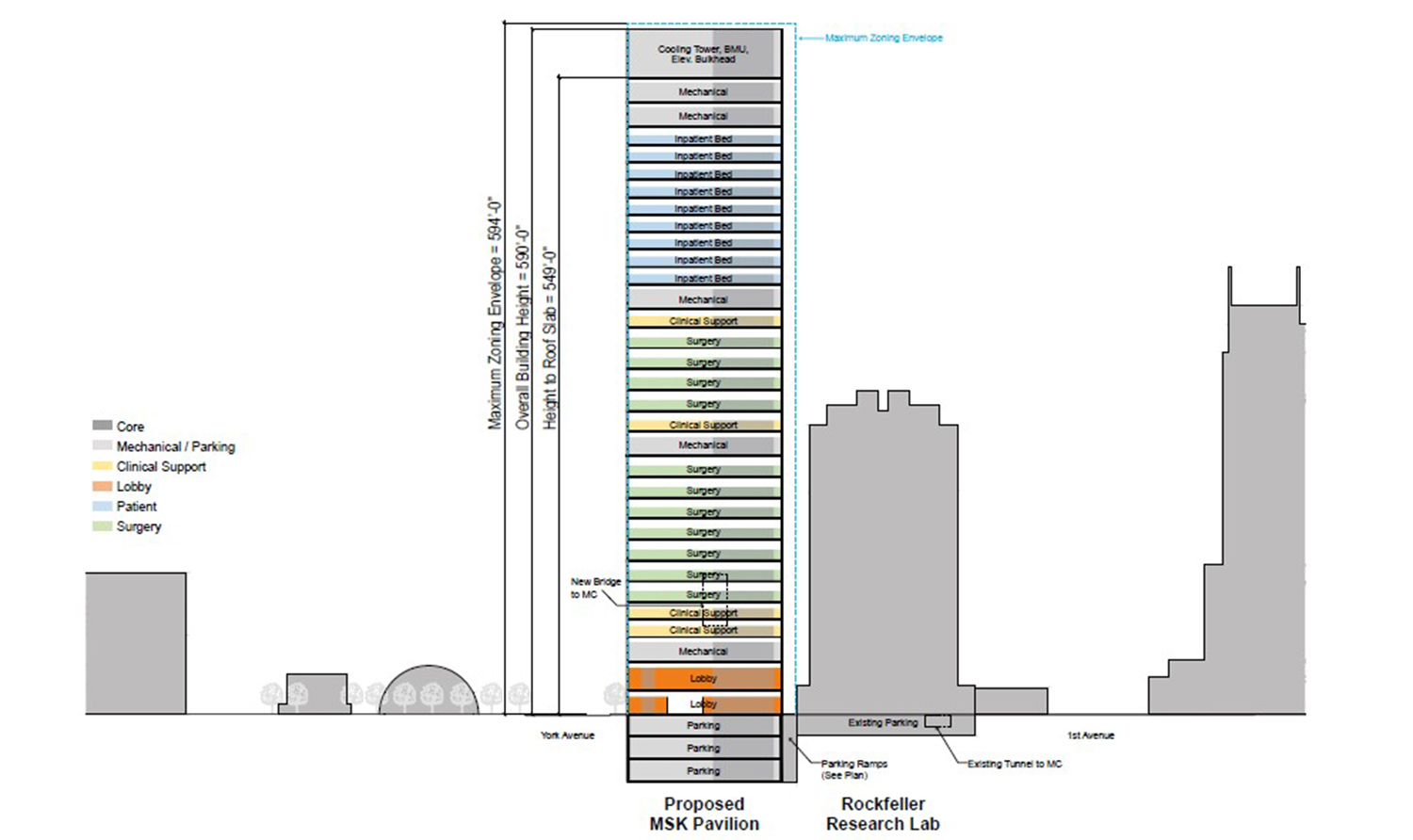
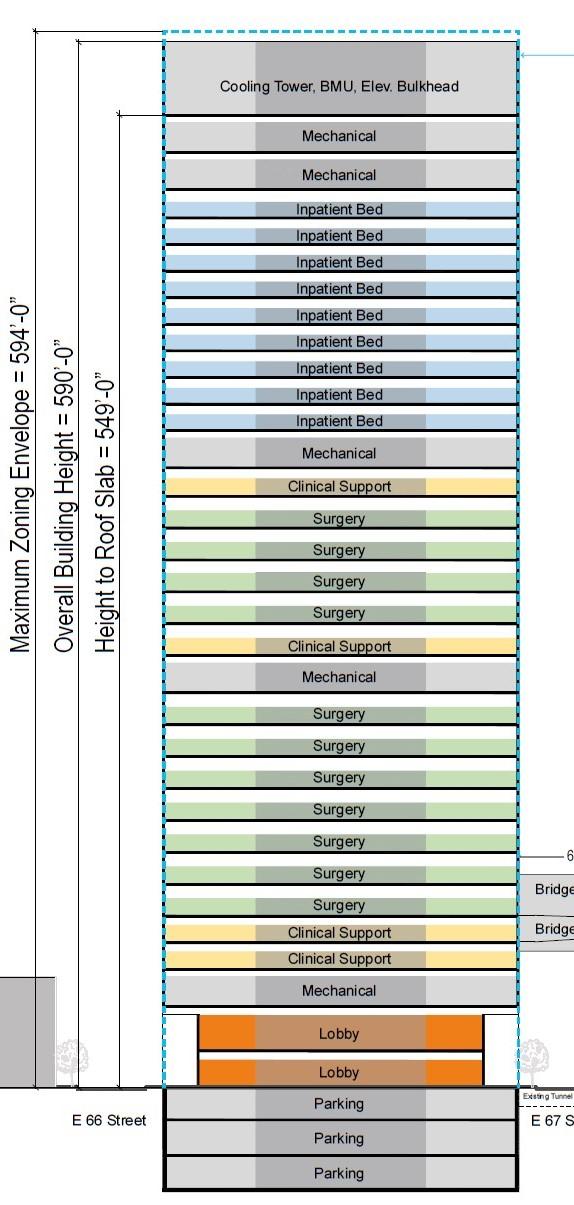
The Kenneth C. Griffin Pavilion at Memorial Sloan Kettering Cancer Center will stand at 481 feet tall upon a relatively small, 25,000-square-foot foundation. Connected by a skybridge to the system's existing hospital, it will extend inpatient capabilities by 208 beds while keeping close to the research, lab and clinical capabilities of the world-renowned original.
|
Quote:
In the past, health care architects designed buildings from the outside in. This creates different shapes and sizes for the rooms on the inside, and doesn't always address the operational and functional needs of the space, according to Suzen Heeley, MSK's executive director of design. She wanted to reverse that thinking for the Pavilion, centering the interior experience over the facade.
The team started by interviewing patients, caregivers and staff members of all different backgrounds, considering ethnicities, gender identities, income levels, technological familiarity, native languages and more to capture a true "cross section" of the health system's population, Heeley told Newsweek. This informed four design "guideposts"—lenses through which all decisions are made to ensure they're consistent with the project's goals.
|
Quote:
MSK intends to extend patient empowerment into the individual rooms. They can control the intensity of the lighting, the temperature and the shades on the windows. Outlets are placed in strategic, easy-to-reach locations so people don't have to "climb under things or sit on the floor, like at the airport," Heeley said. There is a sleeper sofa for overnight visitors with a table they can work at, equipped with an adjustable reading light in case they'd like to work or read while their loved one is resting.
Smart TVs in each room will list the patients' agenda for the day and allow them to order food. They can also display virtual consultations with clinicians and equip faraway loved ones to join in on the conversation.
Plus, every employee, physician and visitor will wear a RFID badge that automatically displays their name and title on the patients' TV when they enter the room, so the patient never has to wonder who they're talking to.
Outside of the room, digital screens will display pertinent patient information to the clinicians (is the patient at risk of falls? Are they prone to infection that would require nurses to wear protective gear?) so they are fully prepared for the interaction before it happens.
|
Quote:
In the 27-story Pavilion, all patient rooms will have natural light and a bird's-eye view of the city. The design team is working to incorporate other elements of the natural world into the interior, Heeley said.
"We're in New York City, so it's not as easy to have these beautiful terraces that I see at facilities in California," she said. "We have to figure out ways to bring that nature indoors in a way, through artwork or through video, or however we choose to do that, but that connection to nature is so important."
MSK conducted research with their architects to see how people biometrically responded to the use of wood and color in a space, and they plan to reflect those findings in the design. Since there are no 90-degree angles in nature, the rooms and facilities incorporate curves wherever possible: "The human brain kind of reacts to sharp angles as a warning or a risk," Heeley said.
|
Quote:
n addition, the Pavilion will add new operating rooms that are roomy enough for the latest, greatest surgical robots, and are wired for high-speed internet and data transmission. Robotic surgery requires a surgeon to sit at a console in the operating room, at a distance from the operating table—which isn't always possible in standard-sized spaces.
"We have a number of rooms that really aren't adequate for robotics in the current [hospital]," Drebin said. "All the rooms in the new Pavilion will have the capacity to have the latest surgical robots."
Looking to the future also requires MSK to consider environmental sustainability, according to Koford. They're focused on obtaining an EPA Lead Certification and have made a number of design choices to keep the Pavilion "green." For example, they selected triple-glazed glass for the exterior, which optimizes heat retention, so the building doesn't just rely on air conditioning units to keep its interior cool. They have also included modern building management systems that will monitor for energy inefficiencies.
Koford also hopes to outperform industry peers on the Pavilion's kBTU intensity rating, which measures a building's energy consumption relative to its size.
|


__________________
NEW YORK is Back!
“Office buildings are our factories – whether for tech, creative or traditional industries we must continue to grow our modern factories to create new jobs,” said United States Senator Chuck Schumer.
|





 Prev
Prev










 Linear Mode
