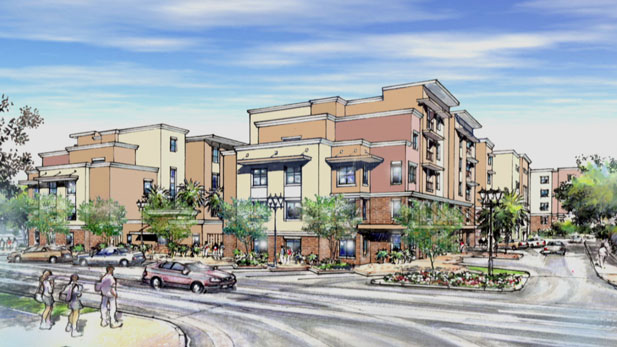
Tucson Development Thread


The Hampton in Austin,Philadelphia and St. Louis are too old for Tucson and plus it's not even Tucson style.
A Hampton that is kinda like the MLK apartment building would be more appropriate for Tucson.

You know we're talking about Tucson right? The buildings and architecture downtown are a bit older than Rita Ranch. :D


thumb.php

^Not in Austin, Philly or STL
 
You know we're talking about Tucson right? The buildings and architecture downtown are a bit older than Rita Ranch. :D


thumb.php

^Not in Austin, Philly or STL

I like that building, it's nice (except for the back side where we need a Hampton) but it's not Tucson. Tucson won the digital city award, we need more technology. An energy efficient building like the new unisourse building would work. I also feel that Tucson's downtown is becoming more appealing to the shopper to help with this cause I feel that the Hampton should have ground level stores. AND because I'm me i am going to say once again that Rainbow bridge needs to be built (the big one) and a 2 highrises, Unisourse energy tower twin ( the tall one) and another highrise 400 feet tall to 600 feet tall.:cool:
 
Some new Color Downtown to the Sears building brightens things up. What was once a cold grey toned building is now a bright and warm yellow and red. Its also right next door the the Green Pennington St Garage so sixth Avenue has a lot of color now.

264506_10150207952731923_283507751922_7513401_5016296_n.jpg

255133_10150206337626923_283507751922_7500290_4563961_n.jpg

255016_10150206339841923_283507751922_7500312_2935158_n.jpg

255016_10150206339846923_283507751922_7500313_8326200_n.jpg

255016_10150206339856923_283507751922_7500315_6374443_n.jpg

all photos by Downtown Tucson Partnership Facebook
http://www.facebook.com/pages/Downtown-Tucsonan/283507751922


Color and more color splashes the walls at Imago Dei on 6th Ave.
By Teya Vitu
http://www.downtowntucson.org/news/?p=3311

Color has erupted on Sixth Avenue across from the Ronstadt Transit Center.

The street has quickly taken leave of the four shades of gray that has bleakly dominated for years at the former Sears Executive Center building, 51 and 55 N. Sixth Ave.

Imago Dei Middle School moved in right after Easter break, armed with a $5,000 façade improvement grant from the Downtown Tucson Partnership that they had to match with their own $5,000.

Mid-June a new color scheme quickly blossomed on the forlorn Art Deco façade. Michael Albers, a Downtown interior designer assembled a palette of Regency Cream (a warm yellow), columns painted Arabian Red and accents and window frames colored Needlepoint Navy (a slate gray-blue).

“It’s very fresh and will catch your eye,” said The Rev. Anne Sawyer, head of the school. “The façade is the first sign that Imago Dei is Downtown and opening its doors to the broader community.”

They want to open the 51 N. Sixth space to artists and musicians.

Imago Dei is an Episcopal school for fifth to eighth grade students who qualify for free and reduced price lunch, where education is free for students, funded by private donations.

Imago Dei is the first of three properties to carry out its façade work in the second phase of the Façade Improvement Program managed by the Downtown Tucson Partnership. The second phase is funded entirely by $25,000 in private donations with a maximum of $5,000 assigned to Imago Dei, The Drawing Studio and the former Reilly Funeral Home building.

“We rely on private donations to be able to fund these projects,” said Teresa Vasquez, the partnership’s Downtown planner and façade program manager.

Anybody who wants to add to the Façade Improvement fund can reach Vasquez at 837-6501.

The first phase of the program surprised everyone at the results that a bit of dressing up exteriors could bring. Providence Service Corp. moved its corporate headquarters into 64 E. Congress and its restored historic façade; the Screening Room and Beowulf Alley Theatre each added lighted marquees.

“Each façade renovations has really impacted the core of Downtown,” Vasquez said.

“It’s more than just color. It’s the attitude and perceptions. There really are things going on Downtown that are positive and this is just the visible spirit.”

Imago Dei moved a few blocks south from 639 N. Sixth Ave. on the Monday and Tuesday after Easter and classes started Downtown that Wednesday, while staff was still unpacking. Classes continue through June, and school starts again in mid-August.

“We’re closed for the entire month of July,” Sawyer reasoned. “We have 10-hour school days, 11 months of the year a six days a week. Saturday is a half day. We find the children talking about Imago Dei as a family.”

The students how have a new, colored home, too.

“We hope the children take pride in their school home,” Sawyer said.
 
I just feel like I have to share this.


http://www.forbes.com/2011/06/08/best-worst-cities-for-renters_slide_2.html

Forbes Magazine has announced that Tucson is the best city for renters. The valley of the sun has also made it on the list at number 3!
if your too lazy to check out the site here is what they said about Tucson

Best Cities, No. 1: Tucson, Ariz.

Average Monthly Rent: $604
Change in Rent year-over-year: 1.5% increase
First Quarter Vacancy Rate: 9.4%
Mortgage Payment v. Rent Payment: $277 cheaper to rent
 
Tyndall Avenue Improvement Project Under Way

By Bill Davidson , Parking & Transportation Services, June 8, 2011

FULL ARTICLE: http://uanews.org/node/40164

A road improvement project under way this summer on Tyndall Avenue is intended to make the area more user-friendly for drivers, cyclists and pedestrians.

Improvements will include new pavement, curbs, angled parking, bicycle lanes, wider sidewalks, pedestrian crossings, landscaping and reconstruction of the street itself.

Tyndall.lg_horiz.jpg

(Photo by Caleb Tellez, Parking & Transportation Services)
http://uanews.org/node/40164
 
City green-lights repairs for historic signs
Owners no longer must let them decay or tear them down
Rob O'Dell Arizona Daily Star | Posted: Wednesday, June 29, 2011

Aging historic signs can now be repaired instead of simply removed under new rules passed unanimously by the Tucson City Council on Tuesday.
Under the city's previous sign code, older signs didn't meet requirements, so if they came down for repairs they could never go back up.


Read more: http://azstarnet.com/news/local/gov...7be-5848-905c-f09455e73d7b.html#ixzz1Qe8jkgvv

4e0ab25142067.preview-300.jpg

Kelly Presnell/Arizona Daily Star
http://azstarnet.com/news/local/govt-and-politics/article_c628b30b-97be-5848-905c-f09455e73d7b.html
 
Neon Tucson

Great news about the signs. I think they're tacky, but at the same time... they're great too. I guess most Americana is that way. Plus they look cool at night.

The city listed a few stretches of road where the signage exceptions apply. How about taking it a step further and designating a street or two were neon signs are encouraged? A street with no fluorescent back-lit acrylic would be a start.

Anqrew
thanks for the updates. Any news or pictures of the TEP offices? (or anything else that's new since the last round of photos)
 
Another Space filling on Congress!

Rooted in Community
By Jamie Manser - Zocalo Magazine www.thezmag.com
image: Repp Design + Construction

art741nar.jpg
"Sparkroot is a concept that I have been mulching in my mind for years," says Ari Shapiro of his latest Downtown venture, set to open in early August at 245 E. Congress St., at 5th Avenue. "It's essentially the kind of space that I crave as a customer that I don't feel really exists. The heart and soul of it is a coffee shop, but it's a coffee shop that brings elements of a restaurant into it."

Shapiro, who is also the proud founder and owner of three Xoom Juice smoothie shops (one is located in the 245 E. Congress St. strip), describes Sparkroot as a trifecta. It will have three beverage groups: coffee and tea, homemade sodas and boutique/micro beer and wine, and will serve healthy vegetarian fare. "We're not a bar or a restaurant, or a pure coffee shop. We're an amalgamation of all three."

Shapiro shares the details with an energy that conveys measured excitement. However, the more he elucidates on the features of his new business and everything that has gone into it, the broader his smile and the livelier his brown eyes.

As we pour over the urban aesthetics of the Repp Design Construction plans, Shapiro points out the coffee, bar and kitchen areas, the loft, and the layout of the seating. "There will be individual counter seating; we're going to have a seven foot community table built by my friend Raj Helweg and have lounge chairs and sofas. We're making a lot of furniture ourselves, but we're also buying a lot of mid-century vintage stuff." Notching up the cool factor is a 1963 Wurlitzer jukebox, with tunes for free, and patio seating along 5th Avenue.

Shapiro makes it clear how important it is to him to utilize local talent and is employing Tucson's artist community to decorate and build out the space. Contributors include: Troy Neiman making a hanging bike rack and a table made of bike parts, Ezequiel Leoni building a 20 foot window bar facing Congress Street, Travis Edgar constructing a writer's table.

"If you want a story Jamie, here's the story - do you know how hard it is to get reclaimed wood?" Shapiro says they bought 480 board feet of Wisconsin barn wood from a man far south on Nogales Highway. "It is gorgeous, and weathered, and mostly red and there is still some hardware in planks. We are using that throughout the space."

While the layout is certainly unique, what customers won't get anywhere else in Tucson is the Blue Bottle Coffee Sparkroot is set to serve. Shapiro looked at local options and loved them, but went with the San Francisco based company because it "is at the very leading edge of specialty coffee."

The beer and wine selections will feature quality options priced for everyone. "All wine is going to be $5 a glass, all day, no specials. I don't want to serve a $9 glass of wine; I don't want to serve a $7 glass of wine. And then all beer will be $4 a bottle."

When it comes to the menu, Shapiro promises healthful options of homemade granola and whole food bars, Panini sandwiches, soups, hummus and more. "Basically, simple fare done with a lot of care and
creativity." :cheers:
 
Hotel, apartment, bridge deal in works for freeway frontage
July 01, 2011 Downtown Tucsonan By Teya Vitu

Downtown stalwarts Peach Properties will likely get the nod to build a hotel, apartments and a new Greyhound terminal along the freeway frontage road between Congress and Cushing streets.

The Peach proposal would be the largest Downtown development in terms of acreage since the federal courthouse was built in the late 1990s.

Peach Properties owner Ron Schwabe proposes a 120-room hotel designed by local architecture firm FORSarchitecture+interiors, which has designed several Downtown interiors. Schwabe also proposed a 340-unit apartment structure, 50,000 square feet of commercial, and 1 acre dedicated to transit, likely a permanent Greyhound terminal to replace the temporary Greyhound station already in place on the property.

Full Article: http://www.downtowntucson.org/news/?p=3337
 
Student Housing Pressures Tucson Neighborhood

Story By Luis Carrión
July 6, 2011


Student populations at the University of Arizona have grown consistently for several years, and demand for housing has exceeded the number of available units. This market force has led Houston-based Residential Housing Development to plan a 756-bed complex on East Sixth Street just west of North Fourth Avenue. The project is under construction in the long-vacant lot formerly occupied by the old YMCA.

The District, as the project is named, falls under the city of Tucson’s Infill Incentive initiative, which seeks to promote high-density housing in the urban core. However, area residents are uneasy about the implications of such a large influx of students.

Jennifer O’Conner, a longtime resident of the neighborhood, and a member of the West University Neighborhood Association, says developers met with residents but only after city approval of the project.

John Sedwick, executive director of the Fourth Avenue Merchants Association, says having a 756-bedroom facility so close will be a boon for merchants. He understands the resident’s concerns, but he thinks the size of The District makes sense.

“We have a lot of open space in this urban area, and the infill is good,” Sedwick says. “It will help downtown grow, revitalize, and it will help us stay healthy.”

070611_Student_Housing_PKG_617_347_1.jpg

Photo: AZPM

Artist's rendering of a student housing development being started on East Sixth Street near North Fourth Avenue.


These are the empty lots around the area.

thedistrict.jpg
 
Karen Uhlich will probably get this project canned and put in more subsidized low income housing. That's her vision for downtown. Regina Romero would favor a skate park and graffiti wall.
 
Plaza Centro Update

I was wondering why there were steel railings coming out in front of the Plaza Centro garage looking north and I sensed and imagined it be for a cool screen :cool:. It will be a cool screen but I imagined it as a video screen like the ones you see when driving north on I-10 heading into phoenix. But I guess having some type of artistic screen works. Here is a update from the architect's blog site:


"Just a quick update from our Plaza Centro Construction Site: The Garage is nearing completion, steel for the Arcade and the two big GreenScreens / Art installations is now going in. The screen on the southwest corner is going to be transformed by a large scale public art installation by local Tucson artist Daniel Martin Diaz - the piece will stand as a widely visible focus point and frame the historic downtown entertainment district at the north end of Congress street.

Check back next week for a sneak preview of Daniel’s work when the pieces go up!"


Blog+Pic+%257C+Tucson+Site-steel.jpg


Blog+Pic+%257C+Tucson+Paseo+render.jpg


Actual Webpage:aiarchitects.blogspot.com/
 
Last edited:
Plaza Centro Update

Blog+Pic+%257C+Plaza+Centro+Art+-Installation+1.jpg


"Installation on the Plaza Centro screens has begun! The first art panels have been installed - they are inserted into a larger screen of metal mesh that will support climbing vines - eventually the art panels will float like medallions in a wall of green. We worked with Tucson based Landscape Architect Lisa Ribes and consulted with various other local experts to ensure that the selected plants will withstand the intense Arizona summers.
The flowers of Yellow Orchid Vines and Tangerine Trumpet Creeper will reflect and complement the paint accents of the projects color scheme. Check back soon to see pictures of the main art piece on the corner of Congress Street and the new 4th Street underpass."

I can't wait until it is complete. The designs are great!
 
Cushing Street Bridge Update

Cushing Street Bridge will have 1920s flair with touches of 2010s
July 12, 2011 (5:59 pm) | Permanent Link


By Teya Vitu

Much more often than not, bridges are meant to rush over without the slightest consideration given as a destination.

The Golden Gate Bridge stands apart, as does the new bridge at Hoover Dam.

The new Cushing Street Bridge that will span the Santa Cruz River could well be more a destination than even a way for cars, bikes, the streetcar and pedestrians to get across the dry riverbed.

This Cushing Street Bridge will evoke the 1930s. Those who remember the old Congress Street Bridge that came down in the early 1970s will see a very familiar sight. Those who don’t can check out the balustrades on the Stone Avenue Underpass, which were replicated for the Cushing bridge.

Four wide staircases will lead down to the river. Slanted, triangular canopies will flair to the west to provide shade for pedestrians. Art and history will decorate the bridge at street and riverbed levels.

“Bridges are around for 50 to 75 years,” said Claudia Perchinelli, principal at Structural Grace, the Tucson bridge engineering firm that designed the bridge. “Bridges impact the environment. Our goal is to leave it looking better.”

“This bridge was seen as a significant gateway to the West Side,” said the bridge’s architect, David Dobler, also at Structural Grace. “We believe every site has integral history.”

Construction of the two-span, 310-foot-long concrete girder bridge will start in earnest the week of July 18.

The groundbreaking ceremony will take place Thursday, July 14, at 8:30 a.m. near the west bank of the Santa Cruz River. Take West Congress Street to Avenido del Convento (Mercado San Agustin), turn south and continue until you see an event tent on the bare landscape.

The Cushing Street Bridge is slated to open to traffic in August 2012. Originally planned to feed into the canceled Tucson Origins museum complex, the bridge for now will primarily service the luxury housing Mercado District of Menlo Park, its adjacent Mercado San Agustin and the nine-block Mission District yet to be built.

The 40-acre Origins site has no committed plans these days but the acreage just about matches the size of the Downtown core.

“We are linking the opportunity for a new Downtown with the old Downtown,” Tucson Transportation Department Director Jim Glock said.

The bridge will be Tucson’s most striking automotive bridge and the third iconic Downtown bridge erected this century, along with the Rattlesnake and Basket bridges that primarily serve bicyclists.

It will have 8-foot-wide sidewalks on each side, separated from vehicles by traffic barriers with benches built into the pedestrian side. 5-foot-wide bicycle lanes will go each way, and cars and streetcar tracks will share the single 12-foot-wide lane going each direction.

The bridge is aligned 22º39′ askew from the river bed in a southeast to northwest slant. Designers learned by chance that this alignment was only half a degree off from where the sun rises and sets on the summer solstice, June 21.

“We determined we needed to respond to the sun in some way in the design of the bridge,” Dobler said. “We needed to have shade structures.”

Dobler found a way to bring the sun and shade canopies together to create sidewalk history and art.

The six, green shade canopies above each sidewalk will appear as ship’s sails, 8 feet wide and 10 feet above the sidewalk at one end and tapering down to a near point over its 75-foot upward journey ending 23 feet higher than the sidewalk,

The canopies will be perforated with small cottonwood leaf patterns, and at each base will be a cut-out of a historic image such as a propeller or railroad spike that will project onto the sidewalk below.

On the sidewalk below each canopy, a historic image will be sandblasted, such as a streetcar or the Phoenix Mars Lander.

The canopy and sidewalk art were engineered so that the canopy image projects onto the sidewalk image at a precise time on the historic date each year each year described in a panel at each sidewalk image. The will detail the historic event and provide the time when the project image will overlap.

The artwork is by Brenda Semanick, also collaborating with Structural Grace. You will find her touches all over the bridge, above and below.

On the sidewalk, along with the historic images, there will also be sandblasted cottonwood leaves. Much larger cottonwood leaves - up to 5 feet - will be blasted into the bridge abutments above a layer of volcanic rock veneer.

More cottonwood leaves will appear on the retaining walls along the for stairways heading down to the river, and Semanick will also embed ceramic pot shards into the steps. The staircases start at 8 feet wide at the stop and spread out to 15.5 feet by the bottom.

“They are kind of like a grand staircase or terrace steps,” Dobler said.

The two piers will be sandblasted with fish and fowl that once inhabited the river when it flowed year-round. Bats will be sandblasted into the pier caps under the bridge.

All the artwork was a collaboration between artist, designers, residents in the Menlo Park, Barrio Sin Nombre and Kroeger Lane neighborhoods, city leaders and the Tucson-Pima Arts Council.

Design features from the 1920s are all over the Cushing Street Bridge, most markedly with the balustrade railings with the many small arches and the ribs that carry the cantilevered sidewalks that project beyond the piers that hold up the bridge.

The historic design perfectly bridges the history on both sides of the river, where much of the Menlo Park neighborhood dates from the 1890s to 1910s, and Downtown east of Stone Avenue is nearly intact 1910s and 1920s.

Dobler researched Congress Street bridges spanning that era. An iron girder bridge with timber at each end was first built in 1907 but washed out in 1915.

A concrete, two-span arch bridge with cantilevered balustrades was built in 1922-27 and stood until it was replaced in the 1970s by the non-descript modern Congress Street Bridge in place now.

They did extensive research of the old bridge and found everything the city and Arizona Historical Society had. They found no balustrade details and so deferred to the next best thing, the Stone Avenue Underpass.

“The balustrades look like the same precast molds used on the Stone Avenue underpass,” Dobler said. “We went over there to make templates of the shapes.”

The Stone Avenue underpass opened in 1935.

The Cushing Street bridge has gone through several major design overhauls as well as drastic changes in proposed funding. Three years ago, Rio Nuevo funds were earmarked for the bridge.

The combined collapse of Rio Nuevo and emergence of President Obama’s stimulus package shifted the bridge’s funding from Rio Nuevo to Obama’s American Recovery and Reinvestment Act, which will supply $9.3 million. The construction bid amount is $6.4 million but that does not include city administrative costs.

The bridge is budgeted for up to $15 million.

“We have adequate budget to cover the costs and any eventuality,” Glock said.

These are the historic images sandblasted into the sidewalks and the corresponding cut-out images projected through the canopies by sunlight:

1. February 19, 1910

Pavement: Charles “the Bird Man” Hamilton flies first plane in Tucson
Sunlight projection: Propeller

2. February 21, 1925

Pavement: La Fiesta de los Vaqueros, First Rodeo Parade

Projection: Spur and horseshoe

3. March 20, 1880

Pavement: Southern Pacific Railroad, first train in Tucson

Projection: Railroad spike

4. April 10, 1983

Pavement: First Mariachi Conference with Mariachi Cobre, Los Changuitos Feos, Lalo Guerrero

Projection: Guitar, trumpet, hat

5. May 25, 2008

Pavement: UA Phoenix Mars Mission landing

Projection: The symbol for Mars

6. June 24

Pavement: St. John for El Dia de San Juan

Projection: Rain

7. July 3

Pavement: A poem by Ofilia Zepeda honoring the average day for the first monsoon

Projection: A saguaro harvester

8. August 20, 1775

Pavement: Etching of Presidio San Agustin

Projection: A Bell

9. October 26, 1775

Pavement: Bautista de Anza, 2nd Expedition

Projection: Colonial Spanish flag

10. Pavement: Tucson Pressed Brick Company

Projection: T.P.B.C.O

11. 1705

Pavement: Father Kino-Pimeria Alta Map-first published in France

Projection: Tower of San Xavier del Bac

12. Nov. 19, 1897

Pavement: First streetcar

Projection: Overhead cable pattern

Here's a link from Kvoa.com about the start of the construction of the bridge :

http://www.kvoa.com/news/groundbreaking-for-cushing-street-bridge/

cushing1.jpg
 
U of A New Video Scoreboard Update

IMG_0122.JPG


Picture_4_large.png


Construction is nearing completion and the video scoreboard itself is being shipped over from China and should get to Tucson and put up by the first game against NAU Sept 3.


Back
Top