Pseudo-Downtowns

MolsonExport

Touching grass everyday.
Staff member
The notion of pseudo-downtowns was recently brought up in another thread, with respect to Laval, Mississauga City Centre, and other latter-day attempts to create downtowns from scratch.

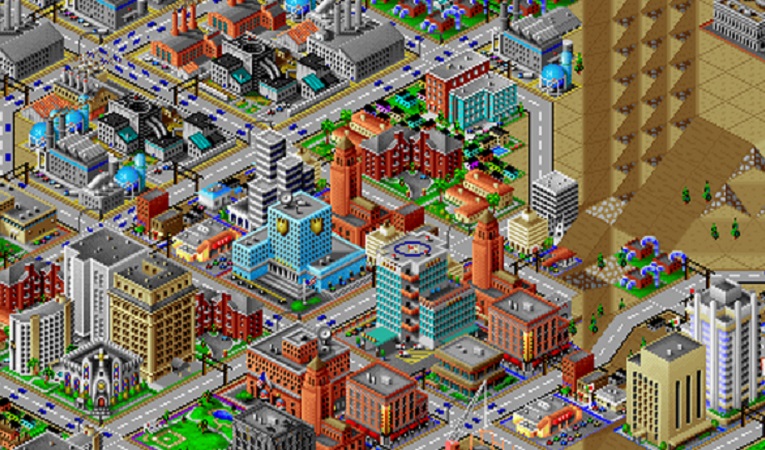
Add water and watch it grow. Sim City 2000. The real question is: Can pseudo-Downtowns ever become true downtowns? A bunch of tall buildings does not make a downtown.

It must be possible. Somewhere, it must have been achieved. But for my money, I don't know that I have seen a latter-day downtown truly make the grade. Not Surrey City Centre, Not Metrotown. Definitely not Laval.

Will time tell? Can these new city centres, like North York City Centre (arguably the closest one to making the jump from pseudo to real downtown, on account of having a metro line), make the jump? Or are they forever doomed, on account of 6 lanes-wide boulevard (with two more turning lanes), very long blocks, monotonous blue glass walls, and just nothing that is eclectic/novel/intesting. Olive Garden does not count.

Post your shots of pseudo-downtowns. Make the case for/against their ability to become true downtowns. Discuss the secret sauce of downtowns (for me: true rail-based mass transit, eclectic mix of buildings of different styles, ages, heights, lots of independent/family businesses, a mix of arts/museums, retail, large office buildings, and residential, narrow streets and short blocks, grid, etc.).

This is not a downtown. Without massive alterations, it can never hope to be a true downtown.
Longueuil.jpg

crazytourist.com

ditto:
1200px-Complexe_Jules_Dallaire.jpg

wikipedia
 
What about:
Richmond City Centre?
Upper Lonsdale?
Metrotown?
Downtown New Westminster?
Scarborough City Centre?
Mississauga City Centre?
The new pseudo-downtown planned for Vaughn?
Hull (the old part of Gatineau with all the federal buildings)?

Sim-City-2000-The-power-of-running-your-own-20th-century-city-amig-games-amiga-news-download-amiga-games-ADF.jpg
 
Hm I know New West has lots of older buildings and a Skytrain line. It's downtown is probably older than Vancouver's? But not sure if it counts.
 
Downtown New West is very much a true downtown. Two stations, one underground, a walkable and historic node. Within New West, I would consider the uptown area to be more of a pseudo downtown. It as well is a walkable and pedestrian oriented area though.


The eponymous example of a pseudo downtown to me would be Airdrie. Barely walkable, sea of surface parking with car-oriented retail, administrative buildings…. and nothing better. Mississauga fits that example as well, just on a far larger scale.
 
North York City Centre is arguably a “new downtown”, and is quite successful. It does have the benefit of having several small rows of street fronting storefronts from the 1920’s that others don’t, but it’s still focussed around a 6 lane arterial and is mostly buildings built from the 1980’s and later.

I think Vaughan Centre has potential as well - but it needs more time.

Even Mississauga is finally getting there... just not there yet.
 
As mentioned in the other thread Abbotsford for it's size has a poor downtown. Tiny with few memorable heritage buildings. Perhaps it is too young for that sort of thing? It's roots are too farmy if there's such a thing?
 
What about:
Richmond City Centre?
Upper Lonsdale?
Metrotown?
Downtown New Westminster?
Scarborough City Centre?
Mississauga City Centre?
The new pseudo-downtown planned for Vaughn?
Hull (the old part of Gatineau with all the federal buildings)?

Sim-City-2000-The-power-of-running-your-own-20th-century-city-amig-games-amiga-news-download-amiga-games-ADF.jpg

Sim City 2000 and Transport Tycoon were my favorites game 20 years ago. :yes:
 
The notion of pseudo-downtowns was recently brought up in another thread, with respect to Laval, Mississauga City Centre, and other latter-day attempts to create downtowns from scratch.

Add water and watch it grow. Sim City 2000. The real question is: Can pseudo-Downtowns ever become true downtowns? A bunch of tall buildings does not make a downtown.

It must be possible. Somewhere, it must have been achieved. But for my money, I don't know that I have seen a latter-day downtown truly make the grade. Not Surrey City Centre, Not Metrotown. Definitely not Laval.

Will time tell?

The last bit in bold is the crux of it. Density alone does not make a downtown but it's surely the foundation upon which the rest is built. These new downtowns springing up from coast to coast are very early on in their development. They will need a lot more time to gel. PT, parks, retail, office, condos, a quality public realm, cultural assets (museums, sports), institutional (schools, hospitals) don't appear over night. The key for places like Vaughan Corporate Centre, Surrey City Centre, etc. will be to add these elements bit by bit.

Metros with multiple mini-downtowns is the direction Canada has been heading for about 20+ years. The benefits of this strategy are well known. We all have a vested interest in these places succeeding.
 
I don't think New Westminster (or even North Vancouver) qualifies for this discussion, for the same reason that any older city or town (with a real downtown) doesn't qualify: its downtown is a downtown only in virtue of everything that was built during a past era when people actually knew how to build real downtowns. I think this discussion is about whether there are any contemporary suburban communities that have successfully built or replicated from scratch anything that resembles a traditional downtown.

It's not Canadian, but the best example of a late 20th century suburb constructing completely from scratch something approaching a traditional downtown that I personally know of is Bellevue in Washington State.
 
Downtowns aren't built in one day, and today's "real" downtowns weren't either. They are the result of continuous building and rebuilding.

The problem with pseudo-downtowns is that they are still a work-in-progress, but that is also the key to their success. They need to remain a work-in-progress, like any real downtown. So the question is, can they remain a work-in-progress. That's the real challenge.

I think people need to stop evaluating urbanity as simply a binary quality, like urban vs. suburban, or downtown vs. not downtown. It is not black and white. "Suburban" itself is a grey area by definition (a place with a mix of rural and urban qualities). The key is increasing the urban, and/or reducing the rural. Think of "urban" or "downtown" as a percent value instead of either 1 or 0. What is the urbanity in terms of percentage of Mississauga City Centre compared to the typical neighbourhood in Mississauga? How many people walk to store/work, take transit in Mississauga City Centre compared to the rest of Mississauga? How about in Mississauga compared to Vaughan or Milton? When you see buses on Hurontario becoming so overcrowded to the point that they need to be replaced with LRT, is that not a step forward in the right direction? Is it a failure to take steps forward? Does it need to be a leap forward?

I don't see why single out and nitpick about these suburban "downtowns" so much. What are we supposed to do, just build regular subdivisions? What exactly does a regular subdivision mean in Canada anyways? Jane-Finch? In what time in Canadian history did new suburbs not make any attempt at all to increase density and mixed-use development, reduce walking distances, or promote transit use? Look at my thread about Mississauga's "original" downtown, Cooksville (The North American Moscow and Cooksville Village), to see attempts from the 60s and 70s. Mississauga City Centre is basically an extension of Cooksville, and you can see MCC towers in my Cooksville photos as well.

So it's not a new thing. All those 60s and 70s subdivisions in Toronto, these are some of the most transit-dependent places in North America. According to the 2016 Census, 34.6% of Scarborough residents commuted to work by public transit. That's higher than the central cities of Chicago, Boston, San Francisco, Philadelphia. Even without a real downtown, is Scarborough really a failure? Have the attempts there to get people out of their cars, even half-hearted, really not been meaningful?

Canada is a car-dependent country, and the biggest competitor to the car in the suburbs is not walking, it's transit. If we can shift suburbanites away from cars to transit, then we can try to shift them away from transit onto bicycles. If that is successful, then we can start to try to get them off their bicycles and onto the sidewalks. Gradually reducing distances. One step at a time. And density is the key for every step. Arguably, a lot of suburbs in Canada are already on that second step, and they need to keep working toward the third step, and that means building more places like Mississauga City Centre, Scarborough City Centre, Metrotown, etc. and continuing to build upon them also.

And let's not forget, these pseudo downtowns are a reflection of real downtowns as well. Whatever little success they had, it is because of their connection to the real downtown. And at the same time, the real downtown is also in turn strengthened or weakened by these pseudo downtowns, or lack thereof. Think about it. What would downtown Toronto look like today if no one in Scarborough used public transit? What would all that demand for parking do to Toronto's downtown?
 
It took me like 5 minutes to find Abbotsford's "downtown" on Google Maps. It makes Brockville, ON (pop. 21,854) look like Manhattan. What's the deal? Is it just a tiny village that became a bedroom community for people priced out of Vancouver?
 
It took me like 5 minutes to find Abbotsford's "downtown" on Google Maps. It makes Brockville, ON (pop. 21,854) look like Manhattan. What's the deal? Is it just a tiny village that became a bedroom community for people priced out of Vancouver?

Abbotsford grew almost entirely in the suburban era. The same is true for a number of Lower Mainland towns like Langley or Chilliwack which have a tiny nucleus of older stuff, mostly limited to early-mid 20th century.

New Westminster was bigger to begin with and has morphed into more of an urban bedroom community with the old bones of a medium-ish town.

I'm not a big fan of Metrotown, Brentwood, etc. from an urbanism perspective but I think we should compare them to suburbia, not older inner city areas. They are much better than they could be, and they're practical places to live with good transit connections and lots of amenities.
 
Yonge and Eglinton in Toronto could be the downtown of a mid-sized city with a big city skyline of its own.
 
I would argue that North Vancouver and especially New Westminster are legitimate downtowns.

Richmond is a pseudo-downtown that has largely been a success. You may not like it’s particular brand of urbanity but it definitely has an identity and sense of place.

Brentwood is a very successful suburban town centre, Lougheed is transforming into one as well, and I don’t think that either of these two locations are pretending to be anything more.

Metrotown is another successful suburban town centre that now has ambitions to become a pseudo-downtown, but we will see how that goes.

Surrey City Centre on its current projectory does have a very real chance of becoming a true successful pseudo-downtown. Coquitlam also has a similar chance on a smaller scale.
 
Yonge and Eglinton in Toronto could be the downtown of a mid-sized city with a big city skyline of its own.

That area is one of the oldest parts of Toronto, heck Yonge street was first started from that point...north. Not a ton of heritage is there, and what is there is being facadomized or torn down. Honestly in 20 years it'll be very....interesting on an urbanism perspective, not that I'm disregarding it's place today in the city. It has the right grid pattern more of less in terms of street plans, and it's getting rather dense...I wouldn't call it a downtown in any case, but if you were to remove this section of the city and plop it in suburbia....it'd be a hell of a mid-sized city skyline, with good transit too.

Markham is an interesting case I think....I'm curious to see how they develop their whole downtown, seeing as it's not ridiculously far from their historic main steet...although it's definitely not that close.
 
Last edited:
At around 100 high-rises UC and complete at Yonge and Eglinton, it has around half as many towers as all of downtown Edmonton + Oliver, with a significantly higher population density and far smaller area. I think it's fair to consider Y + E to be a "downtown" on its own, or at least an urban node rather than "pseudo" anything. Especially given its walkability and accessibility.
 
Yonge and Eglinton isn't a pseudo downtown in the same way that newer centres are. The area was built out by the 1920s as a traditional mixed use urban neighbourhood, well before the car-oriented planning era. It's just an urban area that has seen later high rise development on a large scale. Even North York Centre was originally built in largely the same way a bit later.

There's a big difference between that and something like a Vaughan or Mississauga, which are attempts at taking suburban, car-oriented areas and turning them into downtowns.


Back
Top