Regardless of all that, it would be very helpful to have a dense spiderweb of bus lines, all with reasonable speed/frequency, throughout the core city. Getting closer to that would require another funding source. For electoral reasons it has to be the core city (or close to that) paying for itself.

You are using an out of date browser. It may not display this or other websites correctly.
You should upgrade or use an alternative browser.
DENVER | Main Development Thread #7
- Thread starter RyanD
- Start date

TakeFive
Active member
If cities have any dry powder stored in a box they might want to hold onto that with change in the air.Regardless of all that, it would be very helpful to have a dense spiderweb of bus lines, all with reasonable speed/frequency, throughout the core city. Getting closer to that would require another funding source. For electoral reasons it has to be the core city (or close to that) paying for itself.
One Quick Example
With Biden Bucks providing as much as 85% of Medicaid costs and as much as 70% of some favored non-profit charities all that is now on the chopping block. While the city of Denver is not directly responsible for any of this will they want to help out Denver Health (for example)?
With respect to transportation
Transportation for America estimates over $20 billion in grants is vulnerable. That wouldn't include Amtrak which is a whole other topic and pot. With the iija expiring next year the plan is to have its proposed replacement by the end of this year.
The odds for Stagflation seem to be growing which could make estimating future city revenues and expenses more difficult.
DenvertoLA
New member
The West Line is the only FasTracks line that was built along a pre-existing streetcar line route making it a poor example as it is pretty damn well integrated with the neighborhoods which is hardly being the middle of nowhere.
Going off a CPR article, I think the streetcars were on colfax and the tracks in the gully it was built on were abandon rail. Idk from google maps a lot of the stations on the west line require awkward quarter mile walks though suburban neighborhoods or walking along side busy streets that have no development because oh yeah, it’s above a gully.
‘What seems bad is actually good, believe me!’ Yeah I don’t buy it. Total waste of potential imo. We can have nice things! And if the goal is to have people voluntarily change their transit habits, the options provided by RTD need to be more convenient than a car.
CDOT has put together a really nice GIS-driven website for Colorado's historical streetcar lines.
It sure would be nice to have some of those back in some fashion.
BrIced_Tea
New member
Going off a CPR article, I think the streetcars were on colfax and the tracks in the gully it was built on were abandon rail. Idk from google maps a lot of the stations on the west line require awkward quarter mile walks though suburban neighborhoods or walking along side busy streets that have no development because oh yeah, it’s above a gully.
‘What seems bad is actually good, believe me!’ Yeah I don’t buy it. Total waste of potential imo. We can have nice things! And if the goal is to have people voluntarily change their transit habits, the options provided by RTD need to be more convenient than a car.
Purely anecdotal here but I live a few blocks away from the W line and take it down to Union Station for work everyday and I'll say it's actually quite nice to walk through essentially a park as part of my commute. Also there is quite a bit of infill development happening at Sheridan Station where I get on, as well as Knox and Perry Stations.
Honestly the thing that makes it the most inconvenient are the unnecessary stops in the Ball Arena parking lots that add 5 minutes to the commute. Don't know why they use these outside of when events are going on at the stadiums.

Cirrus
cities|transit|croissants
DenvertoLA said:my problem with FastTracks is that it’s a rail system built for car drivers, not for people who don’t have cars.
This is overstating it.laniroj said:If we did what you wanted, the price of that system would be 10x what we paid for ours and more importantly, it NEVER would have happened.
A lot of money--but less than FasTracks--is currently being spent correcting this exact deficiency with BRT on Colfax and CDOT's other corridors. That FasTracks never even considered similar projects wasn't an issue of cost, it was an issue of politics. Partly legitimate politics (the need to serve every corner of the region in order to pass a vote) and partly illegitimate (the belief among many at the time that rapid transit is for long distance commutes and not urban circulation).
There is of course much truth to the statement that FasTracks was born of practicalities needed for it to exist. But it's also true that FasTracks' leaders made errors that were avoidable, and had they been avoided a more hybrid system with a better balance of urban vs suburban service probably could have been achieved. Would we have 40 miles of subway? Probably not. But we probably could have had at least one of Colfax and Broadway.
TakeFive
Active member
Pretty well said for a D.C. guy
What's truly amazing is the difference in context between the early 2000's and today especially with respect to density.
BRT gone sad?
Going all the way back to 2014 when the Cleveland Healthline BRT opened with great fanfare with first year ridership of 5.1 million to a post-COVID ridership in 2023 (most recent available) of 1.7 million. Talk about falling off a cliff.
While I don't necessarily think the East Colfax BRT will live up to the hype, it should do well enough and be a great addition.
This is overstating it.
A lot of money--but less than FasTracks--is currently being spent correcting this exact deficiency with BRT on Colfax and CDOT's other corridors. That FasTracks never even considered similar projects wasn't an issue of cost, it was an issue of politics. Partly legitimate politics (the need to serve every corner of the region in order to pass a vote) and partly illegitimate (the belief among many at the time that rapid transit is for long distance commutes and not urban circulation).
There is of course much truth to the statement that FasTracks was born of practicalities needed for it to exist. But it's also true that FasTracks' leaders made errors that were avoidable, and had they been avoided a more hybrid system with a better balance of urban vs suburban service probably could have been achieved. Would we have 40 miles of subway? Probably not. But we probably could have had at least one of Colfax and Broadway.
What's truly amazing is the difference in context between the early 2000's and today especially with respect to density.
BRT gone sad?
Going all the way back to 2014 when the Cleveland Healthline BRT opened with great fanfare with first year ridership of 5.1 million to a post-COVID ridership in 2023 (most recent available) of 1.7 million. Talk about falling off a cliff.
While I don't necessarily think the East Colfax BRT will live up to the hype, it should do well enough and be a great addition.
Cirrus
cities|transit|croissants
Cleveland has allowed its service to degrade significantly both in frequency and quality, so [quelle surprise] riders have abandoned it.
Meanwhile, Richmond provides a convenient counterexample. They've improved their service, especially off-peak. Their Broad Street BRT (opened 2018) is currently setting all-time ridership records, and the agency as a whole is well above 2019 levels.
In both cases, it is not because they have a BRT line, but rather is because riders are responding to the changing usefulness of the service.
Anyone going to Mayor Mike’s Transportation party?

This is overstating it.
A lot of money--but less than FasTracks--is currently being spent correcting this exact deficiency with BRT on Colfax and CDOT's other corridors. That FasTracks never even considered similar projects wasn't an issue of cost, it was an issue of politics. Partly legitimate politics (the need to serve every corner of the region in order to pass a vote) and partly illegitimate (the belief among many at the time that rapid transit is for long distance commutes and not urban circulation).
There is of course much truth to the statement that FasTracks was born of practicalities needed for it to exist. But it's also true that FasTracks' leaders made errors that were avoidable, and had they been avoided a more hybrid system with a better balance of urban vs suburban service probably could have been achieved. Would we have 40 miles of subway? Probably not. But we probably could have had at least one of Colfax and Broadway.
A lot of money feels like a misnomer. Colfax BRT clocks in at $280M. FasTracks came in at $6.5B in nominal dollars. Assuming that Federal and Colorado Blvd are equally expensive that's still under $1B for three new transit lines that's significantly less then what one particular, unmentionable, unbuilt line up to Boulder will cost (heck, Broadway BRT could probably be squeezed in there as well given the work that's already been done). Feels like a good substitution, but could you imagine the political stink that would have been raised in the early 2000's?
TakeFive
Active member
Point
Counterpoint
Richmond Virginia
Cleveland Ohio
I picked up a couple who were in Scottsdale for a convention. We started talking about Denver, Scottsdale and Cleveland. (Lets say) prior to COVID, Cleveland had lots of nice buzz about their downtown area and all the improvements and activity. Very Cool. Nobody is quite sure what happened but the bloom went off the rose and now downtown is not so cool anymore.
There's a number of things than can impact transit ridership. There's routes in Denver where RTD would be wiser to hand out rideshare vouchers than add frequency. Then there are other routes that could benefit from more frequency. BTW, RTD tracks demand on their routes and has been adding frequency where warranted.
Some cities and states are still facing financial difficulties ahead. RTD is lucky to have a healthy dedicated revenue stream. They are better off than Philly and Pittsburgh; Chicago and San Francisco to name a few.
Cleveland has allowed its service to degrade significantly both in frequency and quality, so [quelle surprise] riders have abandoned it.
Meanwhile, Richmond provides a convenient counterexample. They've improved their service, especially off-peak. Their Broad Street BRT (opened 2018) is currently setting all-time ridership records, and the agency as a whole is well above 2019 levels.
In both cases, it is not because they have a BRT line, but rather is because riders are responding to the changing usefulness of the service.
Counterpoint
Richmond Virginia
Best Places to Live in the U.S. 2024-2025
Richmond residents are no strangers to a high quality of life. Top-rated schools, a diverse economy with plenty of job opportunities, delicious dining options and history on every corner add to the charm of Virginia's capital city.
Richmond, the capital of Virginia, boasts a rich historical and cultural heritage accompanied by elegant architecture, cobblestone streets and charming neighborhoods. The city is home to a wealth of historic sites, landmarks and museums as well as galleries, theaters and live music venues. Richmond has a thriving job market with major employers that include several Fortune 500 companies. The city’s proximity to Washington, D.C., expands career opportunities. Richmond offers all this with a relatively lower cost of living compared to other major metros on the East Coast.
Cleveland Ohio
I picked up a couple who were in Scottsdale for a convention. We started talking about Denver, Scottsdale and Cleveland. (Lets say) prior to COVID, Cleveland had lots of nice buzz about their downtown area and all the improvements and activity. Very Cool. Nobody is quite sure what happened but the bloom went off the rose and now downtown is not so cool anymore.
There's a number of things than can impact transit ridership. There's routes in Denver where RTD would be wiser to hand out rideshare vouchers than add frequency. Then there are other routes that could benefit from more frequency. BTW, RTD tracks demand on their routes and has been adding frequency where warranted.
Some cities and states are still facing financial difficulties ahead. RTD is lucky to have a healthy dedicated revenue stream. They are better off than Philly and Pittsburgh; Chicago and San Francisco to name a few.
Cirrus
cities|transit|croissants
That was my point. FasTracks' failure to address urban travel was not about the money, but was about politics.wong21fr said:that's still under $1B for three new transit lines that's significantly less then what one particular, unmentionable, unbuilt line up to Boulder will cost... Feels like a good substitution, but could you imagine the political stink
You made me look (again) for APTA's Q4 stats. Light rail and commuter rail were both down YOY, though buses went up.
https://www.apta.com/wp-content/uploads/2024-Q4-Ridership-APTA.pdf
TakeFive
Active member
So Vibes; very cool.Oh yes what was I thinking it must be about vibes
I like that
You're talking about RTD I assume. For sure light rail was a mess as they worked to correct track deficiencies. Not sure with commuter rail where most of the ridership is to/from the airport; looks like the 4th quarter was not so great.You made me look (again) for APTA's Q4 stats. Light rail and commuter rail were both down YOY, though buses went up.
https://www.apta.com/wp-content/uploads/2024-Q4-Ridership-APTA.pdf
With buses they started decommissioning the fentanyl routes and restoring normal service for normal people.
TakeFive
Active member
I have a conflict
but it should be fun to hear the results.
Anyone going to Mayor Mike’s Transportation party?
but it should be fun to hear the results.
That was my point. FasTracks' failure to address urban travel was not about the money, but was about politics.
Got it, I thought you were talking about substituting one of the FasTracks lines for a rail-esque Colfax or Broadway line.
TakeFive
Active member
Put this one in the completed column
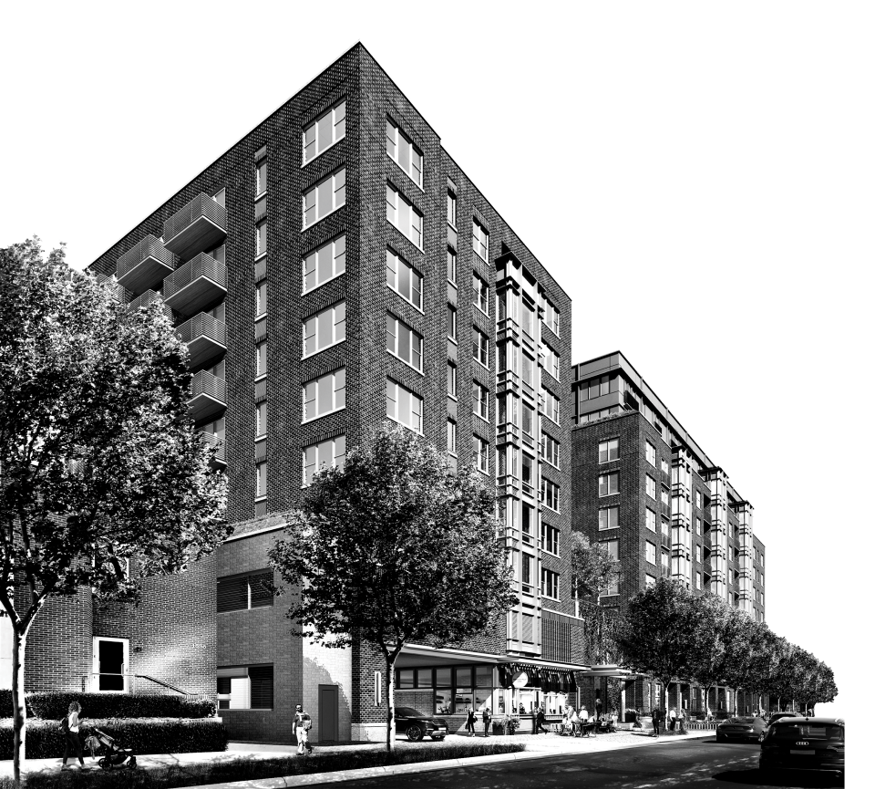
"From bespoke cafes on restaurant row to the gleam of the Capitol building, NOVEL Uptown sits perfectly placed in a confluence of culture."
NOVEL Uptown -- 1557 N Logan Street
Nice Black and White

Images courtesy NOVEL Uptown/Crescent Communities
NOVEL Uptown Opening Weekend:
"From bespoke cafes on restaurant row to the gleam of the Capitol building, NOVEL Uptown sits perfectly placed in a confluence of culture."
NOVEL Uptown -- 1557 N Logan Street
Nice Black and White
Images courtesy NOVEL Uptown/Crescent Communities
NOVEL Uptown Opening Weekend:
Offering up to 8 Weeks FREE + Entertainment Package!You’re invited to opening weekend at NOVEL Uptown! Join us Fri, Feb 28th to Sun, March 2nd for music, drinks, light bites and tours!
TakeFive
Active member
Transit-Oriented Development Welcomes First Residents
February 13, 2025 -- Mile High CRE
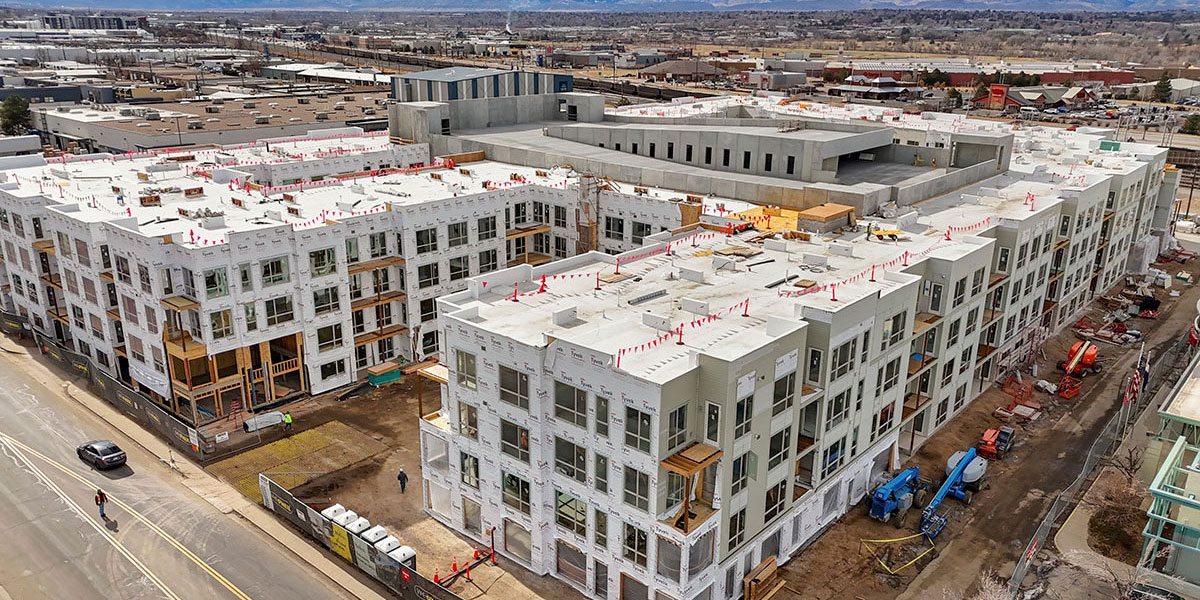
Arden Englewood -- 3595 S Jason Street


Images courtesy Arden Englewood/Fifield Companies
February 13, 2025 -- Mile High CRE
Chicago-based developer Fifield Companies has started welcoming its first residents to Arden, a new four-story, 302-unit apartment community in Englewood, just steps from two RTD stations. Arden was designed to meet the increased need for sophisticated and modern housing in the area.
Arden is managed by Bozzuto, was designed by KTGY and built by W.E. O’Neil.
Arden Englewood -- 3595 S Jason Street
Images courtesy Arden Englewood/Fifield Companies
Considered to be the most amenitized building in the Englewood area, Arden boasts an outdoor rooftop lounge and deck with views of the Rocky Mountains, a resort-style pool featuring a “baja shelf” with lounge chairs, hot tub with year-round access, yoga garden and a party room “pagoda” that faces the pool.
Conveniently located near the parking garage is a gear library featuring scooters, stand-up paddleboards, floating tubes, life jackets, coolers and other items for outdoor fun catering to residents embracing the Colorado lifestyle that are free for resident use. Another unique amenity to Arden is its Micromarket, a resident-exclusive grab-and-go convenience store near the building’s lobby, inspired by similar services offered at hotels.
TakeFive
Active member
Equity Commonwealth Takes Loss On $132M Denver Office Sale As It Winds Down Business
February 11, 2025 By Jonathan Rose, Denver
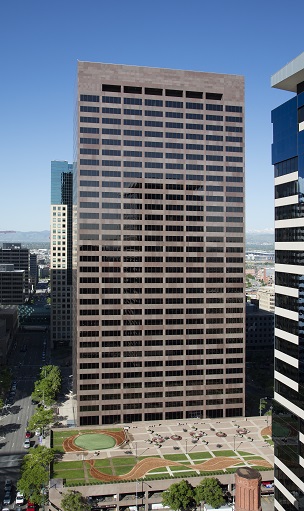
17th Street Plaza -- 1225 17th Street
Credit Equity Commonwealth
Deal has now closed:
17th Street Plaza office tower sells to private equity firm Lone Star
February 26, 2025 By Thomas Gounley -- BusinessDen
February 11, 2025 By Jonathan Rose, Denver
Equity Commonwealth is closing the books on its real estate holdings with the sale of its last remaining property, 17th Street Plaza, a 709K SF office tower in downtown Denver.
17th Street Plaza -- 1225 17th Street
Credit Equity Commonwealth
Deal has now closed:
17th Street Plaza office tower sells to private equity firm Lone Star
February 26, 2025 By Thomas Gounley -- BusinessDen
The 17th Street Plaza office tower in downtown Denver has been sold to an affiliate of Lone Star Funds, a Dallas-based private equity firm.