RyanD
Fast. Fun. Frequent.
Ken and I went somewhere cool today! DI post coming soon! 

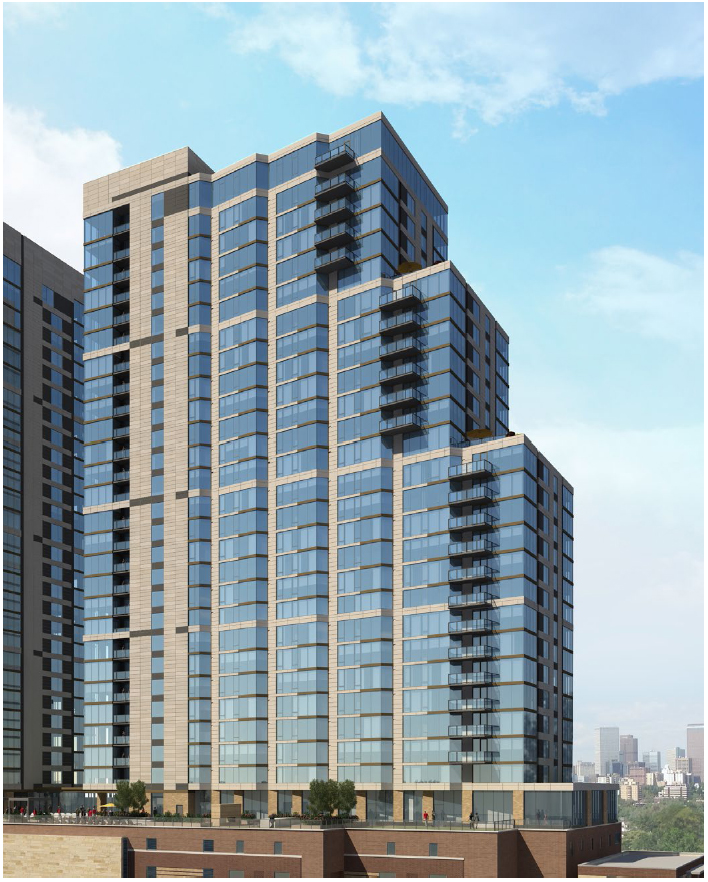
1601 Wewatta Hard-Hat Tour by RyanDravitz, on Flickr
1601 Wewatta Hard-Hat Tour by RyanDravitz, on Flickr

Ken and I went somewhere cool today! DI post coming soon!

The streetscape all through River North has not kept with development. Even Market Street by the ballpark between 21st and Broadway still has non-existent or elevated sidewalks. It gets worse as you go north. Obviously Brighton Blvd has been slated for a major improvement but Blake, Market and Larimer should also be part of that discussion as the area transitions from industrial to more more mixed use and residential.
denconyny said:

Really cool pic!
The Triangle Building looks really good as well. Too bad it couldn't be higher, but already the shadow that it casts is a lot.
And now to fill in the empty lot below with the 12 and 5 story buildings that are supposed to be built there, and all set.......
I suppose hardhats were required to get this cool pic?


With respect to Gaylord I don't need to pontificate any more. I think some have missed that it's more the issues involved than Gaylord specifically.So… If we follow Arizona's example will our economy be as strong as theirs? And our downtown as vibrant and developed as Phoenix?
What's Denver got to do with Birmingham?Similar incentive battles have been a mainstay in Birmingham for years. For places like Irondale, it forces them to compete against cities with much larger warchests. For the metro’s largest municipalities, it often means paying up to protect their turf and their tax revenue.
But for metro Birmingham as a whole, critics say it’s a zero sum game – diverting money that should be spent to lure new companies and cannibalizing the region’s chances for growth.
“What happens most of the time is, those businesses already have in mind where they want to move, then get the municipalities to bid against each other to get a better incentives package,” said Stewart, who is now the city clerk. “Right now, we’re basically just moving money around."
The Mile High modelIncentive wars between local governments are hardly just a Birmingham problem.
Metros around the nation have faced similar issues for years. In metro Kansas City, which straddles Missouri and Kansas, millions in incentives are being given to companies to entice them to move often just a few minutes across state lines.
But a potential blueprint to solve the challenge could be found in Denver.
Unless you were around when downtown Denver wasn't such a nice place, it's probably hard to appreciate how critical regional cooperation has been to Denver's current success.The Colorado metro’s Mile High Compact is a voluntary agreement between Denver municipalities that, among other things, forbids competition for local companies who stay in the region.
Prior to that compact, Denver was facing similar challenges to Birmingham.
“All of the cities and counties would compete so vigorously, we would chase them out of town,” said Tom Clark, CEO of the Metro Denver Economic Development Corp., the organization that spearheaded the compact.


Joel Kotkin is a hack. In this instance, I think he is probably right, although more for affordability and a lack of any other options than a "desire for space," which is hardly what you get with newer suburban development these days anyways. Even a broken clock is right twice a day, as they say. I think the observation that builders don't really know how to build what people want is absolutely true, I see that every day. There's a definite lack of creativity in the development industry. And local governments are basically unimaginative and too afraid to challenge the status quo in any forceful way. I can assure you, based on entitled development alone, the "suburban sprawl" we've come to know and love will still be being built 30 years from now. Nothing is changing in that regard. That's why I focus so heavily on the percentage of overall growth Denver is capturing - a tiny percentage - growing tinier every time somebody bitched about a five story building). Until that goes higher, all of the transit and a few thousand units downtown are meaningless. Transit is never going to serve the exurbs effectively unless we build them differently, which we are not doing. Basically, we folks who have a weak orgasm every time an inconsequential new project goes up on Denver Infill - we are part of the problem for not being willing to fight the difficult fights, and caring instead about building ourselves a tidy little island of urbanism to play on, while for most of the rest of metro and nearly all of its people, nothing changes.