• City-versus-city activity is flat-out banned from being posted here in all its forms.

    City vs city trolling sets up a rather nasty and personal fight between forumers from one place and forumers from another place, potentially affecting hundreds of members any time it breaks out. Nothing good comes of versus-trolling, but long after the insults and mockery have been removed, bad feelings between individuals and between groups tend to linger, oftentimes popping up in unrelated threads for months afterwards.

    Thus, when it comes to 'versus' trolling, a line must be drawn--sharply. Anyone who crosses that line shall be disciplined, up to and including suspension and even summary banishment without warning. Forum moderation and administration shall be the arbiter of what constitutes versus-trolling, so if you think your post might be perceived as an unfair attack on an entire city that will upset residents there, tread lightly or reconsider how you intend to express your opinion. No forumer shall successfully claim ignorance of our policy against versus trolling, and no forumer should believe he can get away with it.

    The ban on versus activity applies to all posts and all threads, even ones that are not initially set up as city-versus-city.

    If you see any troublesome posts please report them using the "report a post" icon -
    report.gif
    in the upper right corner of every post on the forum.

Cities that "undershot"


balletomane

New member
Which cities "undershot", i.e., never reached their anticipated potential, size or influence?


Some examples I know of,

Saint John, NB
Montreal, QC (was anticipated to reach 7 million by 2000)
Winnipeg, MB (pre-WW1 city planners expected 4.5 million by the 1980's)
Calgary, AB (Mawson's Plan was drafted for a city of 500,000 within a generation, or the mid 1930's)
Chicago, IL (yes, it may be a global city, but Burnham's "Plan of Chicago" anticipated 13.25 million by 1952)
Galveston, TX (from what I understand it was to become THE gulf port city)
New Haven, CT (expected 1 million by 2000)

And Canada's first annual demographic yearbook expected 109,540,000 Canadians by 1971.
 
IIRC St. Louis was planned/expected to be much bigger/influential today. Even if the city did lose its #1 midwest city status to Chicago.
 
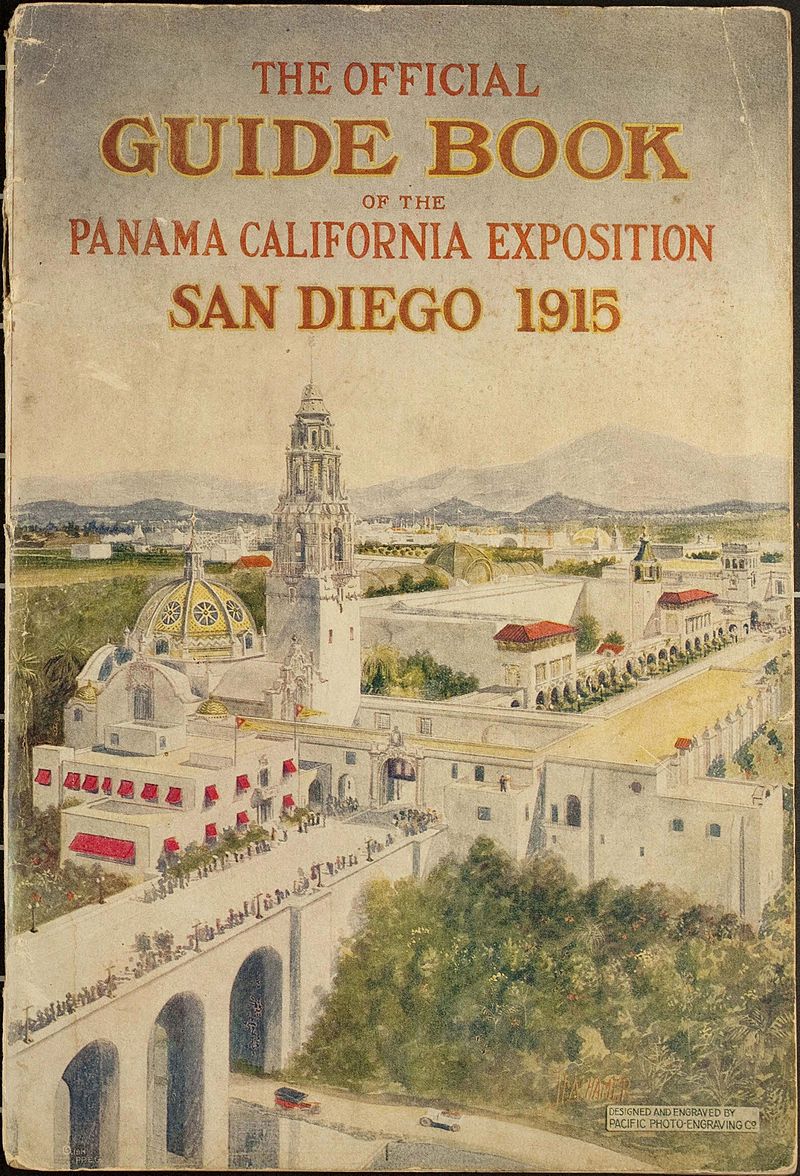
The 1915 Panama Colombia Exposition was supposed to be San Diego's quinceanera, where it would set itself as the nation's premier gateway to the pacific. Instead, the lack of a direct railroad connection to the east coast ensured LA would gain that title. Five years later the city leaders sold virtually the entire bay to the navy, which set SD on the stable course it lies on today instead of the limitless growth they'd previously envisioned.

But hey, at least we got some pretty cool architecture out of the deal.
800px-Guide_Book_of_the_Panama_California_Exposition.jpg
 
Montreal, certainly. You can feel it.

Berlin also has the bones of a larger place. Its scale can be that of a Moscow-sized city.
 
St. Louis, Toledo (OH), Buffalo, Budapest, Breslau (Wroclaw), Koenigsberg (Kaliningrad), Stettin, (Szczecin) St. Petersburg, Beirut.
 
Vienna, once the capital of Europe's greatest empire only a century before. Like Berlin it was the same league of size and growth as London, Istanbul and Paris before the wars and fracturing of empire into much smaller states.

Look at the city centre now and as Bill Bryson put it, aliens invading would be forgiven for attacking Vienna thinking it was the world capital. The grandeur of its buildings is astounding - I've never seen grander cityscapes than the streets in and around the Ringstrasse, more so than Paris, Rome, London, NYC, China. It's just a constant wall of palaces.


lead-image_city_life_oct_2015.jpg

https://metropole.at
image_teaser-lead

www.wien.info
voie.jpg

https://i.ytimg.com/vi/3KYPN0BbInk/maxresdefault.jpg


The streetwalls: thanx to aspiringArchitect, http://forum.skyscraperpage.com/showthread.php?p=5366110

5985734300_6dd358592a_b.jpg


5985716606_e085496045_b.jpg


5985731494_b5b69ccc78_b.jpg


5985736986_781cf8ed60_b.jpg


5985892665_538ed3575f_b.jpg


5985719936_a7376ae700_b.jpg


5986636436_516e56a0c1_b.jpg
 
Last edited:
I thought about Vienna, but didn't include because it was the seat of a grand empire for like 500 years. It was basically the successor to Rome.

It didn't undershoot, it's just well past its prime, IMO. It's core is certainly grand, but not quite on the level of Paris, and many times smaller. You're in commieblockland a short walk from the Stephansdom.
 
Take your pick of any average run-in-the-mill Rust Belt city. Utica (NY) in the late 19th centurt was the fastest growing city in the county for a while. And now look at it...
 
Take your pick of any average run-in-the-mill Rust Belt city. Utica (NY) in the late 19th centurt was the fastest growing city in the county for a while. And now look at it...

That's a good point. Almost every city in Upstate NY between Buffalo and Albany kinda "undershot". A random town of 10,000 will have a business district more appropriate for a town of 50,000.
 
Future City, Illinois, went there one time and it was basically just a trailer park, obviously someone thought it was going to be a big deal at one time.
 
I hate coming onto threads and seeing someone post a million pictures just to illustrate your point... one or two is great, anymore than that just gets annoying. Nothing makes me clock out on what they were saying faster than that.
 
Was thinking one of the Virginia cities. Norfolk or Richmond maybe. If you looked at a map of Colonial America it would be hard not to think that Virginia is the prime location. Right in the middle of the Eastern Seaboard, Norfolk is perfectly located at the mouth of the Chesapeake, halfway between the Caribbean trade routes and those heading to England. Richmond seems to have 19th century bones that imply a city much larger than it currently is.

Not sure what caused it to miss out. Poor local geography with swampy, humid marshlands? That being said Richmond was one of the largest cities in the Confederacy. Perhaps being located on the border of North/South tensions meant it was too risky a place to foster economic growth in the reconstruction era.
 
a lot of midwestern cities are this way, most of them have huge bleached bones sticking out one way or another, excepting maybe twin cities or kansas city maybe. cleveland has this behemoth, echoing downtown, st. louis has a brick backbone hanging out miles and miles, detroit, well speaks for itself.
 
even chicago feels a little lean sometimes, in places. like a massively tall, slightly skinny midwesterner. like there wasn’t enough meat on those colossal bones.
 
Was thinking one of the Virginia cities.

Not sure what caused it to miss out.

I would credit much of it to the Civil War.

suburbanite said:
That being said Richmond was one of the largest cities in the Confederacy. Perhaps being located on the border of North/South tensions meant it was too risky a place to foster economic growth in the reconstruction era.

It is interesting how close the Confederate capital was to the Union Capital -- about 100 miles apart from each other.

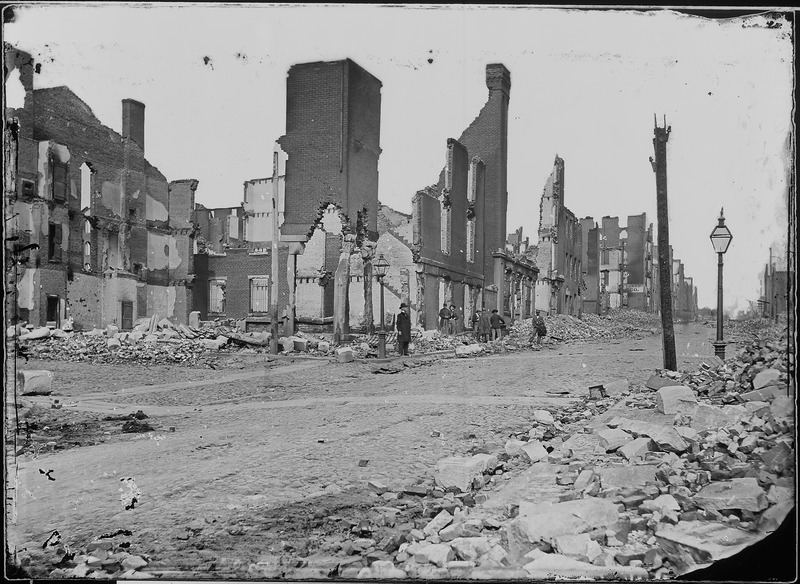
Richmond - 1865
3ca755d3f346cd0d15b72b06d9d1256f.jpg

https://www.pinterest.com/pin/56928382760083704/


lossy-page1-800px-Ruins_of_Richmond%2C_VA.%2C_1865_-_NARA_-_524883.tif.jpg

https://en.m.wikipedia.org/wiki/File:Ruins_of_Richmond,_VA.,_1865_-_NARA_-_524883.tif
 
Ya Virginia was ground zero so it makes sense.

Even in the post-war sun belt boom though, why did a city like Charlotte attract so much more than Richmond? Much closer to D.C. and the rest of the Northeast, seems like an ideal location for people/businesses looking for lower costs. Given how bad D.C. summers are though I can imagine the lower Chesapeake area is that much worse.
 
Can we really credit the Civil War for Virginia? Reconstruction ended in the 1870's and much of the development and economic boom in "older" cities in the north began around that time and took off over the next several decades. Plenty of time for Richmond and other VA cities to the same.
 
Can we really credit the Civil War for Virginia? Reconstruction ended in the 1870's and much of the development and economic boom in "older" cities in the north began around that time and took off over the next several decades. Plenty of time for Richmond and other VA cities to the same.

yeah, chicago was leveled to the ground by the great fire of 1871, yet it was but a speed bump on the city's meteoric rise to greatness.


Back
Top