CHICAGO | General Developments


Status
Not open for further replies.
Isn't the first phase of Parkside having a horrible time moving market-rate units?


Probably true of all the new replacement CHA mixed-income developments, no? Does anyone here see anything that would change that going forward (apart from massive price-cutting to the point at which still calling them "market rate" would be a stretch?
 
Market at lakeshore east
d86ac66b.jpg


As I've been watching the Village Market Center's progress almost daily, I'm surprised to see that thus far it appears they are going with a mostly or all concrete structure.....I had been assuming it would be mostly steel given the flexibility and more expansive column-free spans potentially matching up better with the program here (low-rise, nearly all-retail including a large ancor space......

Anybody in the construction industry have any insight as to what might have prompted the decision to go with concrete here? Pure cost driven? Are steel prices still highly elevated due to consolidation of industry/supply restraint and/or still very strong emerging market demand?
 
Last edited:
Has anybody heard anything about successful leasing of the former Trailways building at Roosevelt and Wabash in the South Loop? (building that Sam's Wine vacated last year). Recently I noticed lights on at night in some of the second floor space and saw what appeared to be cardio/other exercise equipment, and was just wondering if maybe a new gym was moving in or something??
 
Probably true of all the new replacement CHA mixed-income developments, no? Does anyone here see anything that would change that going forward (apart from massive price-cutting to the point at which still calling them "market rate" would be a stretch?

Price-cutting to the point where the units actually sell would just about nail the precise definition of "market rate," wouldn't it? It would probably make more business sense to convert more of the for-sale units to rentals to get them occupied and generating some revenue, but every time it's brought up there is major push-back from community groups, so there are limits to how far that strategy can be pushed.

As I've been watching the Village Market Center's progress almost daily, I'm surprised to see that thus far it appears they are going with a mostly or all concrete structure.....I had been assuming it would be mostly steel given the flexibility and more expansive column-free spans potentially matching up better with the program here (low-rise, nearly all-retail including a large ancor space

I'm not in the construction industry, but maybe the use of concrete has to do with the substantial above-grade parking component?
 
^^^Yep, pretty much. Market clearing price / Market rate......I don't see the difference....
Its like people who have their SFH on the market for 750 days at 1 million.....guess what lower the price
 
I don't know if it's been mentioned here or not but the 31st Street marina is now under construction.

At least the site is fenced off and there's a crane.
 
That reminds me, does anybody know when the 35th st pedestrian bridge over LSD and the RR tracks, designed by Teng is supposed to begin construction?
 
2gulb37.jpg

mrdowntown's post

Wow, just wow.....and to think a Belle tire recently opened near where my parents live in Michigan (in a place with very little design expectations) and the building is a very well done masonry structure. While a different brand, this opens in Chicago.......
 
Price-cutting to the point where the units actually sell would just about nail the precise definition of "market rate," wouldn't it? It would probably make more business sense to convert more of the for-sale units to rentals to get them occupied and generating some revenue, but every time it's brought up there is major push-back from community groups, so there are limits to how far that strategy can be pushed.


I'm not in the construction industry, but maybe the use of concrete has to do with the substantial above-grade parking component?


Yes, in that sense the market price is whatever the open market will bare for a specific unit. What I was thinking is that city officials assumed that it would be possible to sell a portion of units in these mixed-income developments at prices that are more or less comparable to prices they would be able to acheive in developments that have 100% unsubsidized units. Perhaps that's not even remotely possible, no matter the strength of the housing market - maybe the officials completely miscalculated consumer demand for this type of scheme?? I guess that's what I was trying to get at - more of a human nature/social housing policy type question...
 
Yes, in that sense the market price is whatever the open market will bare for a specific unit. What I was thinking is that city officials assumed that it would be possible to sell a portion of units in these mixed-income developments at prices that are more or less comparable to prices they would be able to acheive in developments that have 100% unsubsidized units. Perhaps that's not even remotely possible, no matter the strength of the housing market - maybe the officials completely miscalculated consumer demand for this type of scheme?? I guess that's what I was trying to get at - more of a human nature/social housing policy type question...

The problem is in perception. The Pearl District in Portland has 31% occupancy by residents making below 80% of median income for the region. Yet this is a desirable, high rent community just north of downtown.

Also, $280,000 for a two bedroom 1 bath apartment is still not cheap
 
You touch on it, but a big part of the problem is the different grades of "affordable" housing --- there are set-asides for being at 100% or 80% of area median income, there are set-asides for Section 8/voucher tenants, and there are bona fide public housing units owned by the Housing Authority. The set asides, an indirect subsidy, generally only act like rent control --- they actually tend to drive market prices up, so your Portland example isn't really a direct counterpoint. The directly subsidized housing, like Section 8 and "the Projects," are a much tougher nut to crack in terms of "market pricing," particularly for condo units that are a long-term investment. At least with rentals, people are more likely to take a chance for a year to get into a great location near downtown affordably, but asking people to part with a down payment and commit to a 30-year mortgage... well, ask yourself, would you do it? Almost no one has a problem knowing that 30% of their neighbors make a "mere" $50k/year, and thus there is little impact on demand; rather the rent control limiting supply will artificially increase the price paid on the open market by those not qualifying for the set-asides. Meanwhile, in developments like Roosevelt Square, Parkside of Old Town, etc., the uncomfortable issues arise instead committing to own property sharing a hallway with the family of 5 making a combined $11k/year, several of them generally unemployable for a variety of reasons --- and even if they moved on up and out, a new family would take their place.
 
You touch on it, but a big part of the problem is the different grades of "affordable" housing --- there are set-asides for being at 100% or 80% of area median income, there are set-asides for Section 8/voucher tenants, and there are bona fide public housing units owned by the Housing Authority. The set asides, an indirect subsidy, generally only act like rent control --- they actually tend to drive market prices up, so your Portland example isn't really a direct counterpoint. The directly subsidized housing, like Section 8 and "the Projects," are a much tougher nut to crack in terms of "market pricing," particularly for condo units that are a long-term investment. At least with rentals, people are more likely to take a chance for a year to get into a great location near downtown affordably, but asking people to part with a down payment and commit to a 30-year mortgage... well, ask yourself, would you do it? Almost no one has a problem knowing that 30% of their neighbors make a "mere" $50k/year, and thus there is little impact on demand; rather the rent control limiting supply will artificially increase the price paid on the open market by those not qualifying for the set-asides. Meanwhile, in developments like Roosevelt Square, Parkside of Old Town, etc., the uncomfortable issues arise instead committing to own property sharing a hallway with the family of 5 making a combined $11k/year, several of them generally unemployable for a variety of reasons --- and even if they moved on up and out, a new family would take their place.

I'm sorry, I hadn't made myself clear. the 30% in Portland is a wide variety of incomes, below 80% of median. Additionally, this percentage has been achieved through 10 year property tax breaks, & if developments drop below 25% of residents qualifying, they must then pay the back taxes.

If I had $6,500 to spend on a down payment for a 1 bedroom condo, I would absolutely snatch one up. As it is, I bike everywhere I need to, & with a ten minute walk, I could take the brown line or red line for all other necessary trips.

A dispersal of the poor evenly throughout the city is the ideal we should be aiming for, & if every development in the past boom met just half of the Parkside standards, there would most likely be a unit for every family displaced by the demolition of public housing projects over the same period. There also might be a smaller social gap between the lives of the haves & have-nots. Which works in a lot of other countries.

I apologize if this is getting too political. I just think high end developments should contribute to the solving of these problems, since they flaunt economic inequality.
 
Windy City's Gusts Supply Power to Stylish Turbines


Aug 19, 2010

By Rachel Arndt

Read More: http://www.fastcompany.com/1683897/let-the-great-wind-spin

If you say it right, “urban turbine” rhymes. But can it move beyond its oxymoronic wordplay and into the real world? Designers and architects are beginning to say yes.

In Chicago, Greenway Self-Park uses urban wind power and sleek architectural design to spruce up the dull city garage. Greenway Self-Park, which opened at the end of 2009, has 12 turbines--which started moving this summer--attached to its side and is topped with a rain collection system. For HOK, the firm behind the project, green design was an opportunity for good design, something rarely seen in parking garages. That means a screen instead of a wall, giving the 11-story structure both an open look--that admits its automotive contents--and efficient ventilation, which helps lower energy costs.

“With the design, we took away the traditions of parking garages,” says Todd Halamka, director of design at the Chicago office of HOK. He wants to celebrate the building’s function, not hide it.


windvert1.jpg


windhoriz1.jpg
 
I wonder about the economics of these projects. Will these turbines be maintained over the years because they generate enough power on their own to be worthwhile? Or will we be complaining on this board in a few years that they are broken and they are clearly not being repaired? These types of installations require more maintenance then the typical garage receives so when most people move on will it last? Or is this just a feel good project with no staying power?
 
^ I always see the darn things completely stationary, so count me on the cynical side of this one. But even if the project does little more than feed a bit of momentum into the "green" movement, then that's still a positive step in my book. In particular, once parking garages start featuring charging outlets, they'll feel more pressure to make these things work out well in practice.
 
^ I always see the darn things completely stationary, so count me on the cynical side of this one. But even if the project does little more than feed a bit of momentum into the "green" movement, then that's still a positive step in my book. In particular, once parking garages start featuring charging outlets, they'll feel more pressure to make these things work out well in practice.


LOL, I know. Of the 20 times I've seen this garage, I think I've seen them spinning once.
 
LOL, I know. Of the 20 times I've seen this garage, I think I've seen them spinning once.

I see them 20times a week (or more), and they have spun, once or twice.
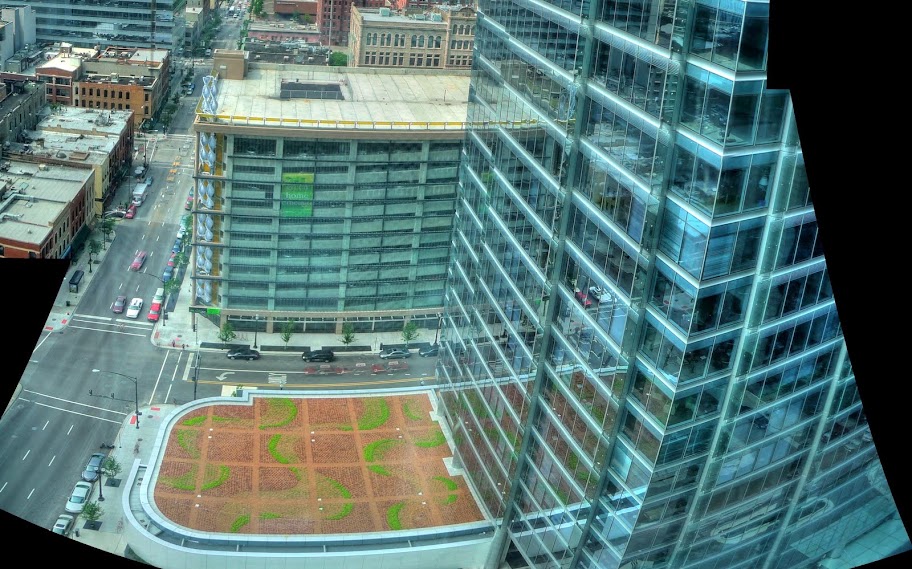
The green roof is still concrete with a tarp over the cistern/pool.

2010_06_18T.JPG


and the green roof on 353 (foreground) is still more red than green.
 
The green roof is still concrete with a tarp over the cistern/pool.
Based on recent news, that is supposed to become the amenity and/or garden roofdeck for the new residential tower next door. So maybe at this point they have no intention of putting in a green roof until they're nearly finished with the residential tower.

Also, what is the cistern for -- collecting rainwater for use somewhere else in the garage?
 
Status
Not open for further replies.


Back
Top