CHICAGO | General Developments


Status
Not open for further replies.
It is an really cool story. I don't think the location is bad at all. Why does every cultural (if you can call a Bond car museum cultural) destination have to be in the urban areas? Forgodsakes it will give people a reason to take a drive in the country in this always plugged in, never have time to just take a breath world we've created. Not to mention, it will do wonders to revitalize and rejuvenate this nice little old town, which is in a historically depressed area of the state - Hopkins Park is just down the road.
 
Somewhat off topic, but I need an answer quickly:

I need to know where all the info that was once on here about the Chicago Tunnel Company went.

More importantly I need to know who actually owns the tunnels. I would assume that they are owned by the city when they are under the streets.

Who was it that knew practically everything about the tunnels? Mr. Downtown?
 

From a FAQ on your first link:

Why were the tunnels under State Street and Dearborn Street demolished to make room for the rapid transit subways? Didn't the Tunnel Company have any say so in the matter?

The Chicago Tunnel Company owned only the locomotives, rolling stock, track, and overhead wire. The City of Chicago owned the tunnels. Because of this, the Tunnel Company didn't have much choice but to give up their most profitable trackage when subway construction was started by the city. You can't fight City Hall!

But then on the wiki page, they have this:

The Chicago Tunnel Company went bankrupt and applied for voluntary reorganization in 1956.[24] The tunnel company attempted to sever itself from the bankrupt holding company, claiming it could operate at a profit,[25] but by 1959, the tunnel asked for abandonment permission.[26]. The Interstate Commerce Commission consented to abandonment that July,[27] and the tunnel assets were sold at auction for $64,000 in October.[28]

Unfortunately, their references are old trib articles which I don't have access to. Not sure whether the tunnels themselves were part of the auction or who might have bought them.
 
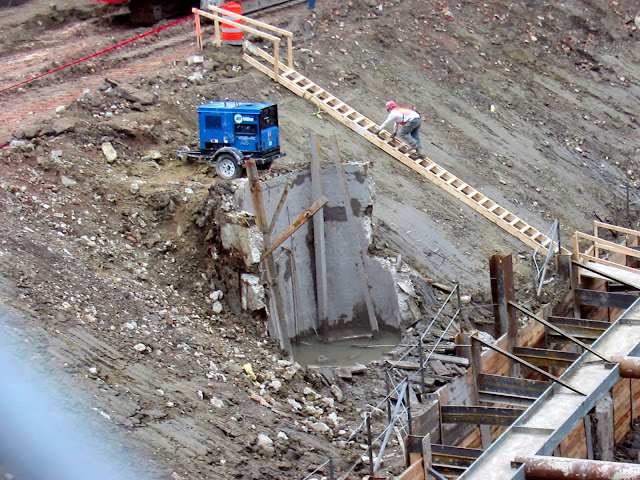
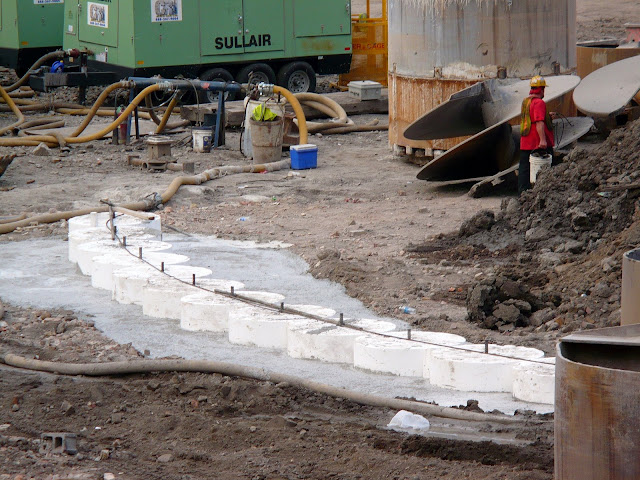
Thanks guys. It seems such a waste that these things are being grouted at every construction site.

I know there is map someone made a while back showing all the places where tunnels have been grouted or demolished. Does anyone have it?
 
The tunnels are now owned by the city, which leases space in them for power lines and fiber optic cables. Since the 1991 flood and 9/11, they've become rather paranoid about them, and no longer allow any tours. At locations where the tunnels cross onto private land for building connections, the city has required plugs or bulkhead doors, and no one is allowed to ever venture beyond them.

I don't know that any of the tunnels under the streets have been destroyed or filled, though bulkheads have now been installed at both ends of all river crossings.
 
Thanks guys. It seems such a waste that these things are being grouted at every construction site.

I know there is map someone made a while back showing all the places where tunnels have been grouted or demolished. Does anyone have it?

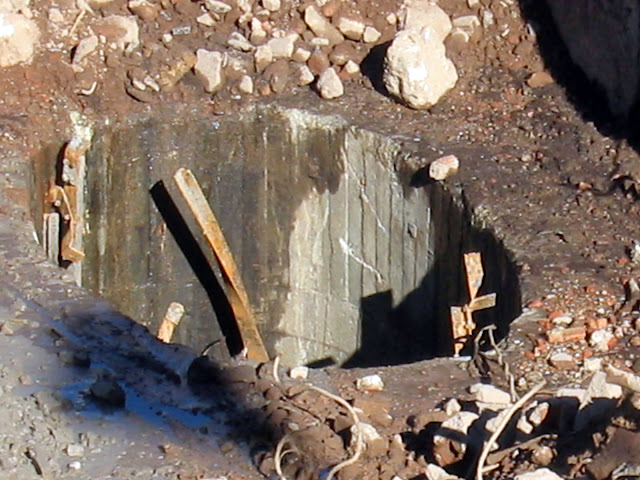
3 I have seen recently

300 N LaSalle - elevator
IMG_1803.jpg


353 N Clark - elevator
IMG_2075.jpg


400 N LSD - turn around
P1040137.JPG
 
It is an really cool story. I don't think the location is bad at all. Why does every cultural (if you can call a Bond car museum cultural) destination have to be in the urban areas?

Strength in numbers I suppose. You put more attractions in one place, it gives people more reasons to visit. "We can go to the Shedd, then Navy Pier, then the James Bond Museum, etc"

Can't complain though. If the guy wants to keep his collection local and bring people to his community, I think that's great.
 
The tunnels are now owned by the city, which leases space in them for power lines and fiber optic cables. Since the 1991 flood and 9/11, they've become rather paranoid about them, and no longer allow any tours. At locations where the tunnels cross onto private land for building connections, the city has required plugs or bulkhead doors, and no one is allowed to ever venture beyond them.

I don't know that any of the tunnels under the streets have been destroyed or filled, though bulkheads have now been installed at both ends of all river crossings.

In addition, my subcontractors have to submit notification to the Department of Homeland Security when they need access to them. . . I have a fiber optic network that resides primarily within the tunnels and with the exception of a few laterals for building access the rest are on bridge attachments. . . I've got quite a few maps of where these tunnels are with relation to my network, but unless you're working for a utility or telecommunications network provider there's no practical need to know where these tunnels are. . .

. . .
 
I've always been more fascinated by the three abandoned streetcar tunnels under the river.

As far as I know, all three are still mostly intact and might be great candidates for adaptive reuse as busways, pedways, art galleries, or something even cooler. Apparently there was some discussion of reactivating the Van Buren tunnel for pedestrian use back when 311 S Wacker was built in the 1980s (the winter garden was always intended as a access point to the tunnel).

The security arguments are a total canard. Obviously, putting people underground in a major downtown creates a potential for bombings, but I don't see the CTA putting in metal detectors in the subways. If a terrorist wanted to cause serious damage in downtown Chicago and wasn't a total idiot like most terrorists seem to be, there would be very little indeed to stop the attack, which worries me. I'm just glad Chicago isn't a symbolic target.
 
Apparently there was some discussion of reactivating the Van Buren tunnel for pedestrian use back when 311 S Wacker was built in the 1980s (the winter garden was always intended as a access point to the tunnel).

The security arguments are a total canard. Obviously, putting people underground in a major downtown creates a potential for bombings, but I don't see the CTA putting in metal detectors in the subways. If a terrorist wanted to cause serious damage in downtown Chicago and wasn't a total idiot like most terrorists seem to be, there would be very little indeed to stop the attack, which worries me. I'm just glad Chicago isn't a symbolic target.

Do I remember correctly that its western exit would be on the block just south of Union Station? Lots of potential there, especially since that block is essentially undeveloped.
On the other hand, it is going underneath the Metra, Amtrak, and possibly HSR tracks; that's a lot of potential for mayhem too. That might figure into opposition (including federal opposition) to the idea.
 
^^^ Two different things. That map is of the Chicago Tunnel Company tunnels. Those were about as deep as the subway. The Street Car Tunnels are a series of tunnels that were dug under the river to allow streetcars to get from one side to another without trying to cross the dangerously overcrowded bridges of the time.
 
Presentation on the proposed reconfiguration of Western near Belmont:
http://www.cityofchicago.org/content/dam/city/depts/cdot/Western_Ave_meeting_exhibits_July2010.pdf

In short, demolishing the overpass and widening Western to 3 full lanes in each direction, with the outer lanes being parallel parking during the off-peak. This means narrowing Western's sidewalks from 15 feet to 13 feet, aside from at the overpass where the sidewalks are only 9 feet presently.

My main concerns are (1) will the widening just squeeze the traffic balloon and shift the congestion hotspots, thereby creating demand for future widening projects elsewhere on Western? Full modeling of the corridor should reveal changes in LOS at outlying intersections, particularly Western/Fullerton and Western/Irving Park; (2) what hypothetical future Bus Rapid Transit options will this project preclude from happening? If the street gets yet another planted median, there goes any hope of a center-running BRT with prepaid boarding islands. On the other hand, if the new outer lanes are at least made bus-and-right-turn-only and bus stops are placed strategically at intersections, this project could improve the reliability and speed of bus service.

I'm also a bit skeptical of some of the pedestrian crossing distances at the big intersections, but Western is already utterly hostile to pedestrians in geometry, traffic, and land use, so at most it's a missed opportunity rather than worsening the status quo in this regard.
 
Status
Not open for further replies.


Back
Top