CHICAGO | General Developments


Status
Not open for further replies.
I think the problem there is what's across the river: an unsightly, brightly-lit train yard that's not going anywhere. And beyond that, the forgotten bowels of the South Loop/West Loop. Probably the ugliest landscape anywhere near downtown. I'd want to turn my back to that too.

What would the reasoning be for restoring the old kink in the river? Wouldn't it make a good chunk of the Riverside Park land disappear and only create useless and inaccessible land next to the train yard on the west bank?

Well, yeah, it was just a fantasy.... although not a particularly thought-out one.

I think ardecila hit it on the head about why this would be a nice thing to do. But there are also other reasons... "Natural" accuracy, and the fact that the perfectly straight river at that point feels more like a canal and less like a natural resource. It wouldn't necessarily result in lost land, if you replaced it on a one-for-one basis (eg the State or whoever controls the waterways would have to deed over some of the land that is currently river - not easy to do, I imagine).

Canals are also intriguing - in fact, I am surprised this has not been done before. A development with marina space in each tower and even some townhouses with docks would draw a lot of interest, I'd guess. Smith+Gill (and Goldberg and Weese before them) obviously clued into this. Considering that we live on such a giant body of water, the opportunities to own a home with any kind of riparian rights are incredibly few.
 
I noticed the other day that a sales center for the Nortown Terrace development on the site of the Nortown Theater is open on Devon. They also have a website up. No full renderings, but I think it's interesting that the new building seems to imitate the massing of the old, and that movie theatres are still in the mix, apparently. Architecture by VOA, but still pretty boring looking. I'm surprised this project is moving forward. They had some better images at the office.

http://nortownterrace.com/index.htm

Anyone know the developer? The site seems to intentionally brush over this important piece of information.
 
Anyone know the developer? The site seems to intentionally brush over this important piece of information.

A November 5, 2006 article lists Amrit J. Patel as developer. Six stories, 70 units, and "The developer will build 9,940 square feet of retail space on the ground floor. Of that, about 8,040 square-feet will be a two-screen movie theatre with 306 seats. The remainder will be leased to one or more retailers.

About 80 parking spaces for residents will be on the second floor, Patel said. "

See also http://crd50.org/pd/pd1038.html for an elevation diagram.
 
I went and explored the West Loop a few days ago. It's a neighborhood that I've always neglected to visit - for some reason, I've always stopped on its edges. It was bitterly cold, so I didn't see as much as I wanted to, but it seems like the neighborhood has a wonderful historic building stock and is making distinct progress. Far from the empty wasteland I expected, it has plenty of auto traffic and bus riders passing through, and I imagine it would have plenty of pedestrian traffic were it not for the cold weather. The complaints of WLCO about a lack of retail seem somewhat justified - I didn't see much retail in the West Loop at all, since all the new condo developments have gone up without retail space at the ground level. The few that do have retail space have seen it snapped up by professionals and realtors, so essential services like corner stores and cleaners cannot move in.

The thing I liked the most was Randolph Street. With its 2 landscaped allees of trees dividing the road into 3 distinct sections, it's extremely Parisian and has the potential to become the showpiece of the neighborhood if development along the street is planned properly.

Are there any plans for Randolph Street anytime soon? It'd be nice to convert it into a two-way road and reduce the speed limits. Another good idea would be to create bike lanes along it, since the West Loop doesn't have many dedicated bike lanes, and the ones that are there only lead eastbound. I imagine that, because of the huge width of Randolph, the bike lanes could in fact become something heavy-duty, with generous space and a raised divider separating it from auto traffic.
 
Bridges & Riverwalk

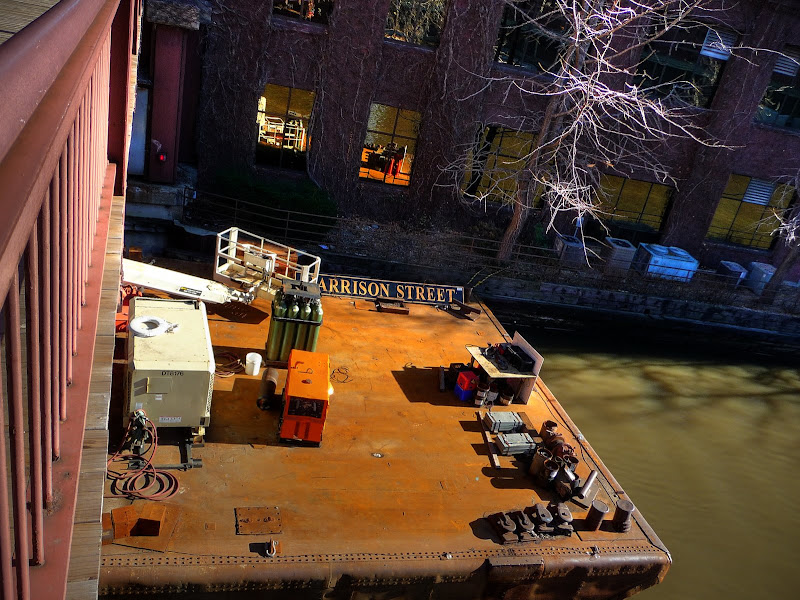
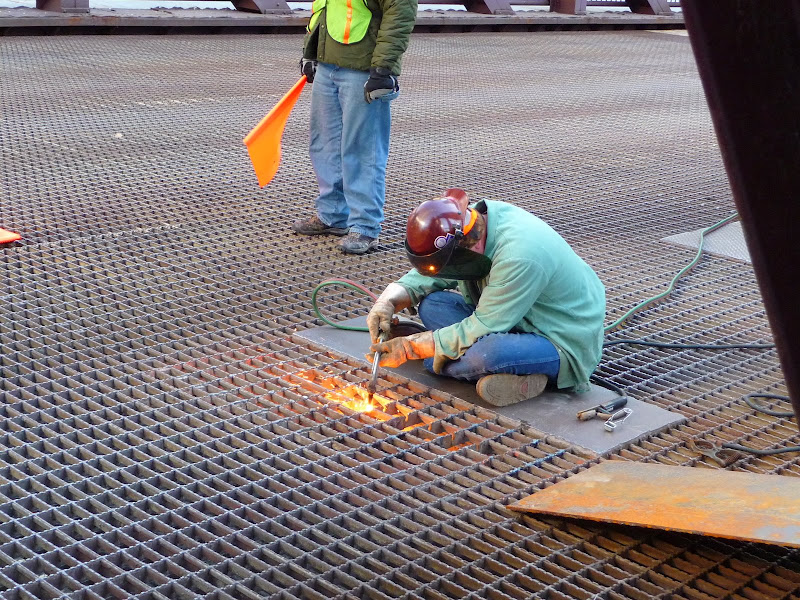
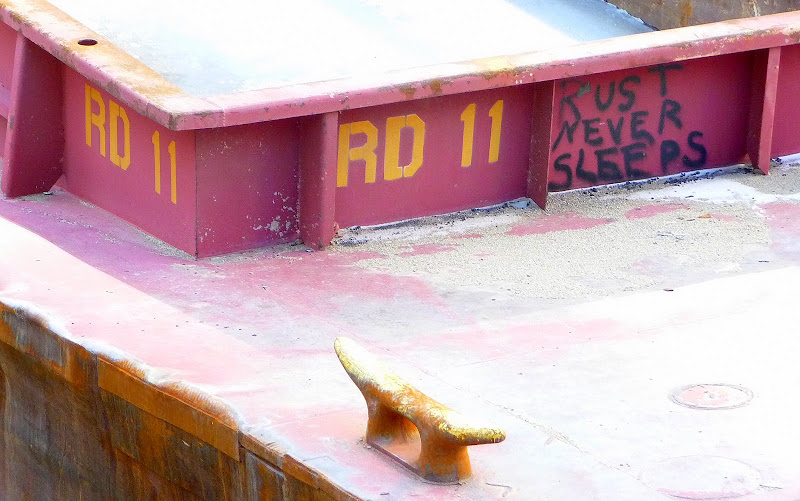
Often overlooked, the maintenance crews keep up their continuous task.
Dec 29,
Lake st Bridge
P1190370_68_69.jpg


LaSalle st - fixing a metal pothole.
P1190395.JPG


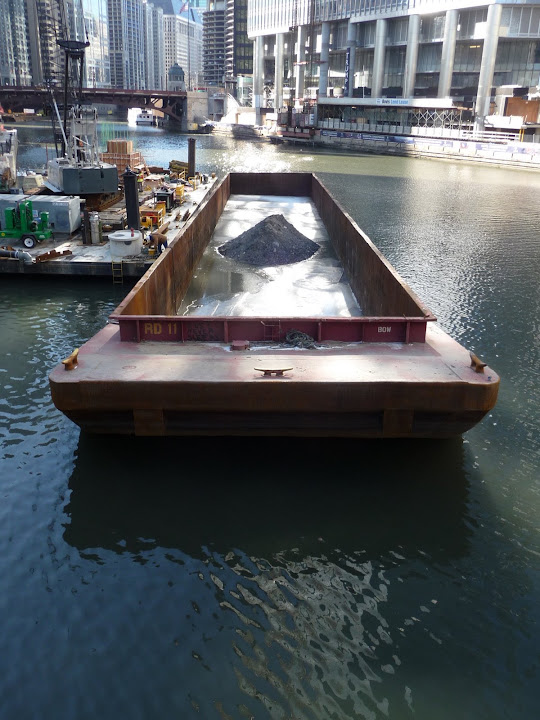
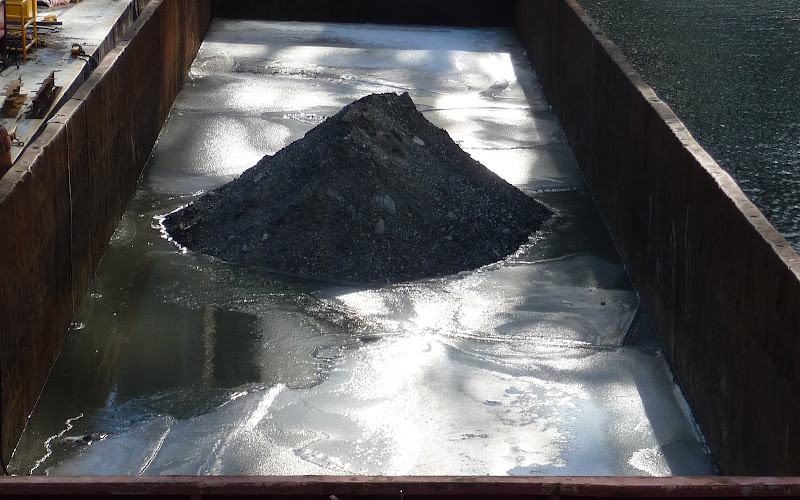
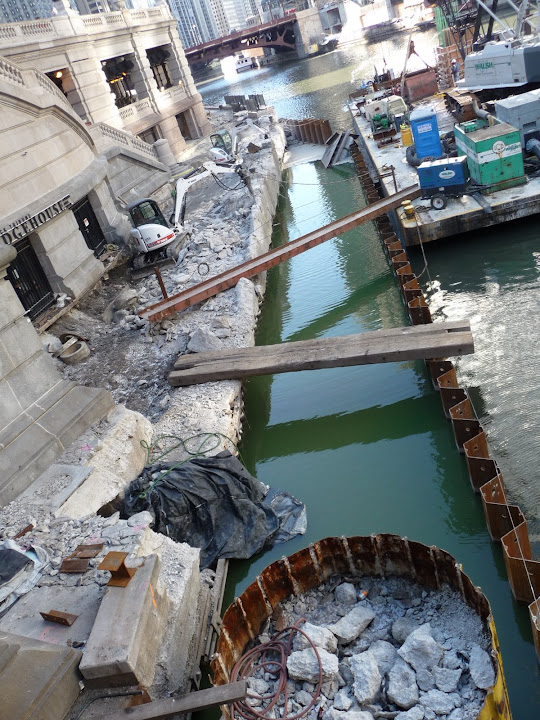
Dec 31 - Riverwalk work from lower Michigan/Wacker.
P1190629.JPG


P1190630.JPG


P1190639.JPG


P1190632.JPG


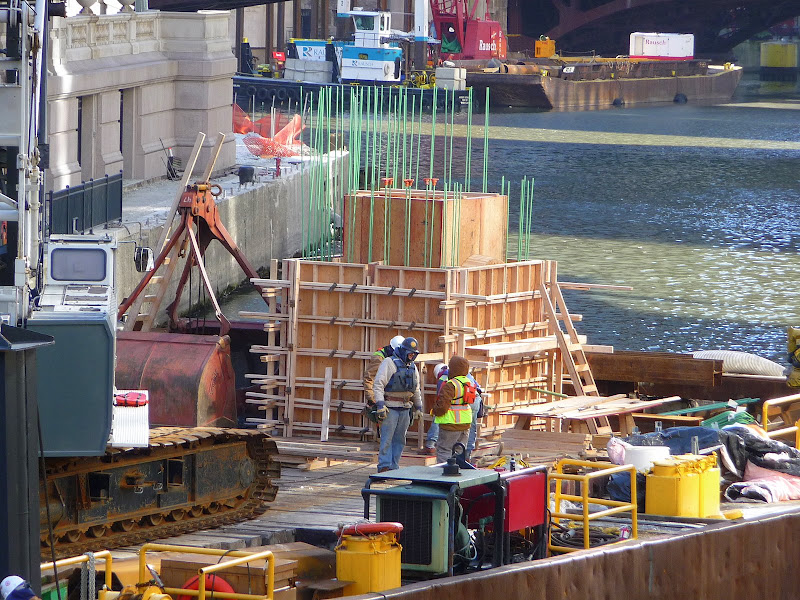
Form and Rebar for a large footing, I would guess this is going to be placed in the water first, then the concrete poured.
P1190627.JPG


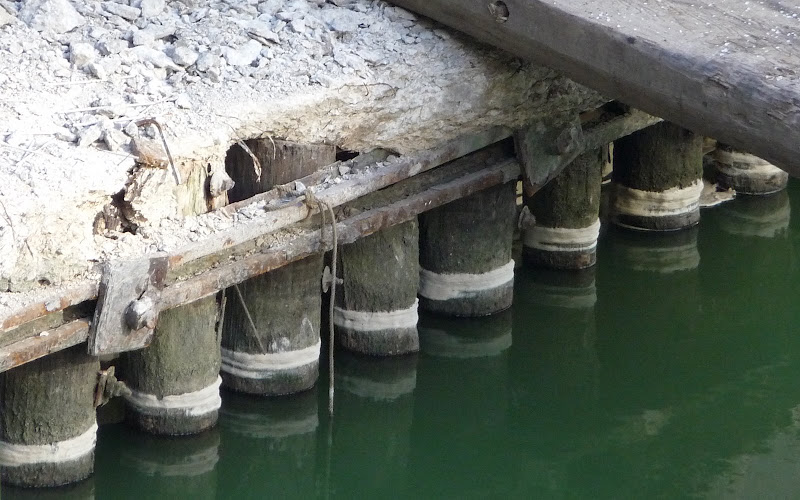
Old School
Pilings , with an I-Beam bolted on, covered with concrete.
P1190636.JPG


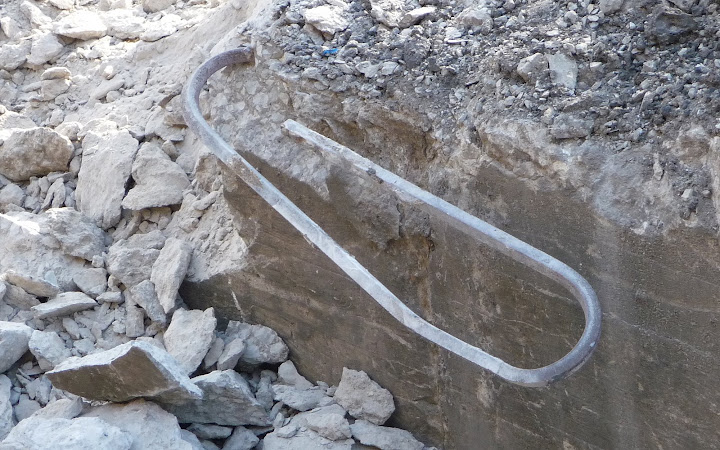
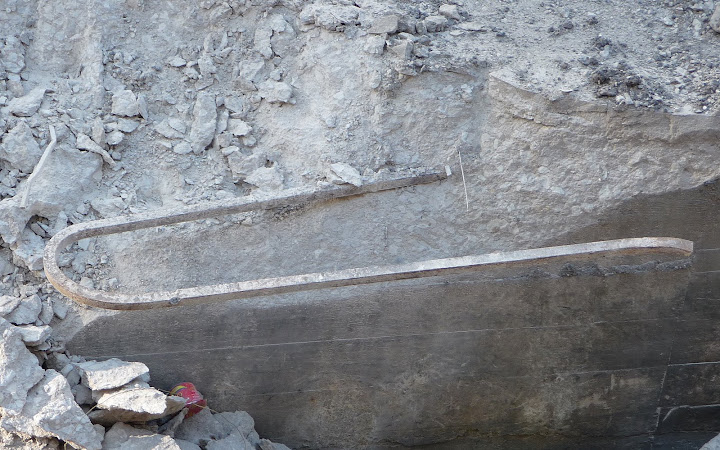
Long section of squarred, not ribbed, rebar that was at the core of an old wall.
P1190646.JPG

P1190647.JPG
 
Far from the empty wasteland I expected, it has plenty of auto traffic and bus riders passing through, and I imagine it would have plenty of pedestrian traffic were it not for the cold weather. The complaints of WLCO about a lack of retail seem somewhat justified - I didn't see much retail in the West Loop at all, since all the new condo developments have gone up without retail space at the ground level. The few that do have retail space have seen it snapped up by professionals and realtors, so essential services like corner stores and cleaners cannot move in.

If there were market demand (e.g. higher population density, either through reduced vacancy of existing units or increased supply of new units) for such stores, such stores would easily outbid the professionals/realtors for the space.

If anything, West Loop is lucky that outright vacancy isn't even higher (it's still quite prevalent), as is the case in other neighborhoods with overbuilt retail like Roscoe Village (see Belmont) or further west by United Center. West Loop is lucky that retail spaces have been concentrated along specific streets like Madison, Halsted, Randolph, Van Buren, rather than scattered willy nilly, which would allow for even lesser critical mass of retail activity.

I still don't get this idea that neighborhood groups have that the problem with a lack of retail is the lack of governmental involvement, as if whining to the aldermen or newspapers will magically make a kooky coffee shop or clothing boutique appear. A dearth of retail represents a combination of either 1) insufficient market demand or 2) too much restriction/cost to make taking the risk of opening a business or franchise an attractive endeavor. Solving both usually means getting NIMBY groups the heck out of the way.

The only way involving politicians can allow the neighborhood to custom-tailor its retail mix is through the use of business subsidies via either TIF or SSA, but that's an inefficient scheme that will eventually collapse on itself for any number of political or economic reasons.
 
A dearth of retail represents a combination of either 1) insufficient market demand or 2) too much restriction/cost to make taking the risk of opening a business or franchise an attractive endeavor. Solving both usually means getting NIMBY groups the heck out of the way.

Exactly. And what's the best way to increase market demand? Increase the population density!
 
Where are all the residents of West Loop going right now when they need milk? Maybe I was just looking in the wrong places, but a lack of critical retail services is not a problem of limited density. You can find immigrants who are willing to open a hair salon, cleaners, or corner store in almost any neighborhood, and West Loop is denser than most. You can't tell me it's less dense than Wicker Park (it was in 2000, but now after 8 solid years of nonstop new construction?)

I don't think it's a problem of government, though - just a failure of developers to provide enough space. Those professionals/realtors pay a lot more for their space than a traditional retail tenant would, so developers need enough to space to satisfy them and then additional space to create a group of retail stores.
 
Last edited:
The thing I liked the most was Randolph Street. With its 2 landscaped allees of trees dividing the road into 3 distinct sections, it's extremely Parisian and has the potential to become the showpiece of the neighborhood if development along the street is planned properly.

Are there any plans for Randolph Street anytime soon? It'd be nice to convert it into a two-way road and reduce the speed limits. Another good idea would be to create bike lanes along it, since the West Loop doesn't have many dedicated bike lanes, and the ones that are there only lead eastbound. I imagine that, because of the huge width of Randolph, the bike lanes could in fact become something heavy-duty, with generous space and a raised divider separating it from auto traffic.

I completely agree with you. I recall exploring the West Loop in my travels last year while living there, and I felt the same way about that section of Randolph Street. It's really a diamond in the rough. What I also recall is that it is lined with warehouses for the most part, and it would need some truly extensive redevelopment to embody what you and I would like to see there.

All I can say is that I hope such occurs. In due time...
 
Where are all the residents of West Loop going right now when they need milk? Maybe I was just looking in the wrong places, but a lack of critical retail services is not a problem of limited density. You can find immigrants who are willing to open a hair salon, cleaners, or corner store in almost any neighborhood, and West Loop is denser than most. You can't tell me it's less dense than Wicker Park (it was in 2000, but now after 8 solid years of nonstop new construction?)

I don't think it's a problem of government, though - just a failure of developers to provide enough space. Those professionals/realtors pay a lot more for their space than a traditional retail tenant would, so developers need enough to space to satisfy them and then additional space to create a group of retail stores.

In terms of unit density and population density, West Loop is less dense than Wicker Park.

West Loopers presumably go to the Dominick's at the base of Skybridge at Madison/Halsted for milk and such - and now they've got the nice new Jewel at the K Station development, as well (most of them drive, anyway).

There's also Walgreens, CVS, 7-Eleven, White Hen, and those smaller grocery stores like Athens Grocery, Presidential Market, etc. I suppose others drive to the Whole Foods on Roosevelt as well.
 
http://www.gazettechicago.com/index/?p=115

Jones location, enrollment may change
By Kathy Hills


The Chicago Board of Education has announced a plan to build a new facility that will relocate Jones College Prep to the lot directly south of the current school instead of renovating the present structure as originally planned. The existing school likely will be sold for development, and enrollment may be opened to neighborhood youngsters.

...The new school will have a full-service library, pool, and gym. The enrollment will be increased from 800 to 1,000 students.

...Planning is in the early stages. Powers said, “We’re waiting for the architects to get back to us with the details on this seven-story, $130 million project on State Street. They talk of breaking ground this spring with completion in 2011, but to my knowledge the board has not approved the project.”
 
http://www.ward42chicago.com/in_the_news.html

Development Project Update: Poetry Foundation at Superior and Dearborn Streets
December 5, 2008


The Poetry Foundation will be constructing their new headquarters at 720 North Dearborn Street, at the southeast corner of Superior and Dearborn. While some details are still being finalized, the overall design calls for construction of a 21,000-square-foot, two-story building, with the first floor featuring galleries, a reading room and poetry library to be open for public use, and the second floor containing office space for the Foundation. The design also calls for an open garden to be located at the building's entrance, and the installation of a green roof.

The existing building at this site is currently being demolished. New construction is anticipated to begin in the spring of 2009, with the building to be opened for use in the spring of 2010. This initiative is privately funded by the Poetry Foundation, a not-for-profit independent literary organization.
 
The Poetry Foundation is the one that 500 million donated rencently and they're throwing up a two story building. You'd think all that poetry would make them romantic visionaries. Guess not.
 
The Poetry Foundation is the one that 500 million donated rencently and they're throwing up a two story building. You'd think all that poetry would make them romantic visionaries. Guess not.

IIRC, John Ronan is designing the building, so it's not like it will be some Belmont Ave faux-loft turd.
 
What's being demolished?

A Victorian rowhouse (actually taller and more dense) that got a bad PoMo nip/tuck, probably 1980s. There might have been something left over under the Dryvit shell, but I presume it was a total loss already.

VivaL reported that another smaller building to the west was also taken down, however. That one was intact and quite nice. Not sure if it was for this project.
 
Status
Not open for further replies.


Back
Top