CHICAGO | General Developments


Status
Not open for further replies.
what a terrible waste of money. :yuck:

Again...

http://featuresblogs.chicagotribune.com/theskyline/

Perfect timing for the Olympics inspection: Handsome new railings on the Michigan Avenue Bridge

Just in time for the International Olympic Committee's visit to Chicago, not to mention the upcoming celebration of the 100th anniversary of the Burnham Plan, new ornamental railings have been installed on one side of the Michigan Avenue Bridge.

They look wonderful, with a richly-articulated, hub-and-spoke pattern that is far superior to the fence post look of the utilitarian railings they are replacing.

The just-finished railings and a new sidewalk are on the west side of the bridge, which forms the gateway to the North Michigan Avenue shopping district from the Loop and is surrounded by a quartet of 1920s skyscrapers including the Wrigley Building and the Tribune Tower. Work on the east side is to start next week and to be completed in June, according to Brian Steele, a spokesman for the city's Department of Tranportation.

6a00d834518cc969e201156fc37c10970b-320wi


6a00d834518cc969e201156ecc984f970c-320wi


The railings are based on the original 1920 design for the bridge by Chicago architect Edward Bennett, who co-authored the 1909 Plan of Chicago with architect Daniel Burnham. Often referred to as the Burnham Plan, the document is credited with inspiring such major pieces of civic infrastructure as Wacker Drive, Navy Pier and the Michigan Avenue Bridge itself. The city's celebration of the plan is to begin June 19th. (At left, workmen fix the bridge in 1939.)
 
wait... how does what i said lend this response? or is this a cumulative response?

Again really? It's a cumulative to all the ignorant responses that you've posted over time. You don't appear to understand what it means to live in an ever changing city. Cities are places that aren't locked in time like a statue or portrait. If things don't evolve, they die off.
 
Last edited:
Adrianxsands said:
so, i'll ask again, where is the need for all these skyscrapers? to see the lake?

Much of the pre-WWII built environment that you know of in the "classic Chicago neighborhoods" is illegal in today's zoning codes. We really can't build the dense 1950's era city today in low-rise form. Many of these old buildings fail minimum parking ratios, minimum lot area, open space, height and use restrictions in today's zoning codes. Then you have more restrictive building codes today as well.

But, for the sake of discussion, let's pretend that we can abolish all of the code restrictions, and just revert back to allowing that old stuff to be built again. We still have to deal with market trends in which people want to live in larger spaces. Additionally, we have smaller family sizes, so there are fewer people in each household while each household takes up more space. In order to make up this lost density we have to build vertically where allowed.

We need more density in a vertical format, in order to deal with the realities of more restrictive zoning codes throughout the city's neighborhoods, as well as today's household and market trends. To meet the parking requirements in larger multi-unit buildings developers usually have to go up because underground garages are so expensive to construct here. More vertical real estate is also needed to put pedestrians on the street to shop in our city's retail stores. Many neighborhoods that have lost density over time do not have enough of a critical mass to sustain street front retail along all of the arterial streets. Keep in mind that because of big box stores and the prospect of driving to them, the threshold for sustaining local neighborhood retail strips is now higher than it was in the past. Same story for sustaining higher CTA ridership as well. You in the past have derided the construction of the Lakefront high-rise wall, but it is because of that added density, that the north side neighborhoods remained vibrant and relatively healthy while much of the city declined. I also highly doubt that CTAs system of Lakeshore Drive express buses would exist without that high-rise density as well. I also personally find it a mystery that someone who praises modern architecture as much as you do, despises many of the modernist apartment towers along LSD.

Then we have the benefits of additional tax revenue coming in from new high-rise buildings while they efficiently utilize existing city services. The Central Area for example contributes something like half of all the city's tax revenue while occupying less than 5% of the city's total land area.
 
Shawn, very good post.

Not that I want to jump into this argument, but I would also point out that much of the high-rise construction in Chicago has been fueled by a transition from an industrial center to a more diverse economy with more office users. Also, the images posted earlier were a terrible comparison, as the vintage one only showed Streeterville, which wasn't much at that time, and the other showed a good percentage of the downtown.

I think one of the universal things I hear from people who live in neighborhoods with skyscrapers is actually how little they notice them. The benefits so clearly outweigh the negatives.
 
My compliments also, Shawn, on a very insightful summary of the interconnected factors shaping today's urbanism.

Just one note: the central area's high proportion of tax contribution is largely due to Cook County's system of assessing commercial property at a higher rate than residential. Actually, I'm pretty sure that a residential highrise contributes much less property tax than the same number of units and square footage distributed among single-family homes or small multifamily buildings. I pay only $2,000/year property tax on my 1100 sq ft downtown condo.
 
New Buffalo, MI with designs on becoming a commuter suburb of Chicago

I find what's happening in this town interesting. A private developer puts money towards a new rail stop in a lakeside community that has seen new townhome & condo development with hopes of becoming the next commuter suburb of Chicago. This sounds like a story from the 19th century..

Will we commute to New Buffalo?
By: Shia Kapos April 06, 2009

31596.jpg


NEW BUFFALO, Mich. — Chicago has been edging closer to this bucolic village for the past couple of decades as more second-home owners seek a nearby taste of country life. Now, a new train stop is about to open in the center of the business district, with direct service just an hour's ride from Chicago's Union Station.
Could New Buffalo be in transition from sleepy summer town to full-time Chicago suburb?
 
...
in the same number of units and square footage distributed among single-family homes or small multifamily buildings. I pay only $2,000/year property tax on my 1100 sq ft downtown condo.

Yeah, it's the sort of thing I don't really want to complain about too loudly, but I own about 1,100 sq/ft on the top floor of an 1890 four-story walkup in River North and pay about $3,000/year in taxes. I know many people in the suburbs who own single family homes with a sales value similar to my unit who pay double or more in property taxes than I do. I'm not normally one for tax increases, but I am for fairness in taxes and I'd admit I don't think it's fair I pay less in taxes for more services than some suburbanites. I don't want to pay double what I pay now - at least not in a one-year jump - but if my taxes went up some lesser amount - say 20% - to fund infrastructure projects downtown or the city at large I wouldn't be crying foul as long as the money actually went to those projects. For example, I'd sign up today to pay an extra 20% in property taxes to see the West Loop Transportation center and it's constituent components built because I know it would help reinforce the vibrancy of downtown and probably more than make up for added cost either in benefit or property value - or both.

I understand why the city likes to keep city taxes lower, but at some point there has to be equity with the suburbs and there has to be an honest analysis of what we're losing by not paying taxes proportional to what the suburbs do. I looked up condos in Naperville similarly sized to what I have downtown and they seemed to be taxed at 1.5 - 2 times what I pay in taxes - 2 - 3 times what Mr. Downtown pays. Not only is that not fair to the suburbanites in that they pay so much more, but it's not fair to the city residents who are paying less than the market would likely bear and in the process missing out on needed infrastructure. Carrol St, West Loop Transportation, Clinton Subway would all be a lot closer to reality if our property taxes were closer to the suburbs' and the difference was going to infrastructure.
 
^The places where this is really going to become intolerable are the inner suburbs. When they decline and need renewed infrastructure or revitalization, they have no resources except a bunch of small unfashionable 1950s houses. So the schools keep getting worse and the property taxes keep getting higher. I fear that a bunch of places such as Dolton, Posen, Ford Heights, and maybe even Lyons, Maywood, Stone Park, and Bensenville will go bankrupt, and the city will end up surrounded by a ring of decay.
 
and the city will end up surrounded by a ring of decay.

And it hasn't had a ring of decay around it in some way for the past 50 years? I guess there will always be decay somewhere in the city as long as people continue to segregate themselves by income. That is something I don't see changing too quickly. I'd rather it be the suburbs than the city though. The suburbs are small enough that they can shrink back to a reasonably smaller size (I.E. tear down the sprawl like cities in Michigan are doing). I mean I know that happened to Chicago, but the central city seems to be much more damaged by changing levels of density than smaller cities around it are.
 
^ Big cities were always more resilient to depopulation and dwindling coffers. The ghost (and then ghetto) suburb could become a disturbingly different phenomenon.

So, annexation? Merger?
 
Why is it inevitable that the inner ring suburbs will decay? For all the inner suburbs with 50s-era housing that have been going downhill, like Maywood, there are others with pretty similar physical infrastructure that have done fine, like Skokie. How the various inner suburbs have fared has more to do with social factors than with physical ones. I don't exactly understand what process you're talking about.
 
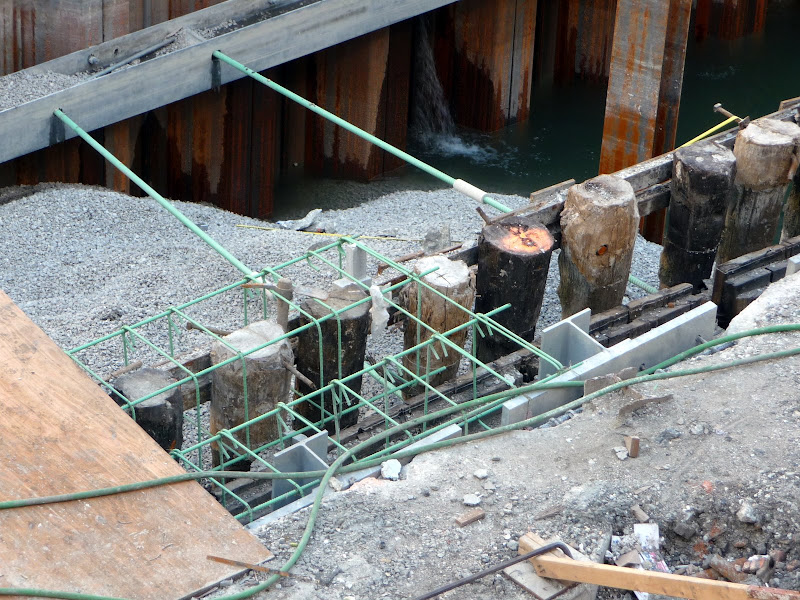
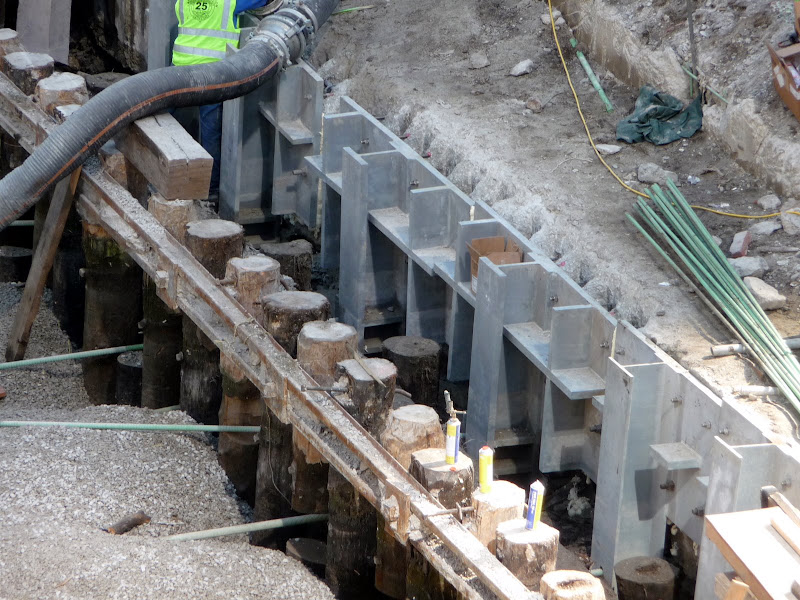
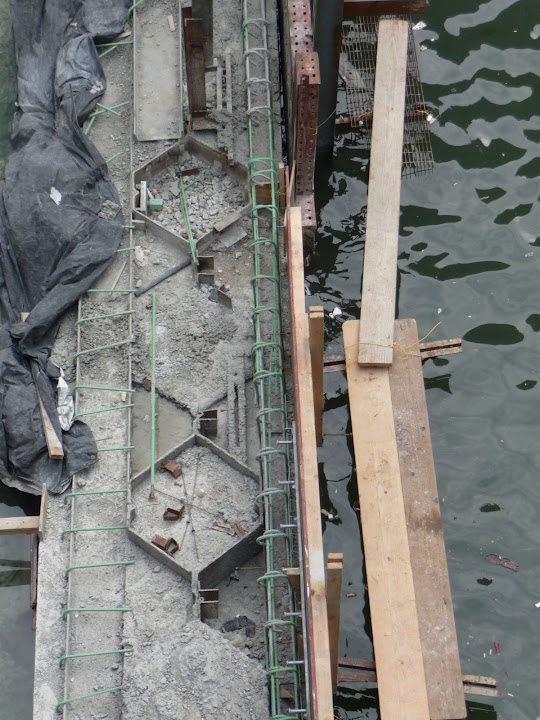
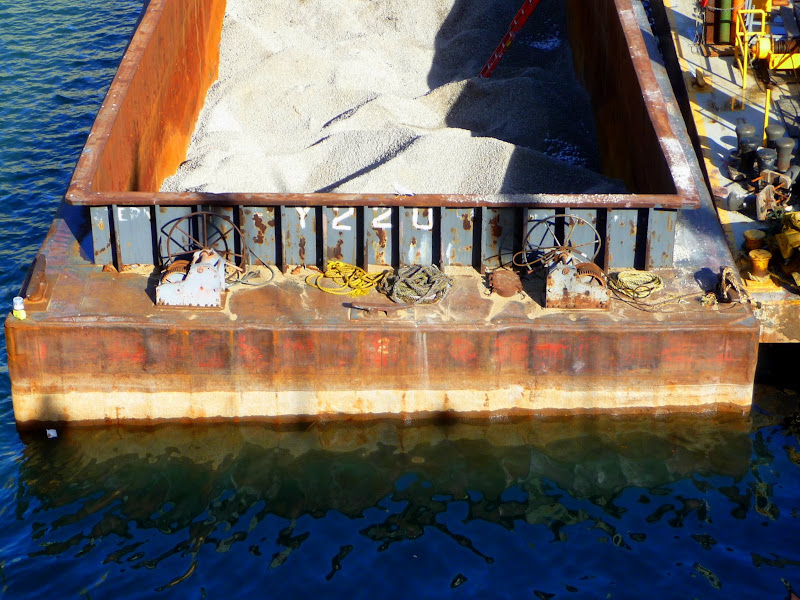
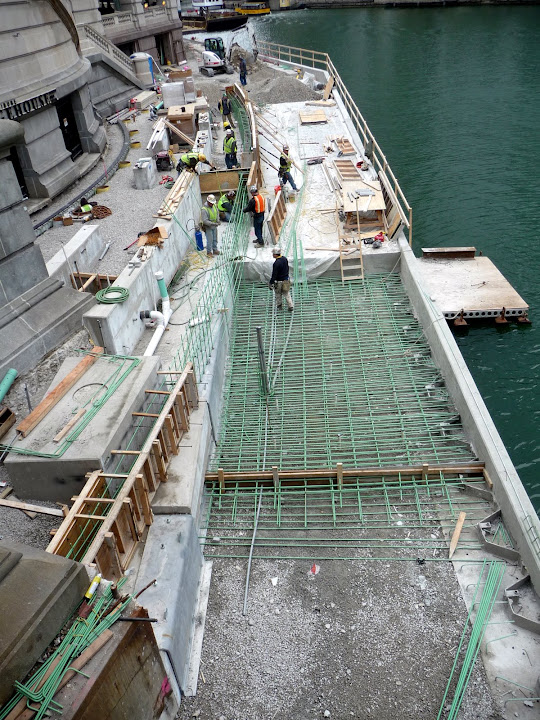
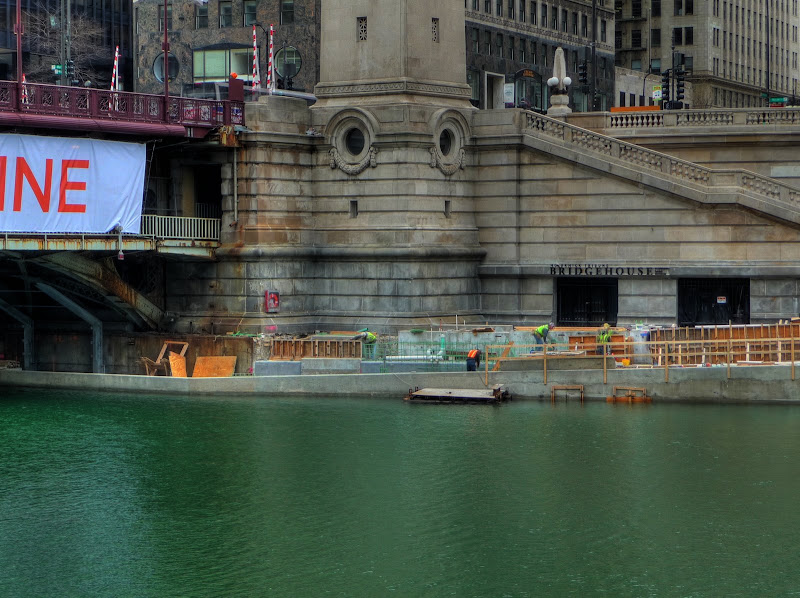
Riverwalk.

March 11
P1280515.JPG


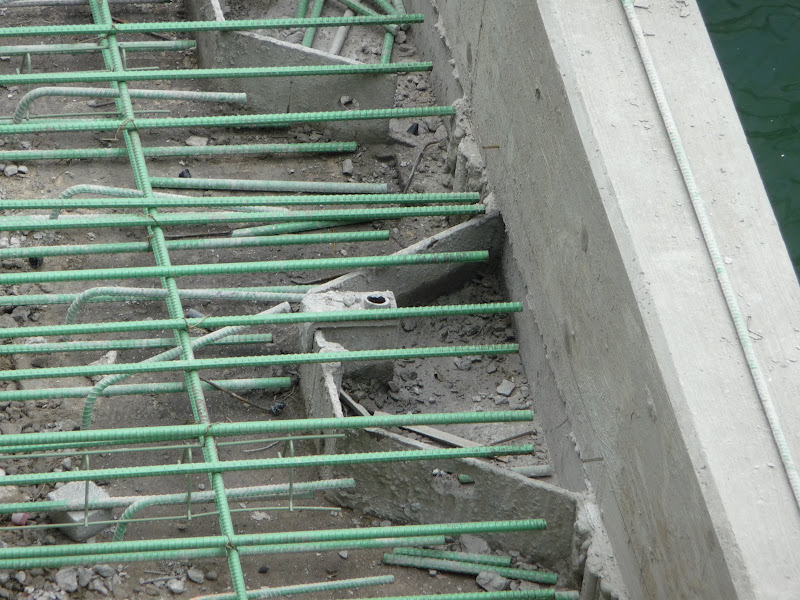
March 17
Plates the rc will lock into.
P1290194.JPG


March 27
P1310054.JPG


March 30
P1310397.JPG


P1310400.JPG


April 02
P1310704.JPG


P1310705.JPG


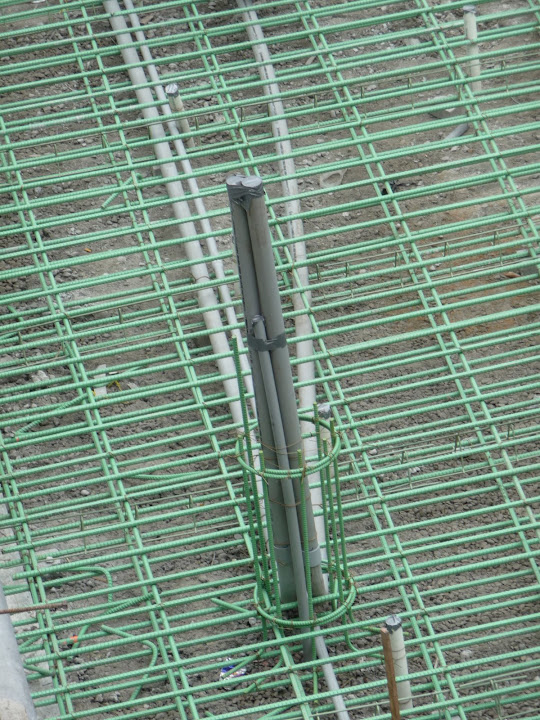
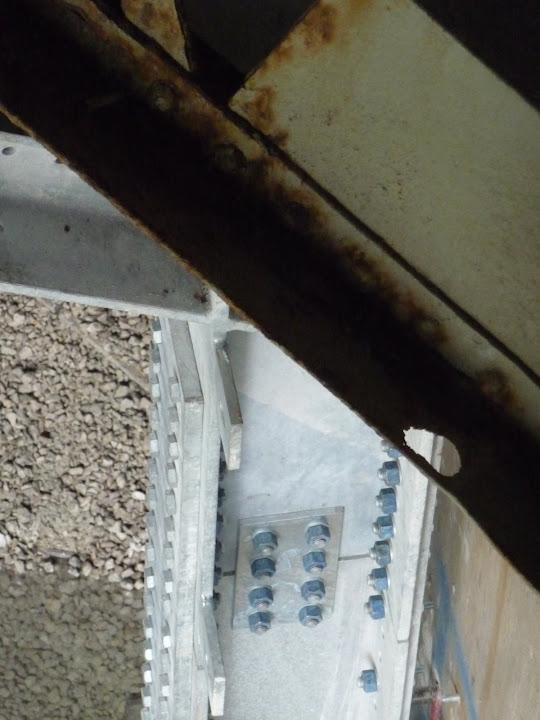
An Ironworker test the wall for proper leaning height. / Well protected cable run.
P1310707.JPG
P1310710.JPG


Screen to protect the walkway from debris coming through the bridge deck above.
P1310725_6_7.jpg


Seems a bit of overkill. this would hold a small car.
P1310712.JPG


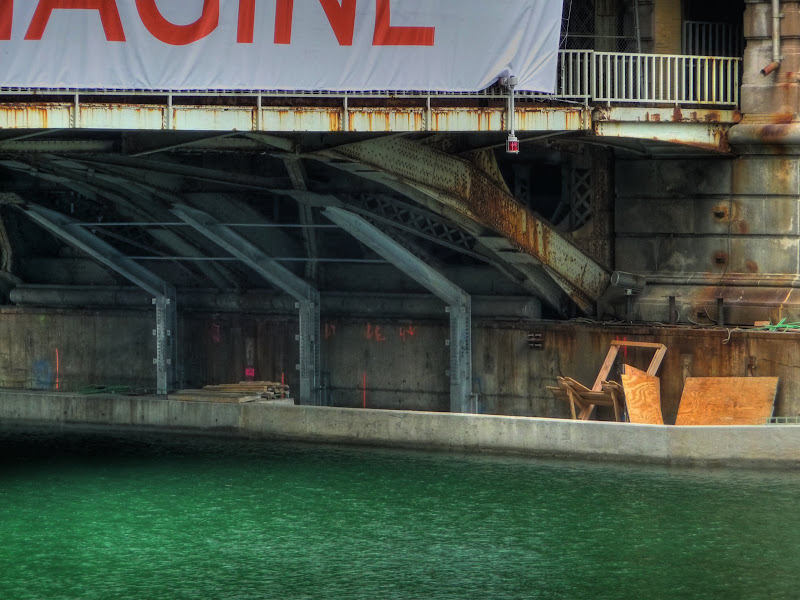
riverwalk dips to go under Michigan Ave.
P1310728_29_30.jpg


Panasonic DMZ TZ4 - Picasa - Autostitch - Photomatix HDR
 
For all the inner suburbs with 50s-era housing that have been going downhill, like Maywood, there are others with pretty similar physical infrastructure that have done fine, like Skokie.

The difference is that Maywood and Skokie don't share tax revenues. For a big central city like Chicago, the areas that are doing well subsidize the troubled areas. The loss of West Side industry is eased by the growth of Loop office districts. But a place that has only residential or obsolete industry has nothing to turn to.
 
Sure, I understand that. I may have misunderstood you. I thought you were talking about a fundamental problem facing inner ring suburbs in general. If you're only worried that the suburbs suffering long-term bad economies aren't going to be able to raise the tax revenues necessary to fix their streets and staff their schools, I would agree with that. Doesn't Cook County already have to provide police service for some of the south suburbs?

I was asking why the housing that these places offer will go out of fashion, and why that will mean economic ruin instead of replacing the old housing. The only reason is that the locations themselves would become undesirable, right? But I don't know why inner ring suburbs in general would become undesirable places. I don't think there's anything inherent about Maywood and Bellwood that require them to be heading in different economic directions from Forest Park and Berwyn. Both of those suburbs have (from casual experience) improved tremendously in the last decade, despite being in pretty bad shape and still having terrible schools.
 
Last edited:
riverwalk dips to go under Michigan Ave.
P1310728_29_30.jpg

Looks like that's only 2 or 3 feet above water level; that will flood pretty often, then, won't it?

Also, they really need to paint that bridge. Maybe they'll repaint the whole thing when they're done with the railings on the upper level.

Out of curiosity, did the lower level have the same decorative railings as the upper level when the bridge was first built?
 
^^^

No it won't flood very often, the main branch is pretty much tied to lake level which doesn't fluctuate very much.

I believe there are plans to rework the whole bridge in the near future, just like they did to LSD and Columbus and Wacker.

Yes I think it did have the same decorative railings...
 
I find what's happening in this town interesting. A private developer puts money towards a new rail stop in a lakeside community that has seen new townhome & condo development with hopes of becoming the next commuter suburb of Chicago. This sounds like a story from the 19th century..

NEW BUFFALO, Mich. — Chicago has been edging closer to this bucolic village for the past couple of decades as more second-home owners seek a nearby taste of country life. Now, a new train stop is about to open in the center of the business district, with direct service just an hour's ride from Chicago's Union Station.
Could New Buffalo be in transition from sleepy summer town to full-time Chicago suburb?

That's a great location for the Amtrak! Unfortunately for this guy, he's asking an INSANE amount for his condos and townhouses. I think he pretty much tapped out the market that thinks Chicago prices are ok for southwest Michigan, not to mention that loans for overpriced vacation homes aren't likely to be easy to get until loans for properly priced primary home are easy to get.
 
Status
Not open for further replies.


Back
Top