• City-versus-city activity is flat-out banned from being posted here in all its forms.

    City vs city trolling sets up a rather nasty and personal fight between forumers from one place and forumers from another place, potentially affecting hundreds of members any time it breaks out. Nothing good comes of versus-trolling, but long after the insults and mockery have been removed, bad feelings between individuals and between groups tend to linger, oftentimes popping up in unrelated threads for months afterwards.

    Thus, when it comes to 'versus' trolling, a line must be drawn--sharply. Anyone who crosses that line shall be disciplined, up to and including suspension and even summary banishment without warning. Forum moderation and administration shall be the arbiter of what constitutes versus-trolling, so if you think your post might be perceived as an unfair attack on an entire city that will upset residents there, tread lightly or reconsider how you intend to express your opinion. No forumer shall successfully claim ignorance of our policy against versus trolling, and no forumer should believe he can get away with it.

    The ban on versus activity applies to all posts and all threads, even ones that are not initially set up as city-versus-city.

    If you see any troublesome posts please report them using the "report a post" icon -
    report.gif
    in the upper right corner of every post on the forum.

Amazon HQ2 thread


Status
Not open for further replies.
Than how come there are something like Amazon 15,000 job openings in Seattle, why are not the "grads" moving to these jobs?

Wow...the fastest growing headquarters in the English-speaking world in terms of actual employees, but that's not fast enough to make my point?

The "employees will come to them" point is a relative term. It doesn't necessarily mean they can grow grow to 100,000 overnight. HQ2 appears to be specifically about widening their access to people. But the point is still true...employees will go to them, and I doubt it'll rely that heavily on the existing local workforce in the second city.
 
Just looking at the cost of office space, Dallas is around $23.00 per sq. ft, while Chicago is around $35.00 per sq. ft.

That doesn't even factor in income taxes or property taxes, as Dallas would still be the winner by a significant margin
Square footage costs for existing offices won't really factor into Amazon's decision as they will be eventually building a new campus. Trust me that new office buildings rent for a lot more than $23.00 SF, even in Dallas.
 
Square footage costs for existing offices won't really factor into Amazon's decision as they will be eventually building a new campus. Trust me that new office buildings rent for a lot more than $23.00 SF, even in Dallas.

I'd also add that property tax rates in Dallas proper aren't any lower than in Chicago proper. I think they're actually higher. I believe Dallas' are higher than Philly as well, but I'd have to verify that.

Illinois & Pennsylvania have higher corporate taxes than Texas, but the gap isn't as big as some may think. IL ranked 23 for 2017. For comparison, Philadelphia claimed the 24th spot and Texas the 14th.

https://taxfoundation.org/2017-state-business-tax-climate-index/

I'll have to find the source, but I know that on a national level, the cost of doing business in Chicago is actually below average. Philadelphia was marginally above average. Not sure where Dallas comes in, but I'd guess it's closer to Chicago and Philadelphia than some may believe.

Edit: Found source. https://www.competitivealternatives.com/reports/compalt2016_execsum_en.pdf Page 9.

21 Dallas-Fort Worth2 US 96.2
22 Houston US 97.6
23 Chicago2 US 98.3
24 North Virginia, Metro DC US 99.4
25 Philadelphia US 99.8
US BASELINE2 100.0

Dallas ain't cheap, folks.
 
Last edited:
I'd also add that property tax rates in Dallas proper aren't any lower than in Chicago proper. I think they're actually higher. I believe Dallas' are higher than Philly as well, but I'd have to verify that.

No, they are rather expensive here in Texas...as we cry and proceed to write a $11,000 check for our property taxes this year...
 
No, they are rather expensive here in Texas...as we cry and proceed to write a $11,000 check for our property taxes this year...

:haha:

I feel that pain. I'm passively browsing houses in a northern suburb and one of my favorites has a tax bill just shy of 10k per year. It's a good sized house, 9,000 sq. ft. lot, great schools, and it's close to the Metra Station, but I don't have kids yet and that's more than twice what I pay now...

It boggles my mind that someone without kids would want, much less need, a 9000 square foot house. I assume you will employ someone full time to clean it and others to do maintenance and so you can afford 10k in taxes.

The housework required weekly to keep my 950 square foot condo clean is getting to be more than I want to do.

9k sq ft lot, not house.
 
It boggles my mind that someone without kids would want, much less need, a 9000 square foot house. I assume you will employ someone full time to clean it and others to do maintenance and so you can afford 10k in taxes.

The housework required weekly to keep my 950 square foot condo clean is getting to be more than I want to do.

I plan on having kids, so I'm just exploring my options.
 
I plan on having kids, so I'm just exploring my options.

i just went through the whole home search dealie for my family of four. after looking at a bunch of houses in evanston and skokie, we're landing in a 3-flat in Lincoln Square (i was just too scared to move to the burbs). what burbs are you looking in?
 
i just went through the whole home search dealie for my family of four. after looking at a bunch of houses in evanston and skokie, we're landing in a 3-flat in Lincoln Square (i was just too scared to move to the burbs). what burbs are you looking in?

Evanston or Wilmette :runaway:
 
^ both solid choices. i spent the 1st two decades of my life growing up on the evanston/wilmette border (7 houses north of isabella in east wilmette).

we very likely would have ended up in evanston had we found something we liked in our price range (we even put in an offer on one house that we were outbid on), but the house pickings in most of evanston are pretty slim under $450K.

there was obviously A LOT more stuff in our price range in skokie, but i just couldn't get into skokie's vibe, it's too post-war auto-centric for my tastes.

i think we'll be pretty damn happy in Lincoln Square, and we didn't have to over-extend ourselves financially, which is nice......

We live in Lincoln Square with kids and absolutely love it.
 

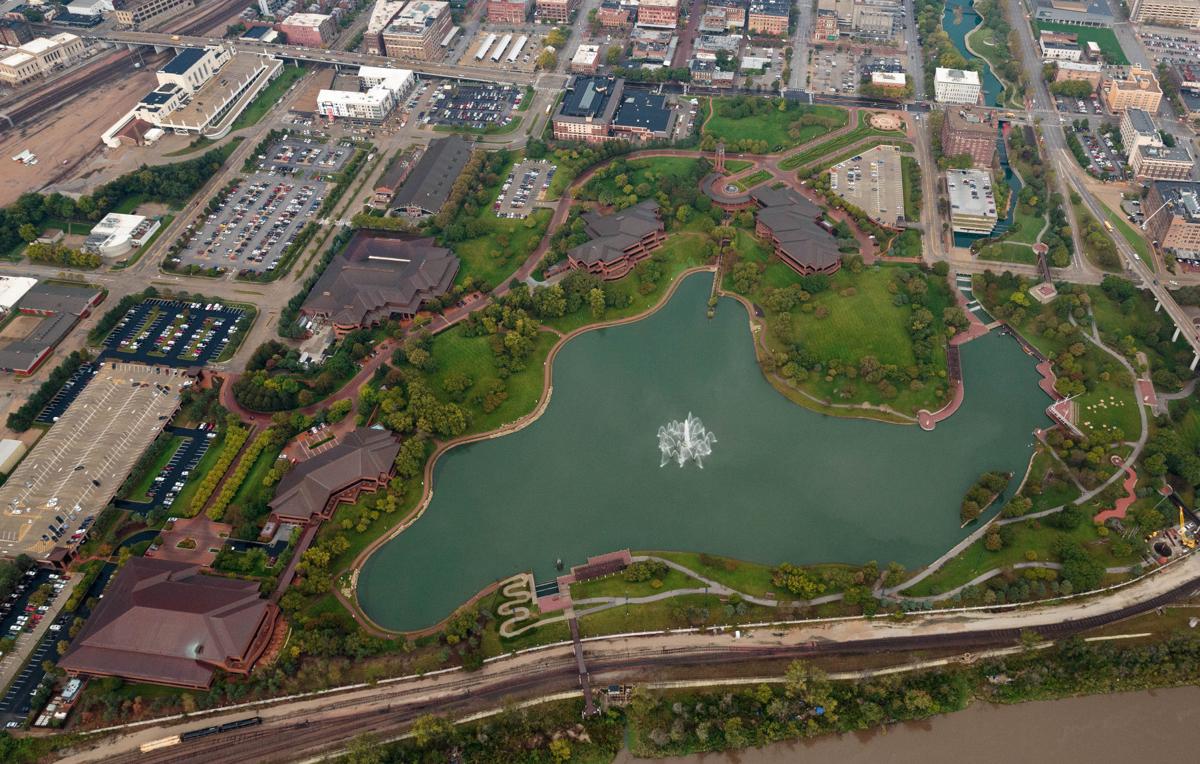
heh. sad thing is midwestern cities actually did this. omaha demolished its riverfront warehouse district in the hopes of keeping con-agra, gave them carte-blanche to build an office park/mud pond.

OmahaAriel-vi.jpg

https://images14.fotki.com

59a47832b249b.image.jpg

bloximages.newyork1.vip.townnews.com
 
There has been a lot of chitter chatter here regarding DART (Dallas Area Rapid Transit), mainly from people who live outside the DFW area. Some of it is informed, and some of it is highly uninformed. You have to understand facts about Dallas' past and future to fully comprehend what DART means to the city and its future, including the possibility of Amazon locating HQ2 in the city and changing the status quo. DART has its issues, but some problems are being addressed and the system has massive potential as the urban core densifies.

Most people probably don't know this (including many present day Dallasites) but Central Dallas and the many surrounding neighborhoods were built as streetcar neighborhoods. In fact, Dallas had a very extensive streetcar systems in the first half of the 20th century. Supplementing the streetcar system was a the "Interurban" network which connected cities and towns across North Texas to Dallas' streetcar system. Believe it or not, this was the Dallas Streetcar map at one point:
2cn8uu8.jpg

SOURCE: https://www.google.com/maps/d/viewe...&ll=32.78833853159589,-96.78434943575076&z=13

As you can see, it was quite extensive. The first mule-drawn streetcar line opened in 1872 and the first electric line in 1891, and the system grew with the city. Neighborhoods such as Oak Cliff, Oak Lawn, Deep Ellum, East Dallas, Knox/Henderson, Fair Park, Junius Heights, Cedars, present day Uptown, and others were all connected to the bustling Downtown. These neighborhoods have changed over time but they have the bones of streetcar neighborhoods and many have seen huge resurgences over the last couple decades. More than 300 streetcars were running in Dallas by 1936. Unfortunately, the powers that be in the 1950's decided that buses and personal automobiles were the future, and the streetcar lines started disappearing. The decision was shortsighted and destructive, and expressways were plowed through once vibrant and healthy neighborhoods which would take decades to overcome.

More Dallas Streetcar history: http://oakcliff.advocatemag.com/2015/01/old-dallas-streetcars-stopped-running-59-years-ago-today/ and https://flashbackdallas.com/category/transportation/streetcars/

Since then, DART was created in the 1980's with a vision of whisking workers from the suburbs to Downtown Dallas. The light rail system was does not circulate people within the urban core. Later, we will get to how that is changing. The DART light rail system does what it does pretty well, transporting 100,000+ people mainly from the outlying areas to the urban core in Dallas and back. A tiny amount of rail opened in 1996 but most of the system as we know it has opened in the last decade or so, and it is still a very young system. A big flaw in the rail design is that ALL lines meet downtown and then ride along a single line, which means that frequency is limited to the current service window. However, this will change as a new "D2" subway line starts construction soon and will split the downtown lines in half and add 3 or 4 new subway stations. After that, frequency of trains can be increased across the network.

Current Streetcars:
-The historic McKinney Avenue Streetcar line which just underwent a large expansion into the Downtown area. It may eventually be converted to a "modern" streetcar line.
-Another (modern) streetcar line to Oak Cliff opened recently.
-Another (modern) streetcar line for a "Downtown circulator" is in final design stages and will start construction soon, hopefully.
-A streetcar extension from Uptown to Knox/Henderson will start construction soon.
-Hopefully more lines will be planned soon, in a return to the historic form of Dallas' urban neighborhoods being connected by streetcars. A Ross Avenue to Lower Greenville line is on some people's wish lists.

The Bus System:
It sucks. This cripples the rail and streetcar network. A complete 180 redesign of the bus system is currently underway. No details have been released yet other than that it will be a huge undertaking.

Regional Rail:
-The TRE double decker trains are still a great way to get between Downtown Dallas and Downtown Fort Worth.
-2 new commuter rail lines are being built, one from Fort Worth to DFW airport and one from Plano, Richardson, Addison, and a couple other places to DFW Airport, and they will provide an east/west link for the DART Red and Green lines.
-DCTA operates a commuter rail from Denton and links with DART in Carrollton.
-High Speed Japanese bullet trains will link Downtown Dallas (and DART) and Houston if everything goes well with that project. It is looking very likely.

In a nutshell, there are certainly problems with the transit network as-is but it is almost a miracle what has been built in just a 20 year span. Name another subelt metro that has developed more public transportation options in the last 20 years. No others come close to what DFW has accomplished. The bones are in place, and development around new stations and changing attitudes towards transit will increase ridership. Amazon locating HQ2 in the urban core, along with the coming expansions, would be the catalyst needed to kick the system into high gear and drive it towards its full potential.

Great post. This is what keeps me very interested in Dallas's urban future.

Sure, you have issues that are large such as a population that culturally just aren't bent towards urbanism....the heat...etc

But with improvements in their current system, expansion of it, continual development around stations, better urban design standards of new buildings, and some civic pride, the city could change drastically. The actual street grid is quite good for a southern city.
 
I'd like to nominate this thread as the greatest in the history of SSP! The sheer boosterism never fails to disappoint. I'm just sad my town (Jersey City) didn't submit a bid, so I can't join the parade. I guess maybe I'll join team Newark instead (because Bayonne sucks). My heart and mind tell me Philly is going to get it or someone that hasn't been talked about much at all. All these WSJ analyses are bunk, in my opinion.

Does anyone know if Amazon will reveal a shortlist of finalists before announcing the winning candidate?
 
^^^^^^

Don't forget the "Is Newark a world class city?" thread. I just wish Newark would get it to end the question and settle the fight right there and now.

If Philly did get it, or any place within a 60 mile radius of my house, that's a win-win! Anywhere else, and its a loss for humanity.

In all seriousness, I'd love for Newark to get it. It would be like winning the power ball for the city, not because of Amazon, but because of the contruction boom that would result.
 
Status
Not open for further replies.


Back
Top