The Albuquerque Journal has a story about building tall in Downtown Albuquerque. They talk to both Jim Long and David Silverman about it in the story. I especially like David Silverman's thoughts and optimism. Jim Long is sort of disappointing in his pessimism and comments, but I wonder if he isn't afraid of competition for Albuquerque Plaza and the Clyde Hotel as premier and highly visible properties in the skyline.
https://www.abqjournal.com/business/article_8ac80482-f41a-40cd-a88f-1a0a2fc77984.html
Quote:
Albuquerque is shooting for the sky when it comes to development in Downtown Albuquerque, but its skyline tells a humbler story.
Revitalizing Downtown Albuquerque has been at the center of development conversations for years, but those conversations always seem to have the question: Is building up a part of the equation, and if so, is it feasible? Some developers say yes, but it poses significant challenges.
Cities like Austin have found a way to transform their skylines, even through periods of national economic uncertainty, thanks to a growing tech ecosystem. The city has seen consistent vertical development over the past couple of decades, with its tallest 74-story building currently under construction.
Costs to build and a lack of private equity funds and market demand are the primary limitations keeping Downtown Albuquerque from building up, according to Jim Long, CEO and founder of Heritage Cos., which owns New Mexico’s tallest building, the WaFd Bank building.
Long said the cost it would take to replace his two Downtown high-rises, the WaFd building and the 20-story Clyde Hotel, would exceed $400 million, creating a significant cost barrier for many developers.
Private equity funds for investing in projects that would cost hundreds of millions to build are also few and far between, Long said. He added that lenders typically like to see borrowers be able to cover at least 25-30% of a project. For a $400 million project, developers would have to come up with up to $120 million.
A lack of market demand is also a driving factor. Long said there is simply not enough demand for big, tall office buildings, hotels or residential housing to “warrant a project like this.”
The primary reasons developers construct tall buildings? Governments putting public money into projects to attract additional investment, and expansions by large companies, Long said.
“To fill a large building, you have to have large tenants. You have to have large companies based here. We don’t have very many large companies based here,” the CEO said.
Many of these reasons are why past efforts to build up higher have failed — the most notable being former Albuquerque Mayor Richard Berry’s early 2017 campaign to reshape the Downtown skyline with a proposed 34-story “Symphony Tower” at the parking lot on Third and Marquette NW. The project was ultimately scrapped after the current mayor, Tim Keller, took office in late 2017.
There is nothing preventing developers from building higher from a zoning perspective. There are no height restrictions for Downtown, said Mikaela Renz-Whitmore, manager of the city’s Urban Design & Development Division.
Renz-Whitmore said she thinks culture also plays a role in the development of Downtown’s structure.
“As part of a Southwest culture, where people really appreciate our vistas and our views... I think culturally, we kind of like our low, spread out development, and I think that absolutely set the flavor for what got developed,” Renz-Whitmore said.
At least one local company today is in favor of vertical development in the heart of the city: Geltmore LLC, a family-run team of local developers who were involved with the Symphony Tower proposal. Geltmore Principal David Silverman agreed with many of the challenges Long spelled out, but added, “That’s not to say we can’t do it.”
Long and Silverman both said some of the first steps to making vertical development in Downtown more feasible would be attracting large companies, potentially tech, into the area and establishing a Downtown Business Improvement District, or BID, which assembles a defined area’s property owners to collectively fund projects and services to boost economic development. Putting a BID together is currently underway Downtown.
Silverman added that the University of New Mexico “committing to something significant coming Downtown” is important, as well as the city investing in Downtown entertainment, such as a performing arts center or concert venue.
“We need a vision, we need a plan. ... We need to not be scared to take some chances,” Silverman said. “If we’re just going to focus on alleys and the graffiti and the lights, we’re not really going to get anywhere. That’s important, but we gotta aspire to a little more than just the status quo.”
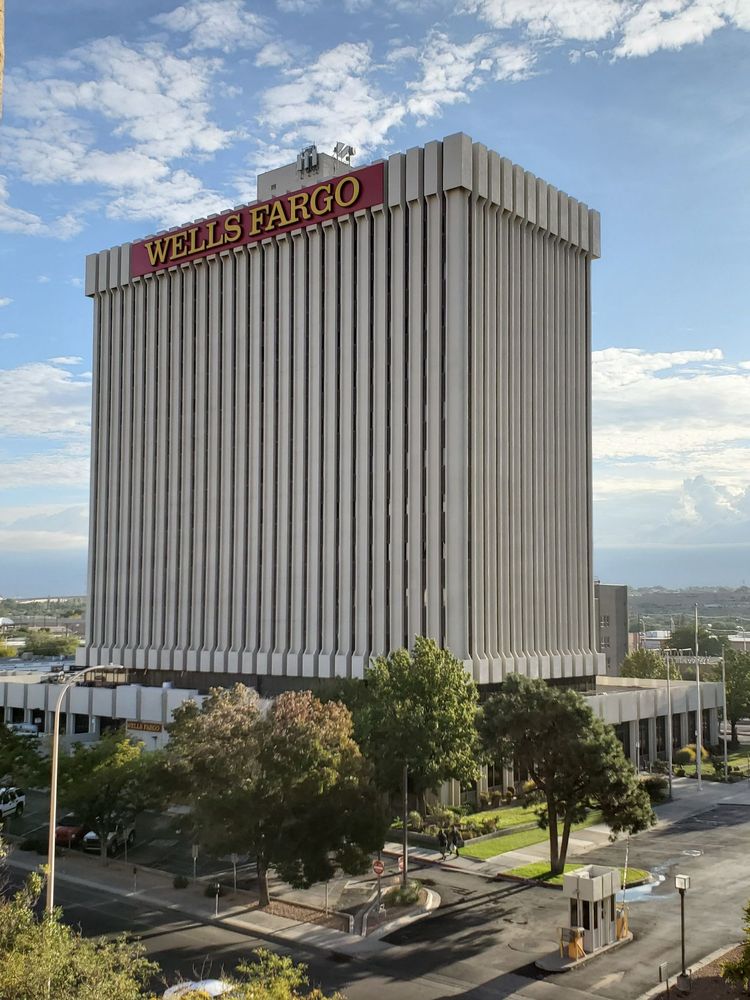
For Geltmore, the planning and aspiring have already started. The group is currently under contract to purchase Downtown’s Wells Fargo building at Second and Lomas NW. If all goes well, the acquisition will lead to some interesting development opportunities.
“There’s vacant land that comes with it, like a whole city block,” Silverman said. “Our plan is to go vertical, and we’re going to start planning now for that in the future.”
Silverman said the more than 500-room hotel that was identified as a potential strategy for boosting tourism in Visit Albuquerque’s most recent 10-year Destination Master Plan is a project that is on Geltmore’s radar and could potentially fit the bill for a tall building next to the Wells Fargo tower.
“It’d be nice to change the skyline and get something taller. (It’s) certainly something that we’re hoping to accomplish,” Silverman said. “We’re pretty far away at the moment, but we’ve certainly got our sights to try to do that.”
Renz-Whitmore said developers getting creative with mixed-use spaces would be necessary to spur vertical growth in the heart of the city. She gave the example of UNM thinking about a dormitory tower project.
“I do think there’s opportunities for building tall buildings, but I think our market isn’t quite there yet,” Renz-Whitmore said, adding she doesn’t see another skyscraper going up in Downtown but does see more buildings between three and seven stories starting to go up at populated centers throughout the city.
Long agreed, adding, “(Downtown) should grow vertically when the market demand warrants it. ... If you were to build today, it would be an economic disaster.”
Silverman said he and the Geltmore team hope to see barriers, including costs, shift over the next five to seven years.
“Why wouldn’t we invest in some density in our core? If people say the health of your city is judged by your Downtown, then why wouldn’t we try to make our Downtown better?” Silverman said.
|


I must again take issue with the false characterization of what doomed the Symphony Tower. Again, it never had a chance to even see if it could come to fruition by going after financing, etc. The mayor killed it before it even got a chance to get to that point.
I also must take issue with the idea that we must have very large companies in order to build tall here or ever again.
El Paso was able to build a new tallest building of 314 feet in height with only a local bank and a local development firm as its main tenants and driving force. Surely we could see something similar come to fruition with companies and outfits here like Nusenda, Sunward, etc. and Geltmore, Titan Development, Legacy Development, etc. coming together in a similar fashion.
https://en.wikipedia.org/wiki/WestStar_Tower
And that's for a traditional office building. Never mind hotel and residential. The barriers to those coming to fruition are much lower. To dismiss the possibility or idea of building those is quite absurd, IMO.
What's missing here and what I've always said, is the desire, determination and will to be Downtown and build here (and taller) by our local business establishment, development community and movers and shakers. It's a cultural shift that needs to happen.
I've seen it in many other cities Albuquerque’s size or even smaller where they focus on and do things to benefit their Downtown area first. That leads to building taller and building up their downtown areas. See smaller places like Fargo and Sioux Falls in the Dakotas, for example.
Fargo has a new tallest building and Sioux Falls is building quite a bit of buildings in the 7-10-story range in its downtown area in two big developments.
https://en.wikipedia.org/wiki/RDO_Building
https://www.thesteeldistrict.com/
https://cherapa.com/
These projects were all initiated, occupied and developed by local companies and development groups. They didn't need huge companies to make the difference in their cities and downtown areas. They just needed the ones they had to focus their efforts and commit to building up and improving their downtown areas. It's entirely possible and can happen here too.
But unfortunately, that sort of culture and will just doesn't exist in Albuquerque right now, apart from a few determined individuals and government efforts, which has also unfortunately been lacking and lagging under this current mayor.
I'm thankful that we do still have some people like the Silvermans in this city, who believe in something bigger and better, especially for our downtown area. You'll sure as hell never get anywhere as a city or downtown area with a defeatist and unworthy attitude. We need to believe in ourselves and say it often that nothing is impossible here. That's where we start!






 Prev
Prev








 Linear Mode
