Under Construction, SLC's Museum of Natural History


When challenged to build an iconic structure that will serve not only as a source of civic pride but also as
a tourist destination, players on a construction team rally around the goal of getting the high-profile project
done right. Add an untenable job site to the mix, and teamwork is even more essential to ensure the success
of everyone involved.
This is the attitude fostered by Big-D Construction Corp., the construction manager and general contractor for
the Utah Museum of Natural History at the Rio Tinto Center in Salt Lake City. According to Senior Project
Manager Leon Nelson, employing a team approach is the only way this project will be successful.
“We’ve learned the significance of planning and the significance of teamwork,” Nelson says. “Relationships and
planning are essential to be successful in a complex project like this. It’s impossible if you don’t have it,” Nelson
adds. “But we have it, and we plan on being wildly successful.”
Construction on the project – which has a price tag of $62 million – started in October 2008, and the new museum
will be open to the public in January 2011. Big-D and the construction team, however, must deliver the project by
July 2010 to give a specialty contractor time to properly set up the exhibits.
“The owner will facilitate moving from the existing facility into the new facility,” Nelson explains. “We are building
the project as a grand endeavor, so it is a very important aspect of how it all comes together.”
 Rock-Solid Site
The site for the museum is being carved out of a mountain face at the foothills of the Wasatch Range on the campus
of the University of Utah. To create the foundations, Big-D is digging out a hole in the mountain and installing a
retention soldier pile system comprised of structural steel and a slab-on-deck concrete system that will nestle into
the hill. The foundation includes walls that carry the pressure of the walls so not as much concrete is required,
according to Nelson.
The exterior of the building is comprised of a combination of concrete and copper panels, the installation of which Big-D
is self-performing. The panels will use copper from the nearby Bingham Canyon Mine, which is part of a donation valued
at more than $15 million from Kennecott, a subsidiary of Rio Tinto. It is the largest single corporate donation in the
history of the University of Utah, the museum says.
The Rio Tinto Center – which will house the museum – will be built to LEED sustainable building standards and will have
about 42,000 square feet of copper on the exterior.
“They’ll take the copper cathode, send it to a manufacturer that will add alloys with the mix, and turn it into coils and
panels,” Nelson says. “A local fabricator will modify the sheets into different copper panels with proper finishing.
“It is very complex in that regard, but it’s a cool building,” he adds. “We’ve taken a lot of steps to make sure not only
us but our subcontractors understand how the project needs to go together to fit and work so we’re on the same page.”

One of those steps has been the use of building information modeling (BIM) to create a model for all members of
the construction party. “Given the different elevations and the complexity of the projects, a model helps visualize
how it goes together,” Nelson says. “We’re also using it as a tool for other structural systems in the building.”
Sustainable Practices
The construction team has made it a priority to include sustainable design procedures for the Utah Museum of Natural
History. According to Polshek Partnership Architects – one of the architects of record for the project with GSBS
Architects – sustainable elements include:
• Minimal disruption to the site;
• Retention of storm water through planted roofs and detention tanks below the parking;
• Enhancement and restoration of running and hiking trails;
• High-quality indoor air;
• Use of recycled and recyclable building materials;
• Future integration of photovoltaic arrays;
• High-performance mechanical systems; and
• High-performance building envelope and glazing.
Nelson says the museum is aiming for a LEED gold certification. Big-D is crushing the existing rocky soil it has
excavated to prepare the site and using it as backfill.
 Environmental Staging
Because of the environmental sensitivity of the area surrounding the site of the new museum, there are no laydown
areas for materials. This has been a major challenge for Big-D and the rest of the construction team, because a project
of this magnitude tends to require much more laydown space.
“There is zero laydown area for a typical project of that size,” Nelson explains. “We had to start in the middle of the
structure, because that’s how it’s put together, and that’s been a big challenge for us to work around.”
To address this challenge, Big-D has had to meticulously schedule the timeframes various subcontractors could spend
on the site at any given moment. “We anticipate what the trades need to perform work on the project, from batch
plants to finishing to delivery and installation,” Nelson says. “We can’t stage anything on-site, so we do some
just-in-time delivery and coordinate that aspect of the project.”
Aside from a lack of laydown space and staging issues, the biggest obstacle for the museum was getting the project
off the ground in the first place. Nelson says the original specs for the project placed the cost way beyond the initial
budget.
However, the construction team members worked together to find ways to include everything the owner wanted in
the final product. Nelson says this required refining the design and the construction processes involved to simplify
some of the complexity of the project.
“We decided to go forward and contemplate what the budget needed to be,” Nelson says. “There were difficulties
in the construction process in terms of constructability, and we worked through various issues by refining the design
and making sure it all fits.”
To bring this to fruition, the construction team met weekly as the submittal underwent a revision process, Nelson says.
These meetings included Big-D, architects and the owners.
“We worked through the complexities of the project to make it buildable and in budget and make sure it looks good,”
Nelson says. “We learned about the significance of planning and the significance of teamwork.”
There also has been constant communication on the schedule, according to Nelson. Members of the construction team
have stayed in touch through a combination of video conferencing, e-mail and face-to-face meetings.
“We have standard protocols within our company with standard meetings, and we coordinate various aspects of the
work that way,” Nelson says. “One of the key things is having the systems in place corporately,” he adds. “They seem
pretty mundane and typical of what you’ll find anywhere.”
Although this is one of Big-D’s most complex projects to date, the company at least has the comfort of familiarity
with the architect. Nelson says the company has performed millions of dollars’ worth of work with GSBS Architects –
the architect of record with Polshek Partnership Architects – and the partnership has been stronger than ever for the
Utah Museum of Natural History.
“We have a good, long history and working relationship with them,” Nelson says. “We built relationships and planning in
terms of being able to be successful on a complex project like this.”
Updates from July 2009


 Time Lapse Video:
http://www.timecam.tv/view_cam.aspx?C=F49FAFHG191C
Time Lapse Video:
http://www.timecam.tv/view_cam.aspx?C=F49FAFHG191C
.





 Prev
Prev






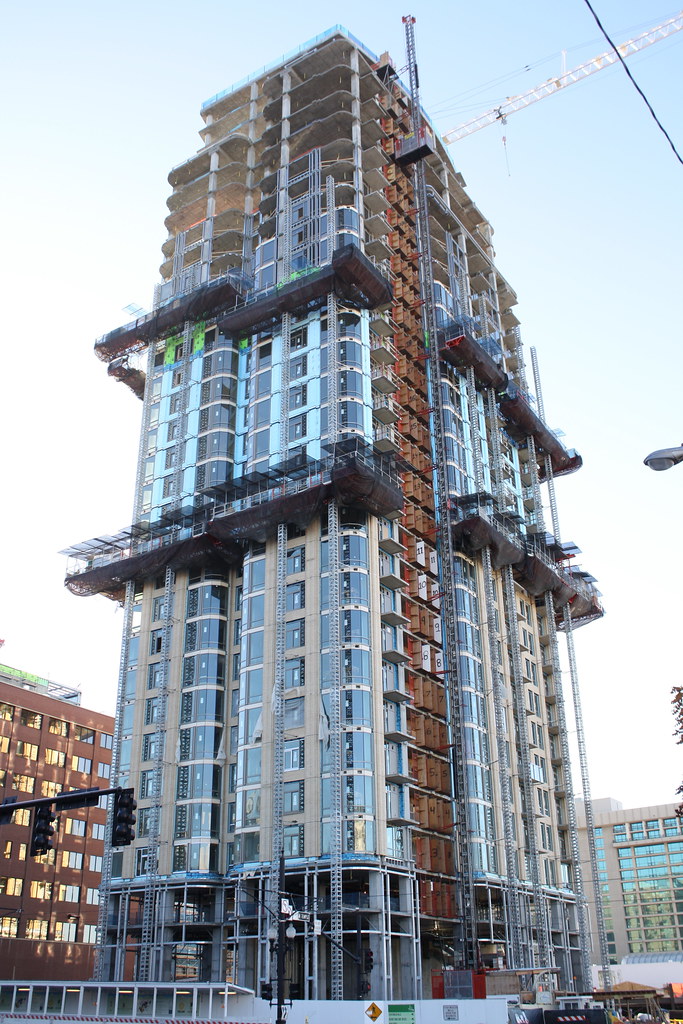


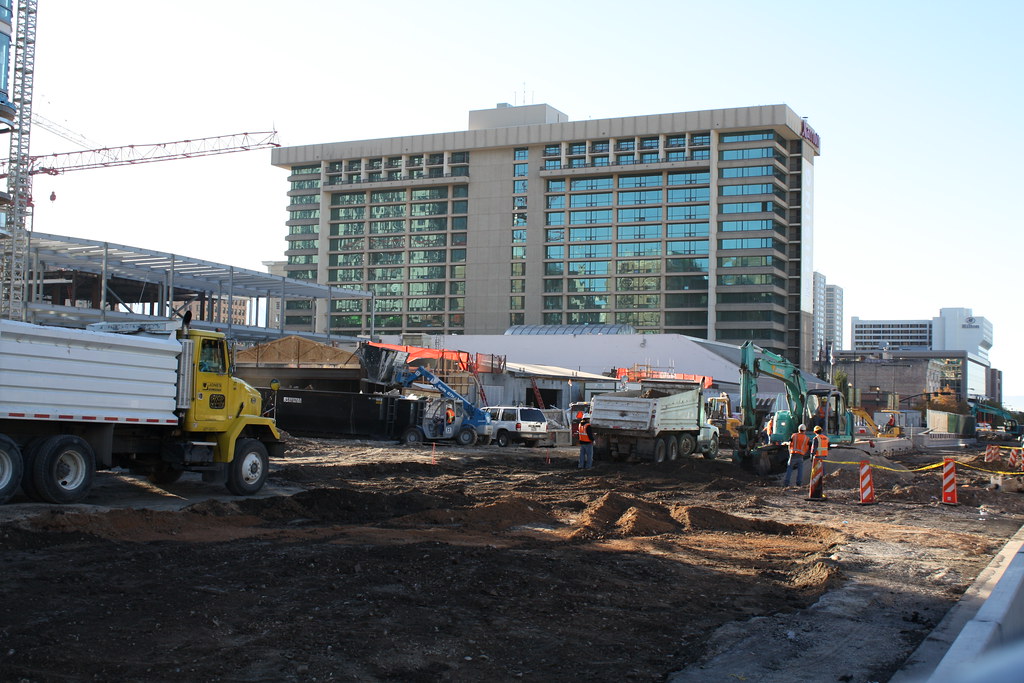











 Can't wait for her to Top Out.






 Linear Mode
