| |
 Posted Jun 7, 2012, 5:57 AM
|
 |
Ferris Wheel Hater
|
|
Join Date: Jun 2006
Posts: 8,373
|
|
Here are the minutes from the Special UDP meeting, nothing new for most members but a good read none the less.
Quote:
EVALUATION: SUPPORT (14-1)
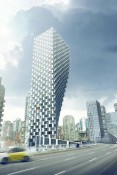
Introduction: Karen Hoese, Rezoning Planner, introduced the proposal for a rezoning application for a mixed-use development. On the Howe Street site, a 49-storey residential tower is planned with a 9-storey podium which will include rental housing, commercial uses and a childcare facility. On the Granville Street triangular sites there will be a commercial centre with buildings up to 6-storeys in height with both retail and office uses. She noted that with the exception of the corner lot at Beach and Howe Streets, the application includes all the parcels bounded by Pacific Boulevard (to the north), Howe Street (to the west), Beach Avenue (to the south) and the Seymour Street off ramp (to the east).
Ms. Hoese described the context for the area noting that north of the site are two Downtown South neighbourhoods: Hornby Slopes and New Yaletown. These are high-density residential neighbourhoods with a limited amount of commercial uses. Between these two neighbourhoods is Granville Street which is an important retail, commercial and entertainment district in the city. She also mentioned that recent Council policy directs the removal of the Two Granville Loops, replaced by an extension of the city’s grid.
Ms. Hoese stated that regarding the zoning of the existing parcels, which is BCPED and FCCDD, there is limited guidance with regard to the development of the sites and instead, development is informed by local area policies. She then described the policy for higher buildings noting that most recently in January 2011 the General Policy for Higher Buildings identified seven sites in the Downtown not impacted by view cones. The 1400 block of Howe Street as well as a site on the other side of the Granville Bridgehead are two of the potential sites for higher buildings. Ms. Hoese noted that the two towers, each approximately 425 feet high, are meant to mark the entry into the downtown from the Granville Bridge and to frame the Granville Bridge Gateway.
In order to earn the greater heights, the High Building Policy also requires architectural excellence and a high level of sustainable design. As well a higher building should “provide a lasting and meaningful public legacy to Vancouver”. In addition to the sustainability requirements there are two further rezoning policies that apply. These include the Green Building Policy for Rezonings which requires the project to achieve LEED™ Gold. The other requirement is the Rezoning Policy for Greener Larger Sites.
Ms. Hoese also noted that through rezonings, City policy anticipates the provision of public benefits in the form of public amenities and services that are intended to meet the needs of new and existing residents.
Garry Papers, Development Planner, described the detailed program/uses of the proposal. He said staff feels the site has an extraordinary opportunity to create a whole new kind of place in the city. The way that such places are activated is with the building edges. He noted that some of the strengths of the proposal are how the streets come into the site from the revised Granville Loops. There is consolidated parking and loading along with retail uses at grade. The landscape plans support the Great Street approach along Pacific Boulevard with three rows of continuous trees and a parking pull-out that allows for a dedicated bikeway. Two courtyard “plazas” are situated about fifteen feet above the Pacific Boulevard sidewalk accessed via a flight of stairs. The approach to the public realm is to treat it as a shared, flexible space using paving rather than the traditional black asphalt, curbs and sidewalks, which provides an opportunity for diverse uses such as weekend markets and special community events.
Mr. Papers noted that Staff are generally supportive of the massing and approach for the podiums, especially the tall, sixteen foot high retail. The ground floor treatment is proposed to be flush glazing with different patterns and textures. He said that staff are concerned that the flush treatment lacks pedestrian scale, interest and doesn’t show any weather protection. The applicant has proposed two demountable metal bridges that tie the existing bridge sidewalks into the building forms. Staff find these exciting and would like to recommend that there be additional ones to tie into the elevated walkways that animate the plazas. This would allow pedestrians who are moving along the bridge to activate the plazas from above and traverse down through the buildings to grade, and to the water.
Mr. Papers noted that the rental portion of the project has two floors above the bridge level at the southeast corner. Regarding the tower, staff support the architectural treatment and the approach to the balconies. However, when seen from the west the tower itself has a broad frontage (135 feet) that is very visible from the Burrard Gateway and casts strong shadows in the late afternoon across Granville Street. The shadow length is not a concern as it does not reach the critical commercial of Davie Street. However the width of the shadow as it tracks across Pacific Boulevard and Granville Street in the late afternoon is a concern, and the width exceeds the 80-100 foot maximum tower faces found in the context.
He said that staff is not concerned with the numerical height of the 493 foot tower, but with the top-heavy proportionality, the shadow impact of the broad face and the overall composition of the form on the city skyline. He added that most of the renderings show the 493 foot proposal but felt it was important to reference it back to the 425 foot datum in policy. He also described the context for the area noting the other towers in the area. Mr. Papers said that staff are excited about the curved form of the tower and that it would be a distinctive building but it is all about how it is composed and how the shadowing is addressed. As well it is important how the tower contributes to the city’s skyline, especially when viewed from the south, coming over the gateway Granville Bridge.
Advice from the Panel on this application is sought on the following:
Public Realm:
Are the two elevated “plazas” connected well enough to the street’s public realm?
Is the ground plane/streetscape treatment suitable for the site and adjacent uses?
Are the demountable bridge connectors valuable to incorporate?
Podiums and Base:
Does the flush glass treatment around the two triangular podiums provide adequate pedestrian scale, interest and weather protection?
Does the west base of the tower require scale transition at the grade?
Tower:
Is the 135 feet/41 meters west tower façade too long, and is the upper floorplate size (11,800 gross square feet/1104 square meters) acceptable?
Does the proposed architectural excellence and sustainable performance meet the criteria to earn the height to 425 feet/130 meters?
Further, is the proposed height of 493 feet/150 meters supportable, as per the Higher Building Policies and criteria, and does it make “a significant contribution to the beauty and the visual power of the city’s skyline”?
City staff took questions from the Panel.
Applicant’s Introductory Comments: James Cheng, Architect, gave some background on the proposal. He said that he attended a lecture at the Urban Land Institute where Bjarke Ingles was speaking and was so impressed with his work that he went to the developer to get him involved in the project. The reason he wanted Mr. Ingles involved was due to the uniqueness of the site that required a unique response. He thought that having an architect that wasn’t local would allow for an opportunity to look at ourselves in a different way. Mr. Cheng added that the site will create a unique moment in Vancouver as we evolve as a city. It is one of the most livable cities, but we have been criticized for our conservative architecture and we have become a little boring. There are lots of things we have done well but there are also lots of ways to evolve. Mr. Cheng added that he hoped the Panel would look at the building as not just another one in the city but as an opportunity to contribute to the dialogue around urban design and architecture in the city.
Bjarke Ingles, Architect, did a power point presentation and described some of the highlights of their proposal. He noted that Vancouver is known for being a liveable city and he said he was excited to work on the site. In designing the project they wanted to be able to have a new evolution of the urban podium turning into an “urban village”. They wanted the tower to be shaped by the city surrounding it and by having two towers flanking the bridge that would create a gateway. One of the things that really drives the real estate quality has to do with the views, so the higher you go the more desirable the units. Because the site is located next to the May and Lorne Brown Park they didn’t want to cast shadows during the majority of the day.
Mr. Ingles noted that there were some setback requirements from the streetscape and from the bridge ramps. There is also a 30 meter setback requirement from all the elevated lanes that needs to be respected; this generated the triangular forms. With all this there is very little useable space left.
He noted that as you come across the bridge, the design of the building is almost like pulling a curtain aside. The building changes character as you approach from the different sides and with the texture of the façade and the play of light and shadow during the different hours of the day will result in the building having a lively presence in the urban skyline. The transition up the building is so gradual that the cantilever on each floor is rarely more than a foot or two so the basic idea is to ‘walk the column’ over on each floor. As you move up in the building the number of units is increased. The balconies on the east and west façade will help with energy performance to optimize all the passive attributes of the building. The main idea is to have a natural ventilation system so that in the winter the building will benefit from passive solar heat gain and in the summer internal blinds and bottom and top ventilation would allow for a natural cooling.
Mr. Ingles said that they looked at various materials and would like to stay within the colour palette of the city and use a native material. One material they are looking at is zinc that is mined in the province. The liner of the balconies could have a warmer material such as stainless steel that has a ceramic treatment.
Mr. Ingles said there was an opportunity to create a desirable neighbourhood under the bridge. The three plazas were designed to be human scale and protected from the busy streets around them. The corners will be open to create a moment for pedestrians as they pass by. Office space will occupy the upper floors with retail and restaurants on the lower floors. They wanted to have a quiet interface with the public realm with store fronts that will allow people to look inside.
The whole pedestrian realm has a series of bicycle paths alongside pedestrian and vehicle traffic. They looked at the traffic regarding access for parking and loading. There is street parking under the bridge that could be converted for special events. Considering the weather in the city they thought that having a covered area could be exciting for different events from a beer garden to weekend markets. Lighting under the bridge could enliven the area and in the evening restaurants could spill out into the area. There could be a permanent climbing wall or there could be an art installation. He added that there are lots of opportunities to make the area exciting and useable.
Mr. Ingles noted that the sustainability strategy includes achieving LEED™ Gold for the building and to achieve LEED™ Platinum for the neighbourhood as a whole.
He said that the team believes the site has some unique opportunities because of the significance of its location. It is capturing a place that is completely underutilized as an urban space and could become a lively neighbourhood in Vancouver. Since it dodges the view cones it is a space where there is an opportunity to explore going higher and as well create a local place for people. He said they did study lower heights for the building but felt that the building would benefit from going higher and would result in a benchmark project when entering the downtown.
Peter Joyce, spoke about the transportation plan noting that they have been working closely with Engineering to advance the ideas and to explore some new ones. They have completed a transportation rationale for the project. They support the one-way flows on the new diagonal streets, especially to clarify the loading maneuvering.
Kelty McKinnon, Landscape Architect, described the landscape strategy noting that it is for maximum flexibility to accommodate a diverse range of urban scenarios. In terms of plantings, it is a pared down landscape palette with street trees that enhance specific streetscape guidelines. She described the plantings noting the sedum carpet on the roofs. The material palette for paving is monolithic and robust using wide concrete pavers covered with crushed granite aggregate. The plazas will have granite interspersed with grasses. As well there is a lighting strategy for under the bridge that will play off the dynamic cathedral like characteristics of being in that space.
Vladimir Mikler, Engineer, noted that in terms of sustainability the project is not only meeting but exceeding the requirements of the Higher Building Policy and Green Building Policy. In particular with respect to the siting the project features redevelopment of the infill site, proximity to transportation, public amenities and proximity to jobs. Most importantly the big focus is on the energy performance. They have been engaged in a preliminary energy analysis, have set up a complex model and have worked on numerous scenarios of various passive design options. They are considering a combination of passive ventilation to provide fresh air as well as heat recovery ventilation for each suite. In terms of heating and cooling, they are considering a hydronic based system that can provide adequate thermal comfort with the lowest possible supply of water temperature. As part of the Green Building Policy they are currently undergoing a feasibility study for district energy based on low carbon energy sources. The preliminary results are exciting with some unique opportunities available and some exciting city infrastructure that would dovetail with what they are trying to do and significantly exceed the energy performance targets they are trying to achieve.
Bruce Haden, Architect, mentioned that there is a provision of rental housing on the site in the southern-most building. In terms of the exact mix and type of housing there is still some planning to do from a financial perspective but is an important contribution to the social portion of the project. They have tried to get the right mix of retail tenants since the area is under-serviced in terms of basic amenities. He noted that in Vancouver some of the downtown towers are mediocre however the public realm seems to have a high level of urbanism with strong support for jogging, walking and biking. There is a lack of creative urban spaces and the space under the bridge would be used in ways that we can’t imagine at the moment.
The applicant team took questions from the Panel.
Panel’s Consensus on Key Aspects Needing Improvement:
The 493 foot tower height improves the slenderness of the tower but further study is needed to improve proportions, possibly by reducing the size of the top plates;
There seems to be a lack of light in the plazas and the spaces need to be made useful. Study podiums to reduce shade on adjacent streets;
Look for further opportunities for the area under the bridge and more importantly look at the programming of that space and funding that might be required for programs and maintenance beyond typical City levels;
Look at the ceiling under the bridge for lighting and other enhancements;
Increase connectivity to the streets from the bridge and the neighbourhood to reinforce the circulation;
The elevated sidewalk ramps have potential retail challenges. Review how to activate the spaces below;
Push the project above and beyond with the sustainability strategy and enhance the energy performance as well as the role of the landscape with respect to sustainable design;
Improve rental housing and the proximity to the bridge structures and the interface with the tower;
Improve solar control on the southwest façade with respect to how the building is expressed. Deep boxes here might contribute to great solar shading rather than on the other facades;
Broad face to the west needs to be further studied, for shadow and scale impacts;
Daycare seems to be in the worst place possible.
Related Commentary: The Panel supported the proposal and didn’t have any issues with the height, density and massing, although the density is pushing the bulk to the limit.
One of the strongest architectural ideas is the purity and simplicity of the tower along with its sculptural quality, but this requires exceptional detailing;
The form and expression of the tower is compelling but could use some enhancement at the top to celebrate the building. Consider a two level screen (as shown in some drawings);
Resolve the bluntness at the top of the tower. Consider curving back in;
Very vigorous interruption of the rectilinear grid and a departure from what has been seen in the past;
The westerly tower recognizes the merging of the traffic while the east podium rises to divide the traffic which is appropriate for the project;
The building hinders light from getting under the bridge and that space will require infrastructure, lighting and acoustics;
Programming under the bridge is important but it should also work when there isn’t any programming. What would happen if the space was never programmed;
A good place to have an art installation would be under the bridge;
The steps up to the “plaza” spaces could be wider to open up the space and be more welcoming;
Challenge in terms of placement of the tower next to the rental building and issues of privacy. The rental building is going to be exposed to a lot of noise as well;
Rental housing should have the same quality as market housing;
The building form is supportable but a little weak in the sustainability strategy and needs to be stronger on the southwest façade in particular. Something needs to be done in terms of improving the solar gain along with a more energy efficient design. As well, the targets could be higher and should include urban agriculture;
How is the project advancing leadership in green design? Needs some social sustainability in the project. Overhangs and balconies will work best on the south facade;
Encourage a sustainability strategy for the office portion because the initial investment will be recovered;
The office building floor plate is small when divided into three components and may be more viable without the plazas or shift the plazas to the edges;
There is a level of discomfort at the street level at the office and retail podiums;
The plazas feel more like a private space than a public one and will be noisy due to the traffic on the bridge. Will probably be used more by the office workers than the public;
Would bring the plazas nearer the roof level for more sun exposure;
Support for the green roofs. Consider making them more useable, by tenants and/or public;
Need to resolve how the building touches the ground on the west side;
There is an opportunity to turn a nasty place that is the current public realm into something that is highly active and important to the city;
The retail that is adjacent to the tower on Howe Street should be removed as it sits in the middle of nowhere. Should become part of the residential building and could be used as amenity space;
There was support for the glazing coming down to grade in the retail component;
Retail requires some weather protection especially at the entrances;
The term “gateway” is appropriate for the site as it has a contextual reference that will differentiate itself from other buildings in the area;
Perhaps what is needed is to find a direct route from Granville Street down to the water as this could be an important route to the water;
The landscaping seems timid and a little thin.
Applicant’s Response: Mr. Gillespie thought that a lot of comments the Panel had were ones the team had already discussed. He said that it is still early in the process and they have a long way to go. Big projects like this one take years to design. They would like to be able to buy the corner site to finish off the project but even with it the tower location wouldn’t change.
Mr. Ingles said he was excited by the Panel’s comments and agreed with a lot of the commentary. He noted that originally the plaza areas were rectangular but were changed as a way to bring more direct sunlight into the area. He added that they are intended to be semi-public, more like a garden oasis. He said they need to be consistent with the spirit of the architecture and thought the Howe Street façade could be more beautiful if it was a tiny bit taller. As well they are looking at the relationship with the tower on the other side of the street and are trying to not cast any shadows on the park. He added that trading a little bit of length for height could create a nicer proportion to the tower.
Mr. Haden said that they haven’t had any real conversation with Engineering staff regarding the underside of the bridge. He added that there are some technical issues but so far Engineering staff has been positive about the streetscape design. He agreed that there were some issues regarding programming the area noting that some things they do will cost money but there could also be things that will make money. He noted that the rental building was a bit of a placeholder at the moment and still needed some work. Also he thought that the bridge needed to be more pedestrian friendly so people will use it. Mr. Haden said that they need to have more conversations around the plazas but thought they could be a place that people discover but was willing to look at other ways to design the space.
Mr. Mikler thought the Panel had some good comments. He added that they want to significantly shift the sustainable nature of buildings in the city and he thought they could go further with the project. They are just at the beginning of the process but he thought they could get a better performance with the building design.
|

|
|
|





 Prev
Prev







 Linear Mode
