HomeDiagramsDatabaseMapsForum About
     

Go Back   SkyscraperPage Forum > Regional Sections > Canada > Ontario > Ottawa-Gatineau > Transportation


Reply

 
Thread Tools Display Modes
     
     
  #101  
Old Posted Mar 22, 2024, 5:56 PM
J.OT13's Avatar
J.OT13 J.OT13 is offline
Moderator
 
Join Date: Mar 2012
Location: Ottawa
Posts: 27,610
Who was really the first person to champion the Rideau Canal Skateway?

Former NCC chairman Douglas Fullerton typically gets all the credit. But three others, including a 19th-century editor of the Ottawa Citizen, were early advocates of building “the world’s longest outdoor ice rink.”

Author of the article:Randy Boswell
Published Feb 22, 2024 • Last updated Feb 22, 2024 • 7 minute read


As the fragility of Ottawa’s Rideau Canal skating attraction becomes more and more apparent in the age of climate change, there’s a growing appreciation for what the 7.8-kilometre ice rink has meant to the nation’s capital as a recreational amenity, tourist attraction and symbol of quintessential Canadianness.

Worries about the Skateway’s future have prompted much thoughtful reflection recently about its history, including its inauguration in January 1971. But the citizens of Ottawa had been skating on the canal for a good century before that.

“A large crowd of young people enjoyed themselves skating on the canal last evening,” the Citizen reported on Nov. 29, 1871, “amongst whom were noticed several young ladies who showed their ankles, their ajility (sic) and grace to perfection.”

Leering aside, the report confirms — 100 years before the official Skateway existed — the deep-rooted impulse in early Ottawa to make the ice-covered canal a winter playground. And many tragic drownings and dramatic rescues made the news throughout the late 19th and early 20th centuries as skaters routinely misjudged the risk of blading along the canal’s sometimes poorly frozen surface.

But when exactly did Ottawa’s urge to go skating on the canal solidify into a public proposal that local authorities should create a full-length skateway from Ottawa’s downtown core to Dow’s Lake or Hartwell Locks, where Col. John By’s boating channel splits off from the Rideau River?

According to the National Capital Commission, which oversees operation of the Skateway, that moment occurred just 53 years ago.

“The idea to turn the Rideau Canal into a skateway came from then-newly appointed NCC chair Doug Fullerton,” we are officially told by the NCC in its online “History of the Rideau Canal Skateway.” Fullerton, a federal economist who served as chairman of the NCC from 1969 to 1973, is rightly hailed as the man who not only championed the skateway concept in those years but who also had the position, power and funding to make it happen.

It wasn’t Fullerton’s idea

The birth of the skateway as we know it today is justifiably traced to Friday, Jan. 22, 1971, when Fullerton himself — captured in a famous front-page Citizen photo, which also illustrates the NCC’s skateway history page — laced up with about 100 others on the official opening day of skating along a section of the canal near the National Arts Centre and a thin strip of cleared ice to Dow’s Lake.

But it wasn’t Fullerton’s idea. There is a long paper trail — a newspaper trail to be exact — making it clear that the concept of a safely maintained skating surface along the canal had been seriously explored three times before the Fullerton-led NCC accomplished the feat.

First, there was A.C. (Alexander Colin) Campbell (1857-1943), a well-known Ottawa journalist and public servant, who floated plans for a Rideau Canal skating, skiing, snowshoeing and tobogganing mega-playground at a public meeting in 1913.

During an exceptionally good span of skating on the canal in February of that year, community-minded citizens led by Campbell held a winter-sports summit. They recommended that the Ottawa Improvement Commission — forerunner of the NCC — consider Campbell’s idea that “it might be feasible to convert the stretch of the Rideau Canal from the Château Laurier to Hartwell’s Locks in the wintertime into a number of playgrounds for the children,” the Citizen reported. “One way of doing this would be by making a glare sheet of ice of the whole thing.”

Nothing came of the concept then. But in November 1918, the prominent Ottawa businessman and journalist Andrew Holland (1844-1923) — editor and co-owner of the Ottawa Citizen in the early 1870s — revived Campbell’s skateway push.

In a letter to the Citizen, Holland argued for “having the Rideau Canal, from the Dufferin Bridge to the locks at Hog’s Back, converted into a skating rink by leaving two feet of water in the stretch. Such a rink would be perfectly safe and thousands of citizens could enjoy open air skating without rink expenses.”

Holland signed the letter “Old Timer,” but Campbell was so thrilled at the show of support that he promptly identified Holland as his new skateway ally, writing in the Citizen that “there is no man in the city whose advocacy of a cause carries greater weight than his.”

Campbell then reiterated his case for “the use of the Rideau Canal as a straightaway skating course” to celebrate the recent end of the Great War; to bring healthy benefits to Ottawa’s youth; and to fulfil the OIC’s obligation to maintain the capital’s recreational attractiveness in winter as well as in summer.

“They tell me there are difficulties,” Campbell wrote. “That, of course, is true. The question is: Should the difficulties be allowed to stand in the way of an object so desirable?”

The Citizen was all in, too: “The canal is delightfully situated for the enjoyment of young people during the bracing winter months,” the newspaper opined on Dec. 3, 1918. “The return would be immediate, in an all-round improvement of health and brightening of the community. It can be done.”

Idea on ice for three decades

And yet it wasn’t. The OIC (remember, the predecessor of the NCC) remained unmoved on the cost question. And perhaps the ravages of the post-war Spanish flu — the last runaway global pandemic before this era’s COVID-19 crisis — killed the momentum for a skateway. So the idea was put on ice for another 30 years.

That’s when Chester (C.E.) Pickering (1881-1983), local business leader and elected member of the City of Ottawa’s powerful Board of Control, took up the cause. In January 1949, Pickering presented an ambitious proposal to transform the canal into “the world’s longest skating rink.” Sound familiar?

“We are neglecting one of the great natural attractions this city has,” Pickering declared. “It is a shame that this fine stretch of water should be forgotten. If it was kept clear of snow, and with a good surface, it would give Ottawa the longest out-of-doors skating rink in Canada.”

It had been less than a year since Ottawa’s own Barbara Ann Scott became the 1948 Olympic women’s figure-skating champion and the toast of the nation. Meanwhile, the Ottawa RCAF Flyers represented Canada in the Olympic hockey tournament, winning the country’s only other gold medal at the St. Moritz Games. Canada, in short, had emerged as a skating superpower — and Ottawa was now both the country’s political and sporting capital.

City politician Len Coulter was the chief challenger of Pickering’s skateway proposal. “We have enough rinks in the city now,” he insisted. “To me it sounds absurd … What will it cost the taxpayers of Ottawa?”

Pickering counter-punched with a flourish: “People would come from all over the world to see the largest outdoor rink in the universe.” It was a compelling pitch, and the city’s main local newspaper — as it had in 1918 — voiced support for the imagined skateway.

“Once again it is being seriously proposed to use the Rideau Canal as an open air skating rink, and this time the idea should not be dropped because of minor difficulties or objections,” the Citizen urged.

Discussions went on for months. Pickering was gently mocked in an Ottawa Journal cartoon in July 1949 — titled “A Midsummer Night’s Dream” — that showed him happily skating on the frozen canal under an illuminated downtown bridge.

The city investigated the proposal and began talks with the Federal District Commission (the former OIC and future NCC). But plans for a test rink on the canal ran up against liability concerns, then poor weather conditions.

Still, the idea percolated throughout the 1950s. In December 1958, city recreation director J. Alph Dulude oversaw the preparation of an experimental skateway on a patch of the canal between the Glebe and Old Ottawa East.

The ”trial scheme” lasted 20 days before heavy snowfall ruined skating conditions in early January 1959. City officials decided at the time that maintaining the historic waterway as a skating attraction wasn’t worth the cost or effort.

Even so, the skateway idea persisted in Ottawa politics. In the fall of 1970, city staff were directed to prepare another feasibility study. It concluded — just a month before the NCC inaugurated the Rideau Canal Skateway to great acclaim — that clearing the canal for wintertime skating would never be practical.

Yet again, the Citizen editorialized that a skateway would be possible if only the will to make it happen existed at Ottawa city hall. “The durable proposal to bring outdoor skating to the Rideau Canal is a great idea,” the Citizen insisted. “But let’s face it; it’s going nowhere.”

The political conditions — and, significantly, the weather conditions that winter — were perfect for Fullerton and the NCC to take hold of the skateway concept.

And the rest is history.

But the tale of the NCC’s skateway triumph has been the only backstory we’ve been telling ourselves ever since. In truth, the long and winding story of the Rideau Canal Skateway has a colourful prelude stretching far back in Ottawa’s past — and some earlier skateway dreamers we should also remember.

Randy Boswell is an Ottawa writer and Carleton University journalism professor.

Our website is your destination for up-to-the-minute news, so make sure to bookmark our homepage and sign up for our newsletters so we can keep you informed.


https://ottawacitizen.com/opinion/bo...canal-skateway
Reply With Quote
     
     
  #102  
Old Posted Mar 22, 2024, 5:58 PM
J.OT13's Avatar
J.OT13 J.OT13 is offline
Moderator
 
Join Date: Mar 2012
Location: Ottawa
Posts: 27,610
Classic City of Ottawa:

Quote:
City politician Len Coulter was the chief challenger of Pickering’s skateway proposal. “We have enough rinks in the city now,” he insisted. “To me it sounds absurd … What will it cost the taxpayers of Ottawa?”
and

Quote:
Even so, the skateway idea persisted in Ottawa politics. In the fall of 1970, city staff were directed to prepare another feasibility study. It concludedjust a month before the NCC inaugurated the Rideau Canal Skateway to great acclaim — that clearing the canal for wintertime skating would never be practical.
Reply With Quote
     
     
  #103  
Old Posted Nov 13, 2024, 6:41 PM
rocketphish's Avatar
rocketphish rocketphish is offline
Planet Ottawa and beyond
 
Join Date: Feb 2009
Location: Greater Ottawa
Posts: 14,195
NCC explores adapting standards around opening Rideau Canal Skateway
Last year, NCC opened canal for skating when ice was less than 30 centimetres thick

CBC News
Posted: Nov 11, 2024 3:16 PM EST | Last Updated: November 11


The National Capital Commission opened the Rideau Canal Skateway below its usual standards for ice thickness for part of last season — and plans to do the same this year.

Bruce Devine, the commission's senior manager of facilities and programs, says the usual standard for ice thickness of 30 centimetres is based on the heavy equipment used to prepare the rink.

But after the skateway didn't open in 2023 and without much snow last season, the commission used lighter equipment to prepare the ice.

"In 2024, we were lucky," Devine said in a French-language interview with Radio-Canada. "We didn't have much snow. We didn't have to worry about that."

Now the NCC — charged with maintaining the skateway — is exploring how to adapt its standards to open the ever-popular winter attraction as often as it can.

<more>

https://www.cbc.ca/news/canada/ottaw...anal-1.7380344
Reply With Quote
     
     
  #104  
Old Posted Nov 13, 2024, 7:00 PM
Uhuniau Uhuniau is online now
Registered User
 
Join Date: Jan 2010
Posts: 8,833
Quote:
Originally Posted by J.OT13 View Post
Who was really the first person to champion the Rideau Canal Skateway?
This history really shows the stubborn staying power of the Ottawa No.

That's how it took over a century to get a bridge of any kind across the Canal at Somerset. How it took more than half a century to replace the one across the Rideau River where Adawe is now.

No, no, no, no, no.

I guess that's what makes it amazing when obvious and amazing things end up happening after years of no.
__________________
___
Enjoy my taxes, Orleans (and Kanata?).
Reply With Quote
     
     
  #105  
Old Posted Feb 7, 2025, 5:00 PM
rocketphish's Avatar
rocketphish rocketphish is offline
Planet Ottawa and beyond
 
Join Date: Feb 2009
Location: Greater Ottawa
Posts: 14,195
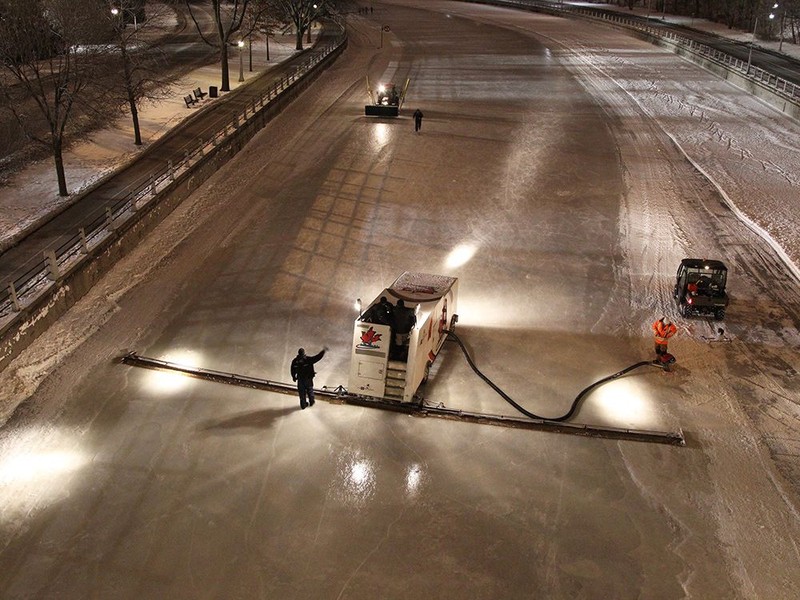
How inventors of famed Frosters that groom Rideau Canal Skateway lost patent due to junk mail
The gangly machines crawl along the world’s largest skating rink, winding through the heart of Ottawa.

Adrian Humphreys, Ottawa Citizen
Published Feb 07, 2025 • Last updated 5 hours ago • 5 minute read


Two Canadian inventors of giant ice resurfacing machines that tame the Rideau Canal each winter into the world’s largest skating rink have lost the patent for their unique contraptions because email alerts warning of an unpaid patent fee were caught in a junk mail folder.

Known as Frosters, the machines crawl along the Rideau Canal Skateway at night, giving the nearly eight kilometres of outdoor ice that winds through the heart of Ottawa its smooth, hard surface.

<more>

https://ottawacitizen.com/news/canad...l-skating-rink
Reply With Quote
     
     
  #106  
Old Posted Feb 8, 2025, 12:24 AM
J.OT13's Avatar
J.OT13 J.OT13 is offline
Moderator
 
Join Date: Mar 2012
Location: Ottawa
Posts: 27,610
Too bad it got cancelled the on the best Rideau Canal season in ages.

Quote:
‘It’s the canal we can’t trust’: Ottawa Ice Dragon Boat Festival future uncertain

After a fifth consecutive cancellation, organizers can no longer rely on the Rideau Canal to meet the required ice thickness.

Author of the article:Alexa MacKie, Special to the Citizen
Published Jan 01, 2025 • Last updated Jan 01, 2025 • 3 minute read
https://ottawacitizen.com/news/its-t...ture-uncertain
Reply With Quote
     
     
  #107  
Old Posted Feb 8, 2025, 1:05 PM
sgera sgera is offline
Registered User
 
Join Date: Apr 2002
Posts: 202
well, this invention and mega-zamboni likely explains what i would say are the best ice conditions i can remember...of all years on the canal.

Quote:
Originally Posted by rocketphish View Post
How inventors of famed Frosters that groom Rideau Canal Skateway lost patent due to junk mail
The gangly machines crawl along the world’s largest skating rink, winding through the heart of Ottawa.

Adrian Humphreys, Ottawa Citizen
Published Feb 07, 2025 • Last updated 5 hours ago • 5 minute read


Two Canadian inventors of giant ice resurfacing machines that tame the Rideau Canal each winter into the world’s largest skating rink have lost the patent for their unique contraptions because email alerts warning of an unpaid patent fee were caught in a junk mail folder.

Known as Frosters, the machines crawl along the Rideau Canal Skateway at night, giving the nearly eight kilometres of outdoor ice that winds through the heart of Ottawa its smooth, hard surface.

<more>

https://ottawacitizen.com/news/canad...l-skating-rink
Reply With Quote
     
     
  #108  
Old Posted Feb 8, 2025, 2:55 PM
wingman's Avatar
wingman wingman is offline
Registered User
 
Join Date: Jul 2007
Posts: 329
Quote:
Originally Posted by sgera View Post
well, this invention and mega-zamboni likely explains what i would say are the best ice conditions i can remember...of all years on the canal.
The machines help no doubt, but I feel the ice conditions are a result of the fact there has not been much if any freeze-thaw-freeze cycles. It's gotten cold, and stayed cold.

Great to see. This trending towards the longest Canal skating season in years!
Reply With Quote
     
     
  #109  
Old Posted Feb 8, 2025, 4:50 PM
zzptichka zzptichka is online now
Registered User
 
Join Date: Dec 2015
Location: Outaouias
Posts: 2,296
Yeah it's been around for 10+ years.
__________________
My aerial Ottawa photos on Flickr 📷
Reply With Quote
     
     
  #110  
Old Posted Feb 11, 2025, 5:09 PM
Uhuniau Uhuniau is online now
Registered User
 
Join Date: Jan 2010
Posts: 8,833
Quote:
Originally Posted by wingman View Post
The machines help no doubt, but I feel the ice conditions are a result of the fact there has not been much if any freeze-thaw-freeze cycles. It's gotten cold, and stayed cold.

Great to see. This trending towards the longest Canal skating season in years!
Yeah, the weather, both daily cycle and over multiple days, has been pretty much ideal. After a meh season, a no season, and the Occupation seasion, it's about time!
__________________
___
Enjoy my taxes, Orleans (and Kanata?).
Reply With Quote
     
     
  #111  
Old Posted Feb 11, 2025, 6:53 PM
VANRIDERFAN's Avatar
VANRIDERFAN VANRIDERFAN is offline
Registered User
 
Join Date: Jan 2007
Location: Regina
Posts: 5,431
I usually skate the canal early in the morning around sunrise. The ice conditions are perfect at that time mainly because the ice is fresh. It`s been a fantastic season this year and now with the decent snow pack the X-Country skiing along the River has been great as well!
Reply With Quote
     
     
  #112  
Old Posted Feb 12, 2025, 3:14 PM
Uhuniau Uhuniau is online now
Registered User
 
Join Date: Jan 2010
Posts: 8,833
Quote:
Originally Posted by rocketphish View Post
[B]How inventors of famed Frosters that groom Rideau Canal Skateway lost patent due to junk mail
The gangly machines crawl along the world’s largest skating rink, winding through the heart of Ottawa.
It's unfortunate about their patent, though I think the case was ultimately decided correctly, but also as "first movers" on a product that has a very very very very very niche market, they should be OK.
__________________
___
Enjoy my taxes, Orleans (and Kanata?).
Reply With Quote
     
     
  #113  
Old Posted Sep 10, 2025, 2:01 PM
J.OT13's Avatar
J.OT13 J.OT13 is offline
Moderator
 
Join Date: Mar 2012
Location: Ottawa
Posts: 27,610
The bridge looks heritage, but it was built in 1979-1981. It was a near identical replacement of a bridge built in 1915 that had to be scrapped because of... drum roll please... salt damage. We still haven't learned.

Video Link
Reply With Quote
     
     
  #114  
Old Posted Sep 10, 2025, 4:35 PM
vtecyo vtecyo is offline
Registered User
 
Join Date: Feb 2015
Posts: 324
Quote:
Originally Posted by J.OT13 View Post
The bridge looks heritage, but it was built in 1979-1981. It was a near identical replacement of a bridge built in 1915 that had to be scrapped because of... drum roll please... salt damage. We still haven't learned.

Video Link
Neat - but they failed to answer the question I've had for years - where's the bathroom? Is it in the other tower?
Reply With Quote
     
     
  #115  
Old Posted Sep 10, 2025, 5:38 PM
Uhuniau Uhuniau is online now
Registered User
 
Join Date: Jan 2010
Posts: 8,833
Quote:
Originally Posted by J.OT13 View Post
The bridge looks heritage, but it was built in 1979-1981. It was a near identical replacement of a bridge built in 1915 that had to be scrapped because of... drum roll please... salt damage. We still haven't learned.
LOL... that led me down a bunny trail in archival Citizen stories.

Funding challenges CHECK

Schedule slippage CHECK

Construction delays CHECK

Jurisdictional issues CHECK

Community associations CHECK

What about the children? CHECK

Cost overruns CHECK

Weather delay CHECK
__________________
___
Enjoy my taxes, Orleans (and Kanata?).
Reply With Quote
     
     
  #116  
Old Posted Sep 10, 2025, 10:56 PM
LeadingEdgeBoomer LeadingEdgeBoomer is offline
Registered User
 
Join Date: Mar 2010
Posts: 1,213
Quote:
Originally Posted by J.OT13 View Post
The bridge looks heritage, but it was built in 1979-1981. It was a near identical replacement of a bridge built in 1915 that had to be scrapped because of... drum roll please... salt damage. We still haven't learned.

Video Link
I lived very close to that bridge (before replacement) when I was less than 10 yo. I lived on one side of the canal and went to school on the other. The bridge was often raised to let boats by and then stuck in the raised position. I did not know it then , but I guess the metal parts could have been eroded by salt.
Reply With Quote
     
     
  #117  
Old Posted Dec 12, 2025, 7:02 PM
J.OT13's Avatar
J.OT13 J.OT13 is offline
Moderator
 
Join Date: Mar 2012
Location: Ottawa
Posts: 27,610
This week's NCC Podcast Episode is on the Rideau Canal. Posting the English and French versions. If you're bilingual, I recommend the French version for this episode.

Video Link


Video Link
Reply With Quote
     
     
  #118  
Old Posted Feb 3, 2026, 4:29 PM
J.OT13's Avatar
J.OT13 J.OT13 is offline
Moderator
 
Join Date: Mar 2012
Location: Ottawa
Posts: 27,610
Quote:
Bicentenaire d’Ottawa et construction du canal Rideau: le bâtiment de l’intendance

Par Michel Prévost, LeDroit
1er février 2026 à 11h45


NOTRE HISTOIRE / Ottawa souligne cette année deux anniversaires historiques intimement liés: le bicentenaire du début de la construction du canal Rideau, amorcée en 1826, et la fondation de Bytown, qui deviendra Ottawa en 1855.

Le bâtiment de l’intendance, mieux connu aujourd’hui sous le nom de Musée Bytown, se trouve au 1, ruelle du Canal, au pied des écluses d’Ottawa, du côté ouest. Il s’agit de l’un des immeubles les plus importants pour l’histoire et le patrimoine du canal Rideau. Construit en 1827, il demeure le plus ancien édifice en pierre de la capitale fédérale.

Le bâtiment de l’intendance est considéré comme l’un des plus beaux exemples de la stratégie de défense militaire du Haut-Canada (Ontario) et du Bas-Canada (Québec) dans les années 1820. Il joue un rôle essentiel dans la construction du canal Rideau, puisqu’on y entrepose les provisions et les outils nécessaires aux nombreux chantiers s’étendant de Bytown à Kingston, sur les rives du fleuve Saint-Laurent. L’édifice abrite également des logements.

Plus encore, il accueille les bureaux des responsables de l’intendance, notamment celui du lieutenant-colonel John By, ingénieur royal chargé de la construction du canal entre 1826 et 1832. L’endroit sert aussi de trésorerie.

Il importe de rappeler que la décision du lieutenant-colonel By d’amorcer les travaux du canal Rideau et d’y établir son quartier général au pied de la rivière des Outaouais est au cœur même de la création de Bytown, future ville d’Ottawa et capitale du Canada.

À l’époque, une structure identique se trouvait de l’autre côté des écluses pour loger les ingénieurs royaux. Ce magnifique édifice en pierre fut malheureusement démoli en 1911 et 1912, mais ses fondations demeurent visibles.

Une valeur patrimoniale remarquable

Le bâtiment de l’intendance constitue un exemple remarquable d’architecture commerciale ou industrielle inspirée de la tradition militaire britannique. Ses proportions équilibrées, ses façades symétriques, ses trois étages et son toit à deux versants en bardeaux de cèdre lui confèrent une présence imposante.

La disposition harmonieuse des fenêtres et des portes témoigne du savoir-faire du Corps des ingénieurs royaux (Royal Engineers). La grande qualité de la maçonnerie, réalisée par l’entrepreneur Thomas McKay, illustre le soin apporté à l’érection de cet édifice unique à Ottawa. McKay, rappelons-le, deviendra par la suite une figure historique majeure de la région avant la Confédération.


Bien que l’intérieur ait été modifié à plusieurs reprises au fil des ans, plusieurs éléments patrimoniaux ont été préservés, notamment les lambris de l’aile résidentielle, le foyer de la salle de lecture du troisième étage, l’escalier à poteaux et pilastres reliant le deuxième au troisième étage, les planchers et les superbes murs en pierre.

Depuis près de deux siècles, le bâtiment de l’intendance contribue à la beauté du poste d’éclusage d’Ottawa. Il fait pleinement partie du patrimoine paysager du canal historique et de la capitale. De nombreux peintres et photographes ont d’ailleurs immortalisé cet édifice emblématique, l’un des plus anciens de la région.

De nouvelles vocations

En 1854, plus de 25 ans après son érection, les autorités britanniques cèdent le bâtiment de l’intendance au gouvernement du Canada-Uni. Jusqu’en 1951, l’édifice accueille diverses organisations responsables de l’entretien du canal. Par la suite, le Musée Bytown et la Société historique d’Ottawa s’y installent. Le Musée Bytown demeure aujourd’hui le meilleur endroit dans la capitale fédérale pour découvrir l’histoire du canal et les artéfacts liés à sa construction militaire et commerciale.

Géré par Parcs Canada, l’immeuble a fait l’objet de plusieurs restaurations, notamment dans les années 1980, lorsque la reproduction des portes et fenêtres lui a redonné l’apparence qu’il avait dans les années 1840.

Un bâtiment reconnu et protégé

Heureusement, le bâtiment de l’intendance, aujourd’hui le Musée Bytown, bénéficie de plusieurs protections. Depuis 1994, il est classé édifice fédéral par le Bureau d’évaluation des édifices fédéraux du patrimoine. La Fiducie du patrimoine ontarien reconnaît également sa valeur exceptionnelle. Enfin, depuis 1925, il est désigné lieu historique national du Canada avec le canal Rideau, lequel est inscrit depuis 2007 sur la prestigieuse Liste du patrimoine mondial de l’UNESCO.
https://www.ledroit.com/actualites/h...PXG3DDSYNSFLI/
Reply With Quote
     
     
  #119  
Old Posted Feb 3, 2026, 4:44 PM
J.OT13's Avatar
J.OT13 J.OT13 is offline
Moderator
 
Join Date: Mar 2012
Location: Ottawa
Posts: 27,610
Quote:
Ottawa célèbre un double bicentenaire cette année : sa fondation et le canal Rideau

Par Michel Prévost, LeDroit
18 janvier 2026 à 12h01


NOTRE HISTOIRE/ Ottawa souligne cette année deux anniversaires historiques intimement liés: le bicentenaire du début de la construction du canal Rideau, amorcée en 1826, et la fondation de Bytown, qui deviendra Ottawa en 1855. Pour marquer ces événements, nous présenterons dans nos pages d’histoire une série de chroniques consacrées aux débuts de Bytown et à la construction du canal Rideau, inscrit depuis 2007 sur la prestigieuse liste du patrimoine mondial de l’UNESCO.

Commençons par évoquer un personnage central de cette double commémoration: le lieutenant‑colonel John By, considéré comme le fondateur de Bytown et l’ingénieur royal responsable de la construction du canal Rideau entre 1826 et 1832.

John By: un personnage incontournable

John By naît le 7 août 1779 à Londres, en Angleterre. Contrairement à la tradition familiale, il ne se destine pas au service des douanes, mais choisit plutôt une carrière d’ingénieur militaire. En 1802, il arrive au Canada, où il participe aux travaux de fortification de Québec et à la construction du canal des Cascades sur le fleuve Saint‑Laurent.

En 1811, il retourne en Europe pour servir en Espagne durant les guerres napoléoniennes, avant d’être affecté à la supervision de poudrières en Angleterre. En 1824, il est promu lieutenant‑colonel.

La carrière de By prend un tournant décisif en 1826, lorsque les autorités britanniques le nomment responsable de la construction du canal Rideau. Il arrive à Québec le 30 mai et ne retournera en Angleterre qu’à la fin de 1832, après l’ouverture officielle du canal.

La guerre de 1812: un contexte stratégique

La guerre de 1812 entre Britanniques et Américains démontre la vulnérabilité du fleuve Saint‑Laurent entre Montréal et Kingston. Dès que les Américains en contrôlent un segment, les communications entre le Bas‑Canada (Québec) et le Haut‑Canada (Ontario) sont coupées.

Le projet est d’abord jugé irréalisable et trop coûteux. Toutefois, en 1825, une commission britannique recommande sa réalisation. Grâce à l’appui du duc de Wellington auréolé de son prestige depuis sa victoire contre Napoléon, à Waterloo, en 1815 le projet est finalement approuvé en 1826.

Le colonel By arrive dans la région le 26 septembre 1826, accompagné de son épouse Esther March et de leurs deux filles, afin de préparer les travaux et de fonder un établissement qui portera son nom : Bytown. Au printemps 1827, il parcourt en canot les 202 kilomètres du tracé projeté pour déterminer l’emplacement des futurs chantiers. Les travaux débutent à plusieurs endroits dès l’été suivant.

La construction du canal Rideau s’étend sur cinq saisons et mobilise environ 6000 ouvriers, qui travaillent dans des conditions difficiles, souvent dangereuses, parfois mortelles. Nous y reviendrons dans une prochaine chronique.


Précisons que l’œuvre de By est un canal à plan d’eau: seulement 19 des 202 kilomètres sont réellement creusés. Une fois achevé, l’ouvrage compte 47 écluses de maçonnerie, 24 postes d’éclusage et 52 barrages, constituant une voie navigable militaire et commerciale d’une grande ingéniosité.

Un manque de reconnaissance

Lorsqu’il retourne à Londres, By s’attend à être anobli et à devenir sir John. Il ignore toutefois qu’une commission enquête sur les dépassements de coûts du projet.

Initialement évalués à 169 000 livres, les travaux sont réestimés par By à 474 000 livres dès 1827. Cette hausse s’explique notamment par son esprit novateur: il fait construire des écluses plus larges que prévu afin de permettre le passage des bateaux à vapeur, favorisant ainsi le transport des marchandises et des passagers.

En 1832, le coût total atteint 800 000 livres, une somme colossale pour l’époque.

La Trésorerie soupçonne alors le lieutenant‑colonel d’avoir mal géré les fonds et engagé des dépenses sans autorisation. Bien qu’il soit entièrement blanchi, By n’est pas anobli et ne reçoit qu’une simple lettre de félicitations du roi Guillaune 1V. Profondément meurtri, affaibli par la maladie, il meurt le 1er février en 1836 sans que sa réputation ne soit rétablie malgré les efforts de sa famille et de ses amis.

Un héritage réhabilité par l’histoire

Malgré l’injustice qu’il subit, l’historien Robert F. Legget décrit John By comme un ingénieur exceptionnel. Dans le Dictionnaire biographique du Canada, il note:

«Il montra souvent un esprit novateur, peut‑être surtout en élevant maints barrages pour transformer en lacs calmes et navigables les rapides les plus dangereux et maîtriser les crues printanières.»

Un discours prononcé à Montréal lors du départ du colonel témoigne également de l’admiration qu’il suscitait:

«Pour mener à bien une entreprise d’une telle ampleur et d’une telle importance, en un temps si court, malgré des difficultés et des obstacles insoupçonnés, et dans une région quasi inexplorée et inhabitée, il vous fallait une force morale, une détermination et un alliage de science et de compétence administrative qui tous suscitent notre admiration et méritent nos éloges.» Hélas, ces louanges ne semblent jamais avoir atteint Londres et le roi.

John By est reconnu personnage historique national du Canada depuis 1954.
https://www.ledroit.com/actualites/2...PRBASBGCJNSXA/
Reply With Quote
     
     
  #120  
Old Posted Feb 10, 2026, 10:04 PM
J.OT13's Avatar
J.OT13 J.OT13 is offline
Moderator
 
Join Date: Mar 2012
Location: Ottawa
Posts: 27,610
Reply With Quote
     
     
End
 
 
Reply

Go Back   SkyscraperPage Forum > Regional Sections > Canada > Ontario > Ottawa-Gatineau > Transportation
Forum Jump


Forum Jump


All times are GMT. The time now is 10:07 PM.

     
SkyscraperPage.com - Privacy Statement - Top

Powered by vBulletin® Version 3.8.7
Copyright ©2000 - 2026, vBulletin Solutions, Inc.