HomeDiagramsDatabaseMapsForum About
     

Go Back   SkyscraperPage Forum > Discussion Forums > City Discussions


Reply

 
Thread Tools Display Modes


  #1  
Old Posted Apr 4, 2012, 8:14 PM
M II A II R II K's Avatar
M II A II R II K M II A II R II K is offline
Registered User
 
Join Date: Aug 2002
Location: Toronto
Posts: 52,168
Race in LA: See How We've Grown


4/1/2012

http://www.lamag.com/features/Story....412infographic

Quote:
Imagine Pittsburgh moving into L.A.—that’s how much our city’s population has swelled in two decades. The central city is far denser today, and of course the composition has changed, too, with the number of Latinos and Asians increasing while the proportion of blacks and whites has decreased. Based on census data (each dot represents 25 people), our maps tell the tale of an evolving metropolis.


__________________
ASDFGHJK
Reply With Quote
     
     
  #2  
Old Posted Apr 12, 2012, 5:00 PM
M II A II R II K's Avatar
M II A II R II K M II A II R II K is offline
Registered User
 
Join Date: Aug 2002
Location: Toronto
Posts: 52,168
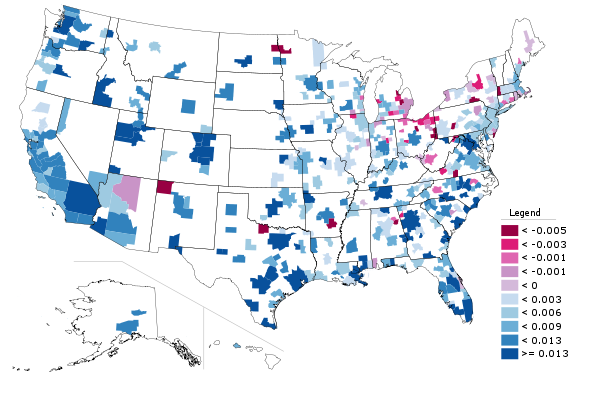
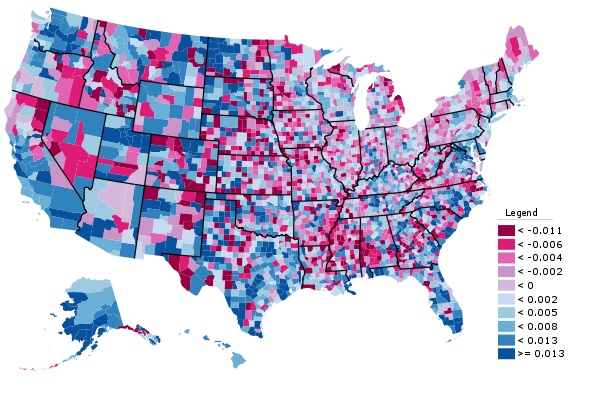
US Metro Population Growth Slows


April 12th, 2012

Read More: http://www.urbanophile.com/2012/04/1...-growth-slows/

Quote:
.....

Someone once said to me about Chicago’s Mayor Daley that if he did something you liked, he was a visionary genius leader, but if he did something you hated, he was a corrupt machine dictator. That seems to be how too many urbanists view the Census Bureau. Back in the 90s when the Census estimates showed cities growing more slowly than boosters believed, they pressured the Census Bureau into adjusting the estimates to provide higher values. As it turned out, in most cases even the original estimates for cities proved inflated. In fact, the 90s were actually better for a lot of major cities than the 2000s were (e.g, New York, Los Angeles, and Chicago). This led to a new narrative that the Census had undercounted cities somehow.

- Now this new data shows slowing exurban growth. All of a sudden, the Census Bureau has become once more a source of Gospel Truth, and I’ve seen many articles suggesting that the exurbs are dead, killed by rising gas prices and new Millennial preferences. Let’s not get ahead of ourselves here. Yes, exurban growth slowed recently. While cities on the whole fared more poorly than expected in the last census, we did see strong growth in downtowns and adjacent areas. I myself wrote about improving migration trends for core cities. That’s good news worth celebrating for cities. But don’t overstate the case. I have a different though admittedly speculative take on the exurbs. I think a chunk of the fringe migration was from very low end home builders skipping out beyond established jurisdictions into unincorporated territory with few buildings restrictions.

.....


Map of metro area growth last year:


County map:

__________________
ASDFGHJK
Reply With Quote
     
     
  #3  
Old Posted May 5, 2012, 5:24 PM
M II A II R II K's Avatar
M II A II R II K M II A II R II K is offline
Registered User
 
Join Date: Aug 2002
Location: Toronto
Posts: 52,168
Is Negative Population Growth Upon Us? Deaths Exceed Births in One Third of U.S. Counties


05/05/2012

By Ron McChesney and Greg Overberg

Read More: http://www.newgeography.com/content/...bout+places%29

Quote:
Population change has short run and long run effects. Short run effects include changes in fertility rates that can result from economic fluctuations. For example, during a recession, couples may delay having children until economic conditions improve. Once job growth has begun and expectations rise, birthrates can increase The correlation is not perfect and other demographic factors could come into play.

- With the expectation that the world’s population will stabilize mid-century, eventually every country’s population – with few exceptions in Africa and elsewhere – will stop increasing. Deaths will exceed births in most countries, and future growth may become more a function of shifting migration patterns. This reality can already be seen in parts of the United States. In one third of the 3,141 counties deaths now exceed births. In the next nine years, the number of counties in this category will expand, which could result in a markedly lower population count in the 2020 census.

- The top 159 counties received a net of 1,000 domestic migrants or more, and these areas include Florida, the Front Range Counties of Colorado, and the major metropolitan counties of Texas. Overall, 1,229 counties had positive domestic migration, while 1,914 counties had negative domestic migration. Hillsborough, Florida (Tampa area), had the highest positive migration with 22,963 net movers, while Los Angeles County, California had the greatest number of net leavers with a total of 55,146 net departing residents.

- International migration is most visible in California, Arizona and Nevada, and in a number of metropolitan areas including the Northeast and the Chicago area. One-hundred and thirty- two counties experienced more than 1,000 immigrant arrivals, and these counties received 74 percent of immigrants, indicating that immigration is concentrated. On the other hand, immigration is also widespread, as all but 520 counties received one or more immigrants during the year. The top county for international immigration was Los Angeles, California, with a total of 42,413 immigrants. The next four counties were Miami-Dade, Florida, with 19,996; Harris, Texas (Houston), with 19,558, Cook, Illinois (Chicago) with 17,208 and Queens, New York with 15,949 immigrants.

.....
__________________
ASDFGHJK
Reply With Quote
     
     
  #4  
Old Posted May 18, 2012, 4:37 AM
Urbanguy's Avatar
Urbanguy Urbanguy is offline
Go Beavs! Go Niners!
 
Join Date: Dec 2001
Location: Portland | Honolulu
Posts: 6,198
Here are the Estimates of the Resident Population by Race and Hispanic Origin for the United States and States: July 1, 2011.

Source: US Census

**FYI: Each race category includes people of Hispanic or Latino origin**

Alabama
White: 3,368,118 70.1%
Black or African American: 1,271,695 26.5%
American Indian and Alaska Native: 33,298 0.7%
Asian: 57,155 1.2%
Native Hawaiian and Other Pacific Islander: 5,227 0.1%
Two or More Races: 67,247 1.4%
Hispanic or Latino origin (of any race): 193,868 4.0%
Total Population: 4,802,740

Alaska
White: 490,374 67.9%
Black or African American: 25,886 3.6%
American Indian and Alaska Native: 107,494 14.9%
Asian: 40,327 5.6%
Native Hawaiian and Other Pacific Islander: 7,875 1.1%
Two or More Races: 50,762 7.0%
Hispanic or Latino origin (of any race): 42,113 5.8%
Total Population: 722,718

Arizona
White: 5,481,131 84.6%
Black or African American: 290,162 4.5%
American Indian and Alaska Native: 339,580 5.2%
Asian: 194,900 3.0%
Native Hawaiian and Other Pacific Islander: 16,603 0.3%
Two or More Races: 160,129 2.5%
Hispanic or Latino origin (of any race): 1,949,294 30.1%
Total Population: 6,482,505

Arkansas
White: 2,354,196 80.1%
Black or African American: 457,736 15.6%
American Indian and Alaska Native: 27,581 0.9%
Asian: 39,525 1.3%
Native Hawaiian and Other Pacific Islander: 6,853 0.2%
Two or More Races: 52,088 1.8%
Hispanic or Latino origin (of any race): 195,075 6.6%
Total Population: 2,937,979

California
White: 27,883,136 74.0%
Black or African American: 2,504,790 6.6%
American Indian and Alaska Native: 636,860 1.7%
Asian: 5,142,382 13.6%
Native Hawaiian and Other Pacific Islander: 185,415 0.5%
Two or More Races: 1,339,329 3.6%
Hispanic or Latino origin (of any race): 14,359,500 38.1%
Total Population: 37,691,912

Colorado
White: 4,516,283 88.3%
Black or African American: 221,500 4.3%
American Indian and Alaska Native: 80,670 1.6%
Asian: 149,929 2.9%
Native Hawaiian and Other Pacific Islander: 8,854 0.2%
Two or More Races: 139,560 2.7%
Hispanic or Latino origin (of any race): 1,070,566 20.9%
Total Population: 5,116,796

Connecticut
White: 2,946,740 82.3%
Black or African American: 396,060 11.1%
American Indian and Alaska Native: 17,093 0.5%
Asian: 144,446 4.0%
Native Hawaiian and Other Pacific Islander: 3,549 0.1%
Two or More Races: 72,821 2.0%
Hispanic or Latino origin (of any race): 494,290 13.8%
Total Population: 3,580,709

Delaware
White: 650,660 71.7%
Black or African American: 198,709 21.9%
American Indian and Alaska Native: 6,063 0.7%
Asian: 30,466 3.4%
Native Hawaiian and Other Pacific Islander: 713 0.1%
Two or More Races: 20,524 2.3%
Hispanic or Latino origin (of any race): 76,153 8.4%
Total Population: 907,135

Florida
White: 14,959,040 78.5%
Black or African American: 3,141,840 16.5%
American Indian and Alaska Native: 93,330 0.5%
Asian: 493,873 2.6%
Native Hawaiian and Other Pacific Islander: 19,853 0.1%
Two or More Races: 349,606 1.8%
Hispanic or Latino origin (of any race): 4,355,525 22.9%
Total Population: 19,057,542

Georgia
White: 6,198,354 63.2%
Black or African American: 3,044,658 31.0%
American Indian and Alaska Native: 50,113 0.5%
Asian: 334,856 3.4%
Native Hawaiian and Other Pacific Islander: 11,164 0.1%
Two or More Races: 176,065 1.8%
Hispanic or Latino origin (of any race): 892,010 9.1%
Total Population: 9,815,210

Hawaii
White: 357,861 26.0%
Black or African American: 27,443 2.0%
American Indian and Alaska Native: 5,835 0.4%
Asian: 529,944 38.5%
Native Hawaiian and Other Pacific Islander: 138,310 10.1%
Two or More Races: 315,417 22.9%
Hispanic or Latino origin (of any race): 126,418 9.2%
Total Population: 1,374,810

Idaho
White: 1,488,442 93.9%
Black or African American: 12,143 0.8%
American Indian and Alaska Native: 26,463 1.7%
Asian: 21,006 1.3%
Native Hawaiian and Other Pacific Islander: 2,901 0.2%
Two or More Races: 34,030 2.1%
Hispanic or Latino origin (of any race): 182,080 11.5%
Total Population: 1,584,985

Illinois
White: 10,042,286 78.0%
Black or African American: 1,905,730 14.8%
American Indian and Alaska Native: 75,130 0.6%
Asian: 618,691 4.8%
Native Hawaiian and Other Pacific Islander: 7,808 0.1%
Two or More Races: 219,612 1.7%
Hispanic or Latino origin (of any race): 2,079,697 16.2%
Total Population: 12,869,257

Indiana
White: 5,655,830 86.8%
Black or African American: 610,595 9.4%
American Indian and Alaska Native: 24,942 0.4%
Asian: 110,157 1.7%
Native Hawaiian and Other Pacific Islander: 3,655 0.1%
Two or More Races: 111,743 1.7%
Hispanic or Latino origin (of any race): 403,796 6.2%
Total Population: 6,516,922

Iowa
White: 2,847,701 93.0%
Black or African American: 94,028 3.1%
American Indian and Alaska Native: 14,043 0.5%
Asian: 56,855 1.9%
Native Hawaiian and Other Pacific Islander: 2,526 0.1%
Two or More Races: 47,156 1.5%
Hispanic or Latino origin (of any race): 158,014 5.2%
Total Population: 3,062,309

Kansas
White: 2,510,254 87.4%
Black or African American: 176,225 6.1%
American Indian and Alaska Native: 33,785 1.2%
Asian: 71,898 2.5%
Native Hawaiian and Other Pacific Islander: 2,889 0.1%
Two or More Races: 76,187 2.7%
Hispanic or Latino origin (of any race): 309,914 10.8%
Total Population: 2,871,238

Kentucky
White: 3,882,296 88.9%
Black or African American: 349,682 8.0%
American Indian and Alaska Native: 12,553 0.3%
Asian: 52,201 1.2%
Native Hawaiian and Other Pacific Islander: 3,333 0.1%
Two or More Races: 69,291 1.6%
Hispanic or Latino origin (of any race): 138,563 3.2%
Total Population: 4,369,356

Louisiana
White: 2,918,181 63.8%
Black or African American: 1,482,004 32.4%
American Indian and Alaska Native: 33,634 0.7%
Asian: 74,720 1.6%
Native Hawaiian and Other Pacific Islander: 2,658 0.1%
Two or More Races: 63,639 1.4%
Hispanic or Latino origin (of any race): 202,233 4.4%
Total Population: 4,574,836

Maine
White: 1,267,747 95.4%
Black or African American: 16,804 1.3%
American Indian and Alaska Native: 8,869 0.7%
Asian: 14,256 1.1%
Native Hawaiian and Other Pacific Islander: 415 0.0%
Two or More Races: 20,097 1.5%
Hispanic or Latino origin (of any race): 17,958 1.4%
Total Population: 1,328,188

Maryland
White: 3,561,383 61.1%
Black or African American: 1,749,143 30.0%
American Indian and Alaska Native: 31,454 0.5%
Asian: 337,586 5.8%
Native Hawaiian and Other Pacific Islander: 5,660 0.1%
Two or More Races: 143,063 2.5%
Hispanic or Latino origin (of any race): 490,716 8.4%
Total Population: 5,828,289

Reply With Quote
     
     
  #5  
Old Posted May 18, 2012, 4:38 AM
Urbanguy's Avatar
Urbanguy Urbanguy is offline
Go Beavs! Go Niners!
 
Join Date: Dec 2001
Location: Portland | Honolulu
Posts: 6,198
Massachusetts
White: 5,538,825 84.1%
Black or African American: 512,134 7.8%
American Indian and Alaska Native: 30,462 0.5%
Asian: 371,141 5.6%
Native Hawaiian and Other Pacific Islander: 6,257 0.1%
Two or More Races: 128,717 2.0%
Hispanic or Latino origin (of any race): 650,621 9.9%
Total Population: 6,587,536

Michigan
White: 7,925,094 80.2%
Black or African American: 1,417,079 14.3%
American Indian and Alaska Native: 68,870 0.7%
Asian: 251,121 2.5%
Native Hawaiian and Other Pacific Islander: 3,719 0.0%
Two or More Races: 210,304 2.1%
Hispanic or Latino origin (of any race): 447,917 4.5%
Total Population: 9,876,187

Minnesota
White: 4,645,546 86.9%
Black or African American: 286,301 5.4%
American Indian and Alaska Native: 68,412 1.3%
Asian: 225,307 4.2%
Native Hawaiian and Other Pacific Islander: 3,199 0.1%
Two or More Races: 116,096 2.2%
Hispanic or Latino origin (of any race): 259,297 4.9%
Total Population: 5,344,861

Mississippi
White: 1,787,924 60.0%
Black or African American: 1,111,856 37.3%
American Indian and Alaska Native: 17,237 0.6%
Asian: 27,875 0.9%
Native Hawaiian and Other Pacific Islander: 1,781 0.1%
Two or More Races: 31,839 1.1%
Hispanic or Latino origin (of any race): 85,631 2.9%
Total Population: 2,978,512

Missouri
White: 5,048,422 84.0%
Black or African American: 703,954 11.7%
American Indian and Alaska Native: 31,273 0.5%
Asian: 103,105 1.7%
Native Hawaiian and Other Pacific Islander: 7,322 0.1%
Two or More Races: 116,612 1.9%
Hispanic or Latino origin (of any race): 221,155 3.7%
Total Population: 6,010,688

Montana
White: 896,925 89.9%
Black or African American: 5,401 0.5%
American Indian and Alaska Native: 64,070 6.4%
Asian: 6,871 0.7%
Native Hawaiian and Other Pacific Islander: 780 0.1%
Two or More Races: 24,152 2.4%
Hispanic or Latino origin (of any race): 30,502 3.1%
Total Population: 998,199

Nebraska
White: 1,660,697 90.1%
Black or African American: 87,124 4.7%
American Indian and Alaska Native: 23,864 1.3%
Asian: 34,716 1.9%
Native Hawaiian and Other Pacific Islander: 2,213 0.1%
Two or More Races: 34,027 1.8%
Hispanic or Latino origin (of any race): 174,516 9.5%
Total Population: 1,842,641

Nevada
White: 2,115,946 77.7%
Black or African American: 233,955 8.6%
American Indian and Alaska Native: 44,162 1.6%
Asian: 208,527 7.7%
Native Hawaiian and Other Pacific Islander: 19,644 0.7%
Two or More Races: 101,088 3.7%
Hispanic or Latino origin (of any race): 737,221 27.1%
Total Population: 2,723,322

New Hampshire
White: 1,247,382 94.6%
Black or African American: 17,256 1.3%
American Indian and Alaska Native: 3,668 0.3%
Asian: 29,811 2.3%
Native Hawaiian and Other Pacific Islander: 572 0.0%
Two or More Races: 19,505 1.5%
Hispanic or Latino origin (of any race): 38,560 2.9%
Total Population: 1,318,194

New Jersey
White: 6,539,664 74.1%
Black or African American: 1,289,292 14.6%
American Indian and Alaska Native: 51,048 0.6%
Asian: 766,130 8.7%
Native Hawaiian and Other Pacific Islander: 8,128 0.1%
Two or More Races: 166,893 1.9%
Hispanic or Latino origin (of any race): 1,600,690 18.1%
Total Population: 8,821,155

New Mexico
White: 1,735,602 83.4%
Black or African American: 51,844 2.5%
American Indian and Alaska Native: 210,499 10.1%
Asian: 32,426 1.6%
Native Hawaiian and Other Pacific Islander: 3,275 0.2%
Two or More Races: 48,578 2.3%
Hispanic or Latino origin (of any race): 973,050 46.7%
Total Population: 2,082,224

New York
White: 13,910,374 71.5%
Black or African American: 3,400,757 17.5%
American Indian and Alaska Native: 185,174 1.0%
Asian: 1,517,556 7.8%
Native Hawaiian and Other Pacific Islander: 24,765 0.1%
Two or More Races: 426,571 2.2%
Hispanic or Latino origin (of any race): 3,495,138 18.0%
Total Population: 19,465,197

North Carolina
White: 6,966,432 72.1%
Black or African American: 2,121,228 22.0%
American Indian and Alaska Native: 149,520 1.5%
Asian: 225,631 2.3%
Native Hawaiian and Other Pacific Islander: 10,670 0.1%
Two or More Races: 182,920 1.9%
Hispanic or Latino origin (of any race): 832,405 8.6%
Total Population: 9,656,401

North Dakota
White: 617,951 90.4%
Black or African American: 9,097 1.3%
American Indian and Alaska Native: 37,531 5.5%
Asian: 7,366 1.1%
Native Hawaiian and Other Pacific Islander: 387 0.1%
Two or More Races: 11,600 1.7%
Hispanic or Latino origin (of any race): 15,318 2.2%
Total Population: 683,932

Ohio
White: 9,653,887 83.6%
Black or African American: 1,432,940 12.4%
American Indian and Alaska Native: 30,269 0.3%
Asian: 201,988 1.7%
Native Hawaiian and Other Pacific Islander: 5,511 0.0%
Two or More Races: 220,356 1.9%
Hispanic or Latino origin (of any race): 367,116 3.2%
Total Population: 11,544,951

Oklahoma
White: 2,873,019 75.8%
Black or African American: 290,106 7.7%
American Indian and Alaska Native: 338,069 8.9%
Asian: 69,820 1.8%
Native Hawaiian and Other Pacific Islander: 5,659 0.1%
Two or More Races: 214,835 5.7%
Hispanic or Latino origin (of any race): 347,620 9.2%
Total Population: 3,791,508

Oregon
White: 3,428,804 88.6%
Black or African American: 76,371 2.0%
American Indian and Alaska Native: 68,455 1.8%
Asian: 150,227 3.9%
Native Hawaiian and Other Pacific Islander: 15,141 0.4%
Two or More Races: 132,861 3.4%
Hispanic or Latino origin (of any race): 466,069 12.0%
Total Population: 3,871,859

Pennsylvania
White: 10,673,040 83.8%
Black or African American: 1,443,659 11.3%
American Indian and Alaska Native: 40,421 0.3%
Asian: 368,649 2.9%
Native Hawaiian and Other Pacific Islander: 7,344 0.1%
Two or More Races: 209,773 1.6%
Hispanic or Latino origin (of any race): 750,431 5.9%
Total Population: 12,742,886

Rhode Island
White: 907,145 86.3%
Black or African American: 75,560 7.2%
American Indian and Alaska Native: 9,223 0.9%
Asian: 32,388 3.1%
Native Hawaiian and Other Pacific Islander: 1,652 0.2%
Two or More Races: 25,334 2.4%
Hispanic or Latino origin (of any race): 134,714 12.8%
Total Population: 1,051,302

South Carolina
White: 3,198,737 68.4%
Black or African American: 1,315,076 28.1%
American Indian and Alaska Native: 24,959 0.5%
Asian: 64,334 1.4%
Native Hawaiian and Other Pacific Islander: 4,000 0.1%
Two or More Races: 72,124 1.5%
Hispanic or Latino origin (of any race): 245,660 5.3%
Total Population: 4,679,230
Reply With Quote
     
     
  #6  
Old Posted May 23, 2012, 4:43 PM
M II A II R II K's Avatar
M II A II R II K M II A II R II K is offline
Registered User
 
Join Date: Aug 2002
Location: Toronto
Posts: 52,168
Almost 800,000 Latinos “missing” from latest census


23 May, 2012

Read More: http://nbclatino.tumblr.com/post/236...-latest-census

Quote:
About 775,000, or 1.5 percent of the nation’s Latinos are “missing” from the overall Latino count in the latest 2010 census. This is just a sampling, the numbers could be higher. “I think it is very troubling that you still have that differentiation,” says Angelo Falcón, a member of the Census’ National Advisory Committee for Racial, Ethnic and other Populations and President of the National Institute for Latino Policy.

“After putting so much money and resources to make sure the Latino population is adequately counted, the fact that under-counting is still a problem is troubling,” he adds. Census Director Robert Groves said that “while the overall coverage of the census was exemplary, the traditional hard-to-count groups, like renters, were counted less well.” In addition, Groves added, “because ethnic and racial minorities disproportionately live in hard-to-count circumstances, they too were under-counted relative to the majority population,” he added.

Falcón, a political scientist who chaired the former Census Advising Committee, says the Census has spent a large amount of resources to ensure Hispanics are not undercounted. He says, however, it is a good time now for “lessons learned” to make sure this does not happen again. Some recommendations, Falcón says, include more advertising in local community papers which serve minority populations, as well as better strategies to work with local community groups.

.....
__________________
ASDFGHJK
Reply With Quote
     
     
  #7  
Old Posted Jun 22, 2012, 3:42 PM
M II A II R II K's Avatar
M II A II R II K M II A II R II K is offline
Registered User
 
Join Date: Aug 2002
Location: Toronto
Posts: 52,168
In a Shift, Biggest Wave of Migrants Is Now Asian


June 18, 2012

By KIRK SEMPLE

Read More: http://www.nytimes.com/2012/06/19/us...rant-wave.html

Quote:
Asians have surpassed Hispanics as the largest wave of new immigrants to the United States, pushing the population of Asian descent to a record 18.2 million and helping to make Asians the fastest-growing racial group in the country, according to a study released Tuesday by the Pew Research Center.

- About 430,000 Asians — or 36 percent of all new immigrants, legal and illegal — moved to the United States in 2010, compared with 370,000 Hispanics, or 31 percent of all new arrivals, the study said. Just three years earlier, the ratio was reversed: about 390,000 Asians immigrated in 2007, compared with 540,000 Hispanics. “Asians have become the largest stream of new immigrants to the U.S. — and, thus, the latest leading actors in this great American drama” of immigration, Paul Taylor, executive vice president of the Pew Research Center, wrote in the report.

- Immigration scholars have attributed the decrease in Hispanic immigration to a mix of factors, including the economic downturn in the United States, increased deportation and border enforcement by the American authorities, and declining birthrates in Mexico. Tougher enforcement measures have made a greater impact on the Hispanic immigrant population than on the Asian immigrant population because a much higher percentage of Hispanics are in the United States without immigration papers, experts said. About 45 percent of Hispanic immigrants in the United States are here illegally compared with about 13 percent to 15 percent of Asian immigrants, Pew demographers found. Under this pressure, Hispanic immigration dropped 31 percent from 2007 to 2010, while Asian immigration increased about 10 percent.

.....


__________________
ASDFGHJK
Reply With Quote
     
     
  #8  
Old Posted Jun 22, 2012, 4:05 PM
Razor Razor is offline
Registered User
 
Join Date: Jul 2011
Location: Ottawa
Posts: 2,998
ya you guys keep it down below..trying to sleep. Slow down..
Reply With Quote
     
     
  #9  
Old Posted Sep 25, 2012, 6:05 PM
M II A II R II K's Avatar
M II A II R II K M II A II R II K is offline
Registered User
 
Join Date: Aug 2002
Location: Toronto
Posts: 52,168
Maps Of U.S. Population Change, 2000-2010


U.S. City Graphics: http://www.datapointed.net/2011/04/m...0-2010-census/

Quote:
.....

Nationwide, one feature stands out: the bumper crop of fresh suburbs that ring almost every metropolitan area. Where did all of these people come from? A zoom into the Midwest suggests the answer. The new tract developments appear to be sucking the life out the older neighborhoods, which bear the scarlet tints of waning population.

- Click through and look closely, and at the very center of the biggest cities – within a stone’s throw of downtown – you’ll see a tiny, resurgent dot of blue. Apparently, at some point in recent history, a home address amongst the skyscrapers became desirable again. Even in the City of Detroit, which dropped a full quarter of its citizens in the last decade, downtown is flashing the signs of a comeback.

.....


New Orleans: http://www.datapointed.net/visualiza...ans-louisiana/

Las Vegas: http://www.datapointed.net/visualiza...-vegas-nevada/

More Cities: http://www.datapointed.net/2011/04/g...ings-part-two/
__________________
ASDFGHJK
Reply With Quote
     
     
  #10  
Old Posted Sep 25, 2012, 8:06 PM
dave8721 dave8721 is offline
Registered User
 
Join Date: Jul 2005
Location: Miami
Posts: 4,184

This would have been a good thread starter by itself. Its interesting to see the differences between cities. Some had growth all over, some only at the fringes. Miami has nice dark blue areas (infill) all through the metro (and of course those pesky ones at the fringes). Atlanta looks all blue.
Reply With Quote
     
     
  #11  
Old Posted Jan 19, 2012, 6:51 PM
pesto pesto is offline
BANNED
 
Join Date: Jul 2009
Posts: 2,546
Florida will pass NY and Arizona, Nevada and Utah are showing strong growth again. Texas continues off the charts.

NY is surprisingly weak considering NYC's boom. I guess much of the NYC growth is actually in NJ, Conn and Penn.
Reply With Quote
     
     
  #12  
Old Posted Jan 19, 2012, 6:53 PM
bunt_q's Avatar
bunt_q bunt_q is offline
Provincial Bumpkin
 
Join Date: Aug 2002
Location: Denver, CO
Posts: 13,203
Funny in a way that the devastated Sun Belt cities - Phoenix, Las Vegas - are still growing near the top of the pack. Maybe we rushed our pronunciations of their doom a bit.

Denver is still on pace to pass a few more cities by decade's end. Good and bad there, I suppose. By 2020 we'll be firmly top-20.

Colorado will probably pass Minnesota, and maybe Wisconsin too, by the next census.

Pain continues for the Rust Belt. If these numbers are even close, it seems the Great Recession has had less lasting effect on growth patterns than a lot of us thought.
Reply With Quote
     
     
  #13  
Old Posted Jan 20, 2012, 1:10 AM
babybackribs2314 babybackribs2314 is offline
Registered User
 
Join Date: Apr 2006
Location: UWS, Manhattan
Posts: 1,728
Quote:
Originally Posted by bunt_q View Post
Funny in a way that the devastated Sun Belt cities - Phoenix, Las Vegas - are still growing near the top of the pack. Maybe we rushed our pronunciations of their doom a bit.

Denver is still on pace to pass a few more cities by decade's end. Good and bad there, I suppose. By 2020 we'll be firmly top-20.

Colorado will probably pass Minnesota, and maybe Wisconsin too, by the next census.

Pain continues for the Rust Belt. If these numbers are even close, it seems the Great Recession has had less lasting effect on growth patterns than a lot of us thought.
I don't think those numbers are necessarily accurate... using projections based on the past decade is kind of silly when the country has seen a massive shift in migration/growth patterns since the Great Recession.
Reply With Quote
     
     
  #14  
Old Posted Jan 22, 2012, 3:55 AM
min-chi-cbus min-chi-cbus is offline
Registered User
 
Join Date: Feb 2005
Posts: 497
Quote:
Originally Posted by babybackribs2314 View Post
I don't think those numbers are necessarily accurate... using projections based on the past decade is kind of silly when the country has seen a massive shift in migration/growth patterns since the Great Recession.
I didn't see the methodology either, and am SUPER confused by the data! I mean, cities with major unemployment problems and economic issues are exploding according to this list.
Reply With Quote
     
     
  #15  
Old Posted Feb 4, 2012, 6:07 AM
bunt_q's Avatar
bunt_q bunt_q is offline
Provincial Bumpkin
 
Join Date: Aug 2002
Location: Denver, CO
Posts: 13,203
Quote:
Originally Posted by min-chi-cbus View Post
I didn't see the methodology either, and am SUPER confused by the data! I mean, cities with major unemployment problems and economic issues are exploding according to this list.
That's not impossible... 160,000 people moved here in the last 18 months, and we sure as heck haven't added that many jobs.

Re: Texas foreclosures... I doubt it had much to do with Texas lending/foreclosure rules being any different. I think it just had more to do with housing prices never getting as high/inflated there. If you don't need to take out a loan worth 8 times your annual salary to buy a house, you don't need a crappy subprime loan. Also, jobs - any jobs - help.
Reply With Quote
     
     
  #16  
Old Posted Feb 4, 2012, 7:04 AM
wwmiv wwmiv is offline
Registered User
 
Join Date: Sep 2009
Location: Austin -> San Antonio -> Columbia -> San Antonio -> Chicago -> Austin -> Denver -> Austin
Posts: 5,710
Quote:
Originally Posted by bunt_q View Post
That's not impossible... 160,000 people moved here in the last 18 months, and we sure as heck haven't added that many jobs.

Re: Texas foreclosures... I doubt it had much to do with Texas lending/foreclosure rules being any different. I think it just had more to do with housing prices never getting as high/inflated there. If you don't need to take out a loan worth 8 times your annual salary to buy a house, you don't need a crappy subprime loan. Also, jobs - any jobs - help.
Again, the reason that housing prices did not inflate were those rules and regulations.
Reply With Quote
     
     
  #17  
Old Posted Jan 19, 2012, 8:28 PM
brickell's Avatar
brickell brickell is offline
Registered User
 
Join Date: Nov 2003
Location: County of Dade
Posts: 9,374
Based on the estimates
Georgia just passed Michigan for 8th.
Arizona passed Indiana for 15th

If similar numbers hold up for next year

Florida will pass New York
North Carolina will pass Michigan
Arizona will pass Massachusetts
Utah will pass Kansas
Nebraska will pass West Virginia
__________________
That's what did it in the end. Not the money, not the music, not even the guns. That is my heroic flaw: my excess of civic pride.
Reply With Quote
     
     
  #18  
Old Posted Jan 19, 2012, 9:18 PM
ChiSoxRox's Avatar
ChiSoxRox ChiSoxRox is offline
Registered User
 
Join Date: Mar 2007
Location: Boston, MA
Posts: 2,509
If their growth rates stay roughly stable, Wyoming will pass Vermont in about seven years, leaving Vermont as the least populous state.
__________________
Like the pre-war masonry skyscrapers? Then check out my list of the tallest buildings in 1950.
Reply With Quote
     
     
  #19  
Old Posted Jan 19, 2012, 10:09 PM
unusualfire unusualfire is offline
Registered User
 
Join Date: Mar 2002
Location: Cincinnati,OH San Diego,CA Alamosa, CO
Posts: 2,031
Why are they using numbers for 2 years instead of one for estimates? Some places lost jobs and still gained 100k? How is that even possible?
Reply With Quote
     
     
  #20  
Old Posted Jan 20, 2012, 2:06 AM
mhays mhays is offline
Never Dell
 
Join Date: Jul 2001
Posts: 20,924
I didn't read the methodology....it's really just a projection from the past?

I like reading my Puget Sound Business Journal, the local version of the Business Journals empire. But they're not good on demographics, their website is probably designed to be horrible to get people to read the print versions, etc. I wouldn't put that type of BS "estimate" (third party or otherwise) past them.
Reply With Quote
     
     
This discussion thread continues

Use the page links to the lower-right to go to the next page for additional posts
 
 
Reply

Go Back   SkyscraperPage Forum > Discussion Forums > City Discussions
Forum Jump


Forum Jump


All times are GMT. The time now is 9:36 AM.

     
SkyscraperPage.com - Privacy Statement - Top

Powered by vBulletin® Version 3.8.7
Copyright ©2000 - 2026, vBulletin Solutions, Inc.