Time for Halifax to get on with plans
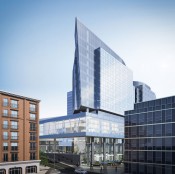
It must be difficult for a group calling itself the Coalition to Save the View to argue that its opposition to a new con vention centre in Halifax is anything other than an at tempt to prevent highrises from being built in the down town.
The coalition held a press conference Friday to make its case against the convention centre. It was based on esti mates that suggest the centre would create a heavy finan cial burden on the province.
Since no one knows just how much the proposed con vention centre will actually cost — the developer Rank Inc. has until July 19 to sub mit a detailed proposal to the provincial government — the opponents of the project were forced to project their own figures in order to justify their findings.
There is little argument. It will be in everyone’s interest to have the economics of the convention project closely examined once the final plans are presented to government.
But the coalition’s effort to fight the project on economic grounds fell short.
The coalition’s financial argument against the project was nothing more than a thinly disguised attempt to force the developer to cut floors from its buildings.
The coalition didn’t reveal the true reason for opposing the convention centre until the last paragraph of its news release, which read: “The towers would be exempt from the HRM by Design rules applied on the other blocks downtown. Any public funding for the P3 con vention centre would allow the height of the towers to double from seven and nine to 14 and 18 storeys, effectively privatiz ing the view from Citadel Hill."
Never mind that a developer can legally build highrises under the view planes legislation, which restricted construction in strategic sightlines from Citadel Hill, with or without a conven tion centre.
The coalition has suggested that renovations to the existing convention centre on Argyle Street would be good enough to meet the long-term needs for a convention centre. They further suggest the tax revenue generat ed by the existing convention centre is about the same as studies have projected for a new and expanded hall down the street.
Considering the proposed convention centre will be larger than the existing facility, with a major hotel attached, along with a shopping and restaurant com ponent, it is difficult to believe the new convention centre would fail to surpass the tax revenue generated by the cur rent facility.
Government is involved in the development of convention centres because such projects are considered revenue gener ators rather than money makers on their own. The only entity that will be able to gain from the development of a convention centre is government through increased tax revenue generated in the various shops, restaurants and hotels from the spending by conventioneers.
The coalition’s opposition to the convention centre is built around a desire to maintain a certain low-level heritage feel to the architecture of the down town. While the new plan for the downtown allows for greater density, heritage groups would have preferred that construction in the downtown be restricted to no more than six storeys.
The fact is, construction, particularly in the downtown, is an expensive business and de velopers require a certain densi ty in order to finance the cre ation of new and interesting buildings.
If heritage groups had been successful in keeping buildings short and squat, as they wanted to do during the HRM by Design debate, it would have not only reflected badly on them but it would have projected poorly on the whole community.
It is about time Halifax pushed forward with new and interesting plans for the city.
(
[email protected])





 Prev
Prev


 Linear Mode
