 The Forest Service considers closing Salt Lake City's Mill Creek Canyon to routine car travel and giving way to bike lanes and shuttles.
By Brandon Loomis
The Salt Lake Tribune
 Kimberly Baker of Salt Lake, crosses the road in Millcreek Canyon on skis Tuesday, December 16, 2008. The forest service has a grant to study alternative transportation in the canyon, perhaps creating a bike lane . Paul Fraughton / Salt Lake Tribune
Mill Creek Canyon » It's the nature of a canyon to funnel the flow into the lowest slot, and up to 1,400 motorists and 400 cyclists a day can tell you that this one is narrow.
Like, no-shoulders narrow. Share-the-road-or-else narrow. Double-parked narrow -- even in winter, when Salt Lakers pack up their Nordic skis and dogs for the metro area's closest forest jaunt.
All this -- plus Boy Scout camps, two restaurants and 120 picnic sites on an 8.5-mile road that starts within view of downtown Salt Lake City -- has the U.S. Forest Service searching for a better way in Mill Creek Canyon. It might wrest drivers from their bucket seats and into shuttle vans, or thread bike lanes through the cut banks and woodlands. The agency last month picked up a $220,000 grant from the Federal Transit Administration's public lands program for a study that many hope leads to a shuttle, whether mandatory or optional.
Sounds great to regular Mill Creek skier Karen Kinnison, so long as Abby can hitch a ride, too. The orange-and-white shorthair "mutt" got her routine 10-mile workout Friday on the groomed snow beyond the dead-end road's winter gate, just as hundreds of dogs are welcomed on odd-numbered dates.
A shuttle could clear the air of exhaust and add to the canyon's tranquility, Kinnison said. Plus, it could take the white-knuckles stress out of a trip up to the woods whenever there's a snowstorm (as there would be, big time, just after she returned to the Salt Lake Valley on Friday morning).
"If they let dogs on the shuttle, I'm fine with that," the Holladay resident said.
Actually, the Forest Service thought of that, and planners are open to further suggestions during the year or so it will take for a consultant to complete the study. Salt Lake Ranger District Recreation Manager Carol Majeske said if there ever is a shuttle, perhaps it could haul a kennel trailer. Perhaps, too, there could be mountain-bike racks to get rock hoppers to all of those trail heads that connect to the web of Wasatch Mountain tracks.
But would the Forest Service really close the road to traffic?
"Who knows?" Majeske said. "It's premature to say that. I don't want to put people up in arms."
Those who sought out the canyon Friday weren't alarmed, though, when they learned of the idea. In fact, only one Mill Creek regular quizzed by The Salt Lake Tribune said he would sometimes go elsewhere if forced from his car here.
The others loved the prospect.
"They should close all the canyons to cars," Salt Lake City resident Michael Friedrichs said while scraping wax across his skis in preparation for some sticky snow at the road's end.
His skiing partner, Anne Yeagle, agreed. The land is public and the Forest Service and Salt Lake County charge a fee for entry to help pay for recreational improvements.
"If [the land] is for recreation," she said, "then that's what it should be used for."
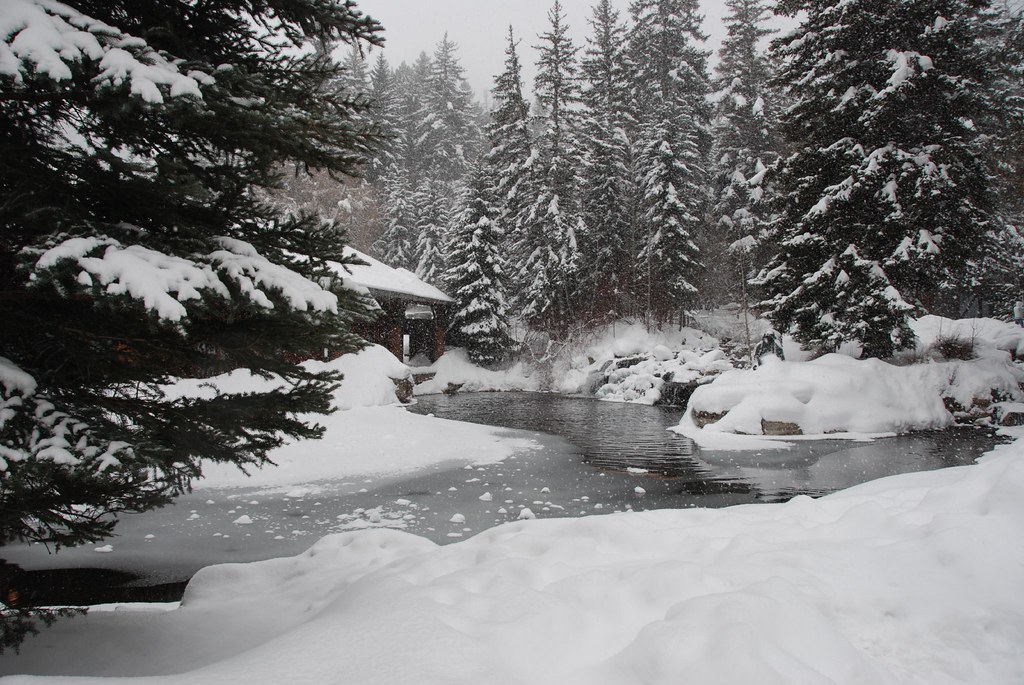
Even on a weekday morning like Friday's -- gray and windy, slush slumping on evergreens -- the gate area is an assembly line of Nordic fun. More than two dozen cars lined the roadside, some of their owners kneeling to click square-tipped shoes into bindings while others cinched toddlers into backpack seats. A pack of retriever mixes whirled in breathless waiting for the trek.
It's unclear who might run an eventual shuttle -- the Forest Service, the Utah Transit Authority, maybe a private contractor. These questions, plus that of whether there's even room for environmentally sensitive bike lanes near the stream, are for the study to answer.
If a shuttle is the solution, it would be one that's increasingly popular in national parks -- such as Zion -- but still rare in multiuse forests. Only those around Tucson, Ariz., and Aspen, Colo., have tried them, Majeske said, although the shuttles in those spots are popular.
But what of Log Haven, a high-end restaurant on a private parcel up Mill Creek? Manager Ian Campbell worries about closing the road to his customers, though maybe they could get an exemption.
There's no question that bikes whizzing downhill among cars is an issue, Campbell conceded. He mountain-bikes on the trails, but avoids the road.
"There are no shoulders," he said. " 'Conflict' isn't the word. It's a problem. They're halfway in our lane."
South Jordan snowshoer Greg Pearson was the one who said a shuttle ride might deter his trips here -- sometimes, anyway. Days like Friday, though, when son Mark was visiting from Houston, there's no substitute for his favorite trail.
Although skeptical of a mandatory shuttle, Pearson said he would be happy to see his fees go to bike lanes to improve safety.
Two canyons over, at Alta's Albion Basin, a town experiment has proven that a voluntary shuttle can get thousands of nature lovers out of their cars. The weekends-only vans ferried 13,000 people to the wildflower slopes there last summer, according to Town Clerk Kate Black. That number nearly matches the 13,400 vehicles that passed all summer, even with weeklong car access.
[email protected]
Mill Creek Canyon
Mill Creek numbers:
450,000 visitors a year.
50,000 bicycle entries.
Parking shortage of 250 slots at peak times.
$2.25 car entry fee ($3 starting Jan. 1).
$22 annual pass ($40 starting Jan. 1).
The study:
$220,000 from the Federal Transit Authority to seek alternative-travel options.
$500,000 total cost.
Possibilities include mandatory shuttle, voluntary shuttle and bike lanes.
Decision possible in 2010.
Companion study:
$204,000 FTA grant to plan alternative transportation in Alta's Albion Basin.
$300,000 total cost.
Town experimental shuttle already serves summer visitors.
Forest Service could take over, or find other options to protect the area.
 Paul Fraughton / Salt Lake Tribune
.





 Prev
Prev






 Ya for me








 Linear Mode
