OK, so what are the real problems with the number of buses at OC Transpo?
Politics pushed OC Transpo into a rapid change to e-buses. The infamous mayor of Ottawa decided that OC Transpo’s cautious approach wasn’t going to fulfil his election promises, so he pushed for a rapid change to e-buses. At the same time, the Federal government was also trying to accelerate a switch to electric transit vehicles to show that its GHG reduction goals are achievable. Therefore, it offered buckets of bucks to cover the cost of ‘upgrading’ bus purchases from diesel to e-buses. (Of course, the Feds are not as generous as it might sound, since the money was a loan that is to be paid back from the savings from not buying diesel fuel. So it wasn’t exactly ‘free’ money. The city will still wind up paying most of the cost of the ‘upgrade’.)
There isn’t manufacturing capacity to cover the number of e-buses ordered. Because of the political pushes, orders for e-buses spiked. The demand far exceeds the manufacturing capacity. E’buses are a new product and it takes a while to ramp up manufacturing and testing. And, as a new product, there were lots of changes being implemented – necessitating changes to the manufacturing process.
A nasty virus shut-down much of the economy for a couple of years. CoViD-19 reeked havoc on manufacturing and the supply lines into and out of factories for years. This turmoil has introduced months-long delays for deliveries.
OC Transpo, relying heavily on the idea of ‘capacity planning’, has been reducing its bus fleet too aggressively. The April 29, 2009 report to the Transit Committee, supporting the future Industrial Garage, stated:
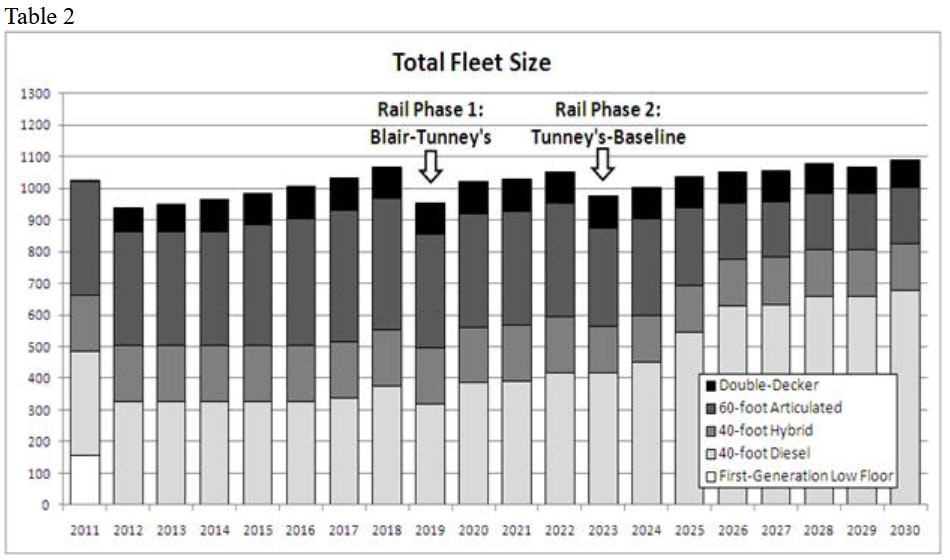
The present fleet size of OC Transpo is 1,025 buses. If LRT proceeds on schedule, according to the Transportation Master Plan, the City will actually reduce the bus fleet in 2017 and 2018. However, in 2019 and 2020, additional buses will be purchased to keep pace with growth. It is expected that by 2020, the City of Ottawa will have approximately 1,300 buses within its fleet.
[
https://app06.ottawa.ca/calendar/ottawa/citycouncil/tc/2009/05-06/ACS2009-ICS-TRA-0005.htm]
There were delays in getting the LRT up and running, of course, but simply added 3-4 years to the estimated timing. Thus, by 2024, based on the projections in 2009, OC Transpo should have had around 1,300 buses.
By 2011, the projected fleet size had shrunk somewhat due to the addition of the double-decker buses. Their higher capacity would reduce the number of buses needed to move the estimated ridership. But by four years after the first phase of the Confederation Line opened, the estimate was still about 1,050 buses.
[
https://app06.ottawa.ca/calendar/ottawa/citycouncil/tc/2011/02-16/03%20-%20Document%202.htm]
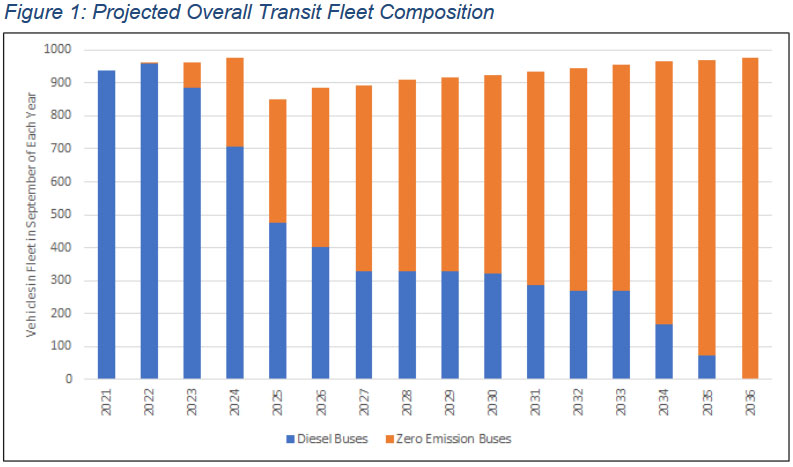
Even by 2021, after the most severe ridership reductions due to CoViD-19, the projection for the size of the required bus fleet was still almost 1,000 buses in 2024.
[
https://pub-ottawa.escribemeetings.com/filestream.ashx?documentid=87677]
OC Transpo tried to minimize costs to meet unrealistic budget restraints. The current fleet has a total of 738 buses, of which, based on ‘Service Availability’ numbers, it is likely that only about 83% (613 buses) are actually available for service. This came about for the 2023 budget. OC Transpo retired 117 older buses to save $4.4M in maintenance costs. At the time, OC Transpo assured the Transit Commission that only 738 buses (of which 615 were to be on the road) would carry all of the, then-current, riders. Ridership ran about 1-1.5 million riders per month higher in 2023 than 2022 when that budget was being formulated, and has picked up another half-million per month in 2024. Thus, there has been a significant increase in ridership since it was determined that 738 buses matched the service need. Anecdotally, the last time I was out on the buses (a couple of Fridays ago), the #85 was so crowded, mid-afternoon, that it left people at stops from Westgate to Carlingwood. The #87 had no spare seats from Carlingwood to Baseline. And the #88 was packed heading west from Baseline.
OC Transpo management went along blindly expecting that the ordered e-buses would be delivered as scheduled. Rule #1 of everything: It always takes longer. (And its corollary: If it didn’t take longer, something was left out.) This was a management failure. A good manager always has something in their back pocket.
There we have it: Political interference rushed the changeover; new products took more time to get manufacturing set up properly – especially with the economic turmoil of a pandemic; penny-pinching to meet imposed (artificially low) budget restraints forced a fast reduction in back-up resources; and optimism about how the plan would play out.
Many saw all of this adding up to become a big problem. Why didn’t Councillors and OC Transpo management see it too.





 Prev
Prev





 Linear Mode
