HomeDiagramsDatabaseMapsForum About
     

Go Back   SkyscraperPage Forum > Regional Sections > Canada


Reply

 
Thread Tools Display Modes
     
     
  #61  
Old Posted Feb 17, 2026, 2:08 PM
Ozabald Ozabald is offline
Registered User
 
Join Date: Oct 2019
Posts: 1,088
Quote:
Originally Posted by Drybrain View Post
This is true, but of course to some degree is a fortunate accident of histoy and geography (much like New West, at a lower tier). i.e., these were independent and fully formed small cities, with meaningful urbanism, clustered around some geographical feature (San Francisco Bay, or the Fraser River) before they were swallowed by the larger metro.

Maybe that's why places like Alberta and Saskatchewan don't really have suburbs of this type at all. Besides the fact of having smaller pre-war populations, the communities are also spread our across the prairie. So there really were never any large or small cities towns within Calgary's orbit, for example, that have turned into suburbs. Today there's Airdrie and Okotoks, but that's about it, and those certainly at the level of New West, let alone Berkeley (obviously).

Atlantic Canada should, on paper, have a similar metro-suburb setup as New England, but I think the issue there is just that population growth hoistorically was too slow for A: small towns adjacent to metro areas to become small cities and B: for the bigger cities to consume them. Even in the Halifax area, there are no major examples of this. Maybe Bedford, which has a tiny historical core, but even that is very, very small. Interesting that the Vancouver metro, despite being settled like 150-200 years later, does have this kind of thing!
Thunder Bay is a unique example. Prior to amalgamation in 1970, they were two separate communities - Port Arthur and Fort William. The separate CBDs of each former city are still very evident today.
Reply With Quote
     
     
  #62  
Old Posted Feb 17, 2026, 5:51 PM
Drybrain Drybrain is offline
Registered User
 
Join Date: Sep 2012
Posts: 4,498
Quote:
Originally Posted by Ozabald View Post
Thunder Bay is a unique example. Prior to amalgamation in 1970, they were two separate communities - Port Arthur and Fort William. The separate CBDs of each former city are still very evident today.
That's interesting, I didn't know that!
Reply With Quote
     
     
  #63  
Old Posted Feb 17, 2026, 5:53 PM
Drybrain Drybrain is offline
Registered User
 
Join Date: Sep 2012
Posts: 4,498
Quote:
Originally Posted by MonctonRad View Post


Well, Dartmouth has a meaningful downtown separate from the urban core of Halifax.
Yeah, but (IMO) the tow downtowns just mash up together into one metropolitan centre, straddling the harbour. I wouldn't really call Dartmouth a suburb (though it largely suburban in character, outside of its downtown).
Reply With Quote
     
     
  #64  
Old Posted Feb 17, 2026, 6:09 PM
someone123's Avatar
someone123 someone123 is online now
hähnchenbrüstfiletstüc
 
Join Date: Nov 2001
Location: Vancouver
Posts: 35,304
Quote:
Originally Posted by Drybrain View Post
This is true, but of course to some degree is a fortunate accident of histoy and geography (much like New West, at a lower tier). i.e., these were independent and fully formed small cities, with meaningful urbanism, clustered around some geographical feature (San Francisco Bay, or the Fraser River) before they were swallowed by the larger metro.
It was a metro area even back around 1900. San Francisco had a huge ferry network going back to the steamship era (that ferry terminal is still a landmark today) and large electric railway network.

Another difference is that there are prominent companies like Apple or Google in SF suburbs that have created a huge amount of wealth and generated lots of features around them to a degree that doesn't exist in Canadian suburbs. Stanford would also be a big outlier in Canada as a private university.

Quote:
Atlantic Canada should, on paper, have a similar metro-suburb setup as New England, but I think the issue there is just that population growth hoistorically was too slow for A: small towns adjacent to metro areas to become small cities and B: for the bigger cities to consume them. Even in the Halifax area, there are no major examples of this. Maybe Bedford, which has a tiny historical core, but even that is very, very small. Interesting that the Vancouver metro, despite being settled like 150-200 years later, does have this kind of thing!
In the early years it wasn't clear where the railway terminus would go. New Westminster is older than Vancouver. It would be like if Halifax were founded but then the port went to Dartmouth or something similar. Then on top of this the Vancouver region experienced explosive growth in the 1900s. That being said, Dartmouth and New West or North Van feel pretty similar. What metro Halifax doesn't have so much is the Metrotown and Richmond type areas.

Another aspect is that so much history in and around Halifax gets lost and torn down, and in a lot of cases it's hard to even find resources about it. For example, MSVU goes back to 1873 and the Rockingham railyard goes far back. In the early 1900s the Rockingham area had passenger rail, some industrial facilities, and the university.
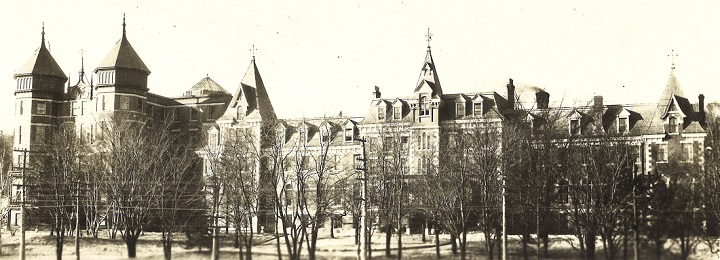

Source


Bedford is somewhat similar. The old parts are nice and it was a small town but it has in some ways declined in the time I've known it even though the area around there has had explosive suburban growth. In the 90s it still had passenger rail service. My impression is that the planning rules there basically require suburban development while there's little to protect heritage buildings.

Another one I can think of is the 5 storey former Simpson's department store by the Northwest Arm that used to have streetcar service and a passenger rail stop. It's been integrated into modern mall construction there and there's nothing to even indicate the building was from the early 1900s, if there's anything left.

Reply With Quote
     
     
  #65  
Old Posted Feb 17, 2026, 6:38 PM
someone123's Avatar
someone123 someone123 is online now
hähnchenbrüstfiletstüc
 
Join Date: Nov 2001
Location: Vancouver
Posts: 35,304
Quote:
Originally Posted by Drybrain View Post
Yeah, but (IMO) the tow downtowns just mash up together into one metropolitan centre, straddling the harbour. I wouldn't really call Dartmouth a suburb (though it largely suburban in character, outside of its downtown).
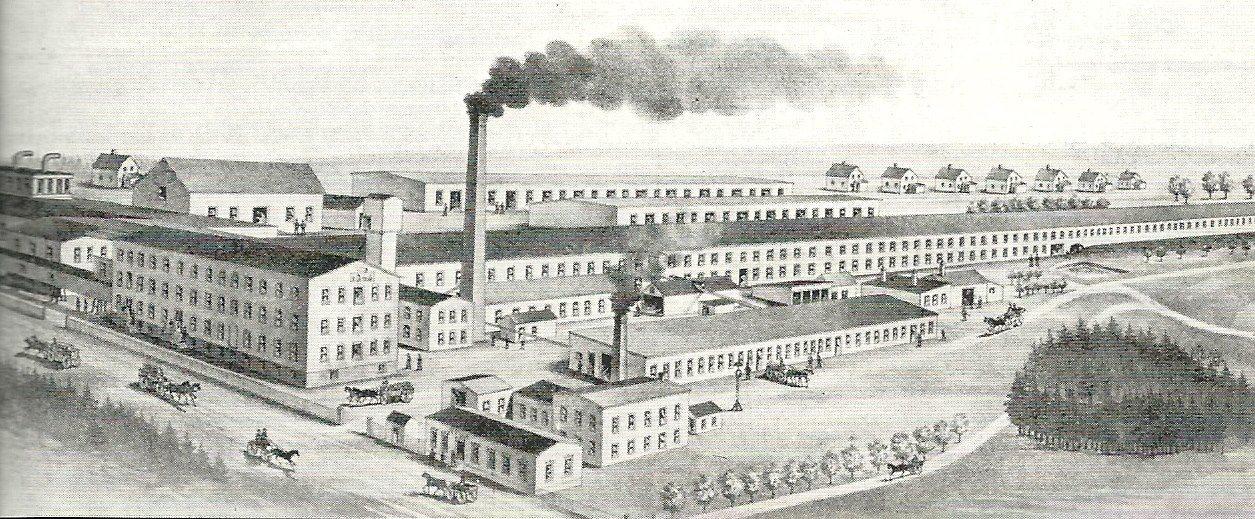
That's pretty recent. Back in the 1950s and earlier, Dartmouth was more like a small town with a ferry connecting it to Halifax, and it had its own industry, like Starr Manufacturing and the marine slips. You can still see bits of it around Canal St although again it's remarkable how much has been wiped out even in living memory.

There was the Old Mill which was the last remaining remnant of the ropeworks, a brick and stone factory building from the 1860s on Wyse Rd. It got torn down for a generic suburban Sobeys. It would have been the 3 storey building in this complex:

Quote:
Originally Posted by OldDartmouthMark View Post
Reply With Quote
     
     
End
 
 
Reply

Go Back   SkyscraperPage Forum > Regional Sections > Canada
Forum Jump


Forum Jump


All times are GMT. The time now is 7:50 AM.

     
SkyscraperPage.com - Privacy Statement - Top

Powered by vBulletin® Version 3.8.7
Copyright ©2000 - 2026, vBulletin Solutions, Inc.