Quote:
Originally Posted by ScreamingViking

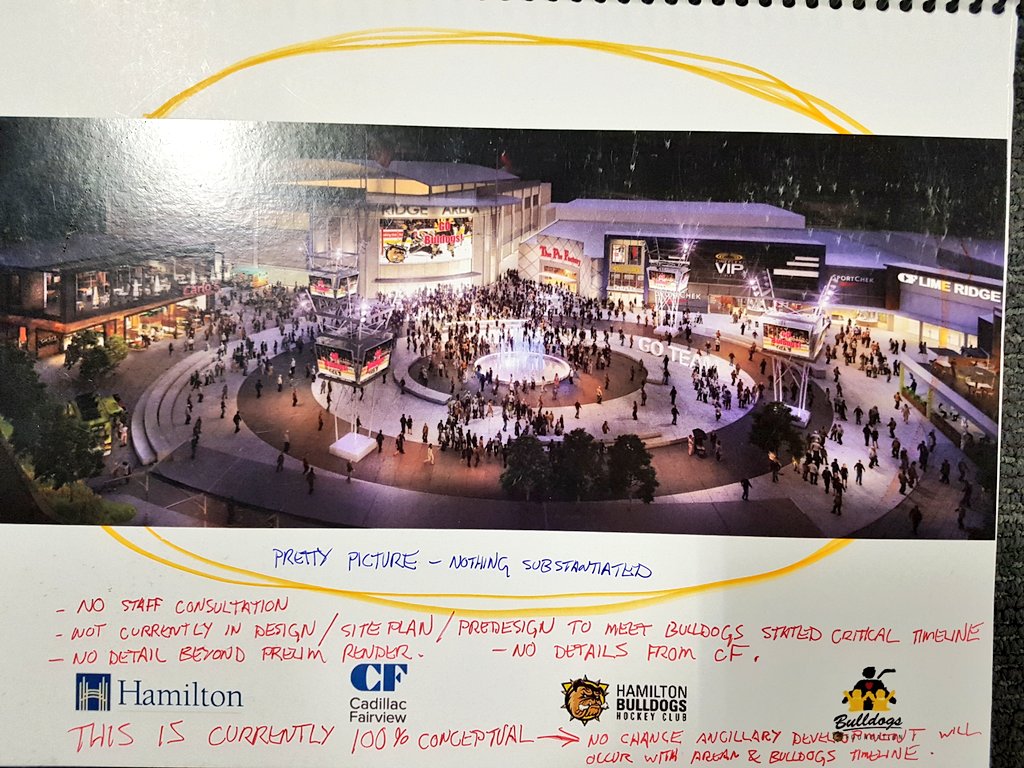
(the scribblings are JP's annotations; he's wearing his heart on his Twitter-sleeve  ... but he's quite right IMO). |
Yes, I should have been more clear about the author of the annotations.
The $54 million, 1,800-cap
parking garage hypothetical is the most far-fetched and least-funded aspect of the proposal:
“Bus transit which could be expanded with new parking garage to include partnership with Metrolinx to provide parking for residents to access West Harbour GO Station which today has only 300 parking spots”
•
West Harbour averages 64 passengers daily, meaning at best, 80% of the station's existing parking spaces are empty.
• Metrolinx built a 1,000-space parking garage in Oakville in conjunction with the federal government. It cost
$41.1M (CAD 2012). Using this per-space metric and applying inflation, an 1,800-space garage would come out at over $83M (CAD 2019).
• What incentive would potential users have to park at LRM, walk to the LRM transit terminal, wait for their bus connection, and ride the HSR 40-some minutes to make their early morning train connection, rather than just drive 15 minutes to West Harbour?
Globe & Mail, April 2018:
It costs up to $40,000 to build one parking spot at a GO train station, and most often, commuters pay nothing to use it. The agency that runs the transit service says this can’t go on.
After expanding parking at a breakneck pace for years, Metrolinx is hoping to slash the number of rail passengers who drive alone to the station by 40 per cent. Parking will be discouraged through price, while access to stations for those coming by foot, transit and bike will be improved. Also, more residential density around stations will be encouraged….
To encourage a change in habits, the agency is hoping to make walking, transit and cycling more attractive.
It’s a multifaceted approach that includes expanding bicycle infrastructure at stations, working with local bus providers to improve service and exploring carpooling and the on-demand transportation service often called micro-transit.
Charging for parking will also be part of it, though the agency seems likely to act gingerly here. GO fares have traditionally been based on a portion of the equivalent cost of driving. Increasing the cost by charging for parking threatens to convince some people simply to drive and many passengers view free parking as a given.





 Prev
Prev











 Linear Mode
