^^^ LOL credibility is key. Comparing one to the other without actually experiencing the other, just to be proven wrong isn't good for your argument.
Don't get me wrong, I hate LAX too and wish the whole thing were torn down and rebuilt, but I think your arguments are a little baseless.
Quote:
Originally Posted by jg6544

i associate lax with the third world and by that, i mean no insult to the third world. When i go to an airport, i don't want hustle and bustle, i want comfort and convenience and i want to get to my gate in the shortest possible time, preferably without a half-mile (or longer) hike. Lax fails in every one of those measures. The "improvements" don't appear to me to be helpful.
|
I really wish people would stop comparing anything in the USA to the actual "third world" because it just tells me that people are clueless to what the third world truly is. I understand its said for dramatic affect but its pretty ridiculous.
"
i don't want Hustle and Bustle"
HAHAHA well sorry LAX is the airport of the second largest city in the nation and is 5-7th (fluctuates) busiest airport in the world and gateway to the Pacific and Asia LOL sorry that its so darn busy

. But feel free to use Burbank(Valley), Ontario(I.E), Long Beach or John Wayne (O.C) since those airports are serving much smaller markets and aren't handling 75 million passengers a year
Quote:
Originally Posted by jg6544
Really? I always seem to have to fly into or out of the far end of Terminal 8, which is quite a hike from security or baggage claim. SFO has that long pier in the United terminal, but it is equipped with moving walkways; so is DIA. But LAX, no.
It's a crappy airport.
|
As I've said before. IF you're really weighing heavily on the fact that an airport doesn't have moving walkways as a make or break on if the airport is good or not, its just ridiculous and sounds like a personal problem. ALL of the terminals, minus TBIT, are literally a 5-10 minute walk from the gate to the street. If you cant manage that walk than maybe its time we get you on a work out regimen. LAX wasn't built like other airports where you can easily have a 30 minute walk from the gate to the street. All of the terminals are right at the street. So that argument is
VOID. AND DIA is MASSIVE, so its expected to have moving walkways since its terminals are literally miles long.
Quote:
Originally Posted by jg6544
SFO, Seattle, Vancouver, DIA, the old Stapleton, DFW, the old Love Field, IAH, ORD, Atlanta, JFK, La Guardia, Newark, Boston, Dulles, National, West Palm Beach, Austin, Tampa, Pittsburgh, Cleveland, Columbus, Kansas City, St. Louis. And that's just in this country.
On that list, the closest ones to LAX in ambience are La Guardia and Newark.
Next?
|
Merely naming off airports doesn't help your argument. If anything, it makes people question your credibility. And regurgitating comparisons to La Guardia and Newark is questionable as well since everyone claims those as the worst in the nation so those being horrible are common knowledge and saying "well ive been to those" well hell they are talked about so much, feels like we've all been through those haha.
Quote:
Originally Posted by jg6544
I confess, I fly United or Alaska; mostly United. The United terminals at LAX could be straight out of Calcutta. The San Francisco terminal is great and, as I said, if my flight lands on the long pier, I just step onto the moving sidewalk and relax.
DIA is the best airport I have ever seen. It actually makes flying a pleasure.
|
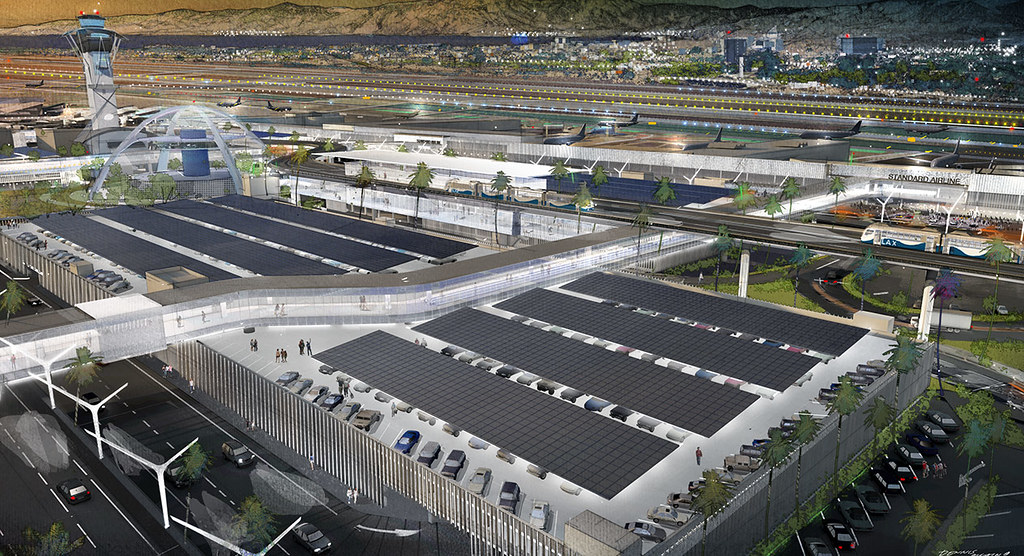
Again, comparing LAX to Calcutta when Calcutta is actually pretty new and modern makes people question your credibility. Comparing LAX, one of the oldest in the nation, to Denver international, one of the newest (if not the newest) is ridiculous. Give credit when its due. LAX is making improvements. Not nearly fast enough and not nearly as grand as they should be but its not horrible.
Again, I'm not here in Defense of LAX, I despise LAX and its lack of cohesiveness, I think the entire thing should have been torn down segment by segment and reconfigured but as always we do everything half assed. But I just hate when people try to make an argument that's not even skin deep. Not looking at the bigger picture. as I said, give credit when its due.





 Prev
Prev
















 Hybrid Mode