Quote:
Originally Posted by CaliNative

It depends on the economy
|
It depends mainly on that.
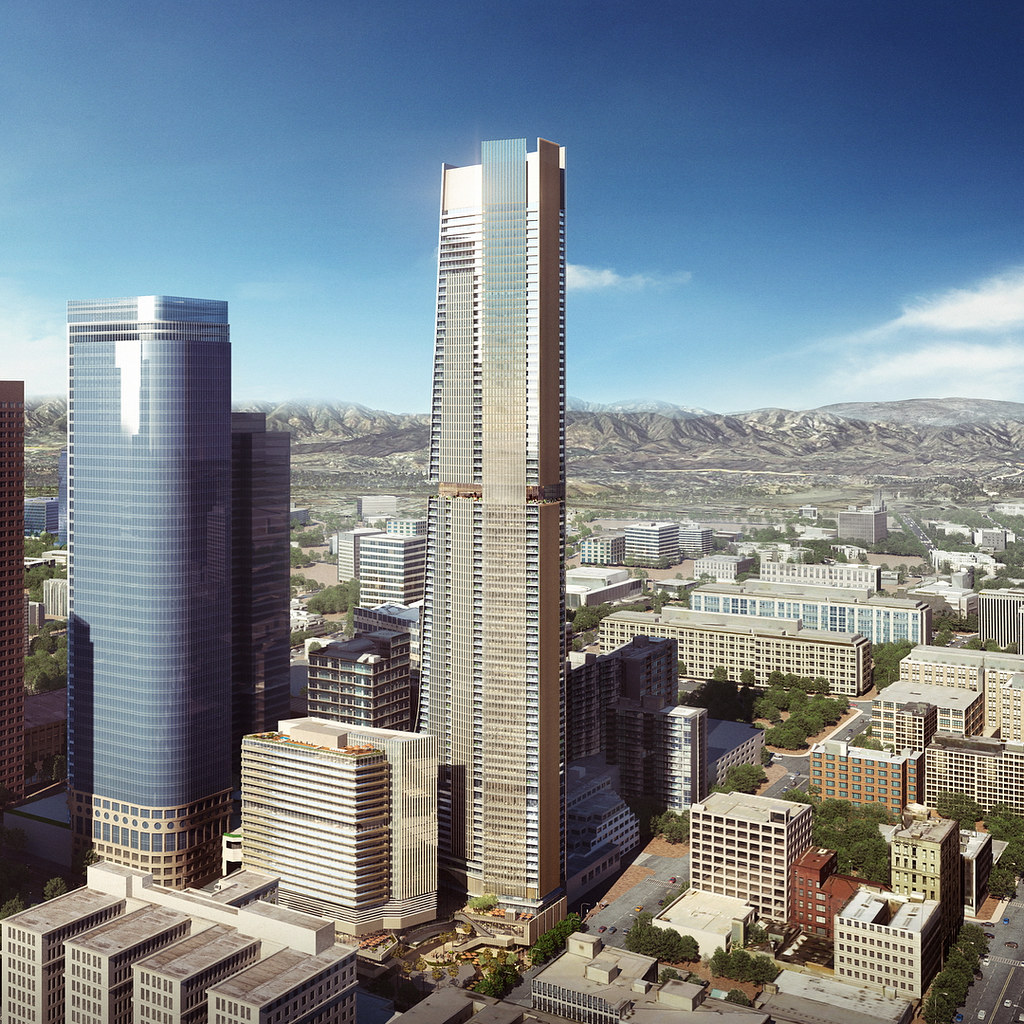
if dt hadn't been struggling with so much vacant office space for over 25 yrs....if not longer....highrise devlpt would have been an easier sell during all that time & still today.

Filling up unused space in dt has been a more difficult task since what is described in this article didn't become evident until the past few yrs. The slowness in reaching today's point is why so many ppl in LA have traditionally favored living & working in hoods far away from dt.
silicon bch...with big space takers like google, yahoo, youtube....might have been as likely in dtla instead of samo, venice & playa del rey if dt had been more substantially improved over 20 yrs ago.
But better late than never.
Quote:
Fifteen Years in the Making, How Downtown L.A. Finally Arrived
By Mary Holland
January 5, 2018
“When I was growing up, I would tell people to get out of Downtown L.A. by 6 or 7 p.m.—it wasn’t safe,” my Uber driver told me as we wrapped around the Hollywood Freeway before making a turn onto West 4th Street. I looked down at my watch. It was about 7 p.m., and I was heading into the once-verboten neighborhood—now the city’s nexus for great restaurants and hip hotels.
The emergence of Downtown Los Angeles, dubbed DTLA, is no news flash: The area has been on the rise since the late 1990s. But that was the start of a long uphill climb. By 2009, it had already undergone the transition from bleak badlands to vibrant cultural mecca, thanks to early pioneers like the L.A. Live entertainment complex and the Standard Hotel. Since then, a slew of new hotels, restaurants, and museums have joined, and the neighborhood is showing no sign of slowing down.
“I don’t think it would be inaccurate to say that 15 years ago, it was an urban wasteland,” said real estate developer Tom Gilmore, referring to DTLA. An architect by trade, Gilmore almost single-handedly spearheaded the inner city’s rejuvenation. He first took note of DTLA’s architectural stock in the early ’90s: The inner city was a ghost town with potential, brimming with abandoned beaux arts and art deco buildings.
The neighborhood’s highest-profile opening yet, the NoMad, is coming this month to the historic Giannini Place building. After standing empty for 17 years, it’ll now have 241 Italian-inspired rooms designed by Jacques Garcia, a library, a rooftop pool, and a restaurant by Daniel Humm and Will Guidara (of New York City’s Eleven Madison Park). A Soho House is reportedly on its way, too, this summer.
To Gilmore, these are the brightest signs yet of the neighborhood’s arrival. “When a tastemaker brand like the NoMad comes in, you realize that whole block is going to change because of them, and you know that the bump from that is going to be significant,” he said.
For all its progress, DTLA is far from finished. Gilmore, for one, says the area is only halfway there. There are major projects still under way: the renovation of Pershing Square and the addition of the Regional Connector Rail, part of a $1.7 billion high-speed rail project that will link a trio of lines (it’s expected to be completed in 2021).
“I think the reason that it’s an important moment for Downtown right now is that people from other cities are beginning to take notice on a level that is more than just mild curiosity. The idea that Los Angeles is a viable alternative for the creative class and for the entrepreneurial population around the country—that’s new,” he said.
|
it wasn't too long ago when the subject of these vids would have been thought impossible or unrealistic.....
• Video Link
• Video Link





 Prev
Prev




 I don't like New Year's Eve. It's not spontaneous enough. Everything is expected in New Year's Eve.




 Linear Mode
