I have been looking forward to the Frontlines for BRT. I know there are 4 or 5 lines in SL County alone (not counting the SLC to Centerville BRT line).
That on top of the expansion of normal bus routes and frequency will greatly change the transit dynamic along the Wasatch Front.
To many people see things either as they are now or as they were before Trax and can't see even a few years in the future to look at what we will have once these projects are completed.
SL County in particular has some of the best transit coverage in the Country. As we increase frequency and service, this will expand outwards and will change from transit coverage to transit options.
By this I mean a bus going by hourly is coverage, a bus going by every 15 minutes or less is a transit option.
And to think we are either 1 small tax increase (either 2015/2016) for faster delivery or 25 years away (with current funding).
This also equates to a slow 3 to 5% year over year transit ridership increase (current funding) or 25 to 50% year over year transit ridership increase (tax increase).
I know I may show my bias but I, my family, and my friends will all be voting for the increase whenever it comes up for a vote. There isn't a better way to clear the air than to reduce driving and we need better transit options for that to happen.
Also, I really want to see ridership for Trax top 100k and bus top 150k daily riders faster than waiting 20 years. If the tax passes and UTA manages to hit their 2020 goal on ridership, Trax and bus service would both top 125K daily riders. Bus service I would expect to go higher but UTA's goal is only to double the existing ridership levels.
Frontrunner would be over 30K as well.
That would put us in a different league for transit ridership. Especially without or with minimal Trax rail expansion (streetcar and 4th south extension being the possible exceptions).
Lastly, we are between 3 and 4% transit usage per capita. Doubling ridership will push us closer to 8% if not higher due to expanded routes.
Also from the following:
http://fivethirtyeight.com/datalab/how-your-citys-public-transit-stacks-up/
If we double, we would go from 42.2 trips per capita to 84.4 trips per capita which would put us at #9. I think we would be lower though and closer to 60 trips per capita which would put us at #13 ahead of Portland and behind Seattle. But only time will tell where we end up on the list and of course how fast we move up.





 Prev
Prev






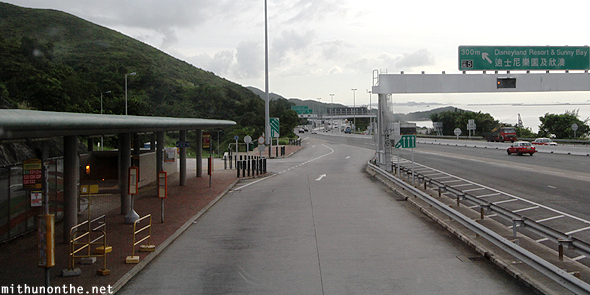 Bus stop on a highway via special bus on/off-ramps, in Hong Kong (left hand drive)


 Linear Mode
