I think that the 401 will remain in concrete. From the looks of the concrete itself, it looks as if it has been finished as a driving surface. Further, the paved asphalt shoulders appear flush to the concrete barriers. I don't think the shoulders would be like that if they were going to pave the concrete immediately.
Michigan has vastly, vastly improved its concrete highway network. They use this technique where the concrete is grooved transversely as apposed to the longitudinal way that Ontario typically does it. It creates a way, way better driving surface. Quebec does this now too, and Ontario has experimented with it. You can see transverse groves on the concrete section of the 402 on the video through Sarnia that you posted a while back.
This is transverse grooving (Whisper grooving) on a highway in Michigan:
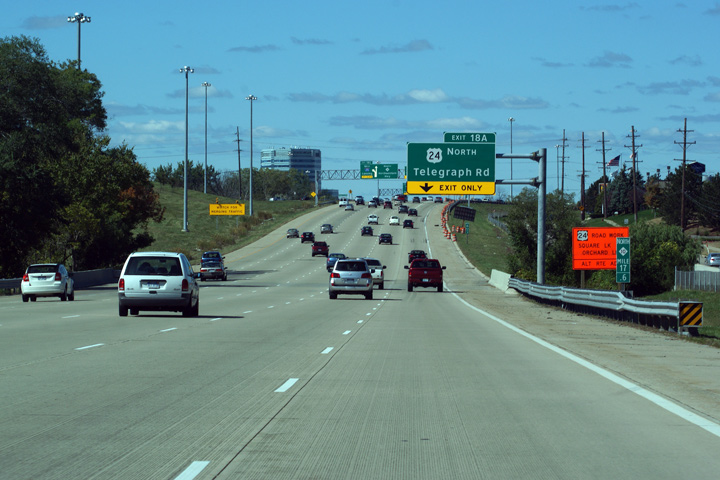
This is how Ontario normally finish its concrete (I am looking perpendicular to traffic flow):

(This is actually from the new lanes of the 401)
I would expect that the 407 will be surfaced within the next decade, with the section between the 427 and 404 probably paved sooner than that. The concrete was probably designed to get paved between the 20 to 30 year mark similar to the work ongoing on the 427 right now. I am guessing it will be the same for the new section of the 401 through Mississauga.
@ Jeremy, I don't think that the express/collector (complex) setup works well with an HOV lane. In a complex freeway, the HOV lane is coming at the cost of the passing lane. That isn't the case in a simple freeway.





 Prev
Prev





 Linear Mode
