Quote:
Originally Posted by Leo the Dog

Lack of housing isn't the problem, it's lack of demand for housing. While DT has managed to fill a couple building with renters, the suburbs (including other the suburban Phx neighborhoods) have built 10s of thousands of housing units. There have been some recent successes in new developments DT, which is awesome, but If there was high demand, Garfield would be THE big city vibrant place to live. There wouldn't be any dusty lots and prices would be in the 500k - 1m range. Just look at a satellite image of the area within the freeways.
DT Phoenix and the immediate neighborhoods around it has some of the lowest population density census tracts. One could argue that it is our man-made creations in combination with nothing of geographical significance that have made DT less desirable. UHI, traffic, huge roads, super blocks/dead zones, sky harbor, freeways an so on.
|
I disagree for a few reasons:
1) Anytime a new residential component is constructed it fills up faster than any suburban apartment complex. Apartments in suburban markets have more vacancies than downtown, some markets significantly more. The same is true for suburban office and housing markets as opposed to the downtown market, including the historic districts. Suburbs and exurbs were harder hit by the recession with more bankruptcies, foreclosures, and vacant homes. Downtown does not have more huge roads or any more freeways than the suburbs which aren't harmed by having huge freeways and arterial streets. Sky Harbor really has no bearing on development in the residential neighborhoods in and around downtown, especially to the north.
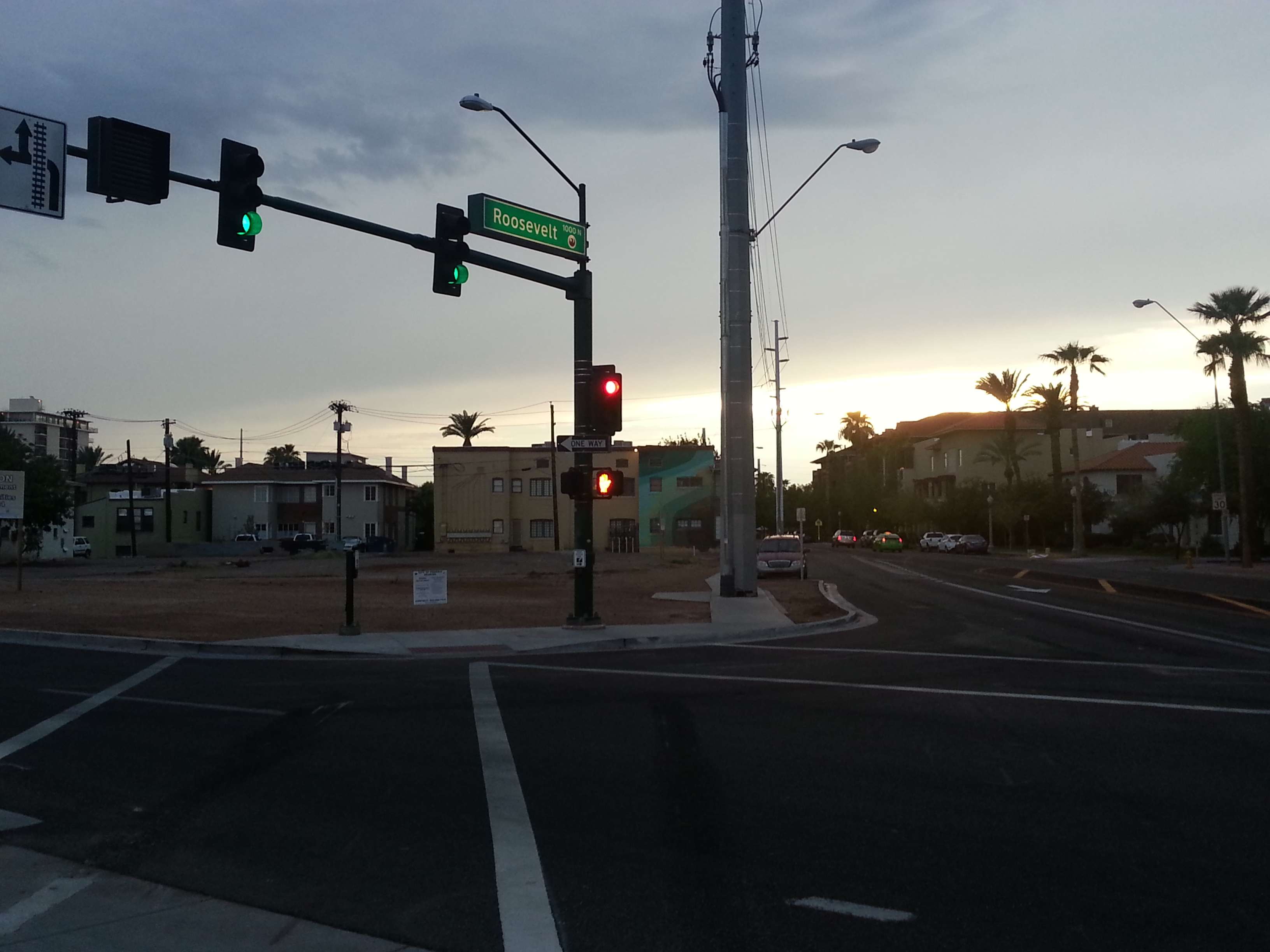
2) Garfield isn't a downtown neighborhood. Garfield is, however, full or small apartment buildings and single family homes. Garfield doesn't give off "THE big city vibrancy" that areas in Roosevelt and Evans-Churchill provide. Garfield is also growing and becoming ever more densely populated especially with more urban-minded artists and neighborhood pioneers. That includes many of the long-time Latino residents who are embracing the changes and influencing the culture of the neighborhood.
Downtown was less desirable in the decades before 2010, not because of the lack of natural features, but because of the expense relative to cheaper land in the exurbs. AND a bad reputation that has only recently changed in the minds of suburbanites and new arrivals. Also, the Sun Belt traditionally attracted those concerned with size of home instead of urbanity. All that is beginning to change, little by little.
3) The smallest Phoenix Council Districts and Census Tracts—in terms of land—include downtown and the Central City. The smallest council district is 4 which includes portions of midtown and downtown starting around I-10.
http://phoenix.gov/cityclerk/services/electinfo/whatsmydistrict/index.html
Even though NE and NW Phoenix have seen "tens of thousands" of new home builds, in order to meet the 180,000 population threshold those suburban districts have to be many times larger. Even District 6, which includes Ahwatukee, is much larger (2 or 3 times the size) than D4 which is basically the Central City district. Whole cities like Chandler (58 square miles) and Gilbert (76 square miles) have only slightly more total populations than District 4. Population densities are highest in certain Maryvale and Alhambra census tracts closest to downtown/Central City (up to 17,000/square mile), but downtown and midtown have higher densities than any suburban city.
For one, downtown which is only 1 to just under 1.5 square miles has about 10-12,000 residents. That alone makes it more densely populated than any city or suburban city (even Tempe) in Arizona ... for that matter, in the Southwest. 20,124 people, as of the 2010 census, live within a 1 mile radius of First Street and Washington; this despite super blocks, rail yards, financial/county/state districts, large parks, vacant lots, etc.. A one mile radius is approximately 3 square miles; therefore, there were ≈6,708/sq mile in neighborhoods around downtown in 2010.
Here you will find countless reports on downtown demographics:
http://www.downtownphoenix.com/business/toolbox/reports/search?x=18&y=14





 Prev
Prev







 Linear Mode
