Pardon me it's not a skyscraper, but it's architecure for the people. I've lived in London all my life and this is a fantastic idea. Great for the city and great for the people.
http://www.timesonline.co.uk/tol/new...cle6211498.ece
BORIS JOHNSON wants to create a new bridge across the Thames lined with shops and houses in the manner of the old London Bridge that was torn down 178 years ago.
The London mayor has likened the scheme to creating a 21st-century equivalent of the Ponte Vecchio – the medieval bridge spanning the Arno River in Florence.
The plan is one of a series of high-profile projects being considered by Johnson aimed at revamping London’s image in the wake of the recession, say advisers.
Early plans being drawn up by Anthony Brown, Johnson’s policy director, are being modelled on designs by Antoine Grumbach, the French architect who won a competition to design a habitable bridge held by the Royal Academy in 1996.
The revived project, which is being backed by the business group London First, envisages a pedestrian crossing lined with shops, cafes and homes running from the north side of the river between Waterloo and Blackfriars bridges to the South Bank complex of museums and theatres.
Grumbach’s designs show the bridge would be suspended from twin 35-storey towers on the north side, containing luxury flats with views over the city. On the south side, a vast greenhouse over the Thames would contain tropical trees and plants.
The medieval London Bridge, completed in 1209 in the reign of King John, was a dense warren of houses and shops supported by 19 small arches. The close-packed wooden buildings proved a major fire hazard and the bridge was demolished and rebuilt several times.
Encroaching development meant the central thoroughfare became so congested that crossings could take more than an hour. Finally, under an Act of Parliament in 1756, orders were given to demolish all the buildings on the bridge.
King John had permitted the building of the shops on the bridge to raise revenue to pay for its upkeep; Boris Johnson believes that the estimated £80m cost of the new scheme can also be met by the sale of its properties.
Speaking to LBC radio last week, Johnson said he aimed to create a bridge “that will once again provide a commercial zone . . . a bridge that actually has residential and commercial property on it, as the old London Bridge did”.
He said the bridge was one of a series of initiatives he is pursuing aimed at “changing the look and feel of London greatly for the better”. The Sunday Times has obtained early drafts of Johnson’s proposed designs.
The idea of a new London Bridge – or living bridge – was first proposed in 1995 by the then Conservative environment secretary, John Gummer, who suggested there was scope for another river crossing in central London.
In 1996 the Royal Academy held a competition for designs, with judges shortlisting two submissions – by Grumbach and Zaha Hadid, the designer of the Aquatics Centre for London’s Olympic Park. Grumbach’s bridge won the popular vote and a study by KPMG showed that it could be built at no cost to the public purse.
A developer was lined up to build it but English Heritage opposed the project, claiming it threatened to damage views of the Thames. After Labour won the election in 1997 the project was dropped.
A spokesman for London First said the organisation hoped renewed interest in the scheme would capture the imagination of people around the world.
“In the 1990s we wanted to build the bridge as a way of putting London on the world map in architectural terms,” said Graham Capper, director of communications at London First.
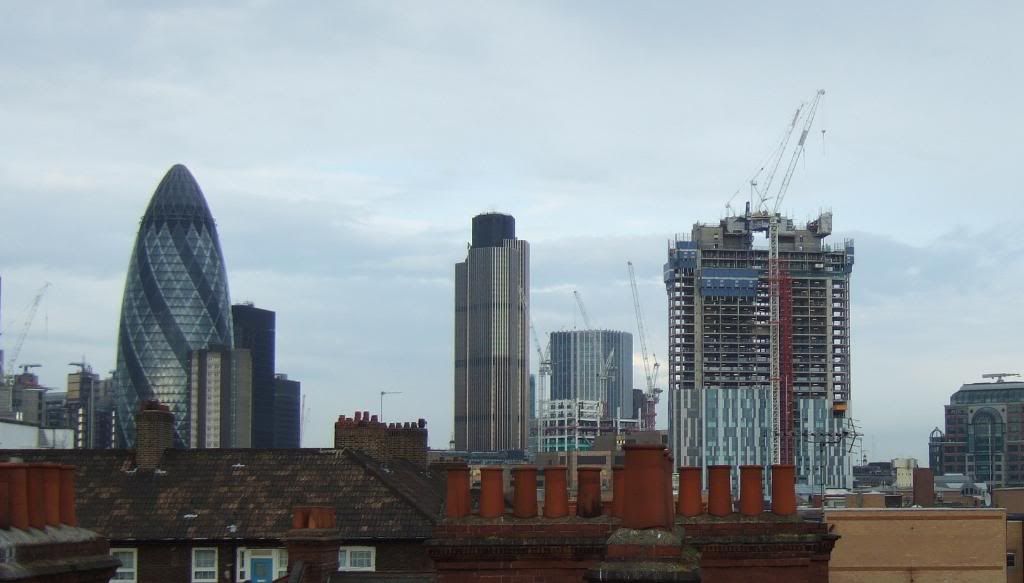
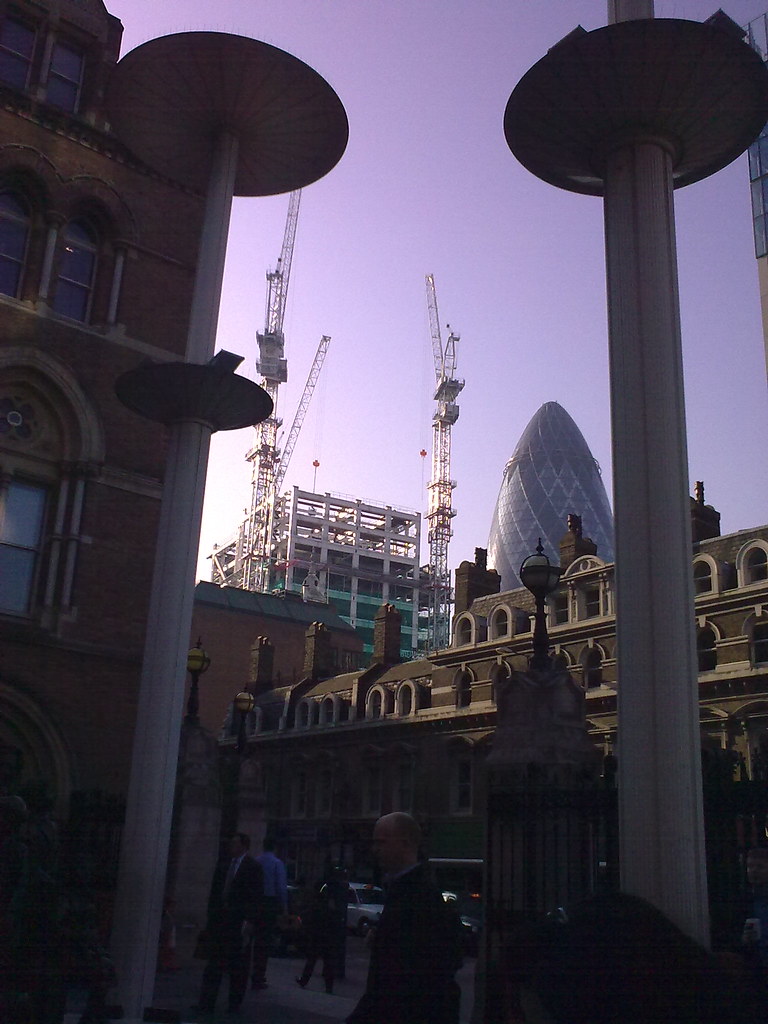
“Today the bridge would be one of those icons – like the Gherkin and the London Eye – that signals the city’s brave, bold, cosmopolitan energy.
“In the current economic climate, doing something iconic is something to aspire to, rather than practically plan for; but this is the kind of thing London should be looking at and we’re certainly interested in working with the mayor to examine the proposals.”
Supporters point out that conspicuous developments right in the heart of the city can work: the London Eye, for example, built as part of the millennium celebrations, and overlooking the Thames, has proved a great tourist attraction.
The world’s few “living bridges” are icons for their locations. They include the Ponte Vecchio; the Rialto Bridge in Venice; and the lesser known Pulteney Bridge over the River Avon in Bath.
Johnson is the latest in a series of leaders who have sought to transform the once polluted Thames into a focal point. He also wants to introduce regular ferry services for commuters and to span the river with a cable-car service.
Despite his limited powers, he is backing The Sunday Times’ proposal for a new international airport in the Thames Estuary and has touted the idea of raising London’s web of “lost” rivers.
Long-term vision is needed if London is not to be outdone by other capitals, say Johnson’s supporters. Last week President Nicolas Sarkozy outlined ambitious plans to transform Paris’s rundown suburbs. His vision of Grand Paris encompasses artificial islands in the Seine, an orbital monorail and enormous new urban forests.
Peter Murray, chairman of New London Architecture, who organised the original exhibition in 1996, said that Johnson’s more piecemeal approach was better suited to the spirit of London: “We’re not a grand plan city. The only grand plan that has ever worked is the Nash route from Regent’s Park to the Mall. Resurrecting the old London Bridge is a good idea.”





 Prev
Prev












 Linear Mode
