HomeDiagramsDatabaseMapsForum About
     

Go Back   SkyscraperPage Forum > Discussion Forums > City Discussions


Reply

 
Thread Tools Display Modes
     
     
  #21  
Old Posted Jan 18, 2014, 9:15 PM
chris08876's Avatar
chris08876 chris08876 is online now
NYC/NJ/Miami-Dade
 
Join Date: Jul 2013
Location: Great State of NJ
Posts: 49,355
Quote:
Originally Posted by The North One View Post
Wasn't Rome the densest place that ever existed? Like not even modern cities of today are as dense as Rome was.
Are we defining density as people per square mile/km or structural density?
Reply With Quote
     
     
  #22  
Old Posted Jan 18, 2014, 10:23 PM
nei nei is offline
Registered User
 
Join Date: Apr 2012
Posts: 515
Quote:
Originally Posted by chris08876 View Post
http://farm9.staticflickr.com/8453/8048176356_105d2f4da1.jpg

^^^^^
Its kinda like Washington DC on steroids
Barcelona is close to NYC/Manhattan in residential density, despite the lack of high rises.
Reply With Quote
     
     
  #23  
Old Posted Jan 18, 2014, 11:16 PM
MonkeyRonin's Avatar
MonkeyRonin MonkeyRonin is offline
¥ ¥ ¥
 
Join Date: Sep 2006
Location: Vancouver
Posts: 10,594
Quote:
Originally Posted by The North One View Post
Wasn't Rome the densest place that ever existed? Like not even modern cities of today are as dense as Rome was.

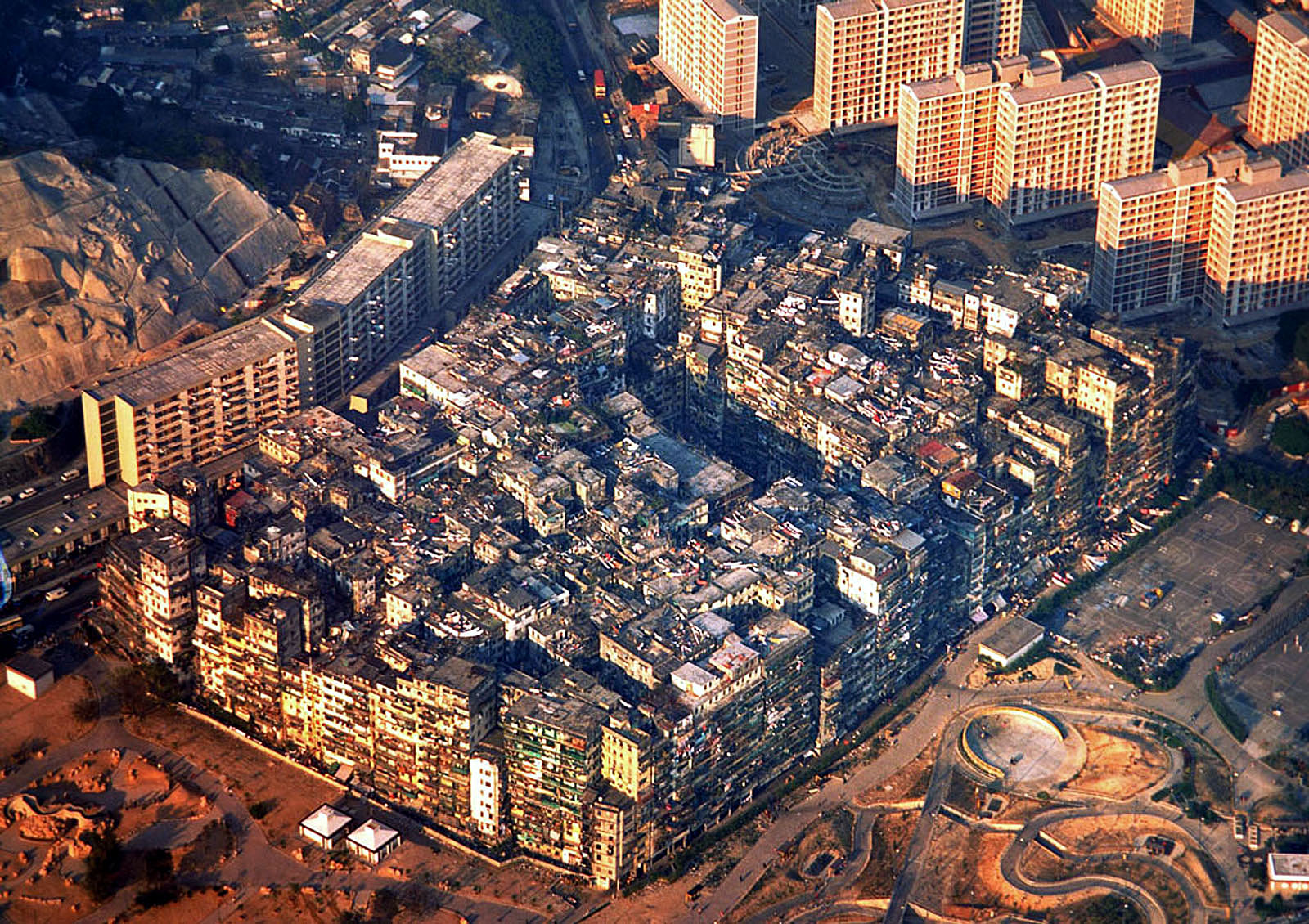
Rome's population peaked at an estimated 1-1.2 million by 200 AD, and with an area of approximately 10 sqkm would have given it a density of up to 100,000-120,000 people/sqkm (in reality it probably would have been lower as those numbers most likely included people in outlying areas). This would be denser than any modern municipality, however, there are several districts of modern cities that are denser than that, like the Mongkok neighbourhood in Hong Kong with 130,000 people/sqkm or Mumbai's Dharavi slum with a density estimated at anywhere from 140,000/sqkm to 460,000/sqkm (300,000-1,000,000 people in a little over 2 sqkm). But the most densely populated settlement of all time would undoubtedly have been Kowloon Walled City, with a density of as high as 1,300,000 people/sqkm in the 1980s.

__________________
Reply With Quote
     
     
  #24  
Old Posted Jan 18, 2014, 11:23 PM
MonkeyRonin's Avatar
MonkeyRonin MonkeyRonin is offline
¥ ¥ ¥
 
Join Date: Sep 2006
Location: Vancouver
Posts: 10,594
Quote:
Originally Posted by nei View Post
Barcelona is close to NYC/Manhattan in residential density, despite the lack of high rises.

There are over a thousand high-rises (1,098 to be exact, according to Emporis, not including U/C & proposed) in Barcelona's metro. It lacks skyscrapers, but not high-rises.
__________________
Reply With Quote
     
     
  #25  
Old Posted Jan 19, 2014, 12:52 AM
MonkeyRonin's Avatar
MonkeyRonin MonkeyRonin is offline
¥ ¥ ¥
 
Join Date: Sep 2006
Location: Vancouver
Posts: 10,594
Quote:
Originally Posted by memph View Post

Wow, that's some serious density (also, Chinese streetview, awesome!). Do Shanghai or Beijing (or any other mainland Chinese city) even have anything like that? The only other place where I've seen development that is both that tall and that tightly packed is in Hong Kong.
__________________
Reply With Quote
     
     
  #26  
Old Posted Jan 19, 2014, 1:15 AM
memph memph is offline
Registered User
 
Join Date: Dec 2010
Posts: 1,855
Quote:
Originally Posted by MonkeyRonin View Post
Wow, that's some serious density (also, Chinese streetview, awesome!). Do Shanghai or Beijing (or any other mainland Chinese city) even have anything like that? The only other place where I've seen development that is both that tall and that tightly packed is in Hong Kong.
I don't think so, maybe taller but less tightly packed, but even then, I'm not sure if the overall structural density is as high.

This complex in Shenzhen is even denser.
http://map.qq.com/#pano=10041003111101123642568&heading=229&pitch=-20&zoom=1

Industrial areas are quite dense too, though not as crazy as Hong Kong's.
http://map.qq.com/#pano=10041003111005114344425&heading=255&pitch=-15&zoom=1
Reply With Quote
     
     
  #27  
Old Posted Jan 19, 2014, 3:29 AM
JonathanGRR JonathanGRR is offline
Registered User
 
Join Date: Oct 2012
Location: London
Posts: 364
Many more of those types of places used to exist in Chinese places, but many of them have been (or are being) demolished to make way for larger roads, public plazas, newer high-rises, or simply because they appear unsightly.
Reply With Quote
     
     
  #28  
Old Posted Jan 19, 2014, 4:00 AM
MolsonExport's Avatar
MolsonExport MolsonExport is offline
Pass me the Vomit Bag.
 
Join Date: Oct 2003
Location: Otisburgh
Posts: 50,940
Quote:
Originally Posted by The North One View Post
Wasn't Rome the densest place that ever existed? Like not even modern cities of today are as dense as Rome was.
The densest place that ever existed, most agree, is the Walled City of Kowloon with 1,900,000 inhabitants per square kilometer (compared to 44,000 per km/sq for Hong Kong, itself one of the most dense cities on the planet)
http://forum.skyscraperpage.com/showpost.php?p=935528&postcount=1.


never in its history did Rome come close to the WCK.
__________________
The whole problem with the world is that fools and fanatics are always so certain of themselves, and wiser people so full of doubts. (Bertrand Russell). Sweet Loretta fart thought she was a cleaner, but she was a frying pan. (John Lennon)

Last edited by MolsonExport; Jan 19, 2014 at 4:20 AM.
Reply With Quote
     
     
  #29  
Old Posted Jan 19, 2014, 5:17 AM
Mr Roboto Mr Roboto is offline
Registered User
 
Join Date: Mar 2006
Location: Chi 60616
Posts: 3,573
That walled city of Kowloon basically looked like a human anthill. Its really quite disturbing, but fascinating at the same time. I wonder how the quality of life was for its residents. (Clearly there was much higher poverty and violence in other parts of the world, but still).
Reply With Quote
     
     
  #30  
Old Posted Jan 19, 2014, 2:05 PM
memph memph is offline
Registered User
 
Join Date: Dec 2010
Posts: 1,855
But maybe Rome was the densest urban area that ever existed, it sounds like it would have been denser than Hong Kong at 44,000/km2.
Reply With Quote
     
     
  #31  
Old Posted Jan 19, 2014, 2:37 PM
chris08876's Avatar
chris08876 chris08876 is online now
NYC/NJ/Miami-Dade
 
Join Date: Jul 2013
Location: Great State of NJ
Posts: 49,355
Quote:
Originally Posted by memph View Post
I don't think so, maybe taller but less tightly packed, but even then, I'm not sure if the overall structural density is as high.

This complex in Shenzhen is even denser.
http://map.qq.com/#pano=10041003111101123642568&heading=229&pitch=-20&zoom=1

Industrial areas are quite dense too, though not as crazy as Hong Kong's.
http://map.qq.com/#pano=10041003111005114344425&heading=255&pitch=-15&zoom=1
Is this the Chinese Google Earth? I tried using it, ran a little slow but its cool as it has cities not mentioned in Google earth street view. Are there other services that offer a street view like service besides Google earth and bing maps?
Reply With Quote
     
     
  #32  
Old Posted Jan 19, 2014, 4:18 PM
Minato Ku's Avatar
Minato Ku Minato Ku is offline
Tokyo and Paris fan
 
Join Date: Jul 2006
Location: Paris, Montrouge
Posts: 4,304
Quote:
Originally Posted by The North One View Post
Wasn't Rome the densest place that ever existed? Like not even modern cities of today are as dense as Rome was.
I don't think so but it is obvious that the big cities in the ancient time were very dense.
Foot was pretty much the only mean of moving for the average people, so, they couldn't move efficiently on large distance.
It means that cities could not spread on a big area.
Reply With Quote
     
     
  #33  
Old Posted Jan 27, 2014, 7:10 PM
New Brisavoine New Brisavoine is offline
Registered User
 
Join Date: Nov 2007
Posts: 4,837
The 15 most densely populated communes/arrondissements in the Paris Region at the 2011 French census (whose results were published earlier this month):
- 11th arrondissement of Paris: 42,138 inh. per km² (109,137 inh. per mi²)
- 18th arrondissement of Paris: 33,798 inh. per km² (87,537 inh. per mi²)
- 20th arrondissement of Paris: 33,117 inh. per km² (85,774 inh. per mi²)
- 10th arrondissement of Paris: 32,535 inh. per km² (84,266 inh. per mi²)
- 3rd arrondissement of Paris: 30,872 inh. per km² (79,958 inh. per mi²)
- 17th arrondissement of Paris: 30,013 inh. per km² (77,733 inh. per mi²)
- 15th arrondissement of Paris: 28,113 inh. per km² (72,811 inh. per mi²)
- 9th arrondissement of Paris: 27,578 inh. per km² (71,427 inh. per mi²)
- 19th arrondissement of Paris: 27,406 inh. per km² (70,982 inh. per mi²)
- Levallois-Perret: 26,817 inh. per km² (69,456 inh. per mi²)
- Le Pré-Saint-Gervais: 25,821 inh. per km² (66,877 inh. per mi²)
- 13th arrondissement of Paris: 25,631 inh. per km² (66,383 inh. per mi²)
- Vincennes: 25,471 inh. per km² (65,969 inh. per mi²)
- 14th arrondissement of Paris: 24,879 inh. per km² (64,436 inh. per mi²)
- Saint-Mandé: 24,230 inh. per km² (62,757 inh. per mi²)
__________________
New Axa – New Brisavoine
Reply With Quote
     
     
  #34  
Old Posted Jan 28, 2014, 1:29 AM
Ch.G, Ch.G's Avatar
Ch.G, Ch.G Ch.G, Ch.G is offline
Registered User
 
Join Date: Jul 2007
Posts: 3,128
Quote:
Originally Posted by Crawford View Post
There already is. Sao Paolo has far more highrises than Shanghai.

And NYC and Hong Kong have far more skyscrapers than Shanghai.

But Shanghai might have the biggest concentration both highrises and skyscrapers, in that it's near the top in both measurements.
The thing that NYC has going for it which Shanghai doesn't is that its tall buildings are built wall-to-wall—like, if you took an old European city and extruded everything up. Shanghai simply isn't the same; its tall buildings are more cushioned by open space (relative to Manhattan, anyway).
Reply With Quote
     
     
  #35  
Old Posted Jan 28, 2014, 1:34 AM
babybackribs2314 babybackribs2314 is offline
Registered User
 
Join Date: Apr 2006
Location: UWS, Manhattan
Posts: 1,726
Quote:
Originally Posted by Ch.G, Ch.G View Post
The thing that NYC has going for it which Shanghai doesn't is that its tall buildings are built wall-to-wall—like, if you took an old European city and extruded everything up. Shanghai simply isn't the same; its tall buildings are more cushioned by open space (relative to Manhattan, anyway).
The coming boom will boost NYC's number of supertalls well above Shanghai's. By 2018, Shanghai will have 8 supertalls (per SSP diagrams); New York will have 16.

In a modern city that doesn't employ slaves (not Shanghai -- the ones in the Middle East & India), that is going to be by far the most impressive vertical extrusion. NYC's dominance will be even greater if one were to reduce the threshold to ~800 feet.
Reply With Quote
     
     
  #36  
Old Posted Feb 2, 2014, 1:18 AM
Gava Gava is offline
Registered User
 
Join Date: Feb 2007
Posts: 133
Ancient Rome definitely qualifies as one of the densest cities ever built, and it probably had the highest living density any city ever had. The majority of the population lived in apartment blocks 5-6 stories tall, tightly packed with only narrow allies in between them, each building housing hundreds of people, and the apartments were basically singular rooms packed with people, all people did in those buildings were sleeping.

I would not be surprised if the density of people living in those buildings were close to 1 person per sq meter of gross floor area. There were no kitchens, no bathrooms, no livingrooms, no wardrobes no nothing, only people sleeping on the floor. Ancient Rome probably reached densities never seen in any other city anywhere on earth before or after, and it was only possible because they had the infrastructure to deal with it, the water delivery and waste disposal infrastructure was the most sofisticated seen in any city on earth before the 20th century.

Last edited by Gava; Feb 2, 2014 at 1:30 AM.
Reply With Quote
     
     
  #37  
Old Posted Feb 2, 2014, 1:33 AM
memph memph is offline
Registered User
 
Join Date: Dec 2010
Posts: 1,855
Quote:
Originally Posted by Gava View Post
Ancient Rome definitely qualifies as one of the densest cities ever built, and it probably had the highest living density any city ever had. The majority of the population lived in apartment blocks 5-6 stories tall, tightly packed with only narrow allies in between them, each building housing hundreds of people, and the apartments were basically singular rooms packed with people, all people did in those buildings were sleeping.

I would not be surprised if the density of people living in those buildings were close to 1 person per sq meter of gross floor area. There were no kitchens, no bathrooms, no livingrooms, no wardrobes no nothing, only people sleeping on the floor. Ancient Rome probably reached densities never seen in any other city anywhere on earth before or after, and it was only possible because they had the infrastructure to deal with it, the water delivery and waste disposal infrastructure was the most sofisticated seen in any city on earth before the 20th century.
Seems unlikely, that would be like 5 million people per square mile (denser than KWC). The numbers suggest is was more around 200,000-500,000 per square mile for the built up area.
Reply With Quote
     
     
  #38  
Old Posted Feb 2, 2014, 1:45 AM
Gava Gava is offline
Registered User
 
Join Date: Feb 2007
Posts: 133
Quote:
Originally Posted by memph View Post
Seems unlikely, that would be like 5 million people per square mile (denser than KWC). The numbers suggest is was more around 200,000-500,000 per square mile for the built up area.
Well, the city had several huge structures, just the Circus Maximum occupied an area that otherwise could have held several thousands of residents. My point was that the living quarters of the city were the most densly populated ever. And, yes, the apartment buildings of ancient Rome were more densly populated than Kowloon walled city, that is a given. The only thing comparable would be something like Gunkanjima.
Reply With Quote
     
     
  #39  
Old Posted Feb 2, 2014, 1:55 AM
memph memph is offline
Registered User
 
Join Date: Dec 2010
Posts: 1,855
Quote:
Originally Posted by Gava View Post
Well, the city had several huge structures, just the Circus Maximum occupied an area that otherwise could have held several thousands of residents. My point was that the living quarters of the city were the most densly populated ever. And, yes, the apartment buildings of ancient Rome were more densly populated than Kowloon walled city, that is a given.
If 1sq m of build space per person with 5-6 storey buildings was the norm, that means the footprint of these buildings would have been at most 3.5% of the city (maybe as little as 1.4%), with the rest being yards and streets associated with these buildings and the public/imperial structures you mentioned and their associated streets/yards.

If you assume 5 storey buildings, a density of 400,000 ppsm, 50% of land dedicated to Circus Maximus, palaces and the like and 20% to streets and yards associated with the residential districts with 30% for residential structures, you'd still have 10 m2 of space per capita. Crowded but not any more so than Dharavi, KWC or even the denser urban villages of Shenzhen.
Reply With Quote
     
     
  #40  
Old Posted Feb 2, 2014, 2:12 AM
Gava Gava is offline
Registered User
 
Join Date: Feb 2007
Posts: 133
Quote:
Originally Posted by memph View Post
If 1sq m of build space per person with 5-6 storey buildings was the norm, that means the footprint of these buildings would have been at most 3.5% of the city (maybe as little as 1.4%), with the rest being yards and streets associated with these buildings and the public/imperial structures you mentioned and their associated streets/yards.

If you assume 5 storey buildings, a density of 400,000 ppsm, 50% of land dedicated to Circus Maximus, palaces and the like and 20% to streets and yards associated with the residential districts with 30% for residential structures, you'd still have 10 m2 of space per capita. Crowded but not any more so than Dharavi, KWC or even the denser urban villages of Shenzhen.
I doubt the residential structures of Rome occupied even 10% of the city area, even though they contained something in the ballpark of 80-90% of the population.

For example, the densest city block in Barcelona sits along carrer del Paraguai, it has close to 300.000 inh per sq km, yet the neighbourhood has a density that is not even 1/20th of that.

Now, compare this city block in Barcelona that has 15-20 sq meter of living space per inhabitant (50-100 sq meter apartments) with ancient Rome were people lived in housing blocks were you would not find anything but people sleeping on the floor, 1 person per sq meter of gross floor area is a conservative number.
Reply With Quote
     
     
This discussion thread continues

Use the page links to the lower-right to go to the next page for additional posts
 
 
Reply

Go Back   SkyscraperPage Forum > Discussion Forums > City Discussions
Forum Jump


Forum Jump


All times are GMT. The time now is 6:30 AM.

     
SkyscraperPage.com - Privacy Statement - Top

Powered by vBulletin® Version 3.8.7
Copyright ©2000 - 2026, vBulletin Solutions, Inc.