Quote:
Originally Posted by H2O

The city cannot deny a permit for purely aesthetic reasons.
|
You are twisting my words. Although I think the building is ugly as sin, I am not saying that the city can or should deny based on aesthetics alone. The stains on this building are my primary aesthetic AND public health concern, and they are one that is likely covered by your following statement:
Quote:
Originally Posted by H2O
As long as a project meets code requirements (some of which are design based), the city has an obligation to approve.
|
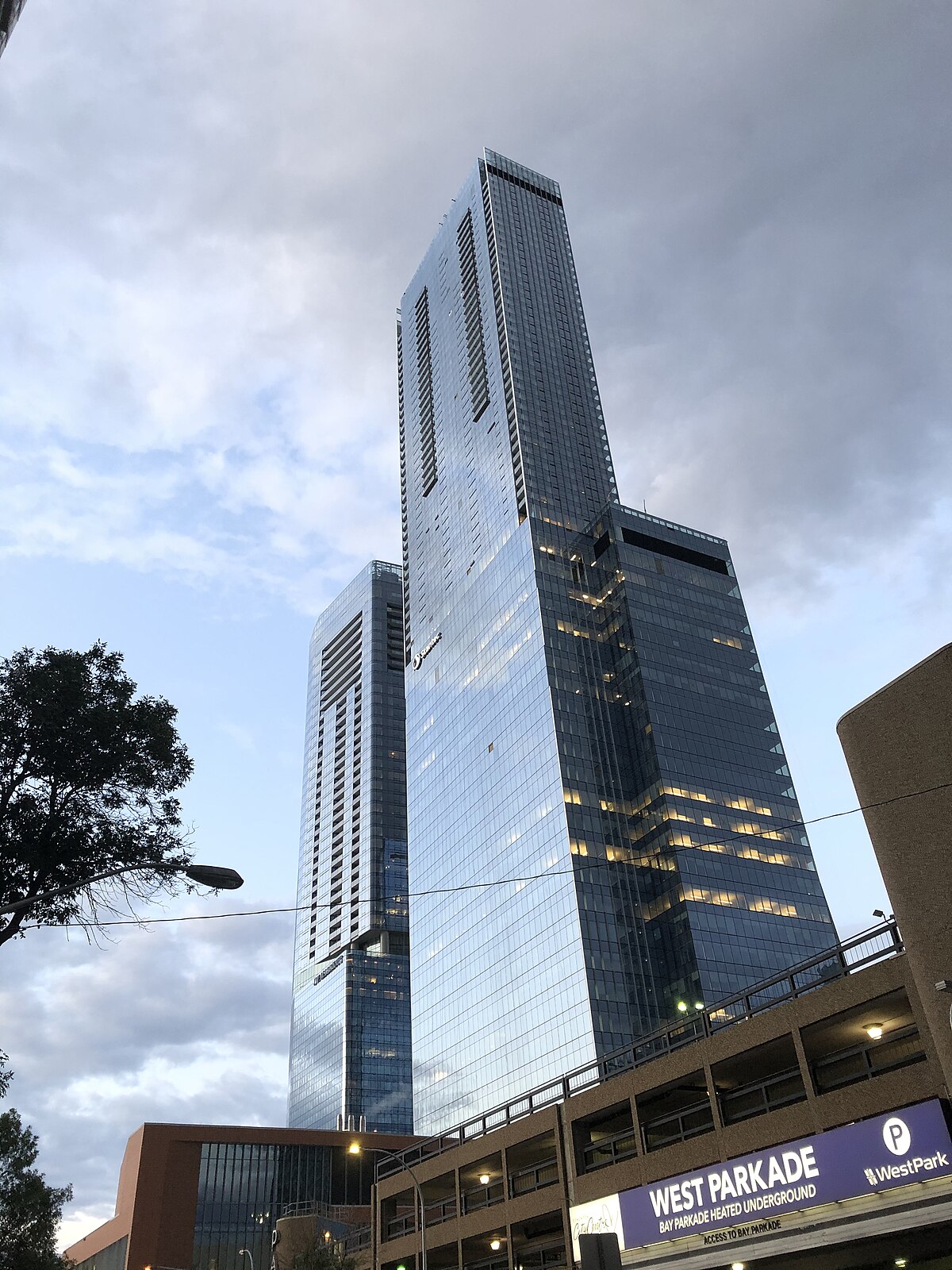
The city has no obligation to approve problematic designs where placement of exhaust vents will likely cause collection of hazardous chemicals on the exterior of a building. And if city code does not concern itself with this, then it should. In all likelihood, it does concern itself with this already.
And none of this really gets at the issue:
Quote:
Originally Posted by H2O
If the city attempted to deny a permit based on a subjective aesthetic objection that did not exist in code, developers would sue and the next legislative session would aim to strip the city of the permitting powers they currently have.
|
THEN CHANGE THE MUNI CODE!
You all are missing the forest for the trees.
The city has the right to change the code. You all want to leave code exactly where it is, but that is wrong. Sure, the code may not
currently deal with these issues, but if it is leading to faulty designs where exhaust vents stain windows with hazardous chemicals, and poor construction quality (from lack of effective construction site inspections) leads to falling glass panels (there've been a number of completed buildings this problem has happened to over the last decade), and shoddy facades that have to be removed and replaced because of water damage a few years in increasing the risk of mold (I can think of more than few of these city-wide), etc., then it
should deal with these issues and no future developer should be given carte blanche
in this way again.
For what it's worth: San Antonio includes some degree of aesthetics in their code via their HDRC and the state has never cared. A few more eyesores on the Austin skyline because of stains on glass caused by poorly placed exhaust vents and MAYBE you'll all realize that what you're arguing for is carte blanch for developers to continue abusing the lackluster process (a process which is the product of choices the city makes) for their own gain. There is no reason that the city cannot change or alter that process to ensure a better result.
And then let's get to the legal process: would a developer bother to actually put up a fight against any municipal government that denied them approval when that fight may very well prove costly and protracted, when they could simply acquiesce to a few key demands? Either way, they're going to end up spending more money. In all likelihood, denying approval on the basis of poorly placed exhaust vents would not be a sure loser in court for the city. The city might actually win, since placement of exhaust vents are a safety concern (collection of hazardous chemicals on a surface that must be cleaned up regularly by a crew) that the city likely does actually regulate. Therefore, it'd be a stupid battle for any developer to pick vis-a-vis acquiescing to a better placement that doesn't leave likely hazardous chemicals collecting all over the facade of a building.
Let me be perfectly clear:
I DO NOT BELIEVE THAT AUSTIN NEEDS A DESIGN COMMISSION. But we sure as hell should not be getting buildings with poorly placed exhaust vents that stain the exterior of a building with hazardous chemicals. You know... the only kind that comes out of an exhaust vent. Period. Ever. That has ZERO to do with being a "cultural charity." It has to do with being a responsible business that doesn't unduly place workers and citizens in a precarious public health situation. Let's be honest with ourselves. And if a developer cannot do it responsibly, then we don't need the building at all. After all, most of these buildings are built on speculation alone so if it didn't get built... oh well, the market would chug along until the financials make better sense for another developer that is willing to do it right.
Quote:
Originally Posted by H2O
It takes more than deep pockets. It takes a robust local market. Development is a business, not a cultural charity. If a developer thinks the local market is strong enough that they can get a better lease rate with higher quality architecture (Google $ail), they will risk more money on higher quality design. With the current climate, don't expect any more Google $ails or Republic$ for a while.
|





 Prev
Prev








 Linear Mode
