HomeDiagramsDatabaseMapsForum About
     

Go Back   SkyscraperPage Forum > Discussion Forums > Transportation


Reply

 
Thread Tools Display Modes
     
     
  #2721  
Old Posted Mar 6, 2021, 6:01 AM
electricron's Avatar
electricron electricron is offline
Registered User
 
Join Date: Aug 2008
Location: Granbury, Texas
Posts: 3,614
Lightbulb

Quote:
Originally Posted by craigs View Post
FYI, Pacheco Pass to Palmdale is around 284 miles.
https://constructionreviewonline.com/pro...oject-timeline-and-all-you-need-to-know/
The state now expects to complete construction on a 119-mile segment of track from Bakersfield to Madera in the Central Valley by 2023. The budget for that segment of track is expected to jump from US $12.4bn to US $13.8bn according to Brian Kelly, the project’s chief executive officer.


Forget all the other mile numbers, they are only constructing presently just 113 miles of it. Add around another 50 miles for the Caltrain's electrification project the CHSR trains will eventually run on, assuming they ever get around to building the San Jose to Madera link.
The DEIS for most of that link came out last year with Alternate 4 being chosen as the Preferred Alternate - which uses mostly at grade running between San Jose and Gilroy paralleling the UP tracks, and will use around 15 miles of tunneling in Pacheco Pass.

Last edited by electricron; Mar 6, 2021 at 6:30 AM.
Reply With Quote
     
     
  #2722  
Old Posted Mar 13, 2021, 9:12 AM
craigs's Avatar
craigs craigs is online now
Registered User
 
Join Date: May 2019
Location: Los Angeles
Posts: 10,884
Caltrain to get fed money for electrification
Funding part of American Rescue Plan Act, full agency allocation to be decided soon

Curtis Driscoll
The San Mateo Daily Journal
March 12, 2021


As part of the recently passed federal American Rescue Plan Act, an estimated $1.25 billion will be available in transit funding for the San Francisco-Oakland area, which includes San Mateo County, with Caltrain earmarked to receive around $52 million for electrification, said Charles Stone, chair of the San Mateo County Transit District.

“Any extra funding we get at Caltrain right now is huge. We’ve got a shortfall,” said Stone, also the mayor of Belmont.

Stone said the $52 million would help electrification projects like the Caltrain Modernization Program, which will upgrade service reliability, including conversion to an electric fleet and station improvements.

Dan Lieberman, a spokesman for Caltrain and SamTrans, said the potential funding would be used to offset the losses from fare revenue and funding of essential operations. The Metropolitan Transportation Commission, or MTC, is the regional transportation planning agency responsible for allocating the money to local transit agencies. When MTC allocates the money, Caltrain and SamTrans will submit applications to the Federal Transit Administration and then draw upon the funds based on revenue losses and cost of operations, Lieberman said.

John Goodwin, assistant director of communications for MTC, said by email that MTC staff estimated $1.25 billion for the San Francisco-Oakland area based on Federal Transit Administration distribution formulas. It was too early to tell how it would be allocated across San Francisco-Oakland area transit agencies, but the distribution process would likely play out in the next three to four months. MTC estimated there would be around $1.67 billion total for the Bay Area’s 12 designated urban areas, Goodwin said. The American Rescue Plan includes $30.5 billion for public transit agencies across the country. The $30.5 billion will help with urbanized and rural area formula grants, transportation services grants for seniors and disabled people, bus services, planning grants and funds for capital improvement projects.
. . .
__________________
Chaos upon my enemies, chaos upon my enemies, chaos upon my enemies.
Reply With Quote
     
     
  #2723  
Old Posted Mar 23, 2021, 7:07 PM
sloppy toppy sloppy toppy is offline
BANNED
 
Join Date: Mar 2021
Posts: 20
It’s now easier to connect between BART and Caltrain


Quote:
Starting on Monday, passengers on BART will have an easier time connecting to other transit services thanks to a series of small changes that improve connectivity and provide more flexibility to meet changes in ridership demand.

Millbrae riders will arrive and depart from the platform closest to the Caltrain connection, all but eliminating the concourse trek between the two rail providers that has long plagued regular commuters.

BART and Caltrain transfer times will also be more synchronized and wayfinding improved.

Additionally, BART passengers traveling on weekdays from Richmond can reach SFO without having to change trains.

Trains will pass through Millbrae Station before terminating at the airport and turning around to head back to Richmond.

These changes were spurred by recommendations from the Metropolitan Transportation Commission’s Blue Ribbon Task Force, a body of regional transit leaders formed in May 2020 to help guide the future of the Bay Area’s transportation network.
https://www.sfexaminer.com/news/its-now-easier-to-connect-between-bart-and-caltrain/

A wise decision was made regarding Bay Area transit? I am legit shocked.
Reply With Quote
     
     
  #2724  
Old Posted Mar 24, 2021, 8:37 PM
M II A II R II K's Avatar
M II A II R II K M II A II R II K is offline
Registered User
 
Join Date: Aug 2002
Location: Toronto
Posts: 50,586
Pod People Drive Dumbarton Rail Study

https://sf.streetsblog.org/2021/03/19/pod-people-drive-dumbarton-rail-study/

Quote:
.....

- The study authors claim their pod/AVT Tech, if used on the corridor, would carry a maximum of 24,300 passengers per weekday. But conventional commuter trains would carry only 17,800. --- In this latest study, which compared the potential for commuter rail, light rail or bus, and AVT pods on the corridor, it was assumed AVTs would run every two-to-four minutes versus commuter trains that would only come every 10 minutes. The difference in headways, presumably, helps explain why AVTs show higher ridership. But it’s unclear why one would make such an assumption about train frequencies: BART ran full-length trains through the existing Transbay Tubes at a rate of 24 train per hour in each direction at peak, and is working on getting that up to 30 per hour.

- The study also ignores the obvious advantages of using a compatible rail system that would integrate the corridor with existing services. If Dumbarton were left compatible with Caltrain/Amtrak/ACE, for example, trains could travel directly between the Peninsula and the entire East Bay and beyond. If AVT is used, anyone trying to use transit to get from most places in the East Bay to most places on the Peninsula would have to transfer to and from the AVT to cross the Bay. --- “The Dumbarton crossing has a regional and mega-regional benefit,” said Green Caltrain advocate and transit watcher Adina Levin. “It makes no sense not to study it in that context.” --- Leaving out the rest of the region is probably also why the study authors determined bus and light rail would carry more than heavy/commuter rail.

.....


__________________
ASDFGHJK
Reply With Quote
     
     
  #2725  
Old Posted Mar 30, 2021, 11:52 PM
Pedestrian's Avatar
Pedestrian Pedestrian is offline
Elite Member
 
Join Date: Dec 2016
Location: San Francisco
Posts: 24,128
Quote:
THE HOLY RAIL?
How leaders want to transform Bay Area transportation
By Jody Meacham – Contributing Writer
Mar 19, 2021 Updated Mar 20, 2021, 8:14am PDT

. . . a new rail tunnel between San Francisco and Oakland is being proposed by two railroad partners — BART and the state-financed Capitol Corridor service — as the linchpin of a massive 20-year rail improvement program called Link21.

The program, still under development, is intended to make it faster to travel by rail than by car within a 21-county region of almost 13 million people and 6 million jobs stretching from Monterey to the Sierra foothills.

The idea is that by speeding up trains, increasing their frequencies and eliminating connections, some of the region’s most vexing economic and environmental problems could also be addressed . . . .

Job growth from 2012-2018 far outstripped population growth from 2012-2019 by 17% to 7% in San Francisco, San Mateo and Santa Clara counties, the institute said. In the East Bay, Sacramento, San Joaquin, Merced and Stanislaus counties, the situation is reversed: Population growth is up to double the rate of job growth.

Frequent, faster rail would rebalance that housing-jobs situation when office work resumes post-pandemic, as Link21 proponents and a poll showing 79% of Bay Area residents believe it will . . . .

The region’s roads are already jammed. The Bay Bridge, which the tunnel would bypass (and on which passenger trains rolled to the East Bay on its lower deck until 1958), carried a quarter-million vehicles per weekday pre-pandemic.

At the same time, the stretch of combined Interstates 80 and 580 from the bridge’s eastern landing north along Berkeley’s bayfront is ranked the 14th most congested freeway stretch in the United States by Seattle-based transportation data firm INRIX, which estimated the resulting economic loss for just those five miles at $100 million a year.

“A second transbay crossing is not just one singular project, but we think of it as a major investment that will literally transform the entire regional transportation network,” David Kim, secretary of the California State Transportation Agency, told a recent Link21 webinar.

Goal No. 1: Transbay crossing
Including the new tunnel, estimated to cost about $30 billion, the railroads involved in Link21 have already identified 13 key improvement projects. Some of them, like BART’s subway in San Jose, are about to begin construction; others are still in the dream stages, such as converting more trains from diesel to emission-free electric power.

But for the projects that already have price tags, the tab is between $103 billion and $113 billion over a couple of decades — as much as the San Francisco-Los Angeles high-speed rail link hobbled by costs.

Many of the funding sources are yet to be found. Potential sources could include local tax increases, state funding provided by the legislature and federal grants from the Department of Transportation through either its Federal Railroad Administration or Federal Transit Administration. The FTA’s acting administrator is Nuria Fernandez, who just resigned her post as head of the Santa Clara Valley Transportation Authority to accept the job in the Biden administration. Federal funding will depend on how successful Biden is in getting an infrastructure bill through Congress.

Because proponents describe Link21 as a “program” rather than a “plan” — there could be more projects — organized opposition has yet to develop. But the most likely place for opposition to the whole package is around funding. Tax increases would require a public vote and, if they’re tied just to a specific project, require a two-thirds majority. General tax increases require only a simple majority for passage, but are open to attack by opponents because legally the revenue can be spent at a county or transit entity’s discretion.

According to proponents, the return on transit investment would be 500%, though that estimate is based on a national formula developed by the American Public Transit Association, the lobbying group for transit agencies, and not on the specific elements of Link21.

More projects may be identified through public outreach in coming months, but all will undergo a “business case” evaluation framework that includes how well they meet goals for strategic transportation improvements, delivery and operational costs compared to revenue generation, employment and population growth, and what it will take to manage it all.

“Link21, the way we’re describing it, is a program of projects,” said Sadie Graham, acting director for the effort at BART’s end. “We’re very much at the beginning of defining what this program is. … But we do know that the crossing and some of the ancillary supportive projects will be within that first package of whatever the projects are” . . . .

The new bay crossing could expand the one-hour rail commute radius from San Francisco — which now barely less than 50 miles to San Jose — to around 80 miles, according to Link21’s concept, with the potential for direct rail service between the city and Sacramento and the San Joaquin Valley.

Part of whatever transportation improvements are achieved would not be solely due to infrastructure improvements, which is Link21’s focus, but also through increased cooperation, integration and perhaps elimination of some of the nine-county Bay Area’s 27 transit operators . . . .

Almost everything mechanical and electrical about BART is unique — the 5-foot, 6-inch distance, or gauge, between its rails being the best known example. Standard gauge for most of the world’s railroads, including those in the United States, is 4 feet, 8½ inches, which means no other Bay Area trains can use BART tracks, or vice versa.

BART and the Capitol Corridor — the diesel-powered standard gauge rail service stretching from San Jose to Sacramento and Auburn along the East Bay — already share a headquarters building and some management staff in Oakland.

BART is primarily supported by its three member counties — San Francisco, Contra Costa and Alameda. But the Capitol Corridor, governed by a joint powers authority representing the eight counties it serves, operates trains owned by the state on behalf of Amtrak over rails belonging to the private Union Pacific Railroad, where they intermingle with freight trains.

The Capitol Corridor is the second busiest state-operated Amtrak service in the nation. In 2019, 79% of Capitol Corridor’s 1.7 million riders were commuting or on other business travel between the Sacramento area and the Bay Area, said Rob Padgette, its managing director.

But passengers with San Francisco at one end of their Capitol Corridor trip have to connect with BART in Richmond. Eastbound, that can mean a long platform wait for Sacramento trains that run on frequencies between an hour and5½ hours apart.

Meanwhile, BART’s original transbay tube is at capacity and vulnerable to shutdowns ranging from an electrical failure to a passenger medical emergency, which can cripple the entire network for hours or longer, A second tunnel would provide important, but enormously expensive, redundancy.

Sharing a tunnel containing tracks for both BART and standard gauge railroads, however, could spread the cost burden. That provides a powerful incentive for BART to work with other railroads. It also incentivizes railroads — including the Capitol Corridor, Caltrain, ACE (Altamont Corridor Express) between San Jose and Stockton and San Joaquin trains between Oakland and the northern San Joaquin Valley — to work with BART because they serve markets needing faster and more frequent access to San Francisco and the Peninsula . . . .

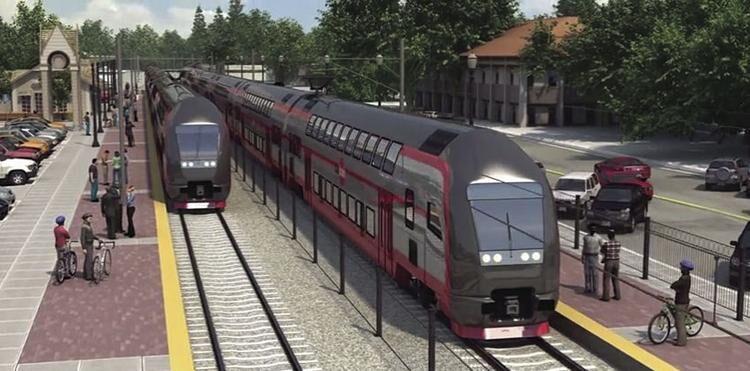
A multirailroad crossing could allow Caltrain, which is scheduled to begin electric service to San Jose next year, to run to Oakland. ACE could offer electric service into the city. The Capitol Corridor could add direct San Francisco-Sacramento trains. Or there could be consolidation of those services.

The vision would be to carry Caltrain and high-speed rail from Caltrain’s existing station near Oracle Park to the new Salesforce Transit Center, which was designed and constructed to accommodate a future rail station.

“If you live or work on the Peninsula and you’re trying to get to Davis or you’re trying to get to Sacramento, that’s a pretty difficult trip,” Padgette said. “In our vision, rail becomes a really easy decision to make where you get on at a station and you get off at a station and you’re not worried about who operates that service along the way.”

It’s electric
Two factors drive the move toward replacing diesel trains with electric service. The first is that exhaust gases in long rail tunnels are poisonous to passengers, so electricity or some other emission-free propulsion is the ticket for tunnel entry.

And the second is a state mandate, adopted by the legislature in 2017, requiring greenhouse gas emissions in California to be reduced 40% from 1990 levels by 2030. Sixty percent of those emissions come from the transportation sector, according to the California Air Resources Board. But between 2005 and 2017, according to the World Resources Institute, a Washington, D.C.-based environmental nonprofit, California’s transportation emissions fell only 5%.

The infrastructure necessary for electric trains is expensive but part of what Link21 envisions as necessary to meet environmental and service goals.

Caltrain’s electrification project will cost $1.9 billion, including the cost of train sets that will replace 75% of its diesel-powered fleet. But its electric trains will accelerate faster, stop more quickly and be capable of speeds up to 125 miles per hour, though initially service will be at the same 79 mph top speed of its current trains.

The Business Times has learned of a breakthrough on the Caltrain project that may allow railroads like the Capitol Corridor and ACE to pursue similar electrification projects for their service.

The latter railroads operate on Union Pacific-owned tracks, and UP has had a blanket policy forbidding its freight trains from operating on electrified lines, according to officials of other railroads who’ve discussed the issue.

Caltrain bought its San Francisco-San Jose line from UP predecessor Southern Pacific in 1991 and had planned to contract out the nighttime Peninsula freight trains UP now operates once Caltrain began electric service.

However, sources with knowledge of the negotiations said UP has now agreed to a deal to operate the service itself even though the line will be electrified.

“An important partner in all of this will be Union Pacific,” the Capitol Corridor’s Padgette said. “I know we don’t know all the answers at this point, but we’re out to accomplish a lot. We’ll have to figure out how to create a system that can accommodate everything.”

https://www.bizjournals.com/sanfrancisco/news/2021/03/19/link21-bay-area-rail-expansion.html
Reply With Quote
     
     
  #2726  
Old Posted Mar 31, 2021, 5:02 PM
TWAK's Avatar
TWAK TWAK is offline
Resu Deretsiger
 
Join Date: Feb 2004
Location: Clearlake, CA Micropolitan Statistical Area
Posts: 17,160
Awesome hearing that they are moving forward with more electrification and in addition to all this Solano and Napa are considering a service as well. Hopefully that could be added to this program, as it connects to the ferry in Vallejo (close to it).
__________________
#ruralurbanist
Reply With Quote
     
     
  #2727  
Old Posted Apr 15, 2021, 8:33 PM
M II A II R II K's Avatar
M II A II R II K M II A II R II K is offline
Registered User
 
Join Date: Aug 2002
Location: Toronto
Posts: 50,586
Could a BART-Caltrain merger fix one of Bay Area transit’s most vexing problems?

https://www.mercurynews.com/2021/04/13/b...e-of-bay-area-transits-biggest-problems/

Quote:
.....

- Imagine if transferring from BART to Caltrain was as easy as taking a few steps from one train to another. Their arrivals would be synced up, so you wouldn’t be greeted by an empty platform and a long wait. The price of your ticket would be based on how far you go, not which train you use, so you wouldn’t have to pay extra for the switch. Maps at every stop would show Caltrain’s line of stations up the Peninsula alongside BART’s routes through San Francisco, the East Bay and the South Bay. Backers of this vision say merging BART and Caltrain into a single regional rail system, set to eventually encircle the Bay, would make public transportation faster, cheaper and easier for riders to navigate. --- Seamless Bay Area, a group that advocates for streamlining the region’s complex web of more than two-dozen public transportation agencies, calls for going even further in a report released Tuesday: It recommends bringing BART, Caltrain and other longer-distance operators such as San Francisco Bay Ferry and the North Bay’s Golden Gate Transit together into a single system that stretches from Santa Rosa to Gilroy.

.....


Report: https://static1.squarespace.com/static/5...116/Governing+Transit+Seamlessly_SBA.pdf

__________________
ASDFGHJK
Reply With Quote
     
     
  #2728  
Old Posted Apr 16, 2021, 6:04 AM
Pedestrian's Avatar
Pedestrian Pedestrian is offline
Elite Member
 
Join Date: Dec 2016
Location: San Francisco
Posts: 24,128
Quote:
ConnectSF, which is comprised of staff from the SFMTA, the San Francisco County Transportation Authority and the San Francisco Planning Department, recently published a strategy for reinvesting in the city’s transit system based on input from residents, community and business groups, and other stakeholders.

The ConnectSF Transit Investment Strategy includes building rail to San Francisco’s busiest places, including under parts of Geary Boulevard and 19th Avenue as shown in the map below.


There’s a lot more to the recommendations beyond new rail. Other areas include restoring and improving existing service, building a “five-minute network” of fast frequent transit, and modernizing our rail system.
SFMTA Project Update
Reply With Quote
     
     
  #2729  
Old Posted Apr 16, 2021, 8:11 PM
jmecklenborg jmecklenborg is offline
Registered User
 
Join Date: Jul 2003
Posts: 4,242
Quote:
Originally Posted by M II A II R II K View Post

I don't think it's technically possible, except maybe during weekend operation, for a Caltrains train to leave San Jose 60 seconds after a BART train shows up and then for a BART train to depart Milbrae 60 seconds after that same Caltrains train shows up.

In short, it's probably possible to sync one but not the other, and likely neither after HSR shows up.
Reply With Quote
     
     
  #2730  
Old Posted Apr 17, 2021, 6:08 AM
craigs's Avatar
craigs craigs is online now
Registered User
 
Join Date: May 2019
Location: Los Angeles
Posts: 10,884
MUNI to resume subway service starting on May 15 for first time since failed August attempt


sfgate.com
April 16, 2021

City officials on Friday announced the return of subway rail service along San Francisco Municipal Transportation Agency's K-Ingleside and N-Judah lines beginning next month.

On May 15, Muni will fully reopen the two lines after having halted all underground service back in August due to an equipment malfunction -- just three days after subway service had resumed for the first time since the start of the COVID-19 pandemic.

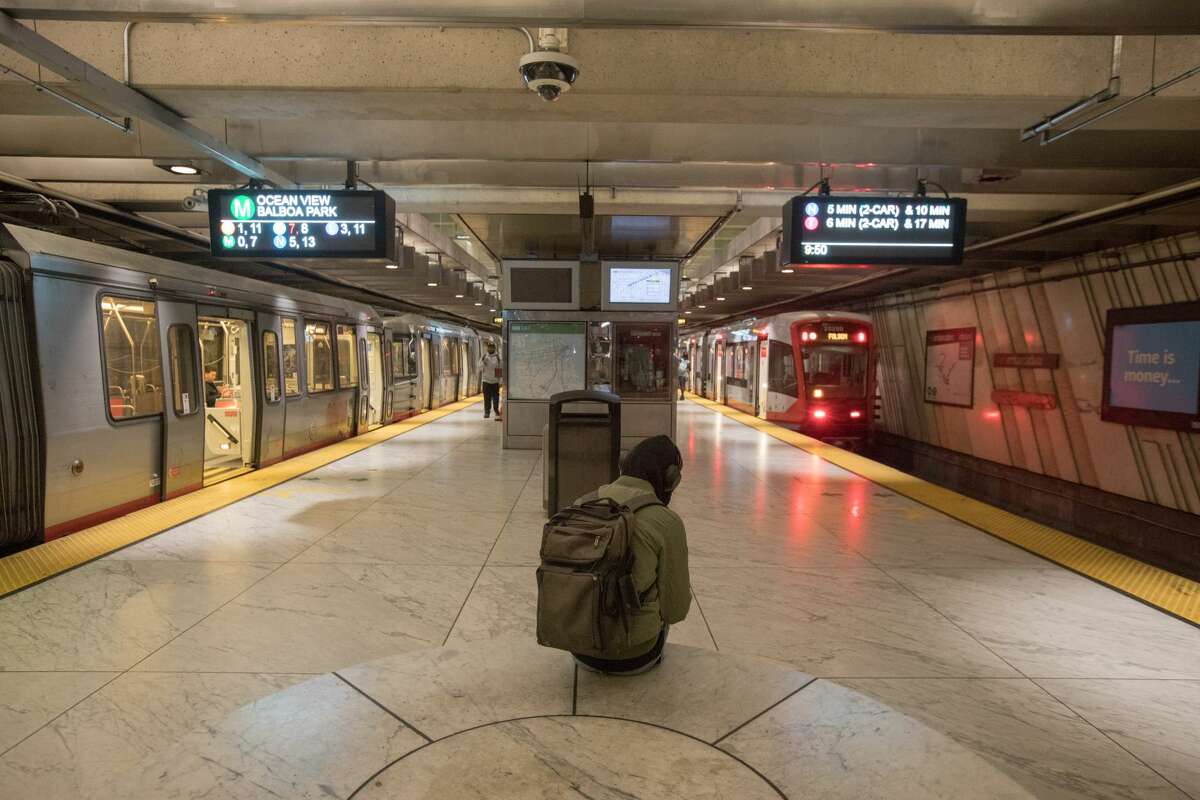
Under the new updated service, the K-Ingleside line will return and be joined with the T-Third Street line, operating at all stops from Balboa Park station to the Sunnydale neighborhood, including providing subway service at all stations from West Portal to Embarcadero.

In addition, on May 15, underground service will also resume for the N-Judah, operating at all stops from the Sunset neighborhood to the Mission Bay Area, including subway service from Van Ness to Embarcadero stations.

Other Muni lines, including the J-Church, M-Ocean View and L-Taraval, will continue to operate as they currently do with the J-Church line providing service from Balboa Park station to Market Street, and the L-Taraval and M-Ocean View operating bus routes from Balboa Park to West Portal stations.

"This last year forced us to change so much about how our city operates, and one of the hardest parts was the impact it had on our public transit. But while trains and buses weren't able to run at normal levels, the SFMTA used that time to make important upgrades and repairs to our infrastructure and prepare for the future," Mayor London Breed said in a statement. "Now I'm excited to see more and more people riding Muni to get around San Francisco."
. . .
__________________
Chaos upon my enemies, chaos upon my enemies, chaos upon my enemies.
Reply With Quote
     
     
  #2731  
Old Posted May 23, 2021, 8:18 PM
M II A II R II K's Avatar
M II A II R II K M II A II R II K is offline
Registered User
 
Join Date: Aug 2002
Location: Toronto
Posts: 50,586
Twitter roasts San Jose BART extension plans: ‘Journey to the center of the Earth’

https://www.mercurynews.com/2021/05/20/t...lans-journey-to-the-center-of-the-earth/

Quote:
.....

- Public transit advocates are pillorying plans for the $6.9 billion extension of BART service through downtown San Jose over station designs that require passengers to descend up to 90 feet to get from the street to their trains. On Twitter, dozens of replies and quote-tweets have panned a Monday post from the Santa Clara Valley Transportation Authority, which is building the BART extension, criticizing a rendering of the planned 28th Street/Little Portugal subway station. Users quickly zeroed in on the 28th Street station’s long stairways and deep boarding platform, which VTA officials said will sit 86 feet beneath surrounding streets. The six-mile BART extension also calls for underground stops in downtown San Jose and at Diridon Station, plus one more at ground level in Santa Clara.

.....


__________________
ASDFGHJK
Reply With Quote
     
     
  #2732  
Old Posted May 24, 2021, 4:23 PM
TWAK's Avatar
TWAK TWAK is offline
Resu Deretsiger
 
Join Date: Feb 2004
Location: Clearlake, CA Micropolitan Statistical Area
Posts: 17,160
Well that's a new one from the NIMBYs "station too deep!" .
__________________
#ruralurbanist
Reply With Quote
     
     
  #2733  
Old Posted May 24, 2021, 4:46 PM
Busy Bee's Avatar
Busy Bee Busy Bee is online now
Closeted Normie
 
Join Date: Feb 2006
Location: on the artistic spectrum
Posts: 13,081
I'm sure the NIMBYs would be totally okay with shutting down the street for 2-3 years while its ripped up by cut-and-cover.
__________________
Everything new is old again

Sic semper tyrannis
Reply With Quote
     
     
  #2734  
Old Posted Jun 3, 2021, 10:11 PM
Mister Uptempo's Avatar
Mister Uptempo Mister Uptempo is offline
Registered User
 
Join Date: Jan 2007
Location: Chicago
Posts: 270
Caltrain electrification delayed to 2024 - Mercury

Quote:
The project transitioning Caltrain from diesel locomotives to sleek electric trains between San Jose and San Francisco is going to take two years longer than expected to finish, while its price tag is growing by more than $300 million, railroad officials announced Thursday.

Caltrain now expects to start electrified passenger service in late 2024, rather than sometime next year. And the 51 miles of electrification work will cost $2.3 billion, up from the previous estimate of $1.98 billion.
Quote:
Crews have experienced “complications” with the signaling system that will manage crossing gates along the new line, the railroad wrote in a news release. COVID-19 has disrupted supply chains for key materials such as rebar and electrical components. And there have been issues with the ground beneath the railroad’s tracks, including underground utilities that don’t match up with planning documents.

Another significant problem: Delivery of Caltrain’s new fleet of 133 electric train cars, which was set to be completed by August of next year, has been pushed back to late 2023. Train manufacturer Stadler, which is building the new fleet in Switzerland and Salt Lake City, has been slowed by COVID-19 infections among its workers, international travel restrictions and problems with suppliers, Caltrain spokesman Dan Lieberman said.
The whole story here.
Reply With Quote
     
     
  #2735  
Old Posted Jun 3, 2021, 11:16 PM
Busy Bee's Avatar
Busy Bee Busy Bee is online now
Closeted Normie
 
Join Date: Feb 2006
Location: on the artistic spectrum
Posts: 13,081
So glad CHSRA gave up on the 4-track Peninsula for this clearly superior alternative. F*** me.

The cost and timeline overrun is really not a good thing for other agencies looking at electrification. This really sucks. The takeaway will be any electrification project will cost hundreds of millions more and take years longer than projected. This will surely scare American agencies who are even remotely considering electrification. Bad news all around unfortunately.
__________________
Everything new is old again

Sic semper tyrannis
Reply With Quote
     
     
  #2736  
Old Posted Jun 4, 2021, 4:37 AM
electricron's Avatar
electricron electricron is offline
Registered User
 
Join Date: Aug 2008
Location: Granbury, Texas
Posts: 3,614
Lightbulb

"And the 51 miles of electrification work will cost $2.3 billion, up from the previous estimate of $1.98 billion."
Old costs projections math = 1980 / 51 = $38.8 million/mile
New costs projections math = 2300 / 51 = $45 million/mile
Projected costs math = 2300 /1980 x 100 = 116% or up 16%.

On time and on budget construction projects just do not ever exist in California anymore.
Time is money, take longer to do it always costs more.
Reply With Quote
     
     
  #2737  
Old Posted Jun 4, 2021, 5:51 AM
urban_encounter's Avatar
urban_encounter urban_encounter is offline
“The Big EasyChair”
 
Join Date: Mar 2005
Location: 🌳🌴🌲 Sacramento 🌳 🌴🌲
Posts: 6,007
Quote:
Originally Posted by Busy Bee View Post
The takeaway will be any electrification project will cost hundreds of millions more and take years longer than projected. This will surely scare American agencies who are even remotely considering electrification. Bad news all around unfortunately.
However, with climate change, it’s highly likely that there will be a push to electrify the frequent (commuter) rail corridors in California, sooner rather than later. Justifying diesel locomotives beyond 2030 to 2035, seems like it would be a tough sell.
__________________
Sacramento
Reply With Quote
     
     
  #2738  
Old Posted Jun 4, 2021, 12:05 PM
k1052 k1052 is offline
Registered User
 
Join Date: Oct 2007
Posts: 2,358
Quote:
Originally Posted by Busy Bee View Post
So glad CHSRA gave up on the 4-track Peninsula for this clearly superior alternative. F*** me.

The cost and timeline overrun is really not a good thing for other agencies looking at electrification. This really sucks. The takeaway will be any electrification project will cost hundreds of millions more and take years longer than projected. This will surely scare American agencies who are even remotely considering electrification. Bad news all around unfortunately.
From the presentation I saw looks like the worst of the delays are signal system and rolling stock manufacturing related. They're going to be done with the electrification (poles, wires, traction power stations) part of this in 2022. I doubt issues and delays in signal system deployment would really shock any US rail operators.

It's going to be another decade before any of this infra is used for intercity high speed rail so in that context it doesn't really matter.
Reply With Quote
     
     
  #2739  
Old Posted Jun 4, 2021, 1:50 PM
ardecila's Avatar
ardecila ardecila is offline
TL;DR
 
Join Date: Jun 2006
Location: the city o'wind
Posts: 16,942
Quote:
Originally Posted by Busy Bee View Post
So glad CHSRA gave up on the 4-track Peninsula for this clearly superior alternative. F*** me.

The cost and timeline overrun is really not a good thing for other agencies looking at electrification. This really sucks. The takeaway will be any electrification project will cost hundreds of millions more and take years longer than projected. This will surely scare American agencies who are even remotely considering electrification. Bad news all around unfortunately.
The corridor needs to be electrified whether there are 2 tracks or 4 tracks, the HSR trainsets aren't dual-mode. It's not mutually exclusive.

I agree the delays are disappointing, and the cost here was actually very encouraging before the latest news came out. The thing is though that America can't build infrastructure of any kind without these kinds of problems. If Metra or SEPTA was building a new diesel powered line, they would run into other, equally bad problems. Amtrak can't even get new unpowered coaches without some weird lead contamination keeping them out of service. I don't think it casts doubt on electrification specifically vs. other kinds of transpo investments. Hell, even roadway projects are a mess these days.
__________________
la forme d'une ville change plus vite, hélas! que le coeur d'un mortel...
Reply With Quote
     
     
  #2740  
Old Posted Jun 4, 2021, 2:07 PM
Busy Bee's Avatar
Busy Bee Busy Bee is online now
Closeted Normie
 
Join Date: Feb 2006
Location: on the artistic spectrum
Posts: 13,081
Quote:
Originally Posted by ardecila View Post
The corridor needs to be electrified whether there are 2 tracks or 4 tracks, the HSR trainsets aren't dual-mode. It's not mutually exclusive.
I'm aware. I'm referring to what it seems like they are getting for the $$$. I still stand by the opinion that once the HSR system makes it into SF, they are going to quickly realize the layout, constraints and capacity of the current Peninsula corridor is inadequate. Which does beg the question, if the current electrification project (outside, yes, of the required rolling stock) is actually a good use of funds if it's not being built to futureproof specifications (ambitions).
__________________
Everything new is old again

Sic semper tyrannis
Reply With Quote
     
     
This discussion thread continues

Use the page links to the lower-right to go to the next page for additional posts
 
 
Reply

Go Back   SkyscraperPage Forum > Discussion Forums > Transportation
Forum Jump


Forum Jump


All times are GMT. The time now is 4:34 AM.


Powered by vBulletin® Version 3.8.7
Copyright ©2000 - 2026, vBulletin Solutions, Inc.