HomeDiagramsDatabaseMapsForum About
     

Go Back   SkyscraperPage Forum > Regional Sections > Canada > Alberta & British Columbia > Vancouver > Urban, Urban Design & Heritage Issues


Reply

 
Thread Tools Display Modes


  #1  
Old Posted Jun 30, 2021, 12:31 AM
Cypherus's Avatar
Cypherus Cypherus is offline
Registered User
 
Join Date: Jan 2007
Location: Surrey
Posts: 1,759
Deniers of climate change are no different than the anti-Maskers who believe the Cabal is behind all this. But in reality, if there is some criticism, is that while Canada can lower its carbon footprint, we have other countries, namely China and Russia, who have no concern about fossil fuels being burned and the effects encroaching our atmospheres. Just 2 years ago, a wildfire in Siberia blanketed the Pacific Northwest in Smoke. This is not a problem for domestic Virtue Signalers to get their thumbs up for the week; we need a sincere and earnest Globalized effort to solve Climate Change akin to the same levels of effort put for free trade.
Reply With Quote
     
     
  #2  
Old Posted Jun 30, 2021, 12:49 AM
Migrant_Coconut's Avatar
Migrant_Coconut Migrant_Coconut is offline
Registered User
 
Join Date: Oct 2015
Location: Kitsilano/Fairview
Posts: 9,896
Yeah, the entire planet needs to get down to 5 tons per capita ASAP... aaand BC's already mostly there, so I'm not sure what else we can do.
Reply With Quote
     
     
  #3  
Old Posted Jun 30, 2021, 1:39 AM
Changing City's Avatar
Changing City Changing City is offline
Registered User
 
Join Date: Nov 2016
Posts: 7,650
Quote:
Originally Posted by Migrant_Coconut View Post
Yeah, the entire planet needs to get down to 5 tons per capita ASAP... aaand BC's already mostly there, so I'm not sure what else we can do.
Not even close.

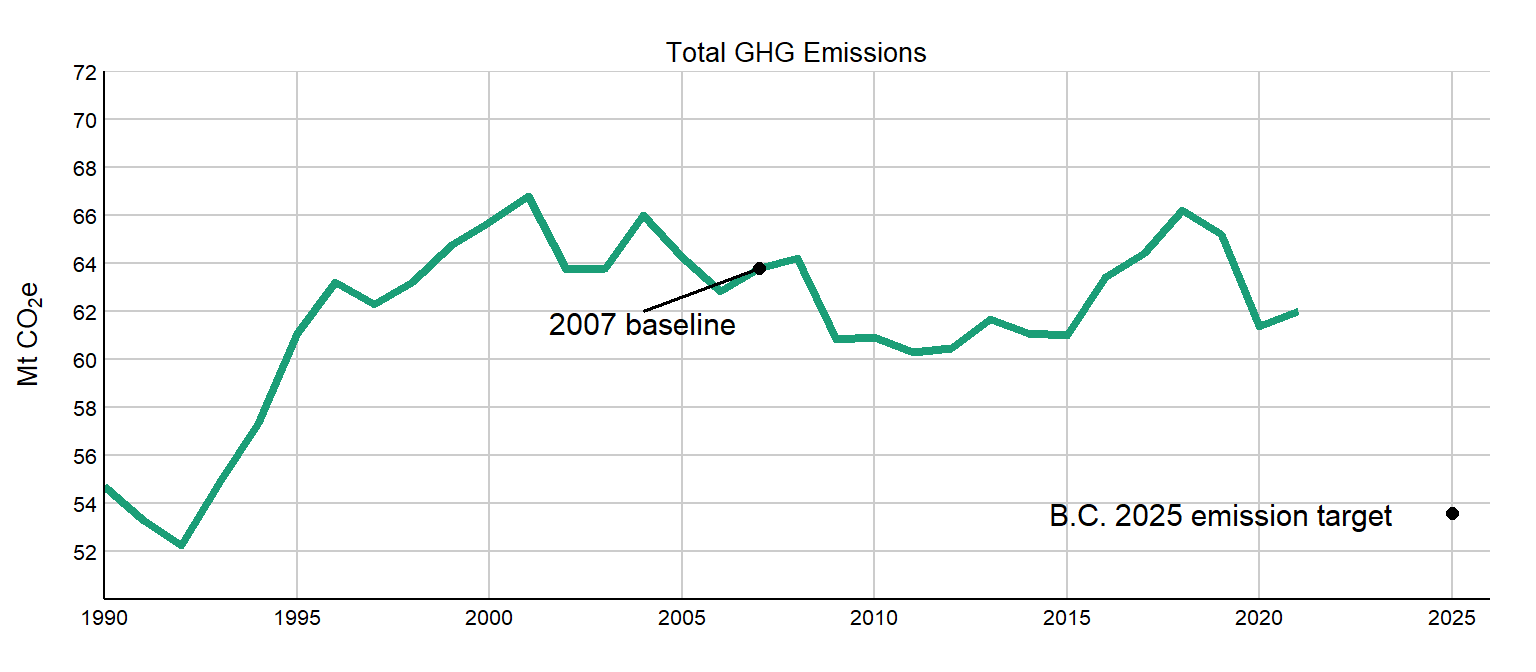
"In 2018, British Columbia's gross greenhouse gas (GHG) emissions, as reported in the Provincial Inventory, were 67.9 million tonnes of carbon dioxide equivalent (MtCO2e). This is an increase of 4.5 MtCO2e (7%) from 63.4 MtCO2e in 2007, the baseline year for our emission reduction targets." [Provincial Greenhouse Gas Inventory]

That's over 13 tons/capita. And in the past few years our emissions have been rising - not falling.
[source, BC Government]


Metro Vancouver per capita GHG emissions were 5.38 tonnes/person, but that's still way too high to limit global heating. We have to generate no net carbon by 2050 to avoid the worst impacts. (That's the plan; a carbon neutral region by 2050).
__________________
Contemporary Vancouver development blog, https://changingcitybook.wordpress.com/ Then and now Vancouver blog https://changingvancouver.wordpress.com/
Reply With Quote
     
     
  #4  
Old Posted Jun 30, 2021, 2:24 AM
Migrant_Coconut's Avatar
Migrant_Coconut Migrant_Coconut is offline
Registered User
 
Join Date: Oct 2015
Location: Kitsilano/Fairview
Posts: 9,896
And yet there's 4x as many Russians, so their total emissions are over twice as much as ours (to say nothing of China). If we're ditching fossil fuels, they better be right behind us.

Quote:
Originally Posted by Changing City View Post
Metro Vancouver per capita GHG emissions were 5.38 tonnes/person, but that's still way too high to limit global heating. We have to generate no net carbon by 2050 to avoid the worst impacts. (That's the plan; a carbon neutral region by 2050).
That's the one I appear to have been looking at. Net zero by 2050 is at least somewhat doable.
Reply With Quote
     
     
  #5  
Old Posted Jun 30, 2021, 1:46 AM
Feathered Friend Feathered Friend is offline
Registered User
 
Join Date: Jun 2016
Posts: 2,430
Understanding that Wikipedia is a terrible source, but at the same time, given the heat I don't feel like doing a deep dive either. Here's the per-capita numbers


Quote:
CO2 emissions by country/region name (only fossil fuels and cement manufacture, metric tons per capita per year. 2018 Figures are from Emissions Database for Global Atmospheric Research (EDGAR) and include all human activities leading to climate relevant emissions, except biomass/biofuel combustion (short-cycle carbon)[5]

2018

Canada 16.1

USA 16.1

Russia 12.1

China 8.0
https://en.wikipedia.org/wiki/List_o...ons_per_capita
Reply With Quote
     
     
  #6  
Old Posted Jun 30, 2021, 3:45 PM
rofina rofina is offline
Registered User
 
Join Date: Nov 2013
Posts: 5,149
I appreciate the optimism in here. I think reality is a little different though.

We would have to reduce our consumption and use to levels last seen during March/April of 2020 when pictures of clear skies and rivers began to circulate from around the world. As I recall, that was just enough, or not quite enough of a CO2 reduction to meet targets.

Imagine the effort it would take to get the world to a place where the economy was on that level permanently.

We don't know how to stop, never have. I doubt this time will be different. Technocrats will always find a way to try and innovate out of this, not understanding the issue is our entire ideology of growth and consumption. I don't think innovation is a solution, the solution has always been fitting into the ecosystem, not trying to build one in our image.

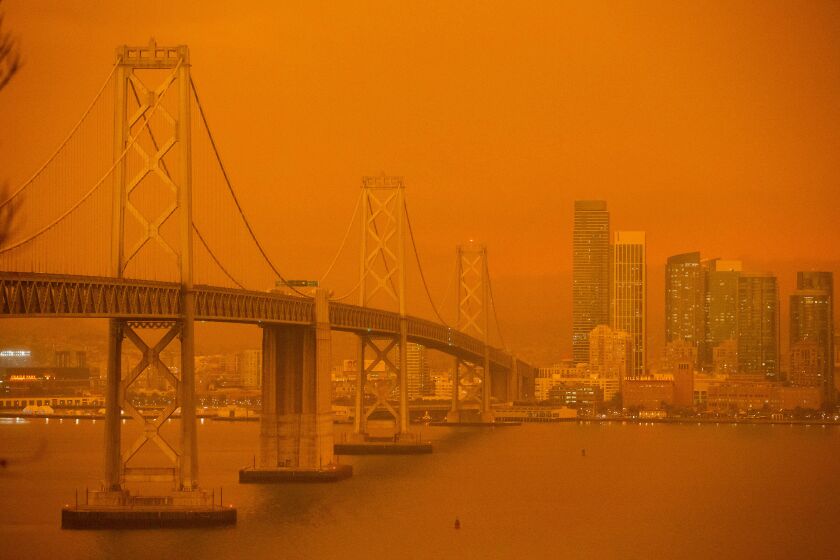
This is the future (and ironically the past);

Reply With Quote
     
     
  #7  
Old Posted Jun 30, 2021, 6:15 PM
logicbomb logicbomb is offline
Joshua B.
 
Join Date: Sep 2010
Posts: 1,172
Reducing GHG's in BC and Canada will be a drop in the bucket as other nations continue to develop and build up their infrastructure.

We can talk about reducing GHG's but the harsh reality is that overpopulation will be the driving factor going forward in climate change, famine and pandemics. The first world has set the bar on what lifestyle one should have and many in the "developing world" will strive to meet this lifestyle at whatever cost, and no treaty or agreement will deter them from industrializing further. Many people will blame these developing nations for not keeping their population in check and destroying their countries when major G7 countries were responsible for off-shoring the "dirty" or "industrial" jobs to allow them to flourish.

I acknowledge climate change driven by AGW is a major issue but we are honestly 30-40 years too late. The central focus should be on adaptation and mitigation strategies. AC and air purifiers should be built into new developments, especially care homes.
Reply With Quote
     
     
  #8  
Old Posted Jun 30, 2021, 7:32 PM
svlt svlt is offline
Registered User
 
Join Date: Apr 2014
Location: Canada
Posts: 987
Yes, the problem is the world's heavy hitters aren't willing to do their part and we don't have the political muscle or ability to economically blackmail those who can to do so. And so, I suppose Canada's leaders want to take us to the level of being able to do so by continuously supporting our #10 (or #9 depending on data source) GDP ranking in the world through fossil fuel extraction and export but in reality that's never going to happen, we will just be able to tread water and significantly slow down our inevitable slide down the world's influential rankings as developing economies take their place in the world over the coming century. Hopefully they make better decisions for the future than the current world powers have.
Reply With Quote
     
     
  #9  
Old Posted Oct 30, 2021, 5:47 AM
jollyburger jollyburger is online now
Registered User
 
Join Date: Dec 2015
Posts: 14,659
It'll be interesting to see how their predictions from 30 years of data holds up.

Quote:
Bigger, more frequent landslides predicted for Metro, especially the North Shore
The number of landslides on the North Shore could jump four fold by the end of the century, with climate change the most likely cause.

A new study predicts that the number of landslides on the North Shore mountains could quadruple this century, with the average size of those landslides increasing by as much as 50 per cent.

Climate change will increase the amount and intensity of rain and that “is likely to increase” the number and size of shallow landslides on the North Shore, the study authors wrote.

Shallow landslides occur when soil cover or other materials break free from the underlying bedrock, gathering material and growing in size as the debris and trees slide down steep mountain slopes and creeks.

“For every metre they travel, they can pick up a whole truckload or two truckloads of sediment,” said Matthias Jakob, a geoscientist with BGC Engineering and the paper’s lead author.

“An increase in landslide activity has potential implications for treatment of drinking water, damage to infrastructure leading to increased costs, and limiting watershed access,” Jakob wrote.

“The underlying hypothesis,” the study authors wrote, “is that climate change, specifically seasonal increases in rainfall totals and intensities,” increase the likelihood and size of North Shore landslides.

Rain is the single most important factor influencing the likelihood of landslides and the study identified three key variables: how much rain fell in the three-week period before a landslide, the previous day’s rainfall, and short-term rainfall in the six-hour period immediately before a landslide. Rain on snow, typical in late fall and early winter, can make things worse through the added water from snowmelt.

“One thing that people fail to recognize sometimes is just the sheer volume of precipitation we get in the North Shore mountains,” said Jesse Montgomery, a division manager at Metro Vancouver, noting that up to five metres of rain a year is “not uncommon at all.”

Despite this, the Lower Mainland can expect longer, drier summers as a result of climate change, he said, even as winter precipitation increases.

The study authors analyzed a database of landslides maintained by Metro Vancouver to predict the number and size of landslides on the North Shore using various climate-change scenarios from the Intergovernmental Panel on Climate Change.

The size of landslides has increased “significantly” since 2004, the authors wrote, with the average volume of landslides increasing “seven-fold.”

Montgomery called the increase in the size of landslides in the past five years “remarkable.”

As landslide volume increases, so does the risk to housing and other urban infrastructure.

“The larger the landslide, the further it can travel,” said Jakob. “So not only do we need to worry that this happens more often, and therefore the risk increases, but we also have to worry that the houses at the bottom of slopes need to be further away from the bottom of the slope.”

Jakob pointed out that across the Fraser Valley, “you see everywhere how development has encroached onto the hillsides,” often without a full consideration of the future impacts of climate change.

“We will have to be prepared to spend a lot more money on structural mitigation,” said Jakob, who suggested that substantial investment, “in the hundreds of millions of dollars,” will need to be made.

“The government would be wise to start thinking down those lines and create a pot of money for mitigation,” he said. “And do that proactively, not wait until landslide damage has happened.”
https://vancouversun.com/news/bigger...cted-for-metro

Quote:
Analysis of a landslide database curated by Metro Vancouver shows a doubling in the frequency of landslides since 1981, prior to which recording was sporadic. How much of the increase since 1981 is attributable to recording improvements cannot be quantified which implies that it is too early to attribute frequency changes unambiguously to climate change. Prior to 2004, the average volume of shallow landslides was 1800 m3, whereas after 2004, this volume increased 7-fold to 13,000 m3. In particular, landslides with volumes exceeding 10,000 m3 appear to have increased abruptly since in the early 2000s.
https://www.sciencedirect.com/scienc...9555X21003299#!

A study with deaths tied to landslide events in BC:

https://www.frontiersin.org/articles...21.606854/full

Some of the slides also seem to be associated with the logging that used to happen in the watershed. They stopped most logging in 1999:

http://www.geohazard.ggl.ulaval.ca/e...ion/fannin.pdf

Last edited by jollyburger; Oct 30, 2021 at 6:02 AM.
Reply With Quote
     
     
  #10  
Old Posted Nov 16, 2021, 6:02 AM
mezzanine's Avatar
mezzanine mezzanine is offline
Registered User
 
Join Date: Aug 2002
Posts: 2,011
Bump! this is a post 3 wk old in light of all road to the interior being closed, with Hwy 1 and 5 washed out and drivers on Hwy 7 needing helicopter rescue due to debris flow

Quote:
Originally Posted by jollyburger View Post
it'll be interesting to see how their predictions from 30 years of data holds up.


https://vancouversun.com/news/bigger...cted-for-metro


https://www.sciencedirect.com/scienc...9555x21003299#!

A study with deaths tied to landslide events in bc:

https://www.frontiersin.org/articles...21.606854/full

some of the slides also seem to be associated with the logging that used to happen in the watershed. They stopped most logging in 1999:

http://www.geohazard.ggl.ulaval.ca/e...ion/fannin.pdf
Reply With Quote
     
     
  #11  
Old Posted Nov 16, 2021, 6:25 AM
jollyburger jollyburger is online now
Registered User
 
Join Date: Dec 2015
Posts: 14,659
Quote:
Originally Posted by mezzanine View Post
Bump! this is a post 3 wk old in light of all road to the interior being closed, with Hwy 1 and 5 washed out and drivers on Hwy 7 needing helicopter rescue due to debris flow
Amazing update their predictions have come true!!
Reply With Quote
     
     
  #12  
Old Posted Jan 9, 2022, 5:20 AM
mezzanine's Avatar
mezzanine mezzanine is offline
Registered User
 
Join Date: Aug 2002
Posts: 2,011
Bump - 5 yr anniversary of this thread coming up

Looks like the western part of the Stanley park seawall will be closed off for a long period of time.

looking at at the original article, I had to laugh at this:

Quote:
A major climate-change study predicts temperatures in Metro Vancouver will exceed those of present-day Southern California in the coming decades.

Frost and ice will become virtually a thing of the past, heating bills will drop, and farm crops will flourish virtually year-round in the Fraser Valley.
I suspect we'll get more extreme weather in the short to medium term, long term = ?????


source: CBC BC
Reply With Quote
     
     
  #13  
Old Posted Jan 9, 2022, 8:12 PM
whatnext whatnext is offline
Registered User
 
Join Date: Feb 2009
Location: Vancouver
Posts: 26,731
Quote:
Originally Posted by mezzanine View Post
Bump - 5 yr anniversary of this thread coming up

Looks like the western part of the Stanley park seawall will be closed off for a long period of time.

looking at at the original article, I had to laugh at this:


I suspect we'll get more extreme weather in the short to medium term, long term = ?????


source: CBC BC
The Parks Board should have a plan in place to raise the seawall and also to make it more resistant to wave action. I’d be curious to know what kind of wave action caused that sort of damage. At the same time it should be widened to provide proper width to allow cycling on it again.
Reply With Quote
     
     
  #14  
Old Posted Nov 1, 2021, 3:51 PM
rofina rofina is offline
Registered User
 
Join Date: Nov 2013
Posts: 5,149
Without bringing climate change into it, the factors seems obvious on the surface.

Were clear cutting further and further into our rainforests, be it the British Properties in West Van or crawling up the mountains of Coquitlam, the elevations are higher, the terrain steeper, trees and tree roosts removed for housing and roads, with that all their ability to retain land. It would seem somewhat obvious the region would be prone to more landslides as we continue to build in less and less housing friendly lands, in less and less environmentally friendly ways.

Throw in the ? of climate change, perhaps increased precipitation in the winter months, for what is already a very wet region, and the likelihood of this being a greater problem on a 20 year timeline seems rather high probability.
Reply With Quote
     
     
  #15  
Old Posted Nov 1, 2021, 5:00 PM
FarmerHaight's Avatar
FarmerHaight FarmerHaight is offline
Peddling to progress
 
Join Date: Jul 2019
Location: Vancouver's West End
Posts: 1,631
Quote:
Originally Posted by rofina View Post
Without bringing climate change into it, the factors seems obvious on the surface.

Were clear cutting further and further into our rainforests, be it the British Properties in West Van or crawling up the mountains of Coquitlam, the elevations are higher, the terrain steeper, trees and tree roosts removed for housing and roads, with that all their ability to retain land. It would seem somewhat obvious the region would be prone to more landslides as we continue to build in less and less housing friendly lands, in less and less environmentally friendly ways.

Throw in the ? of climate change, perhaps increased precipitation in the winter months, for what is already a very wet region, and the likelihood of this being a greater problem on a 20 year timeline seems rather high probability.
I think people focus too much on how emissions contribute to climate change and ignore their other behaviours that have an equally devastating, if more localized, effect on the environment. It's ironic that people build energy efficient homes with solar panels that fuel their electric car on land that used to be wetlands or forests.
__________________
“Nothing compares to the simple pleasure of riding a bike” – John F Kennedy
Reply With Quote
     
     
  #16  
Old Posted Nov 1, 2021, 5:22 PM
Migrant_Coconut's Avatar
Migrant_Coconut Migrant_Coconut is offline
Registered User
 
Join Date: Oct 2015
Location: Kitsilano/Fairview
Posts: 9,896
Somehow, I doubt we're going to have Green Timbers reclaim Fleetwood. Best way forward is to manage what we've got.

Quote:
Originally Posted by rofina View Post
Without bringing climate change into it, the factors seems obvious on the surface.

Were clear cutting further and further into our rainforests, be it the British Properties in West Van or crawling up the mountains of Coquitlam, the elevations are higher, the terrain steeper, trees and tree roosts removed for housing and roads, with that all their ability to retain land. It would seem somewhat obvious the region would be prone to more landslides as we continue to build in less and less housing friendly lands, in less and less environmentally friendly ways.

Throw in the ? of climate change, perhaps increased precipitation in the winter months, for what is already a very wet region, and the likelihood of this being a greater problem on a 20 year timeline seems rather high probability.
Cypress Village sounds like a dumber and dumber idea with each passing week.
Reply With Quote
     
     
  #17  
Old Posted Jan 9, 2022, 6:41 AM
Migrant_Coconut's Avatar
Migrant_Coconut Migrant_Coconut is offline
Registered User
 
Join Date: Oct 2015
Location: Kitsilano/Fairview
Posts: 9,896
Yeah, that article aged like milk. We've got hurricane waves, blizzards in winter, killer heat in summer, tornado-monsoons in autumn, and a whole bunch of homeless Valley farmers.
Reply With Quote
     
     
  #18  
Old Posted Jan 10, 2022, 12:15 AM
officedweller officedweller is online now
Registered User
 
Join Date: Jul 2001
Location: Vancouver
Posts: 41,022
You can tell by the surviving segment in the background that the design of the pathway is not engineered to resist undermining by waves. Once water is able to scour the sand from under the path, it was going to wash away. The capstones along the seawall edge were probably loose or nor reinforced, became dislodged, and that allowed waves to undermine the path.

Placing the pathway on pilings may be the solution and would allow restoration of the foreshore below it for marine life. I think that's the modern standard, as has been implemented at Cooper's Park.
Reply With Quote
     
     
  #19  
Old Posted Jan 10, 2022, 1:50 AM
MIPS's Avatar
MIPS MIPS is offline
SkyTrain Nut
 
Join Date: Mar 2013
Location: Kamloops
Posts: 1,997
I seem to recall that whenever we get high tides combined with high winds a portion of the seawall washes out and each time they rebuild it again with a similar/identical design. I guess they want to keep it original for the tourists?

Google's cached images says The Vancouver Sun has reported on washouts multiple times where the ledge falls off and the water gets underneath but the articles themselves all have broken images.
Reply With Quote
     
     
  #20  
Old Posted Jan 10, 2022, 4:35 PM
FarmerHaight's Avatar
FarmerHaight FarmerHaight is offline
Peddling to progress
 
Join Date: Jul 2019
Location: Vancouver's West End
Posts: 1,631
Quote:
Originally Posted by officedweller View Post
Placing the pathway on pilings may be the solution and would allow restoration of the foreshore below it for marine life.
If there is indeed a way to concurrently naturalize the shoreline and have the seawall, I am all for it. I am not sure I support tearing down the seawall, as the linked video argues, but I think it's ironic that humans build infrastructure to get closer to nature, but we inevitably destroy that same nature in the process

https://www.youtube.com/watch?v=6HoZJytoHHs
__________________
“Nothing compares to the simple pleasure of riding a bike” – John F Kennedy
Reply With Quote
     
     
This discussion thread continues

Use the page links to the lower-right to go to the next page for additional posts
 
 
Reply

Go Back   SkyscraperPage Forum > Regional Sections > Canada > Alberta & British Columbia > Vancouver > Urban, Urban Design & Heritage Issues
Forum Jump


Forum Jump


All times are GMT. The time now is 5:31 AM.

     
SkyscraperPage.com - Privacy Statement - Top

Powered by vBulletin® Version 3.8.7
Copyright ©2000 - 2026, vBulletin Solutions, Inc.