Quote:
Originally Posted by Keith P.

There is seldom a business case for restoration of any of these old working-class wooden box buildings. They are no different than an old jalopy of a car - at some point they simply wear out and become too expensive to repair, and there is no architectural or historic value associated with them.
|
Not really a good analogy, as there are many old cars on the road that people spent a lot of time and money to restore - in many cases they would have been considered junk by some but others were able to appreciate the historic value of them enough to bring them back to life. There's no real "business case" for it, it's done out of appreciation of historic value and realization that once they are gone, they are gone forever, existing only in writings and photographs.
The main difference in your analogy is that a restored antique car will usually no longer be used as a transportation appliance - they will typically be stored away in a garage and only taken out for recreational drives or special events. Houses, however, are still still kept functional for residential or business uses, plus they are stationary, so there is value to the business community in that they can be profit-generators through rent/lease income, and the location/land that they are on also holds value that is independent of the structure that's on it. There is also value to the community in the form of historical characteristics, as well as adding visual interest and character to a neighbourhood.
So, while a person who has appreciation for an old structure can buy it and restore it for their own gratification (which is more difficult and expensive than restoring a vehicle, FWIW), there are not many people capable of doing that on their own. And, as land values increase, they have to compete against business entities who have more investment money available to them than the average individual, and can create a business case for doing the opposite of what the enthusiast owner would want to do. So, rather than spend money on upgrades that will restore the original character and attractiveness to the building, they will take the cheapest route to keep it functional and maximize the income to investment ratio. If their plan is to eventually tear it down and profit from developing the land, then the business case is focused on achieving this without regard to any intrinsic value that the structure may hold.
As someone123 indicates, once the attractiveness of the original structure has been stripped off, and the overall condition of the building is allowed to deteriorate, then it's a lot easier to tear it down, as folks will no longer see it as a historical structure, but just an 'old box with siding on it' - an eyesore that will not be a loss to the community (as drybrain has indicated).
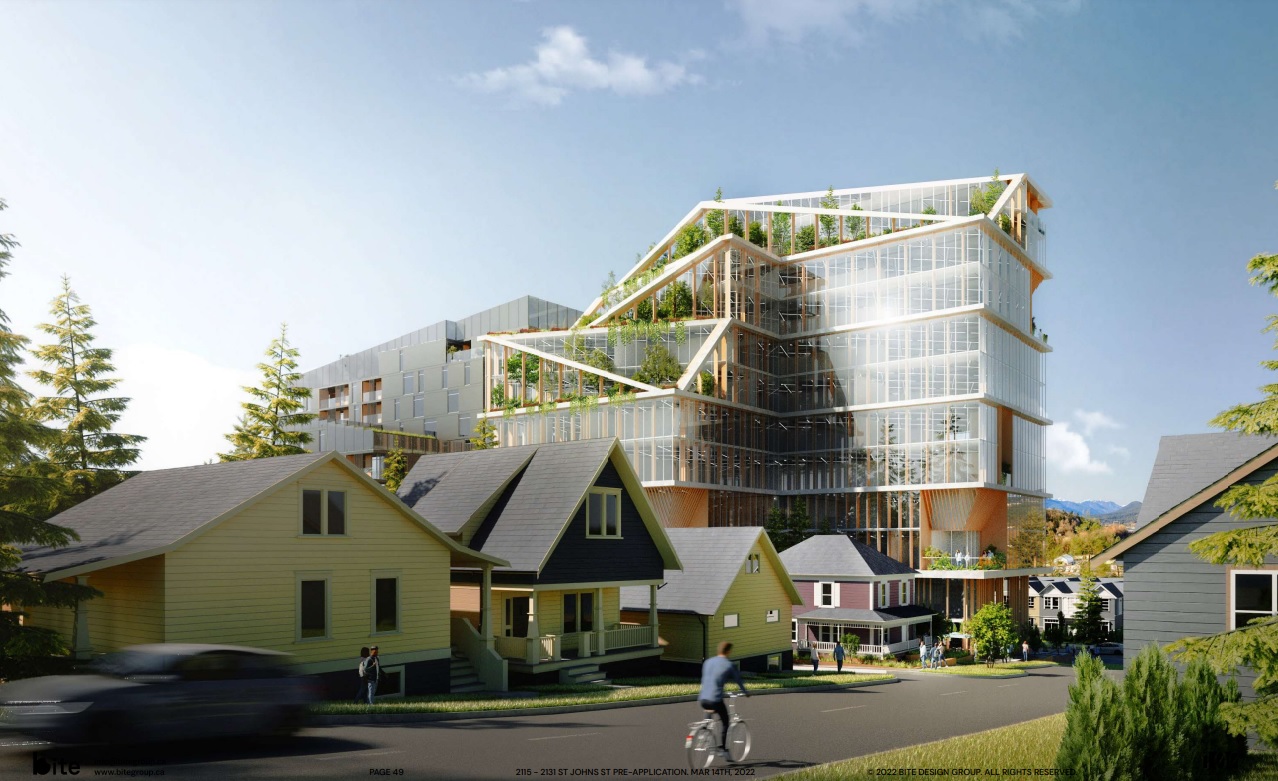
While this really comes down to personal opinion, i.e. whether you think that retaining some historical character of a city is important or not, there's no disputing that it does change the character of neighbourhoods over time, and if the attrition is allowed to happen long-term, then you will arrive at a point where none of the historical character of the area will remain. And maybe that's alright, if nobody cares... future generations will not know what they missed, and will adapt to whatever is there. They may look at old photos and realize what was lost (as I have done many times), but there will be nothing to be done about it at that point, because it will be gone.





 Prev
Prev


 That's what I'm talking about!




 Linear Mode
