What? Having read about the cop Frank Abbott, you’re curious about the other Abbotts? Yes, I don’t blame you—they’re one of my top favorite L.A. families! Here, straight from my notes (believe it or not, I've edited some boring stuff out here, but have thoughtfully left other boring stuff in), is a nice typical odinthorian wall o' text to help Noirishers while away any spare hours. I also include a couple of mining Abbotts who I think are not part of the same family, but who add to the good--and very noirish--times; plus, as a special bonus today only, one member of the Death Valley Party. ("father William Abbott" in the following is shorthand for "parents: William Abbott and Maria Merced Garcia".):
___________
Abbott, Aaron ca. 1867, born; father, William Abbott; by 1891, perhaps married to one Lottie Miller, prostitute; 1891, in trouble with the law (perjury); 1895, in San Francisco, passing counterfeit bills; 1896, back in L.A. being a “morphine fiend”; 1897, disturbing the peace in Westlake Park; cf. Caron Abbott.
Abbott, Amos ca. 1868, born in California; father, William Abbott; 1870, present in L.A.; 1888, getting in trouble with the law, like his brother William; ca. 1896, sent to state asylum as a dope fiend, eventually discharged as cured; 1902, Amos has lost his reason through use of dope, says his mother, and the court consequently sends him back to the asylum.
Abbott, Angelina granddaughter of Maria Merced Garcia; attempted suicide in 1895.
Abbott, Caron ca. 1864, born in California; 1870, present in L.A.; cf. Aaron Abbott.
Abbott, Charles G. a person of this name was a-burglarizing in the Newhall area in 1885 [Los Angeles Times August 22, 1885]; whether related or not to the rest of our interesting Abbotts, I do not know; cf. George Abbott.
Abbott, Frank. The cop. See earlier posting.
Abbott, George ca. 1872, born in L.A.; father, William Abbott; in trouble with the law (assisting a prisoner to escape) in 1889 and (burglary) in 1892; ca. 1892-1896, imprisoned at San Quentin; April, 1896, robbing a saloon; 1897, living with “an Indian woman” on Mission Road, and in a row with brother Frank; November 15, 1898, died in L.A.; cf. Charles G. Abbott.
Abbott, Georgie a woman, “pale, disheveled, frowsy” [Los Angeles Times, 6/25/1896], involved in a murder investigation near Naud’s Junction.
Abbott, James ca. 1835, born in Indiana; 1860, present in Azusa as an “M. Miner” with savings of $1,000.
Abbott, John May 28, 1864, published (Los Angeles Star): “The various speculations that have been floating about, the last two weeks with regard to rich mineral deposits on Lytle Creek, turn out to be a reality. Gold has been found in paying quantities, one claim owned by Abbott has produced as high as $6.25 per pan”; September 24, 1864, published (Los Angeles Star): “John Abbott, indicted for the murder of Robert Kier [sic] at Lytle Creek, was convicted of manslaughter, and sentenced to four years in the State Prison.”
Abbott, John A. or Juan Nepomuceno; alias Johnny; May 16, 1859, born in California; father, William Abbott; 1860, present in L.A.; 1870, present in L.A.; 1887, evidently the “opium-fiend” Abbott involved in the voting scandal (Los Angeles Times 4/20/1887); 1889, arraigned for rape; “notorious” by 1891.
Abbott, Kate Carmen usually known as Carmen; presumably the 1880 Census’s Katrina Abbott; ca. 1875, born; father, William Abbott; “Deaths […] Kate Carmen Abbott, sister of Mercedes Madden and Frank Abbott. Rosary tonight, 8 p.m., at Alvarez & Moore. Mass Thursday, 10 a.n., at Plaza Church. Interment, Calvary” (Los Angeles Times 3/10/1937); see also Salinas Abbott.
Abbott, Merced ca. February, 1870, born in California; father, William Abbott; 1870, present in L.A.; prob. the “Mercedes” Madden mentioned under Kate Carmen Abbott above; see also Maria Merced Garcia.
Abbott, S.S. member of the Death Valley Party.
Abbott, Salinas; ca. 1868, born; father, William Abbott; 1880, present in L.A.; ca. 1886, married H.K. Johnson; 1908, brother Frank Abbott perhaps killed her son W.E. Johnson in self-defense (see below); this is doubtless the “Selina” Abbott, “the wealthy Spanish woman known as the Queen of the Plaza,” who evidently eloped to Cuba with one Eduardo Hernandez, as reported in the Los Angeles Times of February 11, 1913, in which her sister Carmen, then living at 418 N. Main St., is mentioned and pictured; “Selina had been thrice married, but always she was known around the Plaza by her maiden name. She was 45 years old and of the striking Spanish type of beauty. Her clothing was always expensive and stylish, her manner gay and free. H.K. Johnson, a wealthy American contractor of Seattle, was Selina’s first husband. They were married about twenty-five years ago and lived in a $50,000 mansion in Seattle. Her only child, a son, was by this marriage. He met with a mysterious death about five years ago. The body was found on the sidewalk near the Abbott rooming-house at No. 418 North Main street, the skull crushed. An uncle of the young man was arrested and charged with the crime, but was acquitted. At almost the same time Selina witnessed the slaying of two men and the wounding of another in the office of the hotel owned by her and her sister. It is said that the tragedy was caused by jealousy over her. All four of the principals were her suitors. The man who did the shooting and who is now in the penitentiary had been employed as clerk in the hotel. Selina’s second husband was Edward Ives, an attorney. They were married about eight years ago. He died two years later. She was separated from her last husband, a Spaniard, and the brother of one of the two men who were slain in her presence” (Los Angeles Times 2/10/1913); do see also William Abbott of 1860, below.
Abbott, William ca. 1833, born in Indiana or New York; 1853, arrived in L.A. from New Albany, Indiana; “October, 1855, he started the furniture business in a little frame house about ten feet back from the street, which has grown into the stately building next to the Pico House, and the upper story of which is the handsome Merced Theatre” (Centennial History, p. 115); August 8, 1857, published (Los Angeles Star): “Mr. Abbott, we have long known as a member of the [theatrical] profession”; July 31, 1858, published (Los Angeles Star): “Married.—in the Catholic Church, on the 17th inst., Mr. William Abbott to Miss [Maria] Merced Garcia”; 1860, present in L.A. as a cabinet maker with savings of $2,000 and real estate valued at $1,000; November 24, 1860, published (Los Angeles Star): as “Abbott & Co.,” on Delinquent Tax list, location/property described as “San Gabriel Cañon; improvements on mining claims, &c.”; 1860s, firm prospered; late 1860s, he built a larger building, in the upper story of which was the Merced Theater (dedicated in 1870), named after his wife, whose money paid for the building (she required that it be taller than the Pico House); 1870, present in L.A. as a furniture dealer with savings of $1,000 and real estate valued at $9,000; 1872, furniture dealer 18 Main St.; ca. 1875, still alive (daughter born); 1882, “dead several years,” and under “Real Estate Transfers,” we see: “Merced Abbott, alias Merced Garcia de Abbott, John Abbott, Salinas Abbott, Wm Abbott, Aaron Abbott, Amos Abbott, Estate of William Abbott, Merced Abbott, daughter of above Merced, Frank Abbott, George Abbott, Catarina Abbott, and City of Los Angeles, by Sheriff, to J E Hollenbeck, Merced Theater property, $2,550. Same to same, lot w side Main street, and 2 lots e side Main street, $7,535.12” (Los Angeles Times 1/27/1882), but February 28 of the same year, Hollenbeck deeded back to Merced Abbott the two lots “between Main and Sanchez streets”; children: John A., Selina, William M., Aaron, Amos, Merced, George, Frank, Catalina, Kate Carmen.
Abbott, William ca. 1860, born in California; female; father, William Abbott; 1870, present in L.A.; the no-doubt-weary 1870 census taker has written “William” on two successive lines, once for the present female, once for the younger male listed below; probably this is Salinas Abbott.
Abbott, William M. ca. 1862, born in California; father, William Abbott; 1870, present in L.A.; 1882, in jail on arson charges; “The notorious William Abbott, ‘mac’ and opium-eater, was on trial yesterday on a charge of vagrancy, associating with known thieves, and living in and around houses of prostitution. Abbott is a native of Los Angeles, and is about 24 years old. His father was an American, and died several years ago, leaving his family considerable property, consisting of valuable city lots and a business block next to the Pico House, in which is the hall occupied by the Salvation Army…” Los Angeles Times 9/7/1888; 1889, attempting jury-fixing.
And we can’t forget:
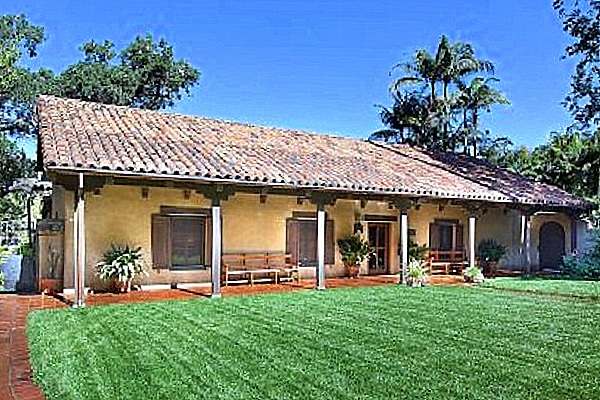
Garcia, Maria Merced usually called Merced; ca. 1837, born in San Diego, perhaps baptized at Mission San Luis Rey (the baptismal records for which are lost); parents: Jose Antonio Esteban Garcia and Maria Guadalupe Uribes; 1844, present in L.A.; July 17, 1858, married cabinet-maker William Abbott; 1860, present in L.A.; 1870, present in L.A.; eponym of the Merced Theater which she and her husband built; her 23-year-old niece Maria Guadalupe Leucadia Garcia was living (and dying) with her in 1882; 1888, in court, with son Amos, for tearing down Salvation Army signs (dismissed on payment of $6 costs); 1891, in court on assault charges, along with son George; there was, in 1892, a “Merced Abbott Block” on N. Main St., perhaps the former Merced Theater; 1898, disturbing the peace; 1902, still alive and declaring to the court that son Amos has lost his reason through use of dope; home in latter days at 550 Mission Road, “one of those stately old Spanish-style houses, surrounded by a great garden and many trees” [L.A. Times, 8/6/1904] ; November 21, 1908, died in L.A.; 1911, estate of $76,303.32 being probated and distributed by executor Frank Abbott; probably the Maria Garcia of the 1850 Census’s household 34 who lived next door to a cabinet-maker (Henry Gurjans) who took in apprentices (such as Merced’s husband-to-be William Abbott?).
And finally, given the spirited nature of Merced Garcia and her children, we can’t fail to note that her mother was a Uribes. “So what?” Come come, now: Merced’s uncle was the interesting Ricardo Uribes, “the most perfect specimen of a desperado I ever beheld. Ricardo could stand more shooting and stabbing than the average bull or grizzly bear” (quoth Horace Bell).





 Prev
Prev













 Google Maps






 Linear Mode
