 Posted Oct 9, 2014, 2:46 PM
|
 |
Registered User
|
|
Join Date: Aug 2002
Location: Toronto
Posts: 50,586
|
|
|
The New City Donut
The New Donut
September 14th, 2014
Read More: http://www.urbanophile.com/2014/09/14/the-new-donut/
Quote:
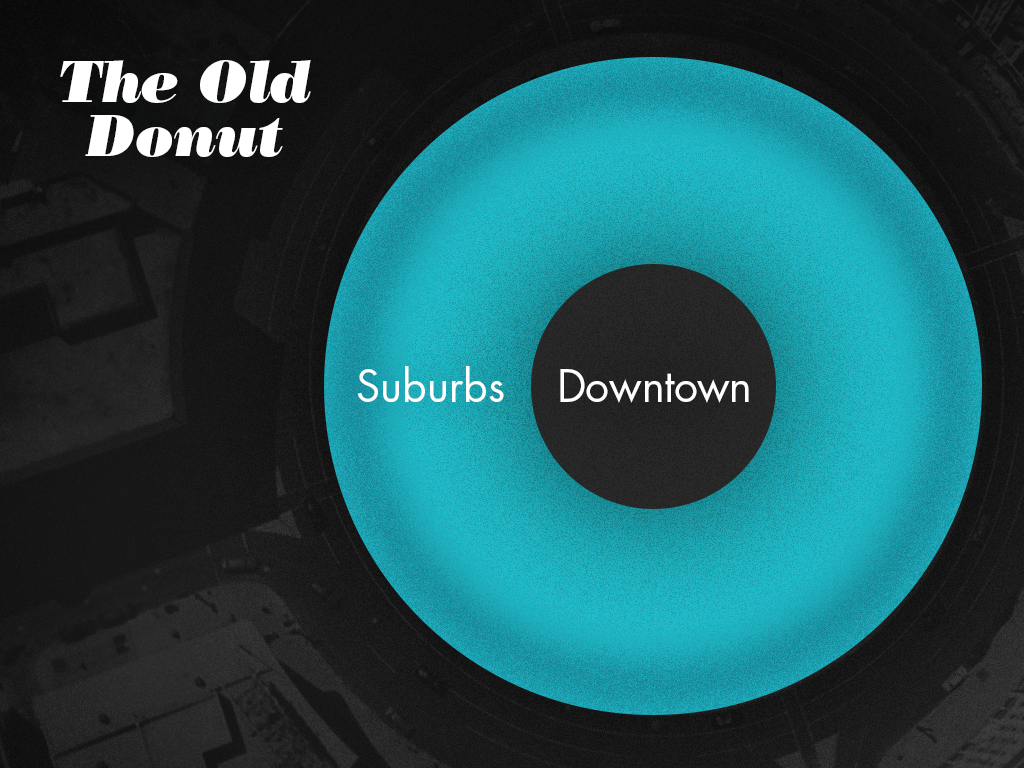
Former Indianapolis Mayor Bill Hudnut used to like to say that “you can’t be a suburb of nowhere.” This is the oft-repeated notion has been a rallying cry for investments to revitalize downtowns in America for three decades or so now. The idea being that you can’t have a smoking hole in your region where your downtown is supposed to be. This created a mental based on a donut.
- Filling in the hole became every city’s mission. Pretty much any city or metro region of any size has pumped literally billions of dollars into its downtown in an attempt to revitalize them. This took many forms ranging from stadiums to convention centers to hotels to parking garages to streetcars to museums and more.
- It’s popular today to subsidize mixed use development with a heavy residential component. These efforts have paid off to a certain degree. Most big city downtowns have done very well as entertainment and visitor districts, eds and meds centers, etc.
- More recently we’ve seen an influx of residents, even in places where the overall city or even region has struggled or declined. Cleveland added about 4,000 net new downtown residents in the 2000s. St. Louis added 3,000. With most cities in some stage of an apartment building spree consisting of a few thousand units, these numbers should only improve.
- Key weaknesses remain in private sector employment (declining in most places) and retail (not enough high income residents yet). And other than the tier one types of cities like Chicago, few places seem to have reached a sustainable market rate development level yet – pretty much everything is getting public assistance.
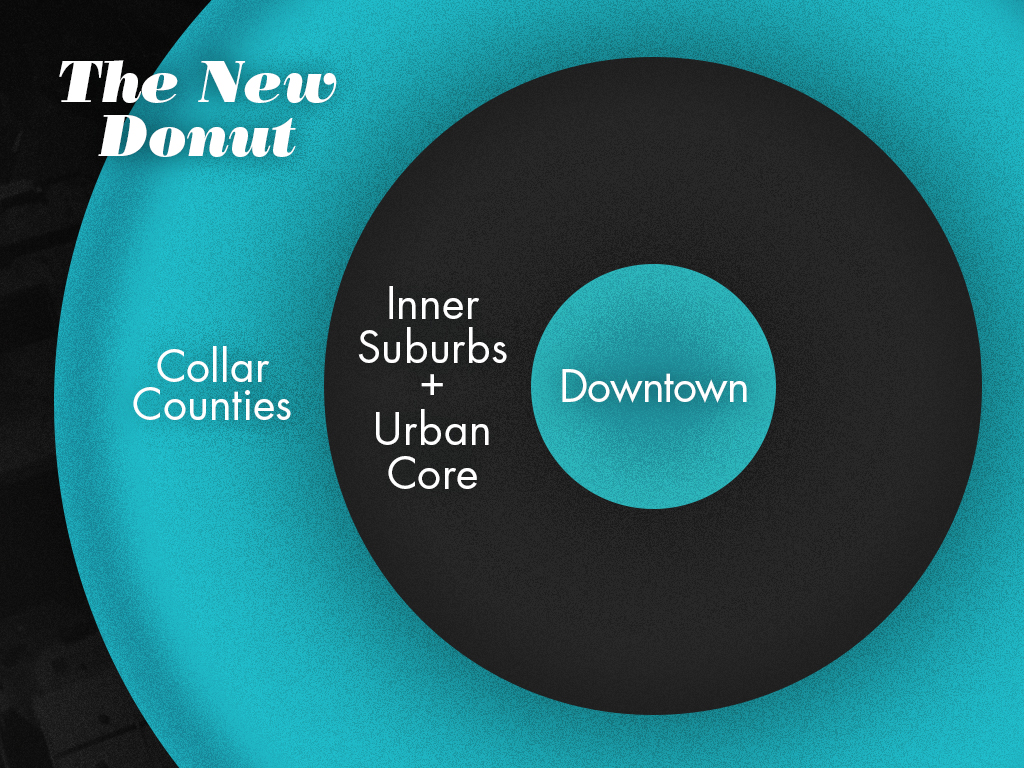
- We’ve got three decades of experience in downtown revitalization, but much less in dealing with this newer challenge zone. I’ve said that suburban revitalization may prove to be the big 21st century “urban” challenge. This is where it is happening in many cases.
- These areas have an inferior housing stock (often small post-war worker cottages or ranches), sometimes poor basic infrastructure, and are sometimes independent municipalities that, like Ferguson, MO, are often overlooked unless something really bad happens. Unlike the major downtown, they are often “out of sight, out of mind” for most regional movers and shakers.
- What’s more, while downtown provides a concentrated location for massive public investment, this more spread out area is too big to fix by throwing money at it. And how many stadiums and convention centers does a region need in any event?
- This is where we need to be doing a lot of thinking about how to bring these places back, look at what’s being done, etc. And also, given the inequality in the country, to try to think about ideas that don’t involve gentrification. One project that appears to be in this kind of zone, for example, is Atlanta’s Beltline project, though there’s a gentrifying aspect to this one. Regions that figure this one out will be at a big advantage going forward.
.....
|
__________________
ASDFGHJK
|




 Threaded Mode