HomeDiagramsDatabaseMapsForum About
     

Go Back   SkyscraperPage Forum > Discussion Forums > City Discussions


Reply

 
Thread Tools Display Modes
     
     
  #3341  
Old Posted Dec 13, 2021, 1:46 PM
Yuri's Avatar
Yuri Yuri is online now
Registered User
 
Join Date: Sep 2008
Posts: 5,610
Quote:
Originally Posted by mhays View Post
The key point isn't Oregon itself, but that it's a national trend -- declining birth rates primarily.

Oregon's did drop more than most however.
Indeed. In 2000, there were 4,058,814 births in the US. In 2010, 3,999,386 and in 2020 only 3,605,201. Provisional figures of the first half of 2021 are available and indicates another fall (1.746 million as opposed to 1.783 million on the same period).

The drop on children/women was even more pronounced, going from 2.06 (2020) to 1.93 (2010) and 1.64 (2020).

It's definitely happening everywhere in the country, with less and less children.
__________________
London - São Paulo - Rio de Janeiro - Londrina - Frankfurt
Reply With Quote
     
     
  #3342  
Old Posted Dec 13, 2021, 2:08 PM
Yuri's Avatar
Yuri Yuri is online now
Registered User
 
Join Date: Sep 2008
Posts: 5,610
I checked the Census tables, and the US population under 18 y/o actually shrank by -1.4% between Census: 74,181,467 (2010) to 73,106,000 (2020).

Source
__________________
London - São Paulo - Rio de Janeiro - Londrina - Frankfurt
Reply With Quote
     
     
  #3343  
Old Posted Dec 13, 2021, 3:36 PM
chris08876's Avatar
chris08876 chris08876 is offline
NYC/NJ/Miami-Dade
 
Join Date: Jul 2013
Location: Great State of NJ
Posts: 49,298
Quote:
Originally Posted by Yuri View Post
I checked the Census tables, and the US population under 18 y/o actually shrank by -1.4% between Census: 74,181,467 (2010) to 73,106,000 (2020).

Source
Immigration will continue to be a driving force in pop growth. Yeah Americans just aren't having as many kids as before (high cost areas, careers, generational thinking, ect).

Which is fine short term but may be an issue down the line. Your growth in your 1st Generation immigrants or residents will be key. Likewise with the 2nd generations.
Reply With Quote
     
     
  #3344  
Old Posted Dec 13, 2021, 6:56 PM
JoninATX JoninATX is offline
Registered User
 
Join Date: Aug 2009
Location: The ATX
Posts: 3,376
Quote:
Originally Posted by C. View Post
I find myself wondering abut 2030 city proper populations.
  • NYC finally hits 9,000,000
  • The New York-Newark-Jersey City, NY-NJ-PA Metro Area undergoes a name change and becomes the New York-Jersey City-Newark, NY-NJ-PA MSA
  • Atlanta falls just short of 600,000
  • Jacksonville and Charlotte topping a million
  • Ft. Worth exceeds a million, tops Austin, and closes in on Dallas
  • Houston overtaking Chicago to be the third largest city in the county
  • All the Texas cities in general continue to see rapid growth
  • Jackson, MS starts a rebound
  • Detroit stabilizes?
Texas cities are still growing at a rapid pace and no slow down in sight. The state will soon be home to 30 million people by late 2022 or early 2023.
Reply With Quote
     
     
  #3345  
Old Posted Dec 13, 2021, 8:25 PM
chris08876's Avatar
chris08876 chris08876 is offline
NYC/NJ/Miami-Dade
 
Join Date: Jul 2013
Location: Great State of NJ
Posts: 49,298
The key for Texan cities or Metros will be not to fall into the housing trap many other metros have (to much demand, not enough housing... driving prices up and slowing down growth in the long run). If they can capitalize on the amount of units built per year, that will do wonders. Possibly taking a cue from some of the gaps of other metros (not building enough housing!). Much of the housing issue is self-induced. Either very poor zoning or zoning that is not in tune with the demand, NIMBY's, anti-growth policies... and so on. Let's just hope those metros continue the unit building and keeping prices reasonable to attract folks.
Reply With Quote
     
     
  #3346  
Old Posted Dec 13, 2021, 8:32 PM
wwmiv wwmiv is offline
Registered User
 
Join Date: Sep 2009
Location: Austin -> San Antonio -> Columbia -> San Antonio -> Chicago -> Austin -> Denver -> Austin
Posts: 5,710
Quote:
Originally Posted by chris08876 View Post
The key for Texan cities or Metros will be not to fall into the housing trap many other metros have (to much demand, not enough housing... driving prices up and slowing down growth in the long run). If they can capitalize on the amount of units built per year, that will do wonders. Possibly taking a cue from some of the gaps of other metros (not building enough housing!). Much of the housing issue is self-induced. Either very poor zoning or zoning that is not in tune with the demand, NIMBY's, anti-growth policies... and so on. Let's just hope those metros continue the unit building and keeping prices reasonable to attract folks.
Austin has already lost that fight, sadly. San Antonio is not too far behind in losing to NIMBYism.
__________________
Houston: 2.4m (+3.9%) + MSA suburbs: 5.4m (+12%) + CSA exurbs: 200k (+5%)
Dallas: 1.3m (+2%) / FtW: 1.0m (+10%) + suburbs: 6.4m (9%) + exurbs: 566k (+9%)
San Antonio: 1.5m (+6%) + MSA suburbs: 1.2m (+10%) + CSA exurbs: 82k (+3%)
Austin: 994k (+3%) + MSA suburbs: 1.6m (+18%)
Texas (whole): 31.29m (+7%) / Texas (balance): 8.6m (+3%)
Reply With Quote
     
     
  #3347  
Old Posted Dec 13, 2021, 9:32 PM
C. C. is offline
Registered User
 
Join Date: Jan 2014
Posts: 3,164
Quote:
Originally Posted by wwmiv View Post
Austin has already lost that fight, sadly. San Antonio is not too far behind in losing to NIMBYism.
And that’s exactly why I think Ft. Worth will exceed Austin in the next Census. Plus home prices are going to be out of reach for in Austin and it continues to be a hip and trendy place to be. I see Fort Worth sprawling as well as more higher density developments near downtown.

I need to retract that Houston will surpass Chicago after reading some of the responses. It will probably happen one day, but 2030 or 2040 Census will not probably be too soon. My thoughts are the lack of zoning and the continued strong economy with affordable home prices when compared to other large cities in the nation would mean continued strong growth for Houston. Just not strong enough to overtake Chicago any time soon.
Reply With Quote
     
     
  #3348  
Old Posted Dec 13, 2021, 9:50 PM
iheartthed iheartthed is offline
Registered User
 
Join Date: Oct 2009
Location: New York
Posts: 11,597
Wow, not one of the five largest cities in Texas has a density above 4k persons/sq mile. That's pretty wild.

Anyway, as they continue to develop, it's a given that at some point the only way these big Texas cities can continue to grow is by densifying. It's just simple math.
Reply With Quote
     
     
  #3349  
Old Posted Dec 13, 2021, 10:35 PM
DCReid DCReid is offline
Registered User
 
Join Date: Jun 2012
Posts: 1,436
Quote:
Originally Posted by iheartthed View Post
Wow, not one of the five largest cities in Texas has a density above 4k persons/sq mile. That's pretty wild.

Anyway, as they continue to develop, it's a given that at some point the only way these big Texas cities can continue to grow is by densifying. It's just simple math.
But they do not necessarily have to grow given the suburbs that they have, the amount of land, and the apparent preference for suburban living. Samsung just picked a little town 40 miles north of Austin for a $10-20 billion factory, so the Austin suburbs will sprawl even more north. DFW has suburbs near or over the OK border, and now is building like crazy 15 miles from Frisco, TX, which is already 30 miles north of Dallas. Houston metro's growth is extending north of Woodlands, which is already 25 miles from Houston...unless the preference for big mcmansions, large lawns and lower rise office and retail centers change in TX, I doubt the sprawl will reverse...I could even see Austin city slowing down in pop. gain like Houston city has, even with the metro population still growing rapidly.

Last edited by DCReid; Dec 13, 2021 at 10:37 PM. Reason: error
Reply With Quote
     
     
  #3350  
Old Posted Dec 14, 2021, 3:12 PM
iheartthed iheartthed is offline
Registered User
 
Join Date: Oct 2009
Location: New York
Posts: 11,597
Quote:
Originally Posted by DCReid View Post
But they do not necessarily have to grow given the suburbs that they have, the amount of land, and the apparent preference for suburban living.
Yes, but this is basically what happened in big Rust Belt metros post 1950. Texas central cities won't be able to maintain this growth without densifying at some point. If they don't densify then it'll create a cycle where all of the new investment gets steered towards newly built suburbs every half generation, while all of the property values in the core plummet.
Reply With Quote
     
     
  #3351  
Old Posted Dec 14, 2021, 4:38 PM
mhays mhays is online now
Never Dell
 
Join Date: Jul 2001
Posts: 20,926
In theory you can have tons of investment in the center without really densifying. California does this a lot. Demand is high in existing areas, but they don't build much new supply, so prices skyrocket, but mostly you get renovations and maintenance.
Reply With Quote
     
     
  #3352  
Old Posted Dec 14, 2021, 5:09 PM
iheartthed iheartthed is offline
Registered User
 
Join Date: Oct 2009
Location: New York
Posts: 11,597
Quote:
Originally Posted by mhays View Post
In theory you can have tons of investment in the center without really densifying. California does this a lot. Demand is high in existing areas, but they don't build much new supply, so prices skyrocket, but mostly you get renovations and maintenance.
But California cities have physical constraints on sprawl, which probably won't ever be an issue in a place like Dallas.
Reply With Quote
     
     
  #3353  
Old Posted Dec 14, 2021, 5:28 PM
subterranean subterranean is online now
Registered Ugly
 
Join Date: Oct 2003
Location: Portland
Posts: 3,845
Quote:
Originally Posted by iheartthed View Post
But California cities have physical constraints on sprawl, which probably won't ever be an issue in a place like Dallas.
Being what? Have you seen the Inland Empire? The central valley?
Reply With Quote
     
     
  #3354  
Old Posted Dec 14, 2021, 5:34 PM
iheartthed iheartthed is offline
Registered User
 
Join Date: Oct 2009
Location: New York
Posts: 11,597
Quote:
Originally Posted by subterranean View Post
Being what? Have you seen the Inland Empire? The central valley?
L.A. is surrounded by mountains, the ocean, and a gigantic military base. Dallas can sprawl out whichever way the wind blows.
Reply With Quote
     
     
  #3355  
Old Posted Dec 14, 2021, 5:42 PM
subterranean subterranean is online now
Registered Ugly
 
Join Date: Oct 2003
Location: Portland
Posts: 3,845
Quote:
Originally Posted by iheartthed View Post
L.A. is surrounded by mountains, the ocean, and a gigantic military base. Dallas can sprawl out whichever way the wind blows.
You could fit 2 Dallas-Fort Worths side by side in Metro L.A. and still not reach its farthest burbs. It's 120 miles from Ventura to San Bernadino. I'd hardly say that's physically constrained. And in some situations, mountains and water make spawl worse, with a hopscotch pattern of development and commuting patterns. I've felt this has always been the case with the Bay Area. Everything is so spread out due to the bay.
Reply With Quote
     
     
  #3356  
Old Posted Dec 14, 2021, 5:48 PM
Crawford Crawford is online now
Registered User
 
Join Date: Nov 2003
Location: Brooklyn, NYC/Polanco, DF
Posts: 34,415
Yeah, LA can sprawl forever too, just not in all directions. The development just leapfrogs the mountain ranges and protected areas.

And I'm not getting why people assume that Dallas will densify because it's sprawling into Oklahoma. That makes no sense. That has never, ever happened, in U.S. history, where a Sunbelt sprawler with no growth limits suddenly morphed into a dense city.
Reply With Quote
     
     
  #3357  
Old Posted Dec 14, 2021, 5:57 PM
DCReid DCReid is offline
Registered User
 
Join Date: Jun 2012
Posts: 1,436
Quote:
Originally Posted by iheartthed View Post
Yes, but this is basically what happened in big Rust Belt metros post 1950. Texas central cities won't be able to maintain this growth without densifying at some point. If they don't densify then it'll create a cycle where all of the new investment gets steered towards newly built suburbs every half generation, while all of the property values in the core plummet.
And I also think a similar pattern to some suburban Rust Belt and older eastern metros may occur (or already be occurring) in those TX and other fast growing sunbelt cities. Some of the close in suburbs or edges of the main city will deteriorate as more far out suburbs appear, especially the close-in suburbs that were quickly built with cookie cutter homes, little character, or had one or two main employment/retail centers. The cities may actually have a nicer main core surrounded by rings of run-down close-in suburbs/edge of the main city, with more remote ring of nice newer exurbs.

Last edited by DCReid; Dec 14, 2021 at 5:57 PM. Reason: error
Reply With Quote
     
     
  #3358  
Old Posted Dec 14, 2021, 6:07 PM
mhays mhays is online now
Never Dell
 
Join Date: Jul 2001
Posts: 20,926
When the main sprawl option is 80 miles from Downtown, the result will often be infill or not growing. That's a huge reason why greater LA is a low-growth area.

It's nothing like Dallas.
Reply With Quote
     
     
  #3359  
Old Posted Dec 14, 2021, 6:21 PM
mrnyc mrnyc is offline
cle/west village/shaolin
 
Join Date: Jul 2006
Posts: 14,681
here is some digested and interesting census results news for cleveland:


Cleveland: growing faster than the national average, and shrinking

By Ken Prendergast / September 1, 2021


In the simpler days of Census data, population numbers for a given metro area either went up or down in lockstep with that region’s economic output. There were few wrinkles in the data to pull apart and analyze. Now, there’s tons of data to grapple with, offering multiple story lines.

...

After a hiatus in 2020, downtown was back in power in 2021, accounting for one-third of all apartment demand in Greater Cleveland.


more:
https://neo-trans.blog/2021/09/01/cl...and-shrinking/
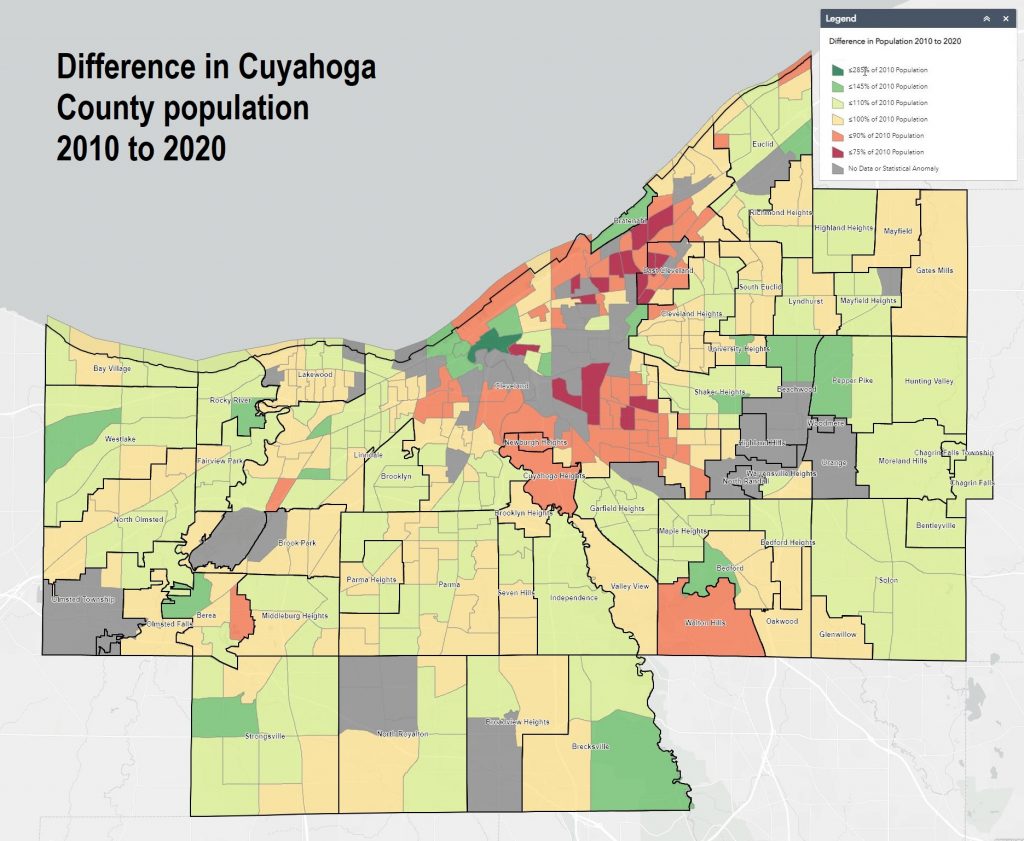


Cleveland’s “best of times and worst of times” is evident in this map showing population change in each Census tract during the 2010s.
Cleveland accounted for the fastest growing and some of the fastest declining Census tracts (Cuyahoga County GIS).

Reply With Quote
     
     
  #3360  
Old Posted Dec 14, 2021, 7:14 PM
urbanadvocate urbanadvocate is offline
Registered User
 
Join Date: Dec 2009
Posts: 213
Quote:
Originally Posted by subterranean View Post
Being what? Have you seen the Inland Empire? The central valley?
Parts of the central valley are actually pretty restrictive because of flood plains, and at least in the northern half, protected wetlands. Additionally, it is the most productive farmland in the country which is no small matter.
Reply With Quote
     
     
This discussion thread continues

Use the page links to the lower-right to go to the next page for additional posts
 
 
Reply

Go Back   SkyscraperPage Forum > Discussion Forums > City Discussions
Forum Jump


Forum Jump


All times are GMT. The time now is 6:45 PM.

     
SkyscraperPage.com - Privacy Statement - Top

Powered by vBulletin® Version 3.8.7
Copyright ©2000 - 2026, vBulletin Solutions, Inc.