HomeDiagramsDatabaseMapsForum About
     

Go Back   SkyscraperPage Forum > Regional Sections > Canada > Manitoba & Saskatchewan


Reply

 
Thread Tools Display Modes
     
     
  #61  
Old Posted May 20, 2026, 2:50 AM
bomberjet bomberjet is online now
Registered User
 
Join Date: Nov 2012
Location: Winnipeg
Posts: 16,293
Call me an idiot. But I had assumed that deal was already cancelled and the land was part of this new project..
Reply With Quote
     
     
  #62  
Old Posted May 20, 2026, 1:25 PM
cheswick's Avatar
cheswick cheswick is offline
Registered User
 
Join Date: Nov 2010
Location: South Kildonan
Posts: 3,007
Quote:
Originally Posted by bomberjet View Post
Call me an idiot. But I had assumed that deal was already cancelled and the land was part of this new project..
You're an idiot.
__________________
There are 10 kinds of people in this world. Those who understand binary, and those who don't.
Reply With Quote
     
     
  #63  
Old Posted Jun 19, 2026, 3:16 PM
Wpg_Guy's Avatar
Wpg_Guy Wpg_Guy is online now
Moderator
 
Join Date: Aug 2002
Location: Winnipeg, Manitoba
Posts: 7,814
From the report titled: Surplus Declaration and Sale of Property Adjacent to 180 Market Avenue – Council – June 25, 2026

  • The PAC has to date raised $17m in private sector support and $15m in provincial support. With a $22m ask in front of the Federal government, the PAC will launch a capital campaign to raise the $10m from the private sector required to complete the project.
__________________
Winnipeg Act II - April 2024

Winnipeg Developments

In The Future Every Building Will Be World-Famous For Fifteen Minutes.
Reply With Quote
     
     
  #64  
Old Posted Jun 19, 2026, 5:01 PM
ColdRain&Snow's Avatar
ColdRain&Snow ColdRain&Snow is offline
Registered User
 
Join Date: Apr 2023
Location: Winnipeg
Posts: 1,550
Quote:
Originally Posted by Wpg_Guy View Post
From the report titled: Surplus Declaration and Sale of Property Adjacent to 180 Market Avenue – Council – June 25, 2026

  • The PAC has to date raised $17m in private sector support and $15m in provincial support. With a $22m ask in front of the Federal government, the PAC will launch a capital campaign to raise the $10m from the private sector required to complete the project.
Thanks for the update. That's still a lot of money to raise unfortunately.
__________________
"Build baby build."
Reply With Quote
     
     
  #65  
Old Posted Jul 22, 2026, 11:49 PM
Wpg_Guy's Avatar
Wpg_Guy Wpg_Guy is online now
Moderator
 
Join Date: Aug 2002
Location: Winnipeg, Manitoba
Posts: 7,814
Quote:
Provincial Investment Brings New Life to Pantages Playhouse Theatre
July 22, 2026

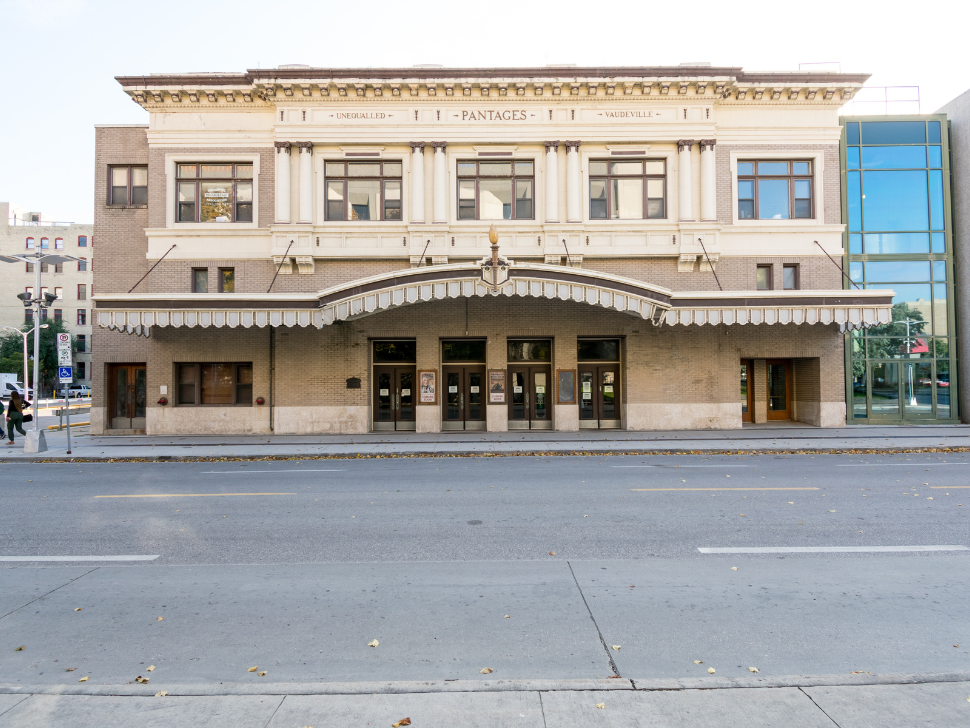
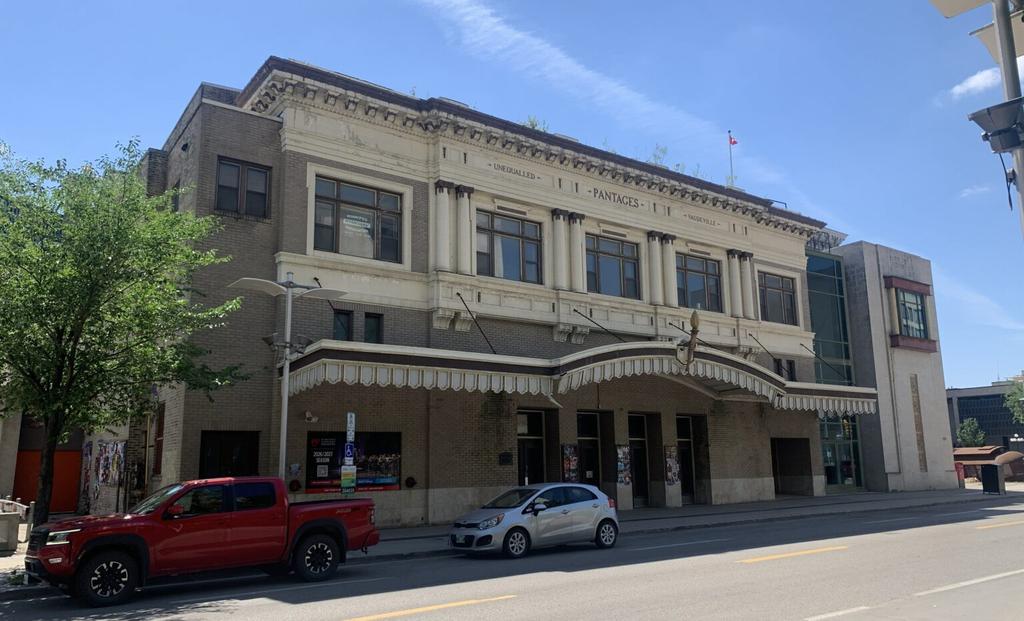
The Pantages Playhouse Theatre, located at 180 Market Avenue, has stood as one of Winnipeg’s most recognizable venues in the Historic Exchange District for 110 years. Now, thanks to a $15 million investment from the provincial government, there is newfound hope for the historic theatre after years of threats of closure.

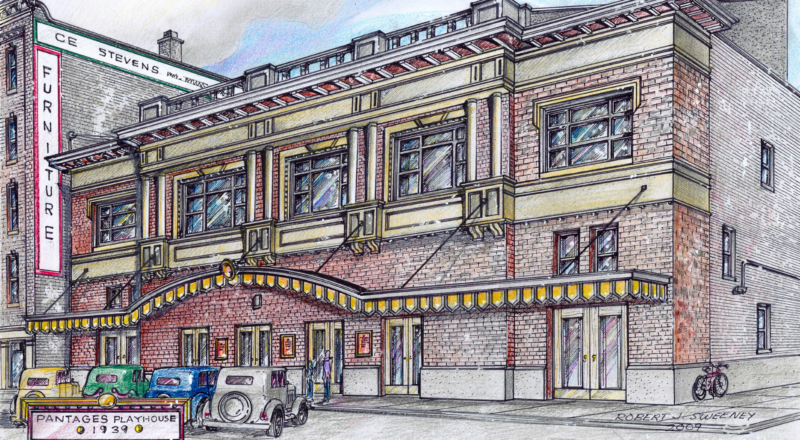
Designed by architect B. Marcus Priteca, the Pantages Playhouse Theatre was built between 1913 and 1914 for Alexander Pantages’ growing vaudeville circuit. Constructed at a cost of nearly $250,000, it was a substantial investment for the period. The theatre was designed in the Classical Revival style (sometimes referred to as “Pantages Greek”) with an elegant terra cotta façade, richly ornamented interior, and lavish plaster detailing that created a sense of grandeur for audiences before the curtain even rose. Priteca was the principal architect for Alexander Pantages’ theatre empire and designed dozens of theatres across North America. The Winnipeg theatre is considered one of his finest surviving works.


he Pantages Playhouse was also the first theatre of its size in North America to be constructed with a reinforced concrete frame, innovative engineering that helped ensure the building’s remarkable survival over more than a century. Originally recorded with a seating capacity of over 1,700, it was reduced to 1,500 in 1980.

Unlike many vaudeville theatres that were heavily altered or demolished, the Pantages retains much of its original architectural character. The Playhouse is one of only six surviving Pantages theatres in the world and Winnipeg’s only remaining vaudeville theatre. The theatre was created as a temple to vaudeville, a style of entertainment that dominated North American stages in the early twentieth century. Vaudeville was marketed as ‘variety’ entertainment and demanded that performers be versatile. Successful acts combined comedy, singing, juggling, magic, acrobatics, ventriloquism, and other skills into a single performance.

Historians divide the theatre’s early history into three distinct periods: the Pantages Years (1914–1923), the Playhouse Years (1923–1933), and the City Years (1936-Present). During its first decade, the theatre served as part of Alexander Pantages’ vaudeville circuit, where the success of an act in Winnipeg often determined whether it would continue westward to other theatres in the chain. Notable acts during the first decade include Buster Keaton and Stan Laurel.

However, the growing popularity of film began to take over live performances. By the early 1920s, films were becoming more affordable and increasingly sophisticated. On any given night, the Pantages Theatre was competing against ten movie theatres offering Winnipeggers new and exciting entertainment, and the Pantages’ vaudeville model became difficult to sustain. On June 23, 1923, it was announced that the Pantages: Unequalled Vaudeville Theatre would close.

Just three months later, the building reopened as the “Pantages Playhouse Theatre.” Under its new name, the venue hosted concerts, recitals, lectures, school productions, films, and even local boxing matches between scheduled performances. Eventually, many performing arts organizations migrated to the newly opened Winnipeg Auditorium in 1932, and the Playhouse quietly closed in June the following year. When attempts to sell the theatre to a new owner failed, the city acquired the building in 1936. In the years that followed, the theatre would continuously change its leases and tenants.

The theatre also holds a special place in the history of the Royal Winnipeg Ballet, the theatre’s longest-serving tenant. In June 1940, the company presented its first performance at the Pantages and continued to use the theatre as its home until the opening of the Centennial Concert Hall in 1968.

Over the decades, countless world renowned performers graced its stage. During the 1950s, one of the theatre’s most successful eras, major touring productions brought internationally celebrated artists to Winnipeg audiences. Shows such as The Greatest Jazz Concert in the World featured performers including Ella Fitzgerald, Buddy Rich, and Oscar Peterson.

On January 5th, 1981, the theatre was municipally designated a historical site by the City of Winnipeg. It was recognized as a National Historic Site of Canada in 1985, with a commemorative plaque installed in its lobby. Parks Canada’s current heritage records list November 15, 1986, as the official designation date and reference a 1989 statement of significance prepared by the Historic Sites and Monuments Board of Canada.

The Pantages has remained an integral part of Winnipeg’s arts community. For decades, organizations such as Dance Manitoba, the Winnipeg Fringe Festival, and the Winnipeg Comedy Festival have relied on the theatre as a performance site. Dance Manitoba has hosted its Showcase and annual spring festival at Pantages for almost four decades. The Winnipeg Fringe Festival used the Pantages as not one but two venues; they have had to find replacement venues for at least 10 performance groups since the theatre’s closure in 2018 forced many artists and arts organizations to look elsewhere.

The loss was particularly felt by performers who had developed a deep connection to the theatre. Local improviser and producer Caity Curtis, who performed at the Pantages during multiple Winnipeg Fringe Festivals, described it as her favourite theatre. She says that she and her partner, Stephen Sim, have decided not to perform their vaudeville show in this year’s festival because “if it’s not at the Pantages, it isn’t right.” She goes on to add,

Performing vaudeville at the Pantages Theatre has been the highlight of my career. I’ve never seen an audience fall in love with a show as quickly and deeply as I’ve seen happen at Pantages. While I’d love to take credit as a performer, I have to say there’s a power in the space that captivates everyone.

Their duo show, which is inspired by comedy greats like Burns and Allen, was met with great acclaim each year. For many artists, the Pantages offers something unique, a sense of intimacy, history, and atmosphere that could not be replicated elsewhere.

While much attention is focused on the 1914 theatre, the complex also includes a significant 1992 addition constructed for the Royal Winnipeg Ballet. Designed in a Postmodern architectural style, the addition reflects a very different era of design from the original theatre. Postmodern architecture emerged as a reaction against modernism, reintroducing historical references and decorative elements into contemporary buildings.

The addition will turn 40 in 2032, an age when many heritage professionals begin recognizing buildings for heritage designation.

Heritage Winnipeg commends the provincial government’s recent commitment of $15 million toward the theatre’s revitalization. The funding announcement, made in May of 2026, provided the final major piece of support needed to move the project forward. The project represents a partnership between the Performing Arts Consortium of Winnipeg, which purchased the building in 2020, and the Winnipeg Symphony Orchestra, which will serve as the managing tenant and help transform the space into a renewed performing arts centre.
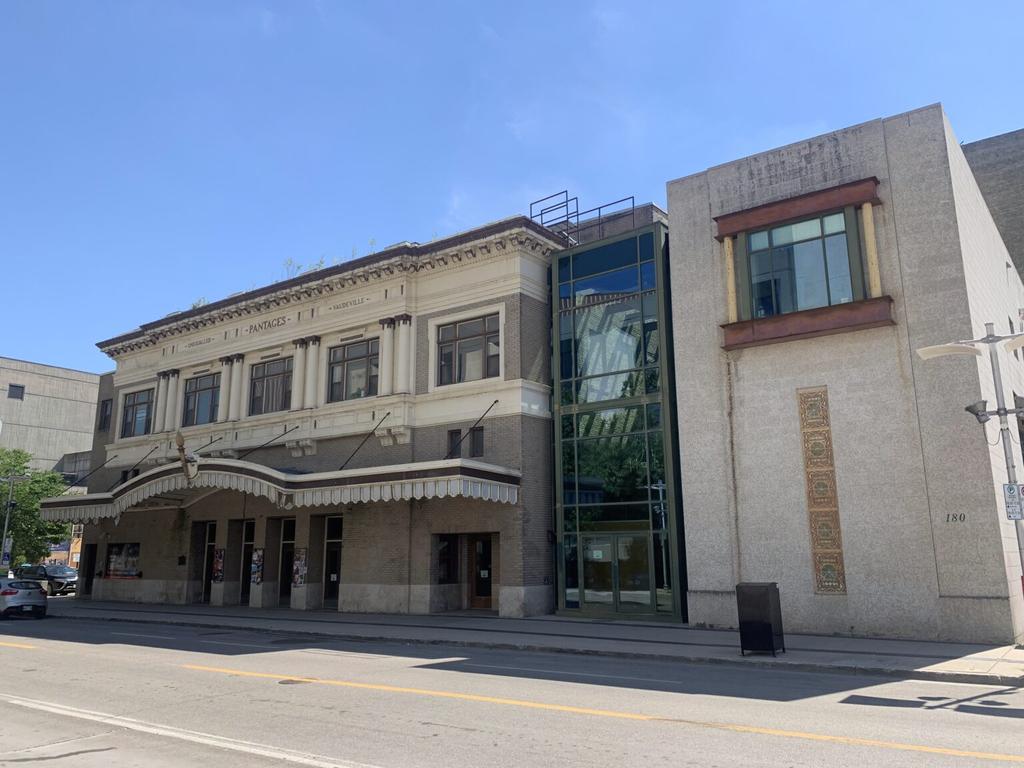


The renovated building will become the Winnipeg Symphony Orchestra’s permanent rehearsal, educational, administrative and mid-sized performance home while remaining available to community cultural organizations and other professional performing arts groups. Project leaders envision the theatre being active approximately 250 to 300 days each year, helping restore a major cultural destination to downtown Winnipeg. Bringing regular activity back into the building will help secure the theatre’s long-term future.

The redevelopment is aiming to conserve the theatre’s most significant heritage features while at the same time modernizing the building for contemporary use. Restoration work is expected to focus on preserving the historic auditorium, decorative plasterwork, stage house, and other character-defining elements that contribute to the building’s heritage value. Upgrades to accessibility, life-safety systems, mechanical infrastructure, and backstage facilities will help ensure the building remains viable for ongoing usage.

After sitting vacant since 2018, the Pantages Playhouse Theatre is set to become an active place for arts, culture, heritage and community life in downtown Winnipeg once again. The investment reassures the existence of an irreplaceable heritage building and also supports the ongoing revitalization of the city’s downtown core.

The Pantages Playhouse Theatre is one of the most architecturally and historically significant entertainment venues in Canada. As one of only six surviving Pantages theatres worldwide and one of the best-preserved examples of vaudeville-era theatre design in the country, its survival secures a rare connection to a form of entertainment that once shaped urban life across North America.

The Pantages has witnessed more than a century of entertainment and creativity. Its story represents the evolution of the city’s performing arts scene and its community, from vaudeville and jazz concerts to ballet, comedy, theatre, and dance.

Today, with renewed support and a vision for the future, the Pantages Playhouse Theatre stands ready to begin its next act.
Written by Heritage Winnipeg
__________________
Winnipeg Act II - April 2024

Winnipeg Developments

In The Future Every Building Will Be World-Famous For Fifteen Minutes.
Reply With Quote
     
     
  #66  
Old Posted Jul 29, 2026, 12:55 AM
Wpg_Guy's Avatar
Wpg_Guy Wpg_Guy is online now
Moderator
 
Join Date: Aug 2002
Location: Winnipeg, Manitoba
Posts: 7,814
Quote:
Vancouver's arts vision and Winnipeg's Pantages project share a common goal
Chris Wolf, Classic107.com | Tuesday, Jul 28 2026, 9:44 AM


At first glance, Vancouver and Winnipeg might seem to be facing very different cultural realities. Vancouver is Canada's third-largest metropolitan area, while Winnipeg has long established itself as one of the country's cultural capitals despite its smaller population. Yet announcements from both cities reveal a strikingly similar problem: a shortage of performing arts venues that meet the needs of modern artists and audiences.

In Vancouver, a coalition of 32 arts organizations have unveiled an ambitious proposal to create a new four-venue Cultural Precinct in the heart of downtown. In Winnipeg, the Winnipeg Symphony Orchestra (WSO) and the Performing Arts Consortium (PAC) have released detailed plans to restore the historic Pantages Theatre into a state-of-the-art performing arts venue.

Although vastly different in scale, both projects are built on the same central idea: investing in performance infrastructure is essential to ensuring the long-term health of Canada's performing arts sector.

Vancouver's Bold Vision for a Cultural Future

The Vancouver Cultural Precinct (VCP), led by the Vancouver Concert Hall and Theatre Society, is proposing one of the most ambitious performing arts developments in Canada in decades. Following a two-year feasibility study involving 32 performing arts organizations, the plan calls for four purpose-built venues designed to accommodate performances ranging from intimate chamber music to large-scale opera and ballet.

The proposed district would include a 400-seat Small Hall, an 850-seat Medium Hall, a 1,750-seat Concert Hall, and a 2,000-seat proscenium theatre. Each venue has been designed around an "acoustic-first" philosophy while offering flexible configurations for multiple performance styles.

The study argues that Vancouver has reached a critical point. With only 0.52 performing arts seats per thousand residents, the lowest per-capita music hall capacity among comparable Canadian and international cities. The city's cultural infrastructure has failed to keep pace with population growth. Arts organizations regularly compete for limited performance dates, while touring productions often bypass Vancouver altogether because suitable venues simply are not available.

As Vancouver Concert Hall and Theatre Society Chair Suzanne Anton noted, the proposal represents "a historic opportunity" to create the world-class venues that artists and audiences have long deserved.

Winnipeg's Solution Begins with One Historic Theatre

While Vancouver is envisioning an entirely new performing arts district, Winnipeg's proposal focuses on breathing new life into one of the city's most beloved historic landmarks.

The Performing Arts Consortium of Winnipeg and the Winnipeg Symphony Orchestra have unveiled plans to renovate the century-old Pantages Theatre into a modern, acoustically sophisticated performance venue capable of serving both the WSO and the broader arts community.

Rather than constructing multiple new buildings, the project aims to transform the existing 1,100-seat theatre into a flexible venue suitable for orchestral concerts, theatre productions, dance performances, comedy, community events, and touring artists.

The proposal would dramatically modernize the building while preserving its historic character. Planned improvements include a larger stage, an orchestra pit, improved sightlines, new stage rigging, modern electrical and mechanical systems, enhanced accessibility, expanded public spaces, upgraded seating, and significant acoustic improvements.

For the WSO, the project represents something it has lacked for decades: a venue designed specifically around the needs of a professional orchestra.

A Shared Recognition That Performance Spaces Matter

Despite the different approaches, Vancouver and Winnipeg are responding to remarkably similar challenges.

In Vancouver, the shortage is primarily one of capacity. Most of the city's available seats are concentrated in two very large venues, the Orpheum and the Queen Elizabeth Theatre, leaving relatively few options for mid-sized performances. Even internationally recognized organizations such as the Vancouver Youth Choir reportedly struggle to secure appropriate performance dates.

Similarly, the Vancouver Symphony Orchestra has argued that neither of its principal performance venues was originally designed for orchestral music. Instead, orchestra officials have emphasized the need for an acoustically superior hall in the 1,800-seat range.

Winnipeg faces a different version of the same issue.

Since the closure of Pantages Theatre in 2018, the city has lost an important mid-sized performance venue. According to WSO Executive Director Angela Birdsell, in its final year of operation the theatre hosted more than 75 community and professional organizations across 150 days of performances. Those users ranged from dance schools and theatre companies to jazz concerts, choirs, comedy shows, and community events.

The loss of that venue has left a noticeable gap in Winnipeg's performing arts ecosystem.

Both cities therefore recognize that successful arts communities require more than just performers, they require venues that match the scale and technical needs of those performances.

Community Partnerships Drive Both Projects

Another notable similarity is the collaborative approach behind both initiatives.

Neither proposal is simply an orchestra seeking a new home.

Vancouver's Cultural Precinct emerged through consultation with 32 performing arts organizations and is supported by community leaders, municipal officials, and representatives from provincial and federal governments. The vision extends beyond classical music to include theatre, dance, Indigenous performance, storytelling, opera, and touring productions.

Likewise, Winnipeg's Pantages proposal has been developed through an extensive partnership between the Performing Arts Consortium and the WSO. Architects, theatre consultants, acoustic specialists, engineers, construction experts, and digital performance consultants spent months developing plans that would accommodate both professional orchestras and community users.

Both projects also recognize that government investment alone will not be enough.

In Vancouver, organizers are working to build a funding coalition involving municipal, provincial, federal, Indigenous, philanthropic, and private-sector partners.

Winnipeg's proposal follows a similar path. The estimated $55 to $60 million restoration would combine government funding with private donations. $15 million has already been pledged, with organizers hoping to secure approximately half of the required funding before launching a major public capital campaign.

The funding models reflect a growing understanding that major cultural infrastructure succeeds only when governments, businesses, foundations, donors, and arts organizations work together.

Different Projects, Shared Goals

Although Vancouver's proposal is much larger in scale than Winnipeg's, both initiatives ultimately pursue the same objective: ensuring that performing arts organizations have spaces designed for the twenty-first century.

Vancouver hopes to establish an entirely new cultural district capable of serving generations of artists while transforming the city's international cultural profile.

Winnipeg's proposal seeks to restore one of Canada's historic theatres into a vibrant community hub that once again becomes home to professional performances, community events, and the Winnipeg Symphony Orchestra.

Both projects acknowledge something that is sometimes overlooked in discussions about the arts: outstanding performances depend not only on talented musicians and audiences, but also on the spaces in which those performances take place.

Whether through the construction of an entirely new performing arts district or the thoughtful restoration of a historic theatre, Vancouver and Winnipeg are demonstrating that investing in cultural infrastructure is an investment in the future of their artistic communities, and their local economies. Vibrant performance venues attract audiences who also support nearby restaurants, cafés, hotels, and shops, helping to breathe life into downtown districts. At the same time, they give artists and community organizations the spaces they need to create, perform, and inspire future generations. These projects recognize that strong arts infrastructure doesn't just strengthen culture, it strengthens the city as a whole.
Classic 107
__________________
Winnipeg Act II - April 2024

Winnipeg Developments

In The Future Every Building Will Be World-Famous For Fifteen Minutes.
Reply With Quote
     
     
End
 
 
Reply

Go Back   SkyscraperPage Forum > Regional Sections > Canada > Manitoba & Saskatchewan
Forum Jump


Forum Jump


All times are GMT. The time now is 5:03 PM.


Powered by vBulletin® Version 3.8.7
Copyright ©2000 - 2026, vBulletin Solutions, Inc.