How 150-year-old technology keeps Ottawa's water flowing
The Fleet Street pumping station just celebrated its 150th birthday, and we got peek inside.
Author of the article:
Blair Crawford
Published Nov 06, 2024 • Last updated 5 hours ago • 4 minute read
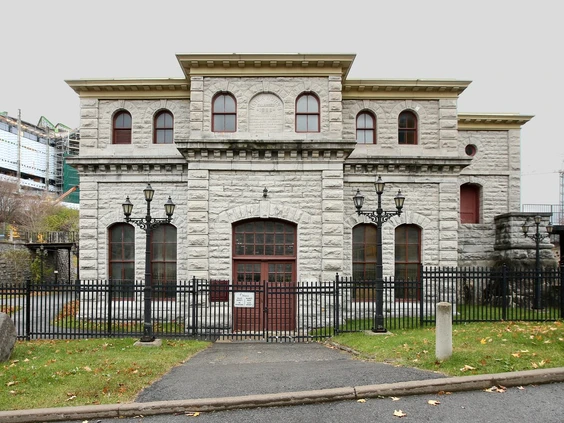
The Fleet Street Pumping Station, located in downtown Ottawa in the Lebreton Flats area, celebrates its 150th anniversary this year. Photo by JULIE OLIVER /Postmedia
Where would you look to find the heart of Ottawa?
It’s not the ByWard Market, the Rideau Canal Skateway or even on the green-carpeted floor of the House of Commons.
The city’s real beating heart is hidden behind the stone walls of the Fleet Street Pumping Station, where five huge pumps feed hundreds of millions of litres of drinking water each day. Remarkably, the technology is nearly unchanged from the day it opened, on Halloween 1874, when Alexander Mackenzie was prime minister and horse and wagons travelled the city’s muddy streets.
Fleet Street, which celebrated its 150th birthday last week, is the last remaining water-driven pumping station in the country.
“It’s very simple, but very effective,” says Paul Montgomery, plant manager of the Fleet Street Pumping Station and the Lemieux Island Water Treatment Plant.
“People ask why we haven’t replaced these with electric power,” Montgomery said, struggling to be heard above the din of five horsepower pumps that together deliver 2,400 horsepower. “Why would we? Can you imagine the size of the electric motors and generators we would need to replace them?”
Using water power to drive the pumps also saves money — about $1.2 million a year in electricity costs, he said. And since they run on river power, not even a city-wide electricity blackout would keep the water from flowing.
Tucked beneath an escarpment at the eastern edge of LeBreton Flats, the Fleet Street Pumping Station may be barely noticed by those walking or cycling past over the adjacent Pooley’s Bridge. Few would imagine the mysterious workings inside.
The pumping station was designed by Thomas C. Keefer, a Canadian civil engineer who also built water works in Montreal and Hamilton. Keefer’s plan was to harness the flow of the Ottawa River to drive the pumps. Its original purpose, however, was not to supply drinking water.
“It was built to provide water for fighting fires,” Montgomery said. “In the 1800s, there were huge fires in cities like Ottawa. Businesses wanted to buy insurance, but the insurance companies insisted there had to be an adequate water supply. It was the insurance companies that demanded it.”
(Ottawa’s first fire brigade was formed the same year that Fleet Street opened, but ironically, neither would help much when the great fire of 1900 destroyed a fifth of the city.)
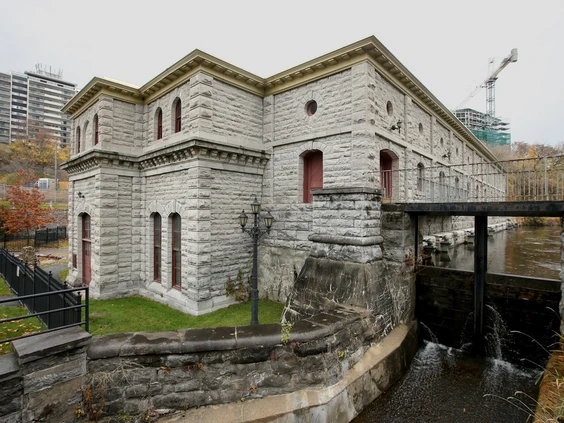
River water enters the system through gates in Nepean Bay, just west of the Canadian War Museum. It flows about 500 metres along an aqueduct to the pumping station where it enters into five portals, one for each pump. After passing through a screen to keep debris out, the water power spins turbines that in turn drive massive gearboxes that transfer that power to the pumps.
Though the machinery has been updated, it’s hardly new. The gearboxes date from 1932 and 1943. Detailed blueprints, hand-drafted by craftsman at the long-gone Dominion Engineering Works of Montreal, sit on a table, ready for use should a replacement part need to be machined.
When the Lemieux Island treatment plant opened in 1932, Fleet Street was converted to supply drinking water. A pipe laid on the floor of the aqueduct carries the clean, potable water to the pumping station for distribution. Fleet Street’s pumps send the water to 95 per cent of the city’s residents, from Orléans in the east, Stittsville in the west and Manotick in the south.
On an average day, Ottawa uses about 300 million litres of water, Montgomery said. Lemieux Island and Fleet Street together can produce about 400 million litres of water. The city’s second water treatment plant in Britannia adds another 360 million litres a day.
Either one can easily meet Ottawa’s demands. In fact, a couple of times a month one or the other plants is shut down for maintenance and just one plant supplies the city’s water. There’s space at Fleet Street to add a sixth pump, and if needed, Lemieux Island’s capacity could be bumped up to 600 million litres, he said.
“The city is growing, for sure, but people are using a lot less water than they used to,” he said. “You’ve got more efficient fixtures today and water itself costs a lot more so people are getting thrifty with it. And there’s a change of demographics. People just aren’t using as much outdoor water as they used to.”
The Fleet Street Pumping Station was designated a national historic site in 1982. That can complicate work on the exterior — “There just aren’t that many stone masons around to do the work,” Montgomery says — but doesn’t affect changes or modifications needed inside the plant.
Still, a look inside the station, with it’s polished wooden bannisters, historic plaques and gnashing gears, would seem still seem familiar to the 19th-century tradesmen who built it. The next time you step into the shower, fill the sink or even flush the toilet, spare a thought for the Fleet Street Pumping Station, the beating heart that makes it possible.
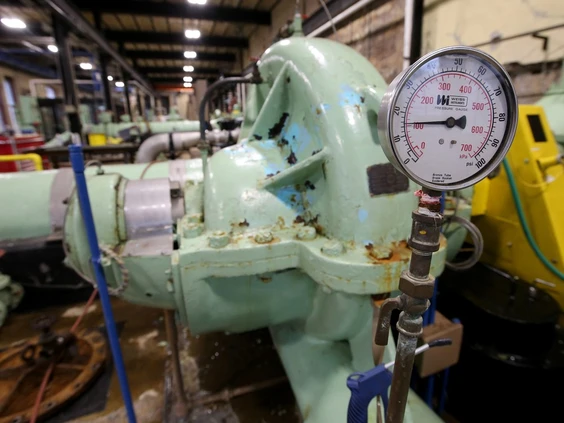
The massive gearboxes date to the 1930s and 40s and are still in use today. Photo by JULIE OLIVER /Postmedia
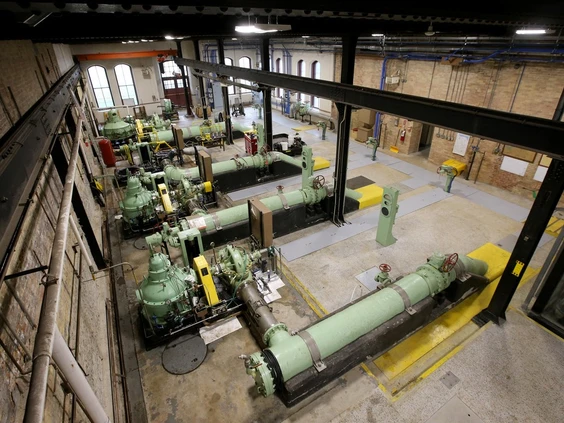
Five water-powered pumps deliver 2400 horsepower to pump drinking water into the city’s distribution network. Photo by JULIE OLIVER /Postmedia
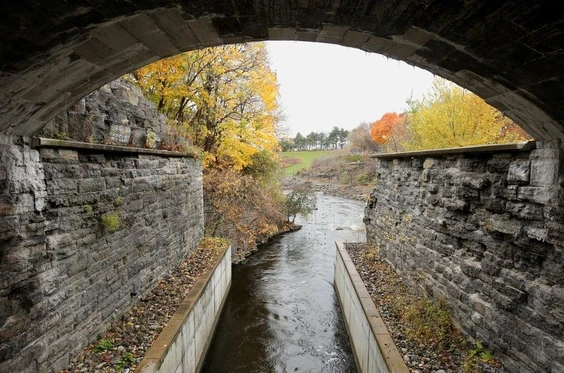
Water empties from the pumping station downs a spillway that into a kayaking course below Pooley’s Bridge. Photo by JULIE OLIVER /Postmedia

A hand-drafted blue print of the gearbox, dated from 1943. Photo by JULIE OLIVER /Postmedia
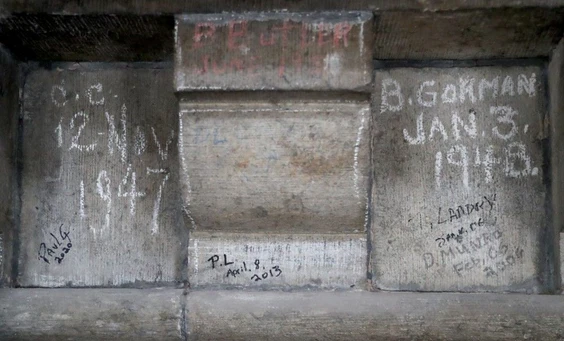
Workers have left their mark inside the pumping station over the years Photo by JULIE OLIVER /Postmedia
https://ottawacitizen.com/news/local...-water-flowing













 Linear Mode
