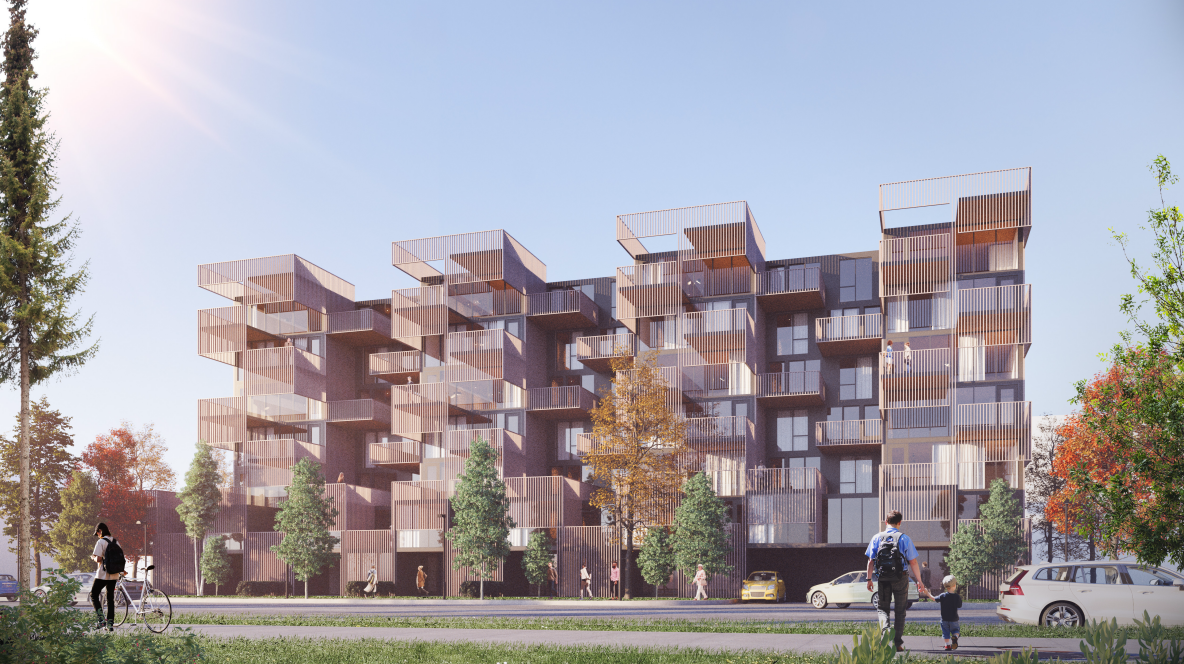
[Dartmouth] The Nest & Finch (Faulkner-Dawson) | 62, 19 M | 20, 2x7 FL | U/C


I'm guessing it's one that got caught in between the Package A and Package B changes. It had been on the list of projects coming to the DAC (as part of the Wyse Rd development) but all of those projects were made as of right when Package B was approved and now won't have to go through the DAC or anything public.
 
I've heard wind mentioned many times over the years in relation to tall buildings in Halifax and how windy it is here. However, stats don't back this up. Halifax is not as windy or as often windy as cities in many other parts of Canada. Look to the great lakes, praries and Newfoundland for the windiest cities in the country. Kelowna is the least windiest city in Canada which seems strange to me given its location in the mountians.
 
I cannot find the posts now, but weren't there several items posted last summer or fall here about a whole cluster of tall developments in this area, such as behind the Doubletree towards the harbour?
 
I've heard wind mentioned many times over the years in relation to tall buildings in Halifax and how windy it is here. However, stats don't back this up. Halifax is not as windy or as often windy as cities in many other parts of Canada. Look to the great lakes, praries and Newfoundland for the windiest cities in the country. Kelowna is the least windiest city in Canada which seems strange to me given its location in the mountians.
If you live in metro you should have significant knowledge of the climate and climate variability of Halifax and Dartmouth. You should also know the elevation of the property. Mountains do not mean wind, unless you can tell me about hurricanes in the Alps. The list of Canadian cities experiencing hurricanes is very short. It is often very foggy in Eastern Passage but bright and sunny at Georges Island. The weather forecasters will tell you that Halifax is the most difficult city to forecast - for obvious reasons.
 
If you live in metro you should have significant knowledge of the climate and climate variability of Halifax and Dartmouth. You should also know the elevation of the property. Mountains do not mean wind, unless you can tell me about hurricanes in the Alps. The list of Canadian cities experiencing hurricanes is very short. It is often very foggy in Eastern Passage but bright and sunny at Georges Island. The weather forecasters will tell you that Halifax is the most difficult city to forecast - for obvious reasons.

I've lived in Halifax since '98, so yes, I suppose I do have at least a decent knowledge of our climate. I have also lived on the praries and in southwestern Ontario, both for a number of years. which provides me with a bit of perspective. We are very fortunate here enjoying one of the best climates in Canada. I see wind in the same category as height in the toolbox of the NIMBYs.
 
I've heard wind mentioned many times over the years in relation to tall buildings in Halifax and how windy it is here. However, stats don't back this up. Halifax is not as windy or as often windy as cities in many other parts of Canada. Look to the great lakes, praries and Newfoundland for the windiest cities in the country. Kelowna is the least windiest city in Canada which seems strange to me given its location in the mountians.

Interesting info, thanks for sharing your perspective.

My impression from living here all my life is that it is regularly windy, especially near the coast where you have the effects of the sun heating up the land during the day causing the warm air to rise and be displaced by cool ocean air, and the reverse happening in the evening (depending on the time of year and the relative temperatures of the land and water). On top of that you have the usual track of storms coming up the eastern seaboard, or coming from the west, depending on jet stream, etc. And, of course wind patterns change with the seasons, like everywhere else in Canada (and most of the world).

We all know having winds gusting to 70 km/h is a regular occurrence that nobody much pays attention to, but I don't know how that stacks up to other parts of the country, as I have visited most of the country, but not lived there.

Kelowna is a bit of a mystery to me, as I stayed there for a week during the summer a few years back but don't recall any windy days (there was lots of forest fire smoke, though, so there must have been some wind in the area). That said, one week is a small sample size, and doesn't really reveal anything.

Colin does have a point in that winds close to the ground feel less severe due to the boundary layer effect, which isn't a factor when you're 20 storeys up, but I don't see this as being unique to this particular building - so it sounds like a 'nothing' point - i.e. there's wind everywhere and it's a little worse the higher up you go, but everybody knows this. It's like saying "don't live on the top floors because you will get hit by rain before it hits the ground"... (and... what does that have to do with the amazing views you will have from the upper floors of this building? :shrug:)
 
Down on Dahlia the wind is negligible, a sheltered place because of the surrounding terrain, but if I walk into the Common the wind is greater once I get through the public graveyard and head towards the bandstand. If I walk towards Sullivans Pond the wind is also less.
if I walk up to the schools I will feel the full effect of wind because the area is open. Winter winds are primarily from the NW and therefore the exposed area of the proposed tower will experience much more wind than residents of the flower streets and Park Lane. My heating bills would be higher if I lived up the hill. When we lived in Woodlawn it was a rare day when there was no wind/breeze.
 
I grew up in that neighborhood, know those areas intimately, and agree with your wind assessment. However, I'm not sure of the relevance as there is nothing unique about sheltered areas experiencing less wind than areas of higher elevations. The houses at the top of Victoria Road or Pine Street surely receive more wind exposure than Park Avenue, Dahlia or Myrtle Streets, and have houses there that were built over 100 years ago.

Just so I understand your reasoning, are you suggesting that houses shouldn't be be built at these areas of higher elevation and exposure to the harbour/ocean, or that tall buildings should only be built in sheltered areas such that they aren't exposed to higher winds? Or are you only suggesting that people should be made aware that a tall building built in areas of wind exposure (with the best views) will experience windy conditions?

Sorry to drag this out, but I'm a little confused as to the point of this discussion. I'll let it go after this... I was just trying to understand why my comment about nice views morphed into a discussion about wind. :shrug:
 
I think I have the right location as Williams Street was listed in the initial post. I believe work is starting on a 27fl building soon.
 
Well, Chicago is know as the "Windy City" and I believe they have the 2nd most skyscrapers in North America.

While it does have its fair share of wind the Windy City reference actually originally referred to the characteristics of the politics and politicians of the city and their tendency toward bloviation and being full of hot air.
 
Another block is for sale. The listing has a rendering, I doubt it will match the final build as I think it was from the original concept for the area.

MU4 - Harbour Gardens

eyJidWNrZXQiOiJidWlsZG91dC1wcm9kdWN0aW9uIiwia2V5IjoiZGF0YXMvMTQ3NDU5MjIvZWRhNzhhNmExZmMyYmQ3MDJmZmYzNjFlMWVjOGFjYzE5MWQ4MWEwYy9vcmlnaW5hbC5wbmciLCJlZGl0cyI6eyJyZXNpemUiOnsid2lkdGgiOjIwMDAsImhlaWdodCI6MTUwMCwiZml0IjoiaW5zaWRlIiwid2l0aG91dEVubGFyZ2VtZW50Ijp0cnVlfX19

eyJidWNrZXQiOiJidWlsZG91dC1wcm9kdWN0aW9uIiwia2V5IjoiZGF0YXMvMTQ3NjkwNDcvMThlYmE5ODA1MzJhZWFiMzlkYWFhZGU2YWY3NmM2YjkxYjY5MTNiMS9vcmlnaW5hbC5qcGciLCJlZGl0cyI6eyJyZXNpemUiOnsid2lkdGgiOjIwMDAsImhlaWdodCI6MTUwMCwiZml0IjoiaW5zaWRlIiwid2l0aG91dEVubGFyZ2VtZW50Ijp0cnVlfX19


Back
Top